
Published on: February 2, 2025 / Updated on: February 2, 2025 – Author: Konrad Wolfenstein
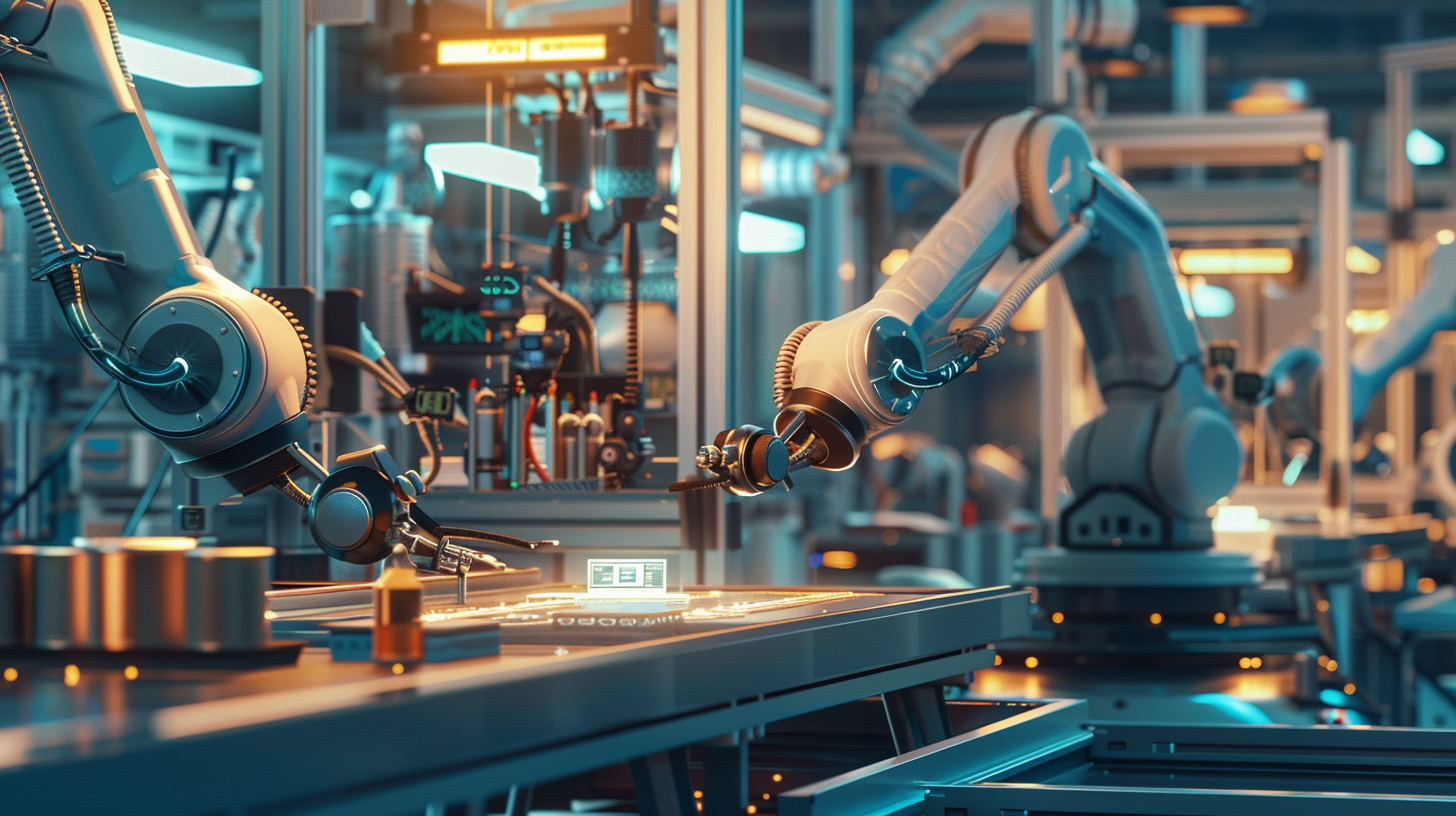
From the top to the bottom? Germany's robotics industry needs to rethink its approach – here's how to get back on track – Image: Xpert.Digital
Revenue decline in 2025: Challenges and solutions for the robotics industry
How Germany's robotics industry can overcome global competitive pressure
The robotics and automation industry in Germany faces significant challenges. It has been evident for some time that its former competitiveness is waning, and the sector finds itself caught in a complex web of rising costs, stringent regulatory requirements, and global competitive pressure. At the same time, many companies are confronted with declining demand, which is having a particularly strong impact on traditionally important customer sectors such as the automotive industry. Industry estimates predict a further decline in total revenue of nine percent by 2025, which would translate to a drop to €13.8 billion. According to these forecasts, revenue already fell by six percent to €15.2 billion in 2024. In light of this development, numerous industry stakeholders are asking what is causing this decline, what structural problems are at play, and what countermeasures can be taken to ensure the long-term viability of robotics and automation expertise in Germany.
“Robotics and automation in Germany has lost competitiveness: The industry association forecasts a decline in total revenue of nine percent to €13.8 billion for 2025,” is a key assessment reflecting the industry's uncertainty. 2024 had already seen a significant revenue decline of six percent to €15.2 billion. This means the German robotics and automation industry is facing a problem that manifests itself on several levels: declining domestic demand, a challenging international environment, and high cost pressures within Germany. At the same time, however, initial initiatives and strategies are emerging that could lead to a renewed upswing in the coming years – provided they are consistently implemented and supported by a political framework.
1. Current market situation
The declining sales figures in the robotics and automation sector clearly illustrate how fragile the economic situation has become for many companies. In recent years, this industry was not only one of the most innovative but also one of the fastest growing in Germany. Many companies benefited from the boom in the automotive industry, the increasing focus on productivity gains through automation, and new fields of application, for example, in medical technology. Today, however, the first signs of erosion are becoming apparent, which can be traced back to the changed global landscape and the restructuring of some key industries.
"The industry is struggling with structural problems"—that's how one summary of recent developments describes it. These problems include excessive dependence on the automotive industry, high costs and regulations in Germany, and weakening demand from abroad. While the Eurozone did manage to record a significant increase in orders, exports to countries outside the Eurozone fell noticeably. The weak domestic demand is having a particularly severe impact, with some surveys indicating that orders have declined by 16 percent.
The following frequently discussed development of the order situation for the year 2024 illustrates the extent of the decline:
- Domestic orders: -16%
- Foreign orders: -2%
- Eurozone exports: +44%
- Non-eurozone exports: -13%
These figures paint a very heterogeneous picture. On the one hand, there are markets in Europe that continue to show strong growth for some companies. On the other hand, crucial foreign markets, for example in North America or Asia, are performing significantly weaker in some cases. This clearly reveals the dependence on individual sectors and regions.
2. Background and causes
Many experts believe a key factor in this negative trend lies in the structural problems facing the manufacturing sector in Germany. These include rising energy prices and personnel costs, as well as an increasingly complex regulatory framework. Companies must increasingly invest time, money, and human resources to comply with legal requirements, which, while often driven by a strong focus on quality and safety, simultaneously stifle agility and innovation.
The industry is also proving vulnerable to economic downturns and structural changes: The automotive industry, previously one of its most important customer segments, is undergoing a transformation, with the shift to electromobility, among other things, demanding enormous investments. At the same time, many manufacturers are cutting costs, and the previously generous budgets for traditional automation projects in Germany are coming under pressure. This is particularly noticeable for robotics and automation companies that have specialized heavily in this sector.
In addition to these factors, uncertain geopolitical conditions and global technological competition also contribute to the current problems. Companies from Asia and North America often benefit from government subsidies or lower production costs, which can give them a significant price advantage in tenders for large projects. This makes it difficult for German suppliers to successfully position their technologically advanced products and solutions internationally, unless they are active in niche markets or specialized applications.
3. Role of the automotive industry
The importance of the automotive industry for the robotics and automation industry in Germany can hardly be overstated. According to industry experts, "excessive dependence on the automotive industry, which experienced a 16% decline in domestic orders in 2024," is considered a significant risk factor. This dependence stems from the fact that a substantial portion of robotic and automated production facilities are specifically used in vehicle manufacturing – for example, in welding body parts, painting, or final assembly.
In times when many automakers face increasingly uncertain sales forecasts and simultaneously have to invest huge sums in new drive technologies, battery technology, or software solutions, traditionally oriented automation solutions often fall by the wayside. While new production processes and electrically powered vehicle platforms could boost demand for highly specialized robotics in the long term, the current reorientation in the automotive industry is leading to a reluctance to invest in traditional projects.
4. International Challenges
Looking beyond national borders reveals that German companies in the robotics and automation sector face intense competitive pressure. Countries like China, Japan, and the USA have established a thriving innovation environment where government funding programs strongly support the development of new technologies. Companies there also frequently have access to larger risk budgets, as venture capitalists are more willing to invest in new products and markets compared to their international counterparts. Furthermore, concepts such as smart manufacturing, the Industrial Internet of Things (IIoT), and data-driven business models are progressing more rapidly in these countries, leading to a wider adoption of highly automated processes.
While Germany gained international attention in recent years with the buzzword "Industry 4.0," it is now becoming clear that the successful implementation of these concepts requires closer collaboration between research, industry, and politics than before. Furthermore, many companies remain heavily focused on traditional mechanical engineering and struggle with the new business models emerging from artificial intelligence, big data, and cloud computing. This lack of pace in digitalization could prove to be a further competitive disadvantage in the future.
5. Potential of Digitalization and Artificial Intelligence
Despite the current setbacks, there is no doubt that robotics and automation will continue to play a crucial role in industrial value creation. The automation of complex processes, ensuring consistent quality, and improving efficiency remain essential goals for many industries – from metal and plastics processing to the food industry, logistics, and e-commerce.
Furthermore, advancing digitalization opens up new possibilities for integrating automation and robotics even more seamlessly into production processes. Topics such as the digital twin of a production site, cloud services for predictive maintenance, collaborative robotics (cobots), and the integration of AI into control software offer companies potential to increase their competitiveness. Particularly in the area of AI-driven image processing and process optimization, significant benefits are evident: robots can be flexibly adapted to various tasks using machine learning algorithms and learn to recognize error patterns in real time. Such technological fields are far from exhausted and hold considerable growth potential.
Another key to success could lie in establishing new business models. Instead of selling individual machines or robots, more and more providers are shifting towards offering automation as a service, with billing based on time or per unit produced. This reduces initial investments for customers and could facilitate market access, particularly in industries that have previously been hesitant to invest in expensive automation solutions.
6. Diversification and new markets
“Reducing dependence on the automotive industry by expanding into growth areas such as laboratory automation, logistics, and renewable energies” is considered one of the most promising measures for strengthening the German robotics and automation sector in the long term. Particularly in the logistics sector, demand for autonomous transport systems, automated storage systems, and intelligent sorting robots is rising rapidly. In laboratory automation, especially in the pharmaceutical and medical technology sectors, robot-assisted handling of sensitive samples can lead to quality improvements and cost savings. Furthermore, booming sectors such as renewable energies, hydrogen technologies, and battery cell manufacturing increasingly require automated processes to produce efficient and consistently high-quality products in large quantities.
The assembly and handling of sensitive components, for example in semiconductor and electronics production, holds great potential. The demand for microrobotics solutions that enable high-precision manipulation will continue to rise in the coming years. German companies could benefit from their experience in high technology, provided they invest the necessary R&D resources and enter into the right collaborations.
7. Strategic industry initiatives
“Companies must accelerate innovation, develop greater agility, and exploit cost-cutting potential,” demanded one industry representative. However, this can only be achieved if companies do not view themselves in isolation, but rather form networks and collaborate on key technologies. Consortia and cross-industry collaborations could emerge, for example, in the areas of fuel cell production, AI integration in production, or data-driven platforms for the manufacturing industry.
The initiative to establish a shared data ecosystem for manufacturing companies could facilitate the exchange of production data, which in turn would promote the use of artificial intelligence. The goal is to analyze production processes in real time and automatically optimize decisions. Small and medium-sized enterprises (SMEs), which typically lack large in-house data analysis departments, could particularly benefit. Such a platform, envisioned under the name "Manufacturing-X," would create standardized interfaces, ensure data security, and establish common rules to enable a seamless flow of information between different companies.
8. Political demands and economic framework
“We call for the reduction of regulatory barriers and the creation of a more competitive framework.” This statement underscores the importance of policymakers in creating a favorable environment for investment and innovation. From the companies’ perspective, the following points are particularly important:
Reduction of regulatory hurdles
Simpler approval procedures, more flexible working time arrangements and a reduction in bureaucracy for research and development projects could increase competitiveness.
Investment incentives for users
Tax breaks or targeted funding programs for companies investing in automation and robotics could stimulate market demand and ensure continued participation in international developments.
More favorable financing conditions
Access to capital is a crucial prerequisite, especially for small and medium-sized enterprises (SMEs) and start-ups, to develop new products or establish global distribution networks. Government guarantees, venture capital funds, or innovation loans could provide a solution.
Industrial policy responses to global subsidies
Competitors from Asia and North America sometimes benefit from extensive government support. For German companies to maintain or expand their technological leadership, corresponding programs would be necessary to stimulate innovative developments domestically and facilitate market entry.
Another important point concerns energy and climate policy. A reliable, affordable, and sustainable energy supply is essential for companies to remain competitive. Coupled with the challenges of the energy transition, companies are currently facing not only rising energy prices but also the need to make their processes climate-friendly. Policymakers could contribute to the further development and international competitiveness of robotics and automation companies by setting clearly defined and realistically achievable goals, coupled with subsidies for energy-efficient production methods.
9. Corporate Reforms
Companies themselves also have a responsibility to rethink their processes and explore new approaches. "Accelerating innovation cycles through agile processes and cost optimization" is a frequently cited maxim in this context. While some companies still have highly hierarchical and bureaucratic processes, agile methods such as Scrum, Kanban, or Lean Development can help shorten development times and test prototypes more quickly.
In light of ongoing global uncertainties, cost control is also of paramount importance. German suppliers, who generally have higher wages and production costs than competitors from low-wage countries, can, however, score points through specialization and quality leadership. This advantage should be expanded: High-quality, reliable, and technologically advanced solutions can win over customers, even if they cost somewhat more than cheaper products.
A key future field that is likely to gain significant importance in the coming years is service robotics. It is used in tasks such as building cleaning, transport in hospitals, and in the catering industry. Logistics robots in the e-commerce sector are also a strong growth area. Here, German companies could strive for global technological leadership by setting standards early on, filing patents, and consistently aligning their developments with customer needs.
10. Promotion of education and research
For these steps to succeed, a solid foundation of skilled workers and research capacity is essential. “Doubling the number of university places in robotics and automation by 2028” and “Introducing technology as a compulsory school subject” are exemplary ideas for promoting interest in technical professions and cultivating talented young professionals. Even today, many companies are experiencing a shortage of engineers, programmers, and specialists for operating and maintaining automated systems.
Raising awareness of technology and natural sciences at an early age can help inspire more young people to pursue relevant degree programs. Furthermore, cutting-edge research in robot safety, human-robot collaboration, and artificial intelligence should be expanded so that innovations developed in laboratories can be implemented in practice as quickly as possible. Universities, universities of applied sciences, and non-university research institutions must cooperate closely with companies to create practical solutions that don't just exist on paper, but solve real-world problems in production.
In the field of human-robot collaboration (HRC), the question is how robots can work safely and directly alongside humans without the need for heavy safety barriers or complex safety concepts. There is still great potential for development here, which could lead to increased efficiency in many industries. Robots could take over repetitive tasks and dynamically adapt to new processes, while skilled workers can concentrate on more complex tasks. Close collaboration between research and industrial practice is essential to test such applications under realistic operating conditions.
11. Global competitiveness and export promotion
To compensate for the decline in foreign orders, it is crucial to strengthen export promotion. "Strengthening export promotion, particularly for non-eurozone markets," is considered a necessary step to counteract the drop in demand. Given the high demand for automation emerging in many developing countries and emerging economies, German companies could develop new business areas there in the long term. However, this requires the professional establishment of sales structures and, if necessary, the involvement of local partners to facilitate market access.
In light of global technological competition, the question also arises as to how German and European companies should respond to the massive subsidies in Asia and North America. Without their own industrial policy initiatives, the competitive disadvantage could worsen. One approach is to promote strategic investments in key technologies and to initiate joint projects at the European level. Close cooperation between the countries of the European Union would increase local value creation and ensure a degree of independence from other regions of the world.
12. Concrete measures for the future
“German robotics and automation companies must now implement structural reforms and strategic initiatives to regain their competitiveness,” is the conclusion of many experts. From the challenges discussed and the industry's demands, various areas of action can be derived that must be addressed by both companies and policymakers:
- Forming consortia for key technologies: Cooperations between different companies as well as between industry and research can help to leverage synergies and bring innovations to market maturity faster.
- Diversification of sales markets: Dependence on the automotive industry should be reduced by focusing more on new sectors such as laboratory automation, logistics, renewable energies or medical technology.
- Agile innovation processes: Faster development cycles and closer involvement of potential customers in the development process make it possible to develop tailor-made solutions for different industries.
- Policies for a competitive environment: Reducing bureaucracy, cutting taxes for research and development, and implementing targeted export promotion programs could stimulate growth. At the same time, hurdles in approval processes must be lowered.
- Education initiative: Doubling the number of university places, increasing the availability of technology in schools, and providing intensive support for student innovation projects will help to counteract the shortage of skilled workers.
- Support for start-ups and SMEs: More favorable financing options, specific incubators and accelerators for robotics and automation, as well as regional cluster formations, particularly strengthen smaller and medium-sized players.
- Expansion of service robotics: The demand for flexible, collaborative, and mobile robots is increasing. Those who can offer their own solutions early on gain a competitive advantage.
- Setting international standards: In many future-oriented fields, clear norms and interfaces are still lacking. German companies, with their technological expertise, could make a significant contribution to shaping global standards and thus establish themselves as leading providers.
- Long-term energy and climate strategy: Predictability and stability in energy supply are essential to keeping investments in Germany attractive. At the same time, ambitious climate targets require innovative concepts, which in turn can offer opportunities for automation providers.
13. Robots and AI: The driving force behind the megatrends of the future
Despite current challenges, the fundamental growth story of robotics and automation remains intact. The global population is growing, demand for increasingly customized and high-quality products is rising, and new technologies such as artificial intelligence, 5G communication, and advanced sensor technology are opening up diverse application possibilities. At the same time, megatrends such as the aging population in many industrialized nations are driving automation by leading to skills shortages and demographic shifts.
"Despite the current challenges, it can be assumed that long-term growth trends will remain intact – provided the right course is set now." This statement illustrates that while the German robotics and automation industry is under pressure, it also has enormous opportunities if it reacts flexibly and makes bold decisions.
In the short term, the situation will be challenging, particularly due to the current cost environment in Germany and the fluctuating economic conditions in some foreign markets. In the long term, however, numerous drivers point to a recovery and renewed growth. Whether this potential can be fully realized depends largely on the willingness of industry players to implement the necessary changes.
At the political level, there is a need to strengthen innovation and competitive advantages. Accelerated planning processes, stronger tax incentives, and a bold digitalization strategy could create a sense of optimism. Furthermore, if the education gap in STEM subjects (science, technology, engineering, and mathematics) can be closed, nothing will stand in the way of a long-term skilled workforce.
Greater public awareness of the benefits of automation could be raised by highlighting the societal importance of these technologies. Robots and AI can improve work processes in many areas and secure jobs in the long term if they are used and managed intelligently.
Likewise, the exchange between research, industry and society should be intensified so that technological developments do not only take place in the laboratory or at individual production sites, but are applied promptly, accepted by the public and create real added value.
14. Robotics 4.0: Securing competitiveness through innovation and collaboration
The German robotics and automation industry is undoubtedly at a crossroads. On the one hand, it faces structural problems manifested in declining order volumes, rising costs, and diminishing competitiveness. On the other hand, significant opportunities lie in diversification and innovative technologies such as collaborative robotics, AI-based production, and the emerging field of service robotics. Furthermore, cross-industry collaborations, where research institutions, established companies, and startups jointly develop solutions, could provide a crucial impetus.
Political framework conditions are a crucial factor here. Germany and Europe have an obligation to create competitive structures, promote research and development, and pave the way for successful digitalization. Reducing bureaucracy, providing tax relief, and ensuring a reliable energy supply could send a clear signal to companies and investors to build their future in Germany.
At the same time, companies themselves bear the responsibility to adapt flexibly to new markets, form collaborative networks, and adjust their products and business models to the changing landscape. Accelerating innovation cycles and implementing stricter cost controls can help maintain and further develop the traditionally high quality of German robotics and automation solutions. Furthermore, targeted educational initiatives are essential to secure future talent and find a long-term solution to the skills shortage.
Ultimately, the industry's success will be measured by its ability to transform the challenges of the coming years into sustainable growth and technological leadership. Robotics and automation are key technologies that are finding their way not only into industry but also into numerous areas of life. From care and service robotics to autonomous vehicles and intelligent processes in agriculture – the demand for sophisticated automation and robotics solutions will continue to rise. This trend gives hope that the industry can reposition itself after the current period of weakness and successfully shape its future.
If all stakeholders – companies, associations, policymakers, and society – pull together and drive forward the necessary reforms, there is a good chance that the German robotics and automation industry will return to its former successes in the medium term. The current upheaval could then give rise to a period of revitalization and innovative dynamism, in which Germany is once again seen as a pioneer of future-oriented technologies. At the same time, this development would benefit many other industries that rely on dependable and efficient automation solutions. Seen in this light, the current decline in revenue is not the end, but rather a wake-up call that could recalibrate the course for the future.
Suitable for: