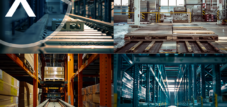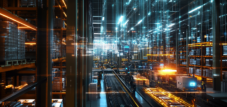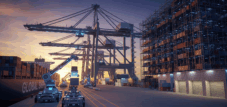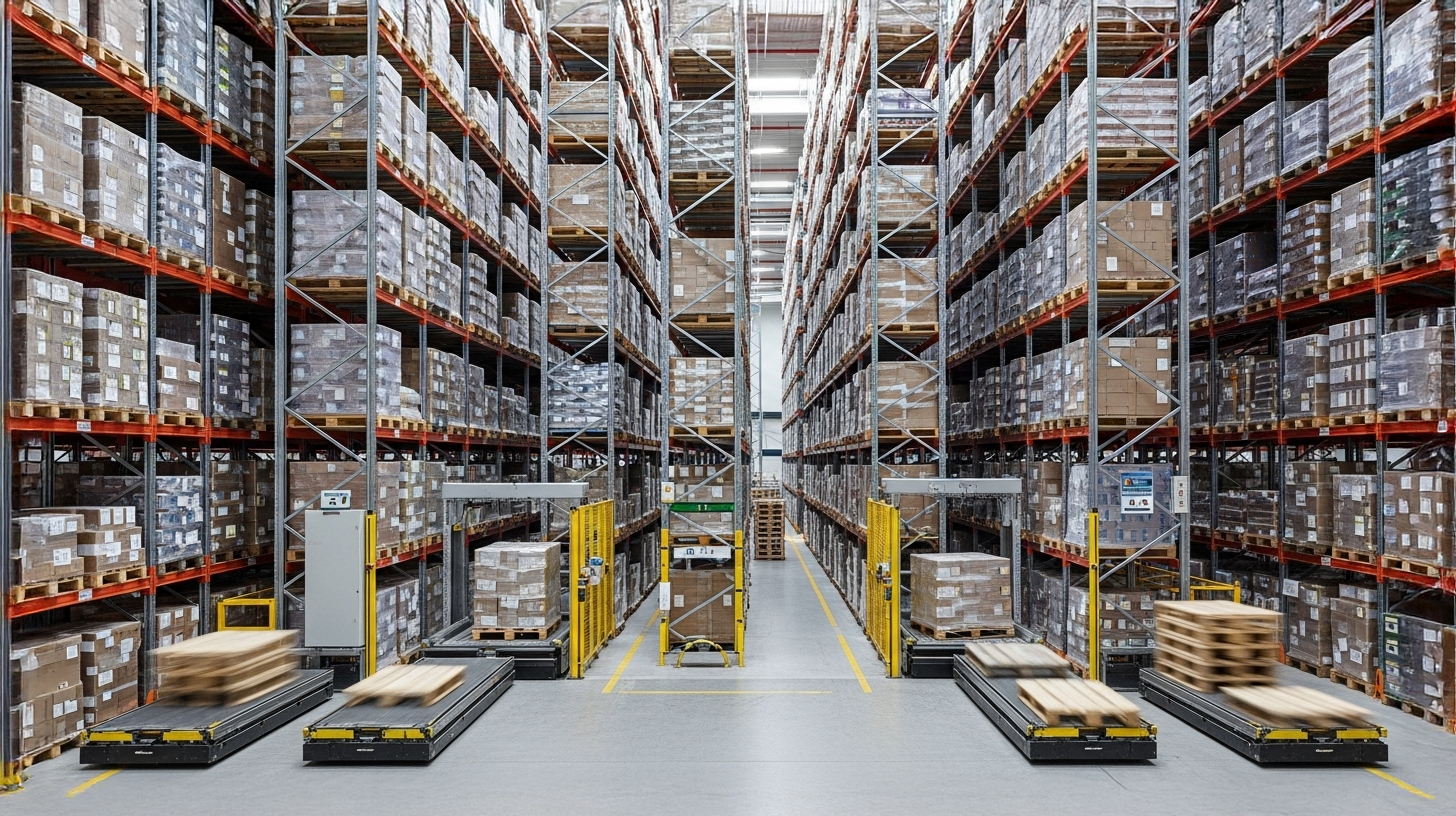
22,000 pallets, 0 employees – From shelf to truck without any manual handling: The secret of Germany's super warehouses – Creative image: Xpert.Digital
Lower costs, higher speed: Why everyone is now investing in fully automated warehouses
What is meant by full automation in high-bay warehouses?
Full automation in high-bay warehouses refers to a system in which virtually all storage and logistics processes take place without direct manual intervention. This technology is particularly widespread in Germany, especially among large industrial companies. For example, companies like Henkel have commissioned a fully automated high-bay warehouse at their Wassertrüdingen site, which offers space for 22,000 pallets on a footprint of 4,000 square meters and can handle up to 250 pallets per hour.
A fully automated system typically consists of three main components: stacker cranes, automated guided vehicles (AGVs), and intelligent warehouse management software. These systems work together in a coordinated manner to ensure efficient and error-free material handling. For example, Sofidel in the USA has implemented an automated warehouse with 35,000 storage locations, equipped with five stacker cranes and double-mover shuttles capable of simultaneously moving two pallets weighing up to 750 kilograms.
The concept of full automation enables companies to significantly increase their storage capacities while simultaneously reducing operating costs. At Gealan, for example, a fully automated high-bay warehouse measuring 125 meters long, 26 meters high, and 22 meters wide was built, offering 5,020 storage locations and achieving a throughput of up to 70 cassette changes per hour.
Related to this:

How do storage and retrieval machines work in automated warehouses?
Storage and retrieval machines are rail-guided transport vehicles that form the core of fully automated high-bay warehouses. These machines handle the storage and retrieval of units such as pallets, containers, and bins in a computer-controlled manner and without human intervention. The machines move in three directions: horizontally along the direction of travel, vertically in the lifting direction, and perpendicular to the aisle.
Modern storage and retrieval machines operate with high precision and speed. At Biohort, for example, a four-aisle high-bay warehouse with four aisle-bound storage and retrieval machines was installed, enabling 70 pallet storage and retrieval operations per hour. The facility has 25,000 pallet positions and can store 13,000 tons of material.
The storage and retrieval machines are equipped with load handling devices that can safely handle various types and sizes of goods. At MS Motorservice, for example, a four-aisle high-bay warehouse operates in three shifts, storing approximately 300 to 400 pallets daily. The machines operate fully automatically and receive all information from integrated warehouse management systems.
A key feature of modern storage and retrieval machines is their ability to perform combined cycles. This means that a storage and retrieval unit can store one pallet and simultaneously retrieve another during a single trip, significantly increasing efficiency.
What are the most important features of driverless transport systems?
Automated guided vehicles (AGVs) are comprehensive solutions that automate the entire material flow within a warehouse. They consist of several components: a central control unit, communication systems, and a fleet of AGVs that perform specific transport tasks.
These systems utilize advanced technologies such as sensors, camera systems, artificial intelligence, and modern navigation solutions. There are two main categories: free-navigating systems that use contour navigation and scan their surroundings with laser sensors, and track-guided systems with fixed infrastructure.
The advantages of driverless transport systems are numerous. They can operate around the clock, significantly accelerating the transport of goods. At the same time, they reduce the need for manual transport personnel, thus lowering labor costs. The systems follow precisely predefined routes and perform transport tasks with consistent accuracy.
At MS Motorservice, for example, six driverless transport systems are used to connect goods receiving, shipping, and various storage areas. These systems enable precise control and minimize the risk of damage to transported goods.
Related to this:
What role does intelligent warehouse management software play?
Intelligent warehouse management software forms the central nervous system of modern automated warehouses. These systems coordinate all processes and ensure optimal interaction between the various components, such as stacker cranes and automated guided vehicles (AGVs). The warehouse management system guides personnel through key workflows such as goods receipt, inventory management, and order picking.
Modern warehouse management systems operate in real time and enable dynamic order processing. With AutoStore, for example, the WMS constantly communicates with the automated system and receives real-time updates on the status of the bins. This ensures precise and efficient order fulfillment.
The software can be integrated with various other systems, such as ERP systems or transport management systems. At Bartels-Langness, the new automated high-bay warehouse is controlled by Swisslog SynQ software, a material flow control system with associated subsystem controls. All operations within the system are fully automated, eliminating the need for manual intervention during normal operation.
Another important function is the optimization of warehouse processes through intelligent algorithms. At MS Motorservice, the entire material flow is controlled via the modular warehouse management system Kardex Control Center. Before goods receipt, all pallets are marked with identification numbers, enabling centralized coordination and planning of warehouse management.
Which companies are already using fully automated high-bay warehouses?
Numerous German and international companies have already invested in fully automated high-bay warehouses. Henkel, for example, has commissioned a new high-bay warehouse with state-of-the-art technology at its Wassertrüdingen site. The warehouse offers space for 22,000 pallets and enables fully automated storage and replenishment of the production lines.
Gealan has built a fully automated high-bay warehouse in Tanna for €16 million. The warehouse, measuring 125 x 22 x 26 meters, offers 5,020 storage locations for cassettes with a payload of 1,700 kg per cassette. Two stacker cranes ensure up to 70 cassette changes per hour.
Oknoplast has commissioned a new automated high-bay warehouse near Krakow with a capacity of almost 30,000 cubic meters. The warehouse achieves a productivity of 60 pallets per hour and fully automatically provides the required profile systems for production. The cycle time for pallet removal, transport, and return is one minute.
Biohort has installed a fully automated high-bay warehouse at its new plant in Drautendorf, enabling over 200 storage movements per hour. The 32.5-meter-high warehouse has 25,000 pallet spaces and, with a footprint of 4,200 square meters, replaces more than 22,000 square meters of conventional storage space.
What does retrofitting and modernization of existing warehouses mean?
Retrofitting and modernization refer to the upgrading and renewal of existing warehouse facilities to bring them up to the latest technological standards. These measures are often a more economical alternative to completely new construction and enable companies to future-proof their facilities.
Retrofitting involves upgrading the components of a system, be they storage systems, electrical and mechanical components, software, or programmable logic controllers (PLCs). The original structure is usually retained, while individual elements are modernized to achieve higher performance.
The advantages of a retrofit are numerous: increased availability and operational reliability, reduced operating costs, improved performance, and adaptation of functions to current needs. At Logwin, for example, automated high-bay warehouses with a total of 41,000 Euro pallet spaces were modernized in Mannheim and Heppenheim. The improvements included conveyor technology components, control systems, sensors, and the implementation of new visualization systems.
Potential starting points for modernization measures include the renewal of mechanical and electronic components, speed adjustment of individual components, replacement of control systems, optimization of material flow and warehouse management computers, and modification of existing components. It is important that the modernization can often be carried out during ongoing operations to minimize disruptions.
What specific solutions are available for different industries?
Different industries require customized solutions tailored to their specific needs. An excellent example is Mayr-Melnhof Holz, which implemented a special automated high-bay warehouse for wood processing in Leoben. The three-aisle high-bay warehouse was specifically designed for storing bundled packages of sawn timber with dimensions of up to 5.2 meters in length, 1.27 meters in width, and 1.30 meters in height, and a weight of up to 3,200 kilograms.
For safe and gentle transport, an innovative modular conveyor system made of high-quality, oil-free plastic with integrated transport rollers is used. This allows packages to be transported both with and without wooden blocks. Upon receipt, all packages undergo a weight and contour check.
In the food logistics sector, Bartels-Langness has implemented an automated high-bay warehouse with over 11,100 pallet positions. The system comprises three Vectura heavy-duty stacker cranes for double pallet handling with a working height of 33 meters and a 228-meter-long pallet conveyor system. The total throughput is up to 200 pallet movements per hour.
MS Motorservice has developed a special high-bay warehouse for the automotive industry, serving as a replenishment warehouse for shipping. The four-aisle system operates in three shifts and can store 300 to 400 pallets daily. Its unique features include the connection of different areas via a bridge and the integration of automated small parts storage for various engine components.
Your intralogistics experts
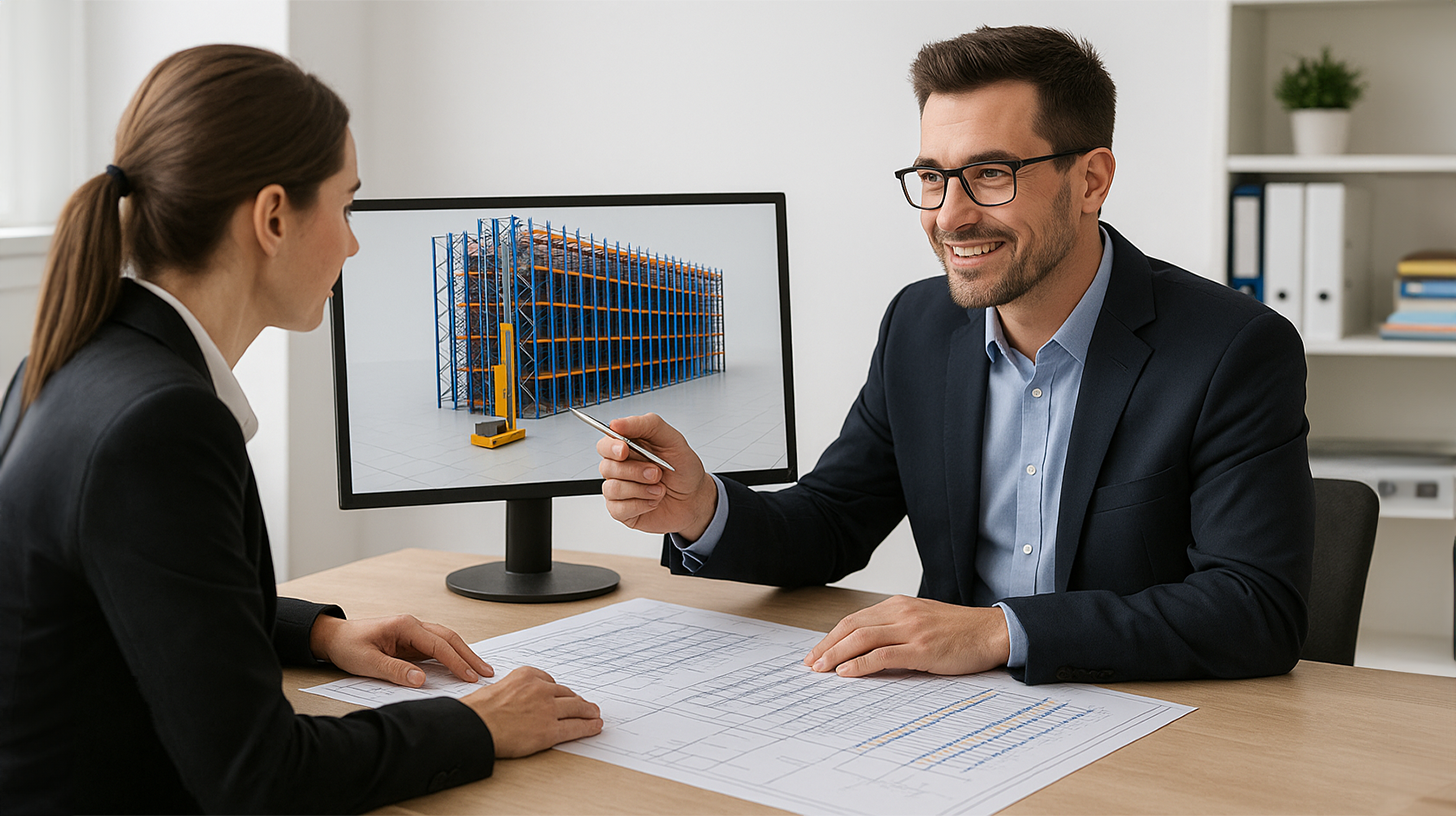
Consulting, planning and implementation of complete solutions for high-bay warehouses and automated storage systems - Image: Xpert.Digital
More information here:
Full automation pays off: Automating without business interruption
What is the level of automation in German warehouses?
The level of automation in German warehouses varies considerably, although Germany is considered an international leader in warehouse automation. Studies show that approximately 42 percent of companies surveyed in Germany report a very low level of automation in their warehouse operations. At the same time, it is estimated that around 80 percent of warehouse locations are still not equipped with extensive automation.
Germany is characterized by a high density of robots and a strong commitment to automation, particularly in the automotive and mechanical engineering sectors. Companies such as Daifuku, Jungheinrich, STILL, and SSI Schäfer offer internationally sought-after automation solutions. Close collaboration between research institutions, industry, and startups drives innovative technologies forward.
In intralogistics, three levels of warehouse automation are generally distinguished: low automation using traditional methods, medium automation with WMS implementation and partial machine takeover, and high automation with machine-assisted warehouse operations. Trends for 2025 indicate increased investment in automation technologies to reduce costs and increase productivity.
A key obstacle is the complexity of integrating different systems. WMS, AMR, robotics, and material handling technology must work together within a unified IT landscape. Added to this is the shortage of skilled workers, which requires high qualifications in mechatronics, IT, and data analysis.
Related to this:

Which technology trends will shape the future of warehousing?
Digital transformation is one of the most important trends shaping the future of warehousing. Modern warehouses are increasingly relying on automated storage and transport systems controlled by sensors, robotics, and artificial intelligence. This not only enables faster and more precise order picking but also minimizes human error and reduces labor costs.
Digital twins are becoming increasingly important in intralogistics. These virtual replicas of objects or processes simulate how their physical counterparts will behave. This allows potential errors to be avoided before they occur, and processes are optimized without the need for real-world testing on physical objects.
Connecting the entire supply chain through the Internet of Things enables real-time communication between warehouses, suppliers, manufacturers, and distributors. This leads to improved coordination and faster responses to market demands. Cloud-based supply chain management platforms and real-time inventory systems are becoming indispensable logistics trends.
Artificial intelligence and big data analytics enable more precise forecasting of demand patterns and optimize inventory levels. Warehouse management systems already monitor goods and transport vehicles, while wearable RF scanners and drones are used for inventory tracking. Computers handle warehouse loading planning, product placement, and task management.
What advantages does full automation offer companies?
Full automation offers companies numerous strategic advantages. A key aspect is the significant increase in storage capacity while simultaneously reducing the required floor space. At Henkel, for example, a new fully automated high-bay warehouse achieved a capacity increase of 22 percent. Biohort replaced more than 22,000 square meters of conventional warehouse space with a footprint of 4,200 square meters.
Automation leads to a significant improvement in process speed and accuracy. At Oknoplast, the cycle time for pallet removal, transport, and return is only one minute, with a productivity of 60 pallets per hour. Gealan achieves up to 70 cassette changes per hour while simultaneously reducing the physical strain on employees through the ergonomic design of the picking stations.
Fully automated systems operate around the clock without fatigue, ensuring consistent quality. At MS Motorservice, the automated small parts warehouse enables dynamic goods replenishment using robots and computer-controlled storage and retrieval. This results in a significant reduction in errors and damage.
The long-term economic benefits include lower operating costs, reduced staffing needs for repetitive tasks, and improved planning reliability. Henkel emphasizes that the new system not only represents a technological leap, but above all offers greater planning reliability and significantly higher supply capacity, as peak periods can be better managed and safety stocks integrated.
How are different automation components integrated?
Integrating various automation components requires careful planning and coordination of all system elements. Modern automated warehouses consist of high-density racking and robot-assisted load handling devices that enable fast and precise storage and retrieval. The warehouse management system acts as the central control unit, coordinating all components.
In complex systems like Biohort's, various technologies are seamlessly integrated. The four-aisle high-bay warehouse with four aisle-bound stacker cranes is connected to the HiLIS Warehouse Management System via vertical conveyors and connecting conveying technology, which communicates with the HOST system via interfaces.
Software plays a crucial role in integration. At Mayr-Melnhof Holz, Hörmann Intralogistics' all-in-one concept enabled a revolutionary optimization of logistics processes. The custom-designed software control, sensors, and innovative conveyor technology were seamlessly integrated into existing workflows, increasing efficiency and competitiveness.
A key aspect is phased implementation. In retrofit projects, modernization is often carried out in small steps that can be implemented while operations continue. This minimizes disruption and allows employees to gradually adapt to the new systems. Integration typically includes mechanical modifications, renewal of electronic components, replacement of controllers, and optimization of warehouse management computers.
What challenges exist during implementation?
Implementing fully automated high-bay warehouses presents various challenges that require careful planning and management. One of the biggest challenges is the complexity of integrating different systems. WMS, AMR, robotics, and conveyor technology must work together within a unified IT landscape, which demands a high level of technical expertise.
The shortage of skilled workers presents a significant obstacle. High qualifications in mechatronics, IT, and data analysis are required to set up and operate the new systems. Companies must therefore invest in training their employees and recruiting new specialists, which incurs additional costs and time.
The high investment costs can be a barrier, especially for smaller companies. Gealan, for example, invested €16 million in its high-bay warehouse, while Biohort had to spend €8 million on its automated system. These sums require a careful cost-benefit analysis and often long-term financing plans.
Operational disruptions during implementation can be problematic, even though modern retrofit approaches attempt to minimize them. Companies must develop alternative solutions for the transition period and adapt their supply chains accordingly. At Logwin, for example, a comprehensive, multi-phase retrofit was carried out to limit downtime.
In addition, there is the challenge of adapting the system to specific requirements. Every industry and every company has individual needs that must be taken into account in the automation solution, as the example of Mayr-Melnhof Holz with its special requirements for sawn timber packages shows.
What does the future of warehousing look like?
The future of warehousing will be characterized by continuous technological innovation and increasing connectivity. Experts predict that by 2025, warehouses will operate almost fully automatically, leading to a significant reduction in operating costs. Autonomous systems such as robots and drones will revolutionize warehouse logistics and delivery.
A key trend is the increased use of artificial intelligence for route optimization and inventory management. AI-driven algorithms improve the efficiency of delivery routes, saving time and fuel. At the same time, they enable more accurate forecasting of demand patterns and optimize inventory levels through big data analytics.
Blockchain technology will become an integral part of modern supply chains by 2025, increasing transparency, preventing counterfeiting, and tracking transport routes in real time. This not only improves security but also enables better product traceability.
Sustainability is becoming an increasingly important factor in warehouse planning. Companies will increasingly rely on energy-efficient systems and CO₂-reducing technologies. The digitalization of all processes will continue to advance, with computers fully taking over warehouse loading planning, product placement, and task management.
The flexibility and adaptability of warehousing systems will be crucial for success. Agile supply chains that can quickly adapt to changing market conditions will have a competitive edge. Personalized delivery options and customer-focused services will be standard offerings by 2025.

Xpert.Plus Warehouse Optimization - High-bay warehouses and pallet warehouses: Consulting and planning
A new dimension of digital transformation with 'Managed AI' (Artificial Intelligence) - Platform & B2B solution | Xpert Consulting

A new dimension of digital transformation with 'Managed AI' (Artificial Intelligence) – Platform & B2B solution | Xpert Consulting - Image: Xpert.Digital
Here you will learn how your company can implement customized AI solutions quickly, securely and without high entry barriers.
A managed AI platform is your all-inclusive, worry-free solution for artificial intelligence. Instead of dealing with complex technology, expensive infrastructure, and lengthy development processes, you receive a ready-made solution tailored to your needs from a specialized partner – often within just a few days.
The key advantages at a glance:
⚡ Rapid implementation: From idea to ready-to-use application in days, not months. We deliver practical solutions that create immediate added value.
🔒 Maximum data security: Your sensitive data stays with you. We guarantee secure and compliant processing without sharing data with third parties.
💸 No financial risk: You only pay for results. High upfront investments in hardware, software, or personnel are completely eliminated.
🎯 Focus on your core business: Concentrate on what you do best. We take care of the entire technical implementation, operation, and maintenance of your AI solution.
📈 Future-proof & scalable: Your AI grows with you. We ensure continuous optimization and scalability, and flexibly adapt the models to new requirements.
More information here:
We are here for you - Consulting - Planning - Implementation - Project Management
☑️ SME support in strategy, consulting, planning and implementation
☑️ Creation or realignment of the digital strategy and digitization
☑️ Expansion and optimization of international sales processes
☑️ Global & Digital B2B trading platforms
☑️ Pioneer Business Development

Konrad Wolfenstein
I would be happy to serve as your personal advisor.
You can contact me by filling out the contact form below or simply call me on +49 7348 4088 965 .
I'm looking forward to our joint project.
Write to me


Xpert.Digital - Konrad Wolfenstein
Xpert.Digital is a hub for industry focusing on digitalization, mechanical engineering, logistics/intralogistics and photovoltaics.
With our 360° Business Development solution, we support renowned companies from new business to after-sales.
Market intelligence, smarketing, marketing automation, content development, PR, mail campaigns, personalized social media and lead nurturing are part of our digital tools.
You can find more information at: www.xpert.digital - www.xpert.solar - www.xpert.plus
Keep in touch