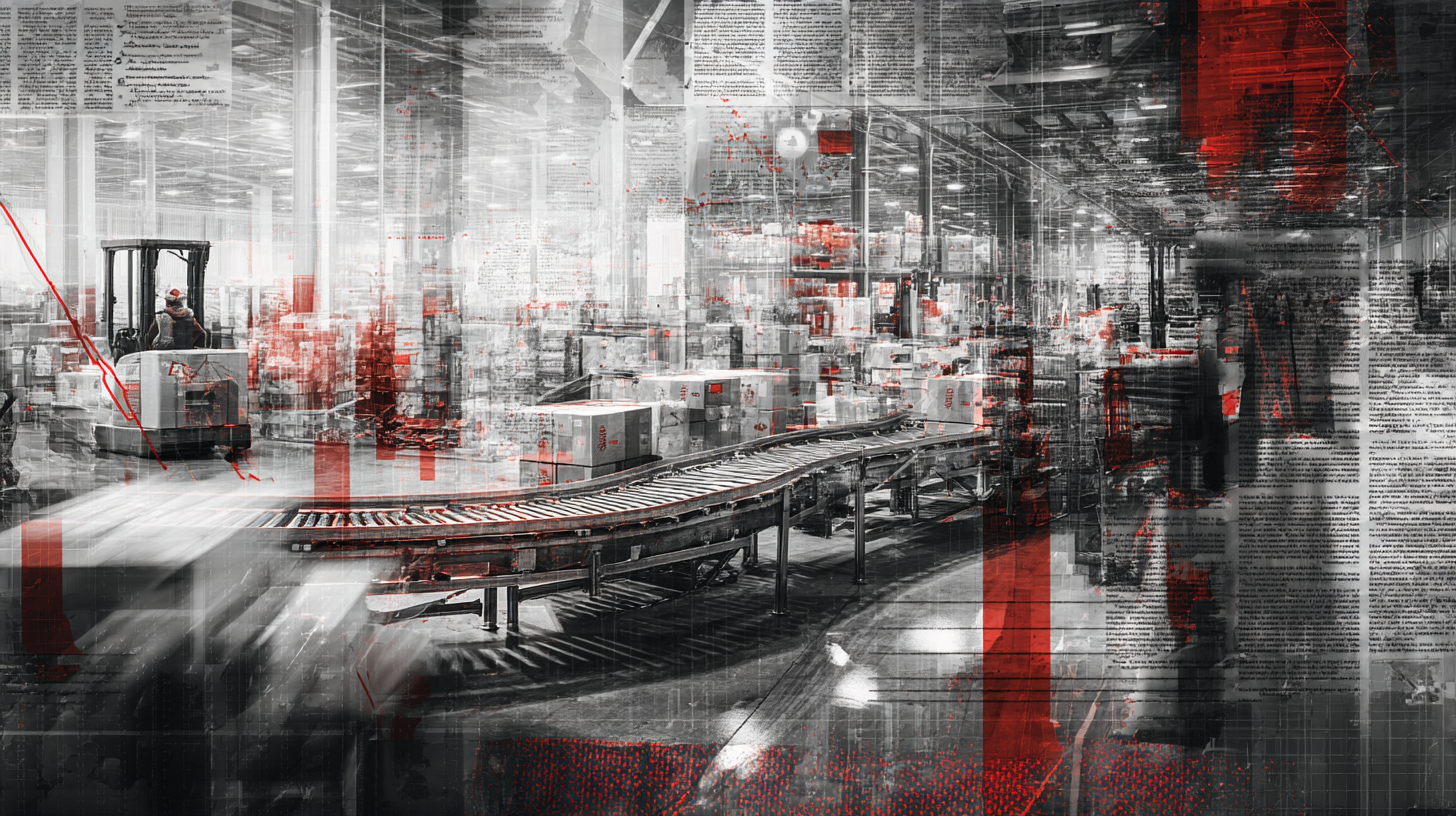
The German intralogistics industry: Growth of three percent (production volume of 27.7 billion euros) with reservations – Image: Xpert.Digital
Trade war pause: US and China agree on 90-day tariff reductions
The German intralogistics sector recorded a production volume of €27.7 billion in 2024, representing nominal growth of three percent. However, this positive figure masks a more nuanced picture: a nine percent decline in orders and shrinking export volumes point to an increasingly challenging market situation. The VDMA Materials Handling and Intralogistics Association forecasts a further decline in production volume for 2025. The sector is caught between depleted order backlogs and growing international competition, particularly from China.
Related to this:

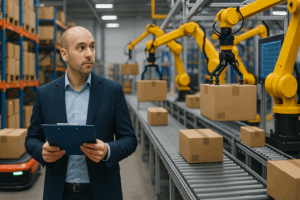
The current situation of conveyor technology and intralogistics manufacturers
German manufacturers of materials handling and intralogistics equipment achieved an estimated production volume of €27.7 billion in 2024, representing a 3% increase compared to the previous year. However, this rise is not cause for unqualified celebration, as the VDMA Materials Handling and Intralogistics Association announced. Jan Drömer, Chairman of the Association, explained the situation: "This production volume partly stems from existing order backlogs. This buffer has now been exhausted." This statement underscores concerns about the future development of the industry, as the order situation has deteriorated significantly.
Development of order intake
Compared to 2023, the industry recorded a nine percent decline in orders in 2024. This downward trend contrasts sharply with the previous year: 2023 was a very successful year for the intralogistics industry, with a production volume of approximately 27 billion euros, representing a nine percent increase compared to 2022. At that time, the industry benefited from strong international business and a significantly increased willingness to invest among customer industries.
Export development and international comparison
The total export volume of the German intralogistics industry declined by five percent to €19.8 billion in 2024 compared to the previous year. Europe remained the largest market with a volume of approximately €12.2 billion, also representing a five percent decrease compared to the previous year. The most important customer countries continued to be the USA with €2.5 billion (down nine percent), followed by France with €1.3 billion (down ten percent) and the Netherlands with around €1 billion (up six percent).
An international comparison reveals a remarkable development: Measured by international exports, China remains at the top of the exporting world. The Middle Kingdom increased its total export volume to €26.8 billion in 2023, a rise of 13 percent. Germany ranked second in 2023 with an export volume of €20.8 billion, followed by Italy in third place with €9.1 billion. Overall, the global export volume in intralogistics reached €122.5 billion in 2023, an increase of 13 percent compared to 2022.
Forecasts and future prospects
In light of the decline in orders and the strained economic situation, the VDMA (German Engineering Association) anticipates a two percent decrease in production volume to €27.2 billion in 2025. This forecast underscores the challenges facing the industry but also demonstrates that the expected decline will be moderate.
Technological developments and innovations
Despite the economic challenges, there are also positive developments in the sector. The Fraunhofer Institute for Material Flow and Logistics IML has developed technology roadmaps for intralogistics 2025 for the Materials Handling and Intralogistics Association of the VDMA (German Engineering Federation). These roadmaps show which technological developments will be necessary by 2025 to meet the future requirements of Industry 4.0.
The digital transformation towards self-optimizing intralogistics systems is enabled by advancements in the technology fields of sensors, communication, and data science. These technological innovations could give the industry new impetus and strengthen its competitiveness.
Structural changes in the industry
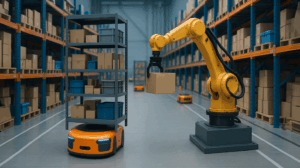
The industry's dynamism is also reflected in structural changes. One example is the renaming of the Driverless Transport Systems division to Mobile Robots within the VDMA trade association. This name change reflects the technological development that has continuously progressed towards autonomous mobile robots in recent years.
Related to this:

Challenges and risks
The intralogistics industry faces several challenges that will influence its future development. Among the most important are:
Economic and political uncertainties
The global economic recovery is still pending, and growth forecasts for Germany have even been revised downwards. Added to this are persistent geopolitical challenges and uncertainties that are negatively impacting investment behavior. Jan Drömer, the new chairman of the VDMA's engineering division, also emphasizes that companies are facing major challenges: "Economic and political uncertainties, as well as bureaucratic hurdles, are causing significant disruptions to day-to-day operations in many areas.".
International competitiveness
Increasing competition from China presents a further challenge. China has overtaken Germany in exports and is further expanding its position as the leading exporter of intralogistics products. This development could jeopardize the market position of German companies in the long term.
Innovative business models and collaborations
Despite the challenges, Jan Drömer also sees development opportunities for the intralogistics and materials handling sectors. He points to Manufacturing-X as an exciting field of activity for companies in these sectors. Such initiatives could foster new collaborations and business models, thereby strengthening the industry's innovative capacity.
Technological change: How intralogistics can remain competitive
The German intralogistics industry is undergoing a transformation. After strong growth in recent years, current developments point to a slowdown. The decline in orders and falling export figures are warning signs that the industry should take seriously.
At the same time, technological innovations and new business models offer opportunities for future growth. The technology roadmaps for 2025 outline possible development paths that can strengthen the competitiveness of German intralogistics companies.
The VDMA's forecast of a moderate decline in production volume in 2025 suggests that the industry exhibits a certain degree of stability despite the challenges. Crucial for future development will be how companies react to the changing market conditions and to what extent they can successfully implement innovative technologies and business models.
Related to this:
We are here for you - Consulting - Planning - Implementation - Project Management
☑️ Our business language is English or German
☑️ NEW: Correspondence in your native language!

Konrad Wolfenstein
I and my team are happy to be available to you as your personal advisor.
You can contact me by filling out the contact form here wolfenstein@xpert.digital:or simply call me at +49 7348 4088 965. My email address is
I'm looking forward to our joint project.