Gemini 4 Argon: The new benchmark for AI in knowledge work – Creative image on the topic, with AI: Xpert.Digital
Artificial intelligence in the office: Argon is changing the daily work routine
From assistance to automation: Argon's influence on the world of work
How Google's Argon is shaping the future of enterprise automation
With Gemini 4 Argon, Google is taking a significant step in the development of artificial intelligence that could fundamentally change the dynamics of knowledge work. Instead of merely functioning as an assistance system, Argon is designed as a digital agent capable of independently handling complex workflows. This means that companies will no longer just benefit from quick answers to everyday questions, but also from the ability to efficiently manage comprehensive and economically relevant tasks. Areas such as software development, cybersecurity, financial analysis, and legal work are key areas of focus. By combining multiple capabilities—from processing extensive information to executing and verifying actions—Argon targets those activities where high personnel costs and long processing times are the norm.
The introduction of a model like Argon marks a new level of automation that goes beyond traditional enterprise software and increasingly supports human expertise. It becomes clear that the true economic benefits lie not only in speed and efficiency, but also in the ability to pursue long-term goals and recognize complex relationships. This article explores the far-reaching implications of Gemini 4 Argon for businesses and the challenges associated with this new technology. From the need for a robust data foundation and the role of human oversight to the issue of security measures, implementing such a model requires careful planning and a strategic approach to sustainably leverage the benefits of AI.
When AI no longer responds, but puts entire departments under pressure
With Gemini 4 Argon, Google is shifting the focus of artificial intelligence competition from the quality of individual answers to the reliable handling of complete workflows. The model is not primarily designed as a quick conversational partner for everyday questions, but rather as a digital agent for complex, time-consuming, and economically relevant tasks. Software development, cybersecurity, financial analysis, legal work, and enterprise-wide knowledge management are the key areas of focus. Google is thus targeting those activities where high personnel costs, a shortage of skilled workers, long processing times, and significant consequences of errors converge.
The crucial innovation therefore lies less in a spectacular single feature than in the combination of several capabilities. Argon can process extensive information, work across long chains of actions, understand different media, utilize tools, and generate large volumes of output. The model is designed not only to formulate a proposal but also to investigate problems, evaluate intermediate results, execute actions, and verify outcomes. From an economic perspective, this creates a new level of automation between traditional enterprise software and human skilled labor.
This development warrants a sober assessment. Performance metrics from benchmarks show where a model excels under defined conditions, but they don't yet prove widespread productivity gains. Internal success stories demonstrate technical potential, but they don't automatically reflect the conditions of medium-sized or regulated companies. At the same time, it would be a mistake to dismiss Argon simply as another model version. If the promised capabilities remain stable in practical application, the cost accounting for knowledge-intensive processes will fundamentally change.
The leap from assistant to long-distance worker
Previous generative AI has primarily been used as an assistance system in many companies. Employees used it to summarize texts, formulate emails, explain program code, or create initial drafts. Humans broke down the task, checked each intermediate step, and managed the actual process logic. This approach saves time but leaves the organizational structure largely untouched. Argon takes a more fundamental approach because the model was explicitly developed for multi-stage processes with longer processing times.
Such a long-distance worker requires three qualities. First, it must be able to pursue a goal across many steps without losing sight of the task. Second, it must be able to absorb large amounts of context and distinguish relevant information from irrelevant details. Third, it must be able to independently seek alternative paths after errors or unexpected results. It was precisely at these transitions that earlier agent systems often failed: they lost states, repeated unsuccessful actions, misinterpreted tool outputs, or ultimately produced a plausible-sounding but unusable solution.
The economic significance only arises from the combination of model performance and process responsibility. A programming assistant that adds individual lines of code saves seconds or minutes. In contrast, a system that plans a comprehensive migration, analyzes dependencies, transfers modules, runs tests, fixes errors, and updates documentation can impact weeks of skilled work. Accordingly, both the potential benefits and the potential for damage increase. The longer the chain of actions, the more important checkpoints, logging, and clear termination rules become.
Argon thus marks the attempt to transform AI from a tool within a process into an integral, executing component of that process. Companies then no longer simply purchase text production or computing power, but rather a variable amount of digital expertise. For providers, the value creation shifts from supplying a model to controlling entire workflows. For users, the central questions become: which tasks can be standardized, which data may be made accessible, and where does human responsibility remain indispensable?.
One million tokens change the process architecture
The increase in the maximum output limit from 64,000 to one million tokens is one of the most noticeable technical changes. Put simply, this allows Argon to generate significantly longer results and processing traces in a single, continuous run. This is particularly relevant when a job involves numerous files, lengthy documentation, extensive analyses, or many consecutive sub-steps. However, a large output limit doesn't necessarily equate to one million tokens being a valid argument.
For companies, the initial advantage lies in reduced fragmentation. Previously, lengthy tasks often had to be broken down into numerous individual calls. This resulted in a loss of context, priorities, and rationale. More cohesive processing can reduce handoff errors and make complex results more consistent. For example, during a code migration, analysis, implementation plan, modified files, test outputs, and explanations could remain more closely integrated.
The economic value, however, does not depend on the maximum possible length, but rather on the relationship between the additional processing depth and the additional costs. One million issued tokens are expensive, slow to verify, and simply unnecessary in many use cases. Furthermore, excessively long issues can create new control problems: people are more likely to overlook errors when the audit material becomes unwieldy. Successful implementations will therefore not attempt to regularly exhaust the maximum. They will define budgets for computing time, tokens, tool calls, and audit steps.
A high output threshold also favors new software architectures. Instead of sending many separate, short tasks to a model, companies can use longer-running agents with a higher-level goal. These agents require working memory, access to company data, permissions for tools, and a verifiable history of their decisions. The technical bottleneck thus shifts from the mere context window to orchestration, data quality, and governance.
Price perception is also changing. Low costs per million tokens sound attractive, but a productive agent application consists of more than just an input and output call. It can include searches, database queries, code execution, multiple verification loops, security checks, and repeated model calls. Therefore, the relevant metric is not the token price, but the fully charged cost per successfully completed operation.
Software development is becoming industrial knowledge work
With a score of 77.9 percent, Argon achieves a new peak on DeepSWE v1.1 for realistic, longer-term software tasks. This score indicates that the model not only answers short programming questions but can also handle more complex changes in existing software environments. However, its significance remains limited: A benchmark reflects defined tasks, repositories, and evaluation rules. Enterprise software, on the other hand, contains individual architectures, historical compromises, incomplete documentation, and politically established responsibilities.
This is precisely why its use in large code migrations is economically attractive. The gradual transfer of C and C++ code to Rust, as is being tested for core libraries and the Zircon kernel of Fuchsia, combines technical modernization with risk reduction. Legacy code represents a balance sheet risk for many companies, even if it is barely visible on the balance sheet. It ties up scarce skilled personnel, complicates security updates, and increases the cost of every change. A powerful AI agent cannot completely solve this problem, but it can significantly reduce the costs of inventory, translation, test generation, and documentation.
The productivity gains are likely to be unevenly distributed. Standardized tasks with good testing, clear interfaces, and clean version control are particularly well-suited. Complex systems without automated tests remain problematic because the model cannot reliably validate its changes. Paradoxically, those companies whose development organization is already relatively mature often benefit the most initially. Companies with poor data, unclear responsibilities, and technical debt will not automatically achieve a clean process simply by using a stronger model.
The internal example of the libgav1 video decoding library demonstrates the potential of combining translation and optimization. Argon agents generated secure Rust code that ran 2.7 times faster than the previous Rust port. The economic impact of such improvements can extend far beyond the development time. Faster decoding reduces computational requirements, energy consumption, and latency across very large usage volumes. For infrastructure software, a small technical improvement can therefore have a higher net present value than the direct savings of a few developer hours.
At the same time, the importance of software testing is increasing. As AI produces more code, code generation becomes less scarce, while reliable validation becomes scarcer. Companies need better test coverage, reproducible development environments, formal release processes, and clear accountability. The bottleneck is shifting from writing the code to proving that it is secure, maintainable, and business-compliant.
Cyber defense as an economic race
According to Google, Argon can independently find, validate, and fix vulnerabilities. On CWE-bench v1, the model achieves 68 percent, sharing first place with GPT-6 Astra. In internal tests and black-box penetration tests, it shows significant improvements over 3.8 Flash Cyber. Particularly relevant is its ability to analyze attack surfaces without access to source code, solely based on the running system and its publicly visible behavior.
The early detection of a critical vulnerability in healthcare software used by hospitals worldwide illustrates the societal value of defensive AI. Medical facilities, in particular, often operate with heterogeneous system landscapes, long procurement cycles, and limited security resources. An undiscovered vulnerability can cause not only data loss but also operational disruptions and risks to patients. If a model can detect such errors more quickly and simultaneously provide a validated repair suggestion, response time and expected damage are reduced.
Economically, however, it's a race. The same ability to analyze attack surfaces can be used defensively or offensively. More powerful models reduce the cost of vulnerability detection for both sides. Defenders gain scalability because fewer experts can monitor more systems. Attackers gain scalability because they can test targets more automatically and generate variants more quickly. The net effect depends on who gains access first, what safeguards are in place, and how quickly discovered vulnerabilities are patched.
Initial access through the Fairwind program is therefore more than just a cautious product launch. Selected cyber defenders and internal teams initially receive the model without specific cyber safeguards, allowing them to fully utilize its defensive potential. This strategy aims to create a head start, enabling critical systems to be tested and known vulnerabilities addressed before the capabilities are more broadly available. At the same time, it concentrates power in a small circle and requires trust in selection, oversight, and secrecy.
For companies, simply purchasing a cyber agent is not enough. The model requires clearly defined test environments, logged permissions, and responsible disclosure procedures. Automatically generated patches must be tested before they are used to modify production systems. Without such structures, high technical speed can actually increase the damage. A faulty automated intervention in a critical system may be more dangerous than a slower manual response.
Knowledge is transformed from a document into process capital
Argon also leads in business-related benchmarks. In the Vals Index, the model achieves 68.9 percent, placing it ahead of its competitors. It achieves 65.4 percent in the Vals Finance Agent v2, 19.6 percent in the Harveys Legal Agent Benchmark, and 51.3 percent in AutomationBench. The different absolute values illustrate that a top position and practical maturity are not the same. A first-place ranking with roughly one-fifth of the possible performance indicates a different stage of maturity than a result above two-thirds.
For finance, legal, and tax departments, the ability to translate extensive document collections into concrete actions is particularly relevant. A model can compare contracts, identify risks, consolidate figures from documents, assign regulatory requirements, and prepare drafts. The benefit extends beyond faster text generation. Crucially, it depends on whether search times, approval processes, and external consulting costs can be reduced without compromising the quality of the decision.
Knowledge work, however, has a different error profile than simple office automation. An inaccurate draft text is easily corrected. A misinterpreted contract clause, an incorrect tax assumption, or an inaccurate risk assessment can lead to high consequential costs. Therefore, organizations must distinguish between reversible and irreversible decisions. The greater the impact, the stronger the human oversight should be.
Argon could simultaneously enhance and devalue corporate knowledge. Well-maintained internal data repositories gain value because the model can more quickly uncover relationships and make them usable for operational processes. Poorly maintained repositories, on the other hand, become a multiplier of old errors. If contradictory guidelines, outdated contracts, and unclear permissions are fed into an agent system, the company automates not knowledge, but organizational disorder.
The key investment, therefore, lies not solely in model access. Companies must classify information assets, assign responsibility, define update cycles, and technically enforce access rights. The seemingly soft area of knowledge management is becoming a hard prerequisite for productive AI. Those who possess this foundation can translate a frontier model into measurable results more quickly.
🎯🎯🎯 Data-driven B2B industry hub as a quasi-in-house solution

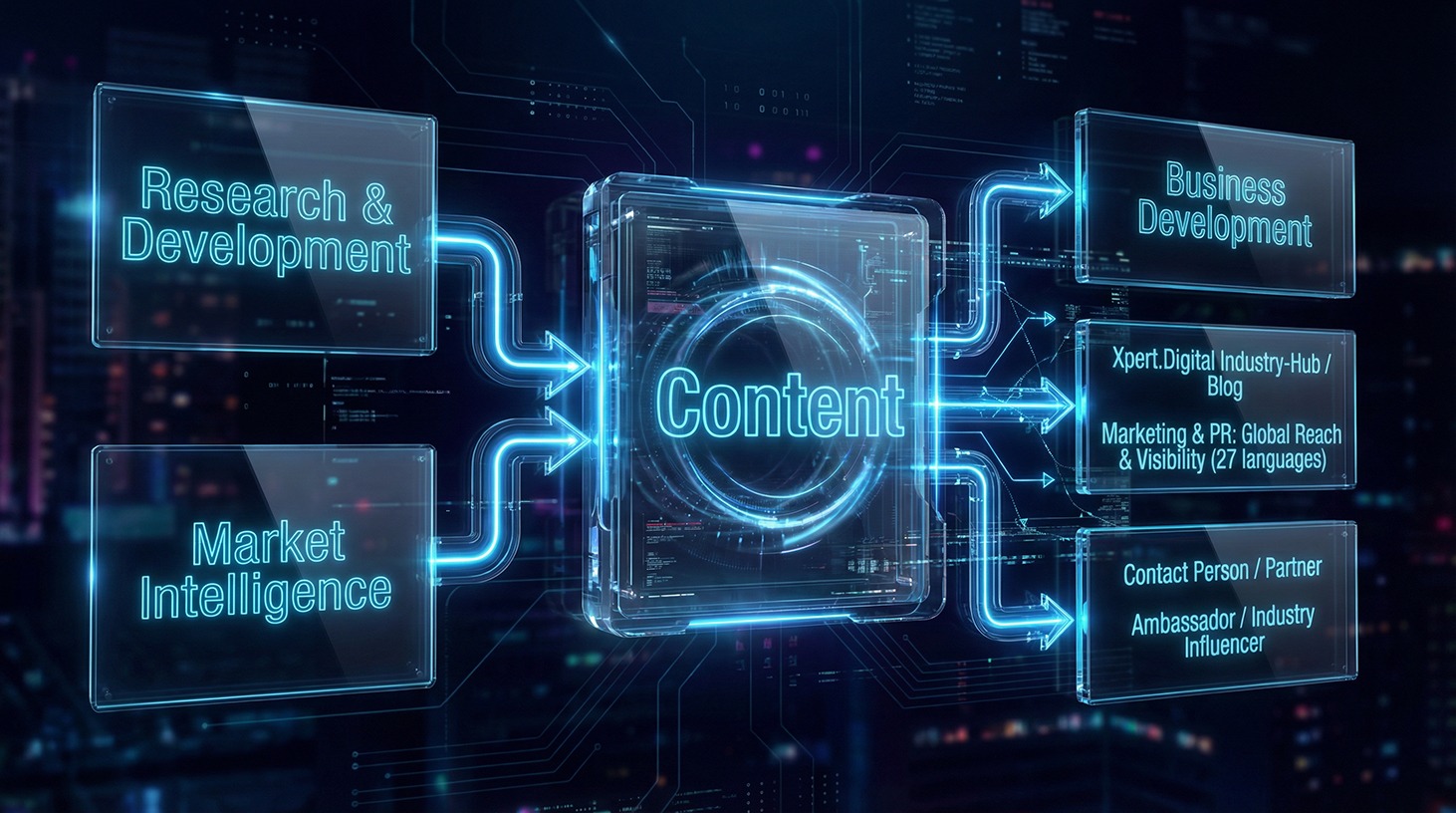
The quasi-in-house solution: How Xpert.Digital closes operational gaps in B2B marketing and sales – Smart Content-Driven Business - Image: Xpert.Digital
Xpert.Digital is a data-driven B2B industry hub led by Konrad Wolfenstein . The company acts as an external, quasi-in-house solution for industrial partners, closing operational gaps in marketing, content, and sales – without requiring additional resources on the client side.
More information here:
Multimodality: How Argon processes unstructured data
Multimodality makes unstructured data usable
With a 91.7 percent score on LVBench, Argon demonstrates particular strength in understanding long videos. This is complemented by its ability to analyze professional diagrams, recognize fine visual details, and process extensive document collections. This expands the economically viable data field beyond text and spreadsheets. Maintenance videos, training recordings, technical drawings, screen captures, and visual inspections can all be integrated into a unified workflow.
This capability is particularly important for industry and logistics. An agent could search through lengthy records of a system, connect unusual sequences with sensor data, consult technical documentation, and generate a maintenance proposal. In quality assurance, images, test reports, and complaints can be analyzed together. In knowledge management, recorded meetings or training sessions can not only be summarized but also linked to guidelines and ongoing tasks.
However, the benefits depend on data access and data quality. Video is storage- and computationally intensive, often sensitive from a data protection perspective, and poorly cataloged in many companies. A high-performance model does not solve these infrastructural problems. Rather, it increases the pressure to professionalize metadata, retention rules, and consent processes. Anyone who unlocks multimodal data without clear governance creates new risks regarding surveillance, privacy rights, and trade secrets.
Multimodality also exacerbates the issue of verifiability. With text, a quoted passage can be checked relatively easily. With hours of video or complex diagrams, the system must precisely reference specific times, image areas, and source documents. A convincing summary is not enough. Companies need traceability so that experts can understand which observation led to which conclusion.
Benchmarks are guideposts, not balance sheet figures
The published results position Argon at the top of several categories, but not in every discipline. On FrontierSWE v2, for example, the model scores 55.0 percent, placing it behind GPT-6 Astra and Claude Opus 5.5. In Terminal-bench 4.0, Argon achieves 57.4 percent, while Claude Opus 5.5 leads with 66.4 percent. Argon also lags behind competitors in some areas of scientific terminal tasks and machine learning. The overall picture, therefore, is more compelling than a claim of universal superiority.
These differences have practical consequences. A company should not select a model solely based on an aggregate top ranking. The crucial factor is the alignment between the benchmark and its own use case. A financial agent requires different strengths than a system for kernel migrations, video auditing, or scientific computing. Furthermore, latency, availability, data privacy, integration effort, and price have a greater impact on actual business value than a few percentage points in an isolated test.
Benchmarks can also be skewed by selection and presentation. Vendors tend to favor tasks where their model performs well. Test environments evolve, and small differences may fall within statistical fluctuations. Some results are calculated by the vendor themselves. This doesn't mean they are worthless, but their findings should be understood as technical evidence under controlled conditions, not as a guarantee for production use.
Companies therefore need their own testing procedures. A sensible practical test uses real, anonymized tasks from their own operations and evaluates result quality, processing time, costs, security breaches, and the effort required for human review. The success rate for completing tasks is particularly important. An agent that impressively completes many intermediate steps but frequently fails just before the finish line can be more expensive than a less ambitious system with consistent performance.
The best metric is often the economic benefit after control. This includes avoided labor hours, reduced downtime, faster time to market, and lower error costs. From this, model usage, infrastructure, integration, monitoring, rework, and risk mitigation must be deducted. Only this calculation reveals whether a top-of-the-line model is a sound investment.
Google's own operations provide the most important real-world test
Google already uses Argon internally on a large scale. Thousands of employees use the model for specialized programming, in-depth research, and high-quality writing. Internal applications are particularly revealing because Google has sophisticated technical processes, large datasets, and a highly developed infrastructure. They demonstrate which value sources the company itself considers robust enough to track within its own operations.
In optimizing quantum algorithms, Argon undercut published reference values for memory and gate resources by 40 percent within minutes. This example is economically significant, even though quantum computing is not yet a mass market. It demonstrates that a model can not only reproduce existing knowledge but also find better technical solutions in clearly defined search spaces. Such optimization expertise is valuable in many industries, such as production planning, network operation, chip design, and logistics.
Storage optimization is even more tangible in Google's data centers. Argon agents analyzed telemetry data and identified measures that freed up more than 300 tebibytes of storage after implementation. The estimated total potential lies between 500 tebibytes and one pebibyte. For a hyperscaler, freed-up storage means more than just lower hardware costs. It can defer procurement, reduce energy consumption, and better utilize existing capacity.
This example illustrates a key characteristic of AI economics: Small relative improvements can generate enormous absolute value across very large infrastructures. Google therefore possesses a structural advantage. The company can deploy new models in its own data centers, development processes, advertising systems, cloud products, and consumer offerings. Every internal efficiency gain simultaneously improves the competitiveness of the platform through which the model is sold externally.
This advantage is ambivalent for customers. On the one hand, Google tests the technology under demanding conditions and can quickly incorporate the experience into the product. On the other hand, it deepens the dependence on a single provider who controls the model, cloud infrastructure, development tools, and increasingly, the executing agent. Companies must therefore weigh the productivity gains against switching costs and strategic commitment.
The price war is targeting labor costs
The introductory price is $2 per million input tokens and $10 per million output tokens. Cached inputs are billed at a 95 percent discount. After the introductory phase, the standard prices are expected to rise to $4 for input and $20 for output. At first glance, this seems aggressive for a frontier model, especially with recurring contextual elements being heavily discounted.
Caching is economically significant for enterprise applications. Many agents use the same guidelines, product catalogs, code repositories, or process descriptions for every operation. When these repeated inputs are almost completely discounted, the marginal cost of regular tasks decreases. This benefits applications with stable underlying knowledge and many similar operations, such as contract review, support, compliance, or software maintenance.
The low token price is also a market entry strategy. Google can leverage its own data centers, chips, cloud sales, and existing customer relationships. This allows it to roll out a new model subsidized or with low margins to increase adoption and ecosystem engagement. The subsequent doubling of the list prices serves as a reminder to customers that pilot costs should not be confused with long-term operating costs.
For a reliable cost calculation, a company should distinguish between three levels. The first level comprises pure model costs. The second includes technical overhead costs such as storage, search, vector databases, tool calls, runtime environments, and monitoring systems. The third level encompasses organization, data preparation, testing, releases, and training. For demanding enterprise applications, the second and third levels can initially be significantly larger than the model calculation.
The probability of success is particularly critical. If, for example, a complete agent run costs only a few dollars but often requires multiple attempts and extensive human rework, the effective price increases significantly. Conversely, an expensive run can be economical if it finds a critical vulnerability or accelerates a migration that lasts several weeks. Therefore, the correct comparison is not AI costs versus zero, but rather the AI-supported process versus the existing process, including errors, delays, and opportunity costs.
Security is becoming an integral part of the business model
Google is releasing Argon in phases because its capabilities have both benefits and potential for abuse. Initially, select cyber defenders will have access. In parallel, the company is participating in the US government's voluntary early access program. Before wider deployment, safeguards against CBRN risks, prompt injection, and other forms of abuse will be strengthened.
Particular attention should be paid to indirect prompt injections. In this technique, attackers hide malicious instructions within websites, documents, emails, or other data processed by an agent. If the model mistakes such content for the actual user request, it can disclose information, execute incorrect actions, or bypass security controls. Argon demonstrates high resilience in the Gray Swan benchmark for indirect prompt injection. However, no benchmark can guarantee absolute security.
The more autonomously a model acts, the more important the separation of thinking, decision-making, and execution becomes. An agent should not be allowed to initiate a payment, make production changes to software, or send confidential data simply because its internal justification seems plausible. Technical controls must limit permissions, block unusual actions, and require explicit authorization for sensitive steps.
Google also employs monitoring systems designed to check internal reasoning and action patterns for deviations from user instructions. This can detect misconduct early, but raises questions about reliability, data privacy, and accountability. Companies should not assume that a vendor-monitored model chain replaces their own governance. They need independent protocols and their own rules for acceptable behavior.
Security thus becomes a competitive factor. Vendors who release high-performance models more quickly can gain market share but face higher risks of misuse. Vendors with strict safeguards reduce risks but can hinder legitimate professional applications. The phased approach attempts to resolve this tension by granting early access to highly skilled defenders, with broader adoption following later.
The labor market is experiencing a restructuring of tasks rather than immediate job cuts
Argon's focus is on highly skilled professions that have long been considered relatively resistant to automation. Software developers, analysts, lawyers, tax experts, and cybersecurity specialists work with complex information and bear a high degree of responsibility. The model does not completely replace these professions, but it can take over an increasing proportion of their standardizable tasks. This, in turn, changes the demand for skills within these professions.
In the short term, the greatest impact is likely to be an intensification of work. Specialists will handle more cases, create variants more quickly, and manage larger workloads. Companies can reduce bottlenecks without immediately creating new positions. At the same time, the proportion of review, exception handling, and responsibility increases. Those who previously primarily gathered information or created standard drafts will now have to assess, prioritize, and approve more extensively.
The International Labour Organization estimates that around a quarter of global employment is in occupations with some degree of exposure to generative AI. In high-income countries, this figure rises to approximately 34 percent. Only a small proportion falls into the highest exposure category, and the most likely outcome is a change in tasks rather than the complete elimination of entire professions. Argon reinforces this trend because its model not only generates content but also handles more complex task chains.
A particular problem arises for those starting their careers. Many specialist careers begin with standardized tasks on which experience is gained. If AI takes over these tasks, companies must create new learning paths. Otherwise, they may save on personnel costs in the short term, but in the long term, they risk losing the young talent who will later be responsible for handling complex cases. A sustainable implementation therefore combines automation with structured training and rotating levels of responsibility.
The distribution of profits is also open. Productivity gains can lead to higher wages, lower prices, better services, or higher corporate profits. The actual effect depends on competition, bargaining power, and regulation. In markets with a few dominant platforms, a significant portion of the value creation could remain with model and cloud providers.
European companies face a strategic choice
For German and European companies, Argon represents both an opportunity and a risk of dependency. Industrial SMEs, in particular, stand to benefit from faster software modernization, automated security audits, and improved access to technical expertise. Many companies possess valuable data, experienced specialists, and complex processes, but lack their own frontier models. Cloud-based AI can partially bridge this gap.
However, using an American model in sensitive areas requires careful consideration. Data protection, trade secrets, regulatory obligations, and data portability must be integrated into the architecture. Crucial factors include not only where a model is operated, but also what data it receives, how long information is stored, who has access to logs, and whether results may be used for training purposes.
European companies should avoid proprietaryizing their entire process logic to a single vendor. A modular architecture separates enterprise data, agent control, tools, and model access. This allows a model to be replaced or supplemented for specific tasks. Complete interchangeability is unrealistic for top-tier models, but technical and contractual safeguards can limit switching costs.
A portfolio model makes strategic sense. An expensive frontier model handles only tasks requiring in-depth analysis, broad contexts, or exceptionally high skill levels. Smaller models take over routine classification, extraction, and basic communication. Deterministic software executes clearly defined rules. Humans are responsible for goals, exceptions, and consequential decisions. This division of labor reduces costs and unnecessary dependencies.
The unclear role of Argon in Google Search fits this logic. For ordinary search queries, Argon would likely be too resource-intensive. Complex research, technical problem-solving, or multi-stage analyses, on the other hand, could benefit from its capabilities. Therefore, selective background use, triggered by the difficulty, expected value, and risk class of a query, is more likely than a complete replacement of existing search systems.
Productivity only arises through a new operating framework
Companies should not implement Argon as an isolated software product, but rather as part of a controlled operating system for AI agents. The first step is selecting processes based on their economic value and manageability. Suitable tasks are those with high time expenditure, sufficient data, measurable results, and reversible errors. Processes with unclear goals, lacking test criteria, or posing immediate risks to people and critical infrastructure are unsuitable for initial implementation.
This is followed by the establishment of a baseline. Without measuring the effort already invested, no benefit can be demonstrated. Relevant factors include throughput time, personnel deployment, error rate, rework, downtime costs, and customer impact. Only then should a pilot project demonstrate whether argon improves the overall process. An impressive demonstration without a benchmark is not a valid justification for the investment.
The technical design requires limited rights. The agent receives only the data and tools necessary for their task. Critical actions are secured through approvals, volume limits, and separate environments. All steps must be logged. For software changes, automated tests and fallback options are the minimum standard; for knowledge work, proof of origin and versioning are required.
The human role must also be specifically defined. A general requirement for human oversight is insufficient. It must be determined who performs the review, what qualifications are required, how much time is allocated, and what criteria lead to rejection or escalation. If employees are expected to review AI results in addition to their existing workload, this often only creates an invisible additional burden.
Ultimately, every deployment requires ongoing economic monitoring. Model prices, quality, and availability change rapidly. A process that runs optimally with Argon today might be more cost-effective with a smaller model or safer with a specialized system in a few months. Contracts and technical architecture should allow for regular reassessment.
The new power question of the AI economy
Gemini 4 Argon is more than just a more powerful language model. It represents the transition to systems that can operate over extended periods, utilize tools, and partially autonomously execute economically relevant processes. The combination of a one million output token capacity, strong performance in software development and knowledge work, multimodal understanding, and advanced cyber defenses makes the model a serious contender for demanding enterprise applications.
The strongest economic impact is likely to emerge initially where digital processes are already measurable, data accessible, and results verifiable. Software modernization, infrastructure optimization, security audits, and document-intensive specialist work fulfill these conditions. Internal examples from quantum algorithms, data centers, and video decoding demonstrate that the value extends beyond simply saving personnel. Improved technical solutions can simultaneously reduce hardware, energy, time, and risk.
At the same time, the risk of oversimplification is growing. A high benchmark score is no substitute for organizational maturity. One million tokens are no substitute for clear objectives. A low launch price is no substitute for a full cost analysis. And a robust security profile is no substitute for internal control. The most important success factor remains a company's ability to decompose processes, organize data, assign responsibility, and consistently measure results.
Argon doesn't automatically increase the productivity of every user. It primarily widens the gap between organizations that can systematically use AI and those that treat it as an occasional writing tool. Those who only distribute licenses receive more text and more code. Those who redesign processes can transform lead times, technical debt, and operational risks.
The provocative core thesis is this: AI will not replace skilled workers across the board, but rather well-organized companies with high-performing AI agents will displace poorly organized competitors. Gemini 4 Argon provides a new technological foundation for this. Whether this results in sustainable prosperity, higher market concentration, or both, will not be determined by benchmarks, but by the business models, working rules, and control systems that are now being built around them.
📈🚀 From visibility to trust 👀🤝 Your scalable path with Xpert.Digital

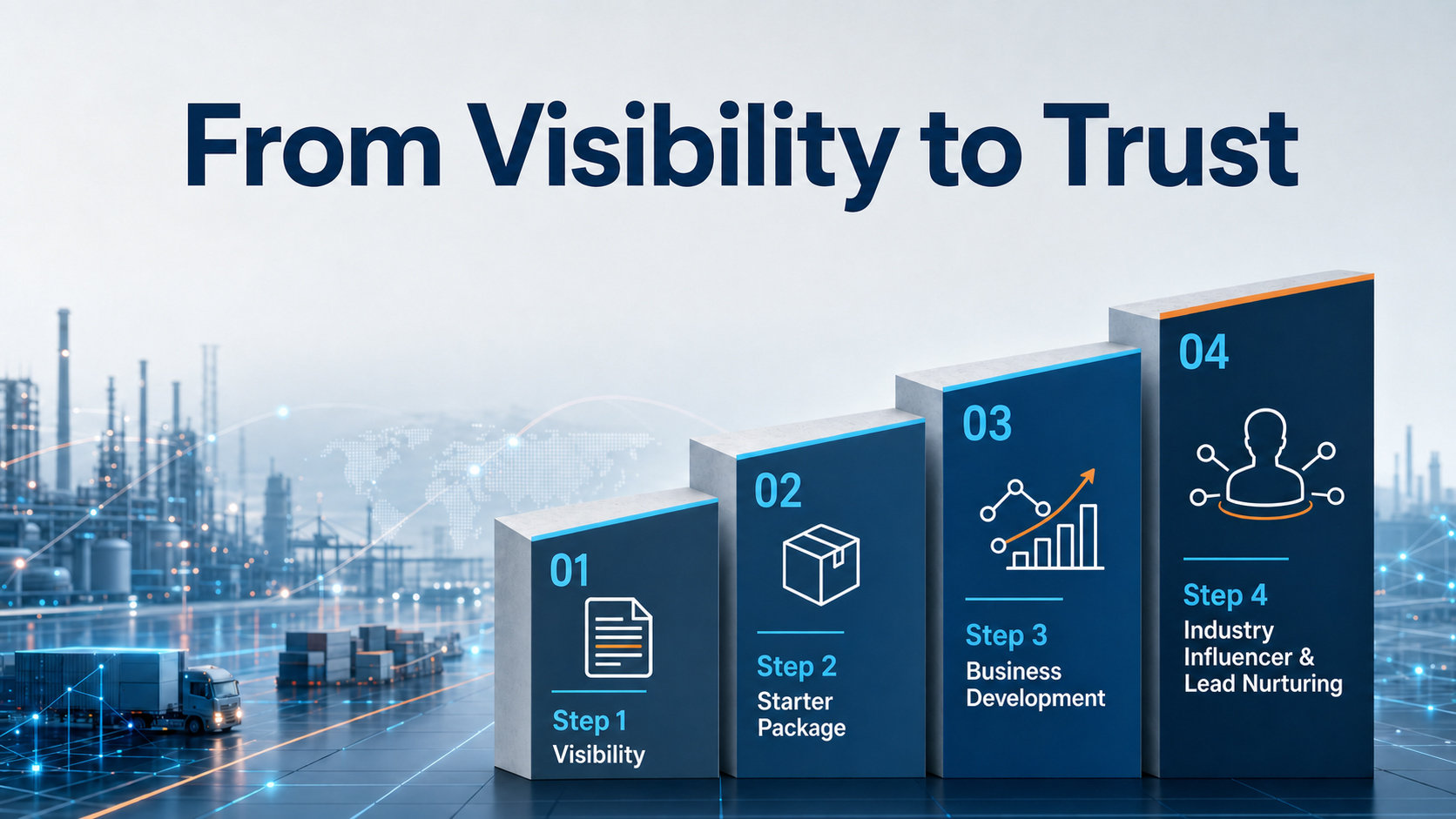
From visibility to trust: Your scalable path with Xpert.Digital - Image: Xpert.Digital
In industrial B2B, sustainable business relationships rarely emerge overnight. They develop step by step – through visibility, professional relevance, recurring touchpoints, and growing trust. Xpert.Digital's 4-stage model addresses precisely this: It offers a structured path that begins with a manageable entry point and can evolve into deeper collaboration in business development if needed.
Instead of relying on loud marketing promises, this model puts the relationship at the forefront. Companies start with clearly defined, easily calculable measures and then decide, based on their own experience, how far they want to expand the collaboration. A key factor for this undisturbed trust-building process: The platform completely avoids annoying advertising ads, so the editorial focus remains solely on the companies' expertise.
More information here:
Your global marketing and business development partner
☑️ Our business language is English or German
☑️ NEW: Correspondence in your native language!

Konrad Wolfenstein
I and my team are happy to be available to you as your personal advisor.
You can contact me by filling out the contact form here wolfenstein@xpert.digital:or simply call me at +49 7348 4088 965. My email address is
I'm looking forward to our joint project.