
Gemini 3.8 Flash and Flash Cyber: Between security promises and cost reality – Image: Xpert.Digital
Gemini 3.8 Flash review: The hidden cost trap in Google's new AI
Price shock for AI: Why Gemini 3.8 Flash is significantly more expensive than you think
Hacker AI in record time: What's really behind Google's Gemini 3.8 Flash Cyber
With Gemini 3.8 Flash and its highly specialized variant, Flash Cyber, Google is igniting the next stage in the global AI arms race – but this technological breakthrough has a major drawback. While the Cyber version shines as an unprecedentedly efficient weapon for detecting and fixing software vulnerabilities and, for good reason, is subject to strict access restrictions, the freely accessible standard model is generating heated debate. Despite brilliant benchmark results and seemingly unbeatable introductory prices, a significant cost trap lurks in the fine print. Extreme internal token consumption due to hidden "thinking processes" makes the AI considerably more expensive in practice than its predecessor. Learn what Google's new models can really do, why the Cyber variant is changing the foundation of digital defense, and why you need to take a very close look at your next AI billing statement.
Defense arms race: Google's new cyber weapon
When a software vendor needs its own security team to uncover vulnerabilities in less than two hours, where previously it took months, the foundation of digital defense changes fundamentally. On September 2, 2026, Google introduced Gemini 3.8 Flash Cyber, a specialized model that delivers precisely this promise, at least according to the company's own figures. It is a specifically trained variant of the Gemini 3.8 series, designed not for general tasks, but exclusively for detecting security gaps in program code and automatically writing appropriate patches.
Responsible for the development at Google include Tulsee Doshi, Senior Director of Product Management, and Raluca Ada Popa, Head of Security for Gemini at Google DeepMind. External partners such as the security company Wiz, as well as internal teams from Google Cloud Security and Chrome Security, also participated in the testing, deploying the model in real-world test environments before its public launch. It is noteworthy that both new model variants—the general Flash model and the Cyber version—are based on the same technical core and differ primarily in their security measures and access restrictions, not in a fundamentally different model architecture or size.
When numbers speak for themselves: The performance balance in detail
The test results published by Google paint a picture of exceptional efficiency in detecting and remediating security vulnerabilities. In an internal test across twenty programming languages, Gemini 3.8 Flash Cyber achieved a success rate of over seventy percent in finding vulnerabilities. According to Google, the model also achieved top scores on the industry-recognized CyberGym benchmark test, which is specifically designed for the autonomous discovery of security vulnerabilities, specifically 86.2 percent in vulnerability detection.
In the external CWE-Bench benchmark, which measures the ability to create working security patches, the model achieved a pass-at-one rate of 47.2 percent. This placed it only slightly behind a significantly larger and more expensive competitor model, which achieved 47.8 percent, but at many times the operating costs. This difference of just 0.6 percentage points, coupled with considerably lower costs, underscores that Google is deliberately focusing on efficiency rather than raw performance with its cyber variant.
The practical relevance is particularly evident in the feedback from security partners. The security company Wiz reported up to a 9.7 percent higher success rate in internal penetration tests, at a fraction of the usual cost. The report from Google Cloud Security Team is even more impressive: A critical vulnerability, which would normally have taken several months to identify, was uncovered in under two hours using the model. Google's Chrome Security Team also reported that the model generated 2.6 times more error-free patches for the Chrome browser compared to other commercial alternatives.
Another important aspect concerns the model's resilience to manipulation attempts. In the so-called Gray Swan benchmark, which tests vulnerability to prompt injections—that is, attempts to manipulate an AI model into undesirable behavior through cleverly worded inputs—Gemini 3.8 Flash Cyber achieved an attack success rate of only 6.0 percent. This low rate indicates comparatively high robustness, which is of central importance, especially for a tool that could potentially be misused for offensive purposes.
Access under lock and key: The Fairwind program as a safety valve
Unlike the general Gemini 3.8 Flash model, which is widely available via the Gemini API, Google AI Studio, Android Studio, and the Gemini app, the cyber variant is subject to strict access control. Google justifies this restriction with the dual nature of the capabilities employed: the same mechanisms that can find and fix a vulnerability could theoretically also be used to deliberately exploit security gaps.
For this reason, Google established the Fairwind program, which grants access exclusively to verified parties. Prioritized user groups include government agencies, operators of critical infrastructure, and organizations responsible for software maintenance and security. This restriction is part of Google's company-wide Frontier Safety Framework, which establishes safeguards against the misuse of AI models in particularly sensitive fields such as chemistry, biology, radiology, nuclear applications, and, of course, offensive cybercrime. While the basic model already incorporates standard safeguards against such misuse, the cyber variant receives a deliberately more permissive set of cybersecurity permissions. According to the company, this is precisely why it is not publicly accessible but remains reserved exclusively for trusted defenders.
This balancing act between maximizing security benefits and the risk of misuse is not merely a technical footnote, but the very core of Google's strategic decision. A tool that can uncover vulnerabilities in record time is as dangerous in the wrong hands as it is useful in the right. The decision to control access through a curated application process, rather than openly marketing the model, demonstrates that Google takes the risk dimension seriously, but also raises the question of how robust such a gatekeeping system can be in the long term against misuse, data leaks, or targeted infiltration by state actors.
One model, two faces: The dual nature of Gemini 3.8
What's remarkable about the product strategy is that Google explicitly emphasizes that the intensive cybersecurity training has not only improved the specialized cyber variant but has also benefited the general model. Both variants share the same fundamental intelligence base but differ in the security filters and access rights they employ. The regular Gemini 3.8 Flash is designed for general programming tasks, agent-based workflows, and multi-stage reasoning in specialized fields such as finance and law, while the cyber version is dedicated exclusively to defending against attacks.
This two-pronged strategy is economically sound, as it allows Google to serve two distinct market segments with a single training effort: the broad developer market on the one hand, and the highly specialized but high-margin security market on the other. At the same time, the model can be positioned to remain open to innovation in coding while strictly regulating the sensitive security sector. This division is likely to serve as a model for other major AI providers, provided the Fairwind program proves successful in practice.
A new dimension of digital transformation with 'Managed AI' (Artificial Intelligence) - Platform & B2B solution | Xpert Consulting


A new dimension of digital transformation with 'Managed AI' (Artificial Intelligence) – Platform & B2B solution | Xpert Consulting - Image: Xpert.Digital
Here you will learn how your company can implement customized AI solutions quickly, securely and without high entry barriers.
A managed AI platform is your all-inclusive, worry-free solution for artificial intelligence. Instead of dealing with complex technology, expensive infrastructure, and lengthy development processes, you receive a ready-made solution tailored to your needs from a specialized partner – often within just a few days.
The key advantages at a glance:
⚡ Rapid implementation: From idea to ready-to-use application in days, not months. We deliver practical solutions that create immediate added value.
🔒 Maximum data security: Your sensitive data stays with you. We guarantee secure and compliant processing without sharing data with third parties.
💸 No financial risk: You only pay for results. High upfront investments in hardware, software, or personnel are completely eliminated.
🎯 Focus on your core business: Concentrate on what you do best. We take care of the entire technical implementation, operation, and maintenance of your AI solution.
📈 Future-proof & scalable: Your AI grows with you. We ensure continuous optimization and scalability, and flexibly adapt the models to new requirements.
More information here:
Between marketing and reality: Why Gemini 3.8 Flash is more expensive than expected
Top performance with the fine print: The other side of the coin
Alongside the Cyber variant, Google released the regular Gemini 3.8 Flash model, which performs exceptionally well in key benchmarks. However, its actual cost-effectiveness, upon closer inspection, proves to be considerably more complex than the official list price suggests. In direct comparison with competing models such as Anthropic's Claude Opus 5 and OpenAI's GPT-5.6 Sol and GPT-5.6 Terra, Gemini 3.8 Flash positions itself at the top of the field in several areas.
In the DeepSWE v1.1 long-term software development test, the model achieved 73.7 percent, just 0.3 percentage points behind the top score of Claude Opus 5 at 74.0 percent. In Terminal-Bench 2.1, which tests agent-based programming tasks in a terminal environment, Gemini 3.8 Flash even surpassed Opus 5's score of 89.4 percent, compared to 89.1 percent. The model also achieved strong results in the LABBench-2 test, evaluating scientific biology data with 86.2 percent, as well as in legal and financial analysis tasks, where it showed significant improvements over its predecessor, version 3.7 Flash.
Performance is significantly weaker, however, in general, open-ended agent tasks. In Terminal Bench 4.0, which tests a model's general ability to independently handle complex, multi-stage tasks in a simulated work environment, Gemini 3.8 Flash achieves only 19.1 percent. While this represents an improvement of almost eight percentage points compared to the previous version, the absolute value remains modest compared to the other results. In general knowledge work, as measured by the GDPVal Elo score, the model, with 1,545 points, also ranks only in the middle of the tested systems.
The price puzzle: Why affordable doesn't mean cheap
The real sticking point of the market launch, however, lies not in the benchmark results, but in the pricing structure. Google is advertising Gemini 3.8 Flash with an introductory price of $0.75 per million input tokens and $3.75 per million output tokens, valid until December 31, 2026. This price remains identical to its predecessor, 3.7 Flash, and is therefore significantly lower than the rates of direct competitors, such as the $12 per million output tokens for GPT-5.6 Terra or the $20 for GPT-5.6 Sol.
At first glance, Gemini 3.8 Flash appears to be a clear price leader. However, closer analysis by independent testing institutes like Artificial Analysis reveals a completely different picture. The real cost driver is not the price per token, but the number of tokens actually consumed per solved task. For an identical standard task, Gemini 3.8 Flash consumes an average of around 48,000 output tokens in the background, while a model like GPT-5.6 Terra requires only about 21,000 tokens for the same task. This significantly higher internal consumption results from a pronounced "reasoning process," in which the model goes through additional intermediate steps before delivering a final answer.
In summary, this results in the actual cost per solved task for Gemini 3.8 Flash averaging $0.58, while competitors perform better at around $0.53, despite a nominally much higher token price. Compared to its predecessor, version 3.7 Flash, which cost only about $0.40 per task on average, this represents a cost increase of approximately 40 percent, even though the price per token remained unchanged.
The following overview summarizes the key figures for the cost and performance balance:
| Key figure | Gemini 3.8 Flash | comparative value |
|---|---|---|
| List price Output per million tokens | 3.75 US dollars | GPT-5.6 Terra: $12, GPT-5.6 Sol: $20 |
| Average internal tokens per task | approximately 48,000 | GPT-5.6 Terra: approximately 21,000 |
| Actual average cost per task | 0.58 US dollars | Competitors: around US$0.53, predecessor 3.7 Flash: around US$0.40 |
| Artificial Analysis Intelligence Index | 59 points | Predecessor 3.7 Flash: 56 points |
| DeepSWE v1.1 Coding Benchmark | 73.7 percent | Claude Opus 5: 74.0 percent |
This discrepancy between the nominal rate and the actual bill marks a significant turning point in the evaluation of AI models. Those who only consider the advertised price per token may be unpleasantly surprised by the monthly bill. This problem will be exacerbated at the turn of the year, as the official token prices will double to $1.50 for input and $7.50 for output on January 1, 2027, which is likely to significantly increase the actual cost per task.
The industry's quiet trend: Intelligence on credit
What's evident with Gemini 3.8 Flash isn't an isolated case, but rather a symptom of an industry-wide pattern. A similar trend can be observed with other leading providers, such as Anthropic: A significant portion of the higher model performance on paper is simply bought at the cost of a longer internal processing time and thus excessive token consumption, not through fundamentally better architecture or efficiency gains. This strategy allows providers to present impressive improvements in benchmark tables, while the actual operating costs for end users increase disproportionately in practice.
This mechanism has far-reaching consequences for the evaluation of AI systems in companies. Those selecting an AI model for productive use in the future can no longer rely solely on official list prices or isolated benchmark values. The decisive factor will increasingly be the actual architectural efficiency of a model—that is, how much computational effort a system actually requires to achieve a specific result, and not just what the theoretical end result is. In practice, this means that cost-benefit analyses for companies will have to include realistic test scenarios with representative tasks, instead of relying on marketing promises from vendors.
Three models in six weeks: The pace of development
Also striking is the sheer speed with which Google updates its model range. Gemini 3.8 Flash is already the third Flash update within just six weeks, following the previous releases of Gemini 3.6 Flash and Gemini 3.7 Flash. This pace demonstrates the enormous competitive pressure within the industry, where providers like Google, OpenAI, and Anthropic must present new model versions at increasingly shorter intervals to avoid falling behind in the race for market share, developer acceptance, and media attention.
At the same time, this speed raises questions about the sustainability of development. Shorter innovation cycles inevitably mean shorter testing phases, which can increase the risk of undiscovered vulnerabilities or unexpected behavior in production environments. This balance between the pace of innovation and thorough security is particularly important in the sensitive area of cybersecurity, where the cyber variant of Gemini 3.8 Flash is specifically deployed. A flawed security model that creates new attack vectors would be a significant setback for the reputation and practical usability of such systems.
Availability and practical classification for users
Gemini 3.8 Flash is widely available to developers and businesses immediately after its announcement. It can be accessed via the Gemini API in Google AI Studio, the agent-based development environment Google Antigravity, and Android Studio. Enterprise customers gain access through the Gemini Enterprise platform, while paying subscribers of Google AI Pro and Ultra tiers can use the model directly within the Gemini app and Google Search. The technical specifications remain largely unchanged from the previous model: The model processes a context window of just over one million tokens, can generate up to 65,536 tokens of output, and handles text, image, audio, and video input.
However, a fundamentally different procedure applies to the use of Gemini 3.8 Flash Cyber. Interested organizations must actively apply to participate in the Fairwind program, with government agencies, operators of critical infrastructure, and software maintenance organizations receiving priority. Independent, in-house operation of the model weights is not possible in either case, as Google maintains a strictly closed model architecture and makes it accessible exclusively through its own cloud infrastructure.
What remains of the promise of the dual revolution?
The simultaneous launch of Gemini 3.8 Flash and its Cyber variant marks a remarkable moment in the development of large AI models, albeit for two very different reasons. With the Cyber variant, the real progress lies less in spectacular individual figures than in its practical validation by internal and external security teams, who report a dramatic acceleration of their workflows. The deliberate restriction of access through the Fairwind program signals that Google takes the inherent dual nature of this technology seriously and is attempting to strike a responsible balance between benefits and risks.
In contrast, the general Flash model reveals a pattern that warrants critical examination. The impressive benchmark scores and the seemingly attractive token price mask an economic reality in which actual operating costs have increased by approximately 40 percent despite an unchanged price list. For companies that productively deploy AI models, this means that pure price lists and benchmark rankings are becoming increasingly meaningless unless supplemented by real-world cost measurements under realistic conditions. The industry is thus heading towards a phase in which architectural efficiency and transparent cost transparency are likely to become decisive competitive factors, even more so than sheer peak performance in isolated test scenarios.
📈🚀 From visibility to trust 👀🤝 Your scalable path with Xpert.Digital

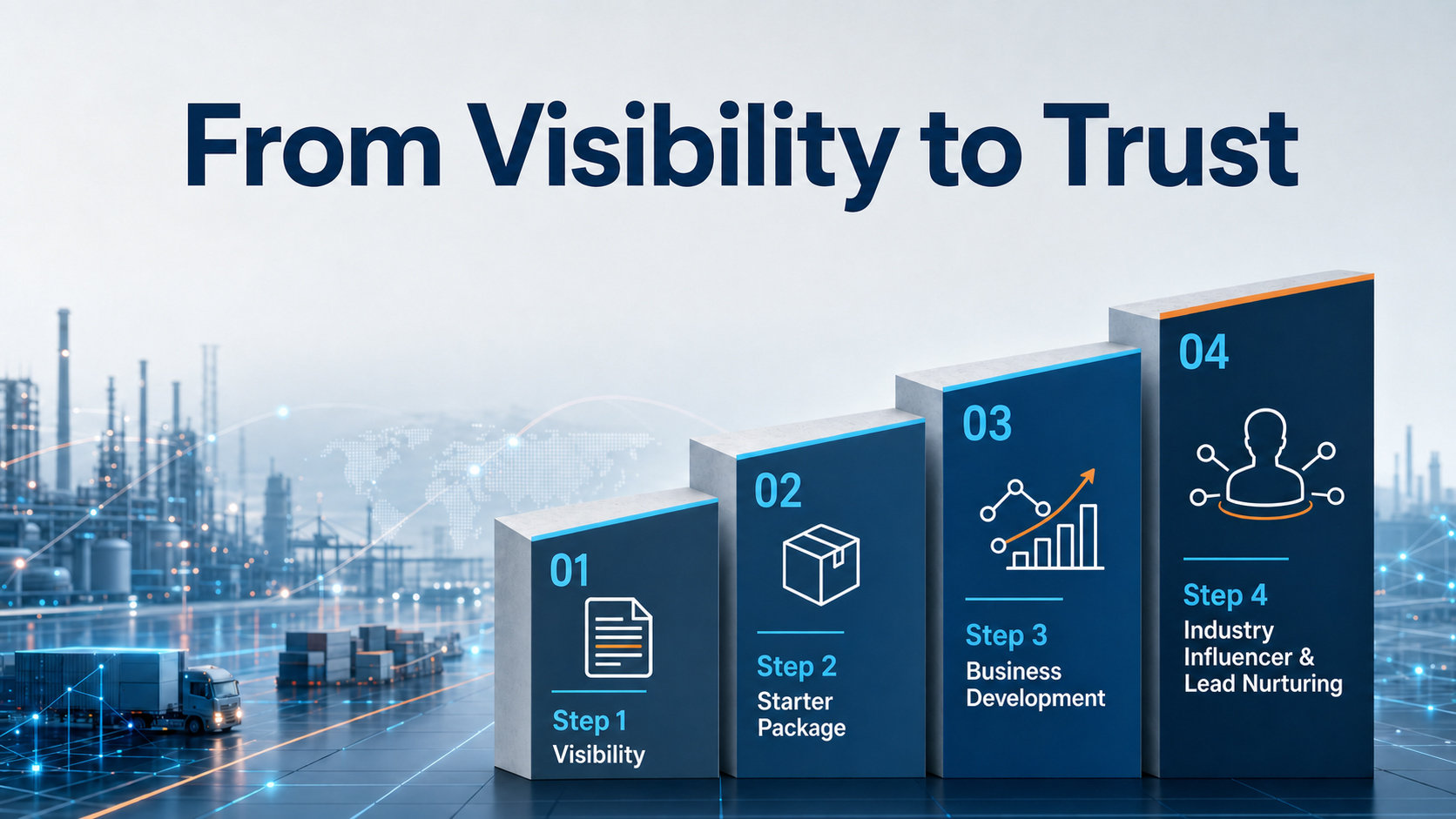
From visibility to trust: Your scalable path with Xpert.Digital - Image: Xpert.Digital
In industrial B2B, sustainable business relationships rarely emerge overnight. They develop step by step – through visibility, professional relevance, recurring touchpoints, and growing trust. Xpert.Digital's 4-stage model addresses precisely this: It offers a structured path that begins with a manageable entry point and can evolve into deeper collaboration in business development if needed.
Instead of relying on loud marketing promises, this model puts the relationship at the forefront. Companies start with clearly defined, easily calculable measures and then decide, based on their own experience, how far they want to expand the collaboration. A key factor for this undisturbed trust-building process: The platform completely avoids annoying advertising ads, so the editorial focus remains solely on the companies' expertise.
More information here:
Your global marketing and business development partner
☑️ Our business language is English or German
☑️ NEW: Correspondence in your native language!

Konrad Wolfenstein
I and my team are happy to be available to you as your personal advisor.
You can contact me by filling out the contact form here wolfenstein@xpert.digital:or simply call me at +49 7348 4088 965. My email address is
I'm looking forward to our joint project.