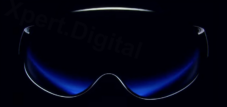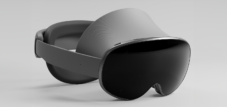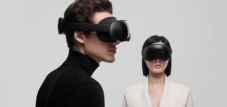
The Galaxy XR is official! Samsung's mixed-reality headset, running on Google's Android XR, starts at $1,799 – Original image: Samsung / Creative image: Xpert.Digital
Samsung's invasion into the spatial future: The Galaxy XR as a Trojan horse against the platform hegemony of Meta (Quest) and Apple (Vision Pro)
When open systems challenge closed empires – The battle for the next computing era has begun
The announcement of the Samsung Galaxy XR on October 22, 2025, marks far more than the introduction of yet another mixed-reality headset into an already fiercely competitive market. With a starting price of $1,799, the South Korean company strategically positions itself between Meta's accessible Quest ecosystem and Apple's luxury Vision Pro, but the real significance of this launch lies not in the hardware itself, but in the fundamental architecture upon which it is built. The device is the first commercial product to run on Android XR, an entirely new operating system developed by Samsung in collaboration with Google and Qualcomm. This alliance of three tech giants signals a concerted offensive against the closed ecosystems of Apple and Meta, and the choice of weapons in this battle could determine the future of spatial computing for the next decade.
The strategic significance only becomes fully apparent in the context of current market dynamics. Meta currently dominates the VR headset market with an overwhelming market share of 74.6 percent in 2024, which even climbed to 84 percent in the fourth quarter. This dominance is based on aggressive pricing and an established gaming ecosystem, but the overall market figures reveal a troubling reality: Global VR headset shipments fell by 12 percent in 2024 compared to the previous year, despite the introduction of new models such as the Quest 3S. Apple's Vision Pro, heralded with great media fanfare as a revolution in spatial computing, sold significantly less than the initial expectations of 700,000 to 800,000 units in its first year, with an estimated 420,000 to 500,000 units sold. The extended reality market is at a critical juncture where technological maturity meets a lack of mass-market interest.
Related to this:

The architecture of openness as a competitive advantage
Samsung's decision to adopt Android XR as its platform is a deliberate strategic bet that open ecosystems will play the same role in the XR space as they did in the smartphone market. The parallels are undeniable: Android captured over 70 percent of the global smartphone market by offering manufacturers and developers a level of flexibility that Apple's iOS never allowed. Fragmentation, often considered a weakness of open systems, has proven to be a strength in the long run, as it has enabled innovation at all levels and fostered price competition. Android XR promises to bring this dynamic to the world of extended reality.
The technical foundation of this strategy is OpenXR, a license-free, open standard from the Khronos Group that enables developers to create XR applications that work across a wide range of devices. Samsung emphasizes that all apps developed for Android will work immediately on the Galaxy XR, giving the device access to a vast application ecosystem right from launch. Furthermore, developers already working with Unity, OpenXR, or WebXR can easily transfer their experience to Android XR. This interoperability addresses the classic chicken-and-egg problem of new platforms: developers are hesitant to develop for platforms without users, while users avoid platforms without applications.
The economic implications of this architecture are significant. While Apple's closed visionOS ecosystem forces developers to optimize exclusively for Vision Pro, and Meta, although offering a larger ecosystem, also maintains proprietary control over it, Android XR theoretically opens the door to genuine platform competition. Samsung is just the first hardware partner; other manufacturers will follow, potentially leading to a diversification of form factors, price points, and use cases. This horizontal expansion could significantly increase the overall market size, rather than simply redistributing market share.
The economic reality of the premium segment
With a retail price of $1,799.99, the Galaxy XR positions itself in the upper mid-range of the market, significantly cheaper than the Vision Pro at $3,500, but considerably more expensive than the Quest 3S, which starts at $299. This pricing reflects a fundamental strategic decision: Samsung is not targeting mass-market adoption, but rather early adopters and professional users willing to pay a premium for superior technology.
The hardware specifications partially justify this positioning. The device uses Qualcomm's Snapdragon XR2+ Gen 2 processor, which offers a 15 percent higher GPU frequency and a 20 percent higher CPU frequency compared to the Snapdragon XR2 Gen 2, and supports displays with up to 4.3K resolution per eye at 90 frames per second. The built-in micro-OLED displays, with a resolution of 3552 x 3840 pixels per eye and a total of 27 million pixels, theoretically even surpass the pixel density of the Vision Pro. However, at 545 grams, the Galaxy XR is heavier than many competitors, and its battery life of 2.5 hours for general use is on the lower end of what is acceptable for productive work scenarios.
The real innovation lies not in the raw hardware performance, but in the integration of multimodal artificial intelligence. Google's Gemini is not an afterthought feature, but integrated into Android XR at the system level. This fundamental design decision distinguishes the Galaxy XR from competitors, where AI functions often appear as applications added on top of the platform. Gemini uses the headset's cameras and microphones to understand the user's surroundings and can respond conversationally, as if it were a companion rather than a tool.
Practical applications illustrate the potential: In Google Maps, Gemini can serve as a personal travel guide, offering recommendations for nearby places as the user navigates immersive 3D maps. When watching YouTube videos, users can ask Gemini to provide additional information about the content, enabling learning-oriented experiences. The Circle to Search function allows users to draw a circle around real-world objects with a hand gesture and instantly receive information about them. These features demonstrate how AI can fundamentally change the way we interact with spatial interfaces, moving away from explicit commands toward natural, context-aware dialogues.
The Enterprise Dimension: Where ROI becomes measurable
While consumer applications dominate the headlines, the immediate economic potential of extended reality lies in the enterprise segment. Samsung has recognized this and announced a partnership with Samsung Heavy Industries to develop virtual shipbuilding training solutions. This collaboration is more than a prestige project; it addresses concrete operational challenges in heavy industry.
Samsung Heavy Industries has been using VR technology for safety training and plan reviews since 2018 and delivered a VR crew training solution to Evergreen's headquarters in Taiwan in July 2025. The integration with Galaxy XR is intended to leverage multimodal AI, high-performance video passthrough, and real-time rendering technologies to further enhance these solutions. The economic logic is compelling: by virtually replicating the actual shipyard environment, engineers can perform design verification and maintenance simulations without needing to be physically present. This reduces travel costs, accelerates iteration cycles, and enables repeatable training in high-risk scenarios without real danger.
Empirical studies on XR in an enterprise context deliver impressive ROI figures. Research shows that companies implementing XR solutions for quality assurance can achieve return on investment rates of 300 to 400 percent within 12 months. For example, the Swedish construction company Skanska invested $75,000 in AR-supported quality assurance systems and achieved annual savings of $300,000 in rework, representing a 400 percent ROI. Remote collaboration solutions deliver similarly impressive results, with travel cost savings of over $54,000 annually and a 30 percent reduction in project delays.
Forrester's analysis of mixed reality implementation documents a three-year ROI of 177 percent for decision-makers. These figures explain why the commercial segment of the VR market grew by 14.9 percent in 2024, while consumer shipments declined. Businesses can justify the cost of XR headsets through measurable productivity gains, error reduction, and accelerated training processes, while consumers primarily base their purchasing decisions on entertainment and lifestyle factors that are difficult to quantify.
Qualcomm's partnership with Samsung to leverage Snapdragon Spaces technology aims to unlock the enterprise ISV ecosystem and provide developers with tools to build business solutions for Android XR. These collaborations bring enterprise-ready XR capabilities for advanced training, co-design of solutions, and secure remote collaboration. The fact that Samsung Heavy Industries validated the integration of its internally developed VR solution with Galaxy XR even before the official market launch indicates a high level of maturity for the platform.
The competitive landscape: Meta, Apple, and the coming consolidation
The XR market is experiencing intense competition, characterized by three fundamentally different strategic approaches. Meta pursues a strategy of volume leadership through aggressive pricing and a focus on gaming and social interaction. Apple relies on technological superiority and seamless integration into its existing ecosystem, accepting a small, high-priced market segment. Samsung and Google, with Android XR, position themselves as an open alternative that aims to combine the advantages of both approaches: access to a broad ecosystem, as with Meta, coupled with premium hardware quality, as with Apple.
Market data clearly illustrates the challenges of these strategies. Meta's overwhelming market dominance is based on over 20 million Quest headsets sold and an established gaming ecosystem, yet the company has invested billions in this market position. Meta's Reality Labs division recorded operating losses of over $15 billion in 2024, while revenue from Quest titles increased by 12 percent, reaching over $2 billion cumulatively. These figures illustrate the long-term nature of the investment: Meta is effectively subsidizing hardware to achieve ecosystem lock-in.
Apple's Vision Pro demonstrates the limitations of a premium-only strategy. Despite outstanding hardware and significant media attention, the device failed to achieve mass-market adoption. Analysts attribute this to a combination of high price, limited content offerings, and an unclear value proposition for the average consumer. Interestingly, the Vision Pro saw stronger adoption in the enterprise segment, where the price can be justified by measurable productivity gains. Reports document its use in medical surgery, product development, and architectural visualization, where the high display quality and precise hand tracking provide direct benefits.
Samsung and Google's bet on Android XR theoretically addresses the weaknesses of both competing strategies. By positioning itself between Meta and Apple in terms of price, it appeals to both price-conscious enthusiasts and quality-oriented professionals. The open platform should accelerate content development and enable hardware diversification, while the Gemini integration provides a unique value proposition. The biggest unknown remains Google's long-term commitment: The company has a reputation for prematurely ending projects, from Google Glass to Stadia to Google Plus. Developers and users will be skeptical until Android XR proves it's more than just another experimental Google project.
🗒️ Xpert.Digital: A pioneer in the field of Extended and Augmented Reality

Finding the right Metaverse agency, planning office, or consulting firm - Image: Xpert.Digital
🗒️ Finding the right Metaverse agency, planning office, or consulting firm – Search and search: Top Ten Tips for Consulting & Planning
More information here:
Galaxy XR: Samsung's bet on an open XR future
The global market context: Growth despite fragmentation
The extended reality market exhibits a fascinating dichotomy between optimistic long-term forecasts and sobering short-term realities. Various market research firms project a market size of between $25.1 billion and $86.2 billion for 2025, depending on the definition and methodology, with CAGR growth rates between 23 and 33.2 percent by 2033. These considerable discrepancies in forecasts reflect the uncertainty surrounding adoption rates and which form factors will ultimately prevail.
Geographically, North America dominates, accounting for an estimated 37 to 40 percent of the global market, driven by early technology adoption, robust technological infrastructure, and the presence of leading technology companies. However, the Asia-Pacific region shows the highest growth potential, with projected CAGRs exceeding 31 percent. China plays a particularly interesting role here: The country is developing a self-contained XR ecosystem with strong participation from major internet companies, smart device manufacturers, and emerging players. The rapid commercialization of generative AI technology in China is creating a unique foundation for AI glasses growth.
Europe is sending mixed signals: While the region is technologically advanced and has strong industrial use cases, consumer adoption is slower than in the US. Germany, France, and the UK represent the strongest European markets, with estimated combined sales exceeding three billion dollars in 2025. Regulatory frameworks, particularly data protection standards like GDPR, significantly influence product development and could make Europe a preferred test market for privacy-focused XR solutions.
Market segmentation by form factor reveals key trends. Standalone headsets, which require no external connection to PCs or smartphones, are increasingly dominating and are projected to account for 60 percent of consumer sales by 2026. Tethered headsets, which connect to powerful PCs, retain their niche for high-end gaming and professional applications. The most exciting category is AI glasses with no or minimal displays, relying on voice and audible interaction. Omdia forecasts that this market will grow from 5.1 million units in 2025 to 35 million units in 2030, driven by products such as Ray-Ban Meta glasses.
Related to this:

The Smart Glasses Dimension: Samsung's Second Frontal Attack
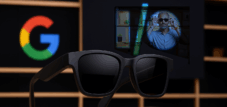
Samsung's XR strategy isn't limited to the Galaxy XR headset. At the end of its announcement event, the company hinted at partnerships with eyewear manufacturers Warby Parker and Gentle Monster to develop AI-powered smart glasses. This announcement is strategically significant because it signals that Samsung intends to cover the full spectrum of XR form factors, from immersive headsets to everyday glasses.
Ray-Ban Meta glasses have proven that a market exists for smart glasses without displays. EssilorLuxottica reported that two million units have been sold since their launch in October 2023, with revenues tripling in the first half of 2025. The company plans to increase production capacity to ten million units annually by the end of 2026. These figures demonstrate genuine consumer demand for wearables that seamlessly integrate technology into everyday accessories.
Warby Parker and Gentle Monster represent different market segments. Warby Parker, known for its direct-to-consumer model and stylish, affordable eyewear, targets a broad, mainstream market. Google is investing up to $150 million in the partnership: $75 million for product development and another $75 million as a direct equity stake. Gentle Monster, a South Korean brand known for its avant-garde design and fashion collaborations, addresses a high-fashion segment and particularly appeals to Generation Z. Google holds a four percent stake in Gentle Monster, which equates to an investment of approximately €107 million.
These partnerships signal a fundamental shift in strategy compared to previous smart glasses attempts like Google Glass. Instead of a technology-first design that ignores social acceptance, Samsung and Google prioritize design and fashion. The glasses are intended to be, first and foremost, glasses that people enjoy wearing, and only secondarily technological devices. This reversal of priorities addresses one of the fundamental barriers to adoption for previous smart glasses attempts: social stigma and a lack of aesthetic appeal.
The planned features will likely follow Ray-Ban Meta's approach: cameras for photo and video recording, open-ear speakers for audio, microphones for voice control, and Gemini integration for context-aware AI assistance. Potential additional features could include small displays for notifications and navigation, similar to Google's prototype shown at I/O 2025. Android XR integration should enable seamless connectivity with Galaxy XR headsets and other Android devices.
Market forecasts and economic implications
Samsung's economic outlook hinges on the successful execution of several parallel strategies. In the headset segment, the Galaxy XR needs to prove it's more than just another "me too" product. The combination of powerful hardware, an open platform, and deep AI integration theoretically offers a compelling value proposition, but reality shows that technological superiority alone is rarely enough. Success will depend on whether Samsung and Google can create an ecosystem of applications that leverage the unique capabilities of Android XR.
The enterprise segment offers the most likely path to early profitability. Companies have clear use cases, measurable ROI expectations, and the financial capacity to pay premium prices. Samsung's existing enterprise relationships, combined with Google's cloud and AI infrastructure, create a strong foundation for B2B adoption. The partnership with Samsung Heavy Industries is just the beginning; similar collaborations in the automotive, aerospace, healthcare, and logistics sectors are likely.
In the consumer segment, market development is more uncertain. The $1,799.99 price point rules out mass market adoption in the short term, but positions the device for enthusiasts and professionals willing to pay for quality. Samsung has proven with its Galaxy smartphone line that it can successfully market premium Android products; the question is whether this brand strength can be transferred to a new product category.
The most interesting long-term development is the potential creation of genuine ecosystem competition in the XR space. If more hardware manufacturers adopt Android XR, a dynamic similar to the smartphone market could emerge: manufacturers compete on hardware innovation and price, while the platform offers continuity and compatibility. This could accelerate innovation, lower prices, and ultimately enable mass-market adoption. The alternative is fragmentation, where each manufacturer creates subtly different implementations of Android XR, frustrating developers and weakening the ecosystem.
Technological convergence and societal implications
The integration of extended reality, artificial intelligence, and spatial computing represents more than a technological evolution; it could fundamentally change how people interact with digital information. The traditional computing paradigm is based on flat displays and explicit input methods: mouse, keyboard, touchscreen. Spatial computing with AI integration promises a more natural interface where speech, gaze, and gestures become the primary modes of interaction.
The potential productivity gains are substantial. Studies on spatial computing in the workplace document that users benefit from virtually unlimited virtual monitors and the ability to organize information three-dimensionally. SAP research on Vision Pro shows that immersive environments enable employees to minimize distractions and switch more quickly between different tasks. The ability to manipulate digital twins of physical systems allows for more intuitive system analysis and collaborative design review.
At the same time, significant societal concerns exist. Data privacy issues are particularly acute with devices that continuously record and analyze the user's environment. The integration of AI exacerbates these concerns: if Gemini sees what the user sees and hears what the user hears, new dimensions of data collection and potential misuse emerge. European regulators will undoubtedly conduct thorough scrutiny, and the GDPR could impose restrictions on certain functions.
Social acceptance remains an open question. While AR glasses without displays, such as the Ray-Ban Meta, are gaining increasing social acceptance, full-featured headsets continue to elicit mixed reactions. The idea of people being completely immersed in virtual worlds in shared physical spaces provokes unease about social isolation and a loss of touch with reality. These concerns are not trivial; they reflect fundamental questions about the role of technology in human relationships.
The health effects of long-term XR use are not yet fully understood. Eye strain, neck and head pain have been reported by early Vision Pro users. Ergonomically optimizing XR devices for several hours of daily use remains a challenge. Samsung's design choices, such as separate batteries, removable light shields, and ergonomic weight distribution, partially address these concerns, but two to three hours of battery life still limits long-term use.
The strategic horizon: What comes after Galaxy XR
Samsung's XR offensive is part of a broader transformation of the computing landscape. The company is not only positioning itself in the headset market, but is creating a cohesive ecosystem of connected devices: smartphones, tablets, wearables, smart glasses, and XR headsets, all integrated through Android and enhanced by AI. This multi-device strategy reflects the belief that the future of computing is not dominated by a single form factor, but by seamless interaction between different devices, depending on the context and task.
Google's role in this strategy is central. As the developer of Android XR and Gemini, Google controls the platform intelligence, while Samsung and other manufacturers provide hardware innovation. This division of labor could be very effective, but it also carries risks. If Google shifts strategic priorities or reduces its commitment to Android XR, hardware partners would be at risk. The long-term stability of this partnership will be critical to the success of the ecosystem.
Qualcomm's position as a silicon supplier gives the company significant influence over development direction. The Snapdragon XR roadmap determines which features future devices will be able to support. Qualcomm's focus on AI acceleration, lower latency, and higher resolutions aligns the industry with specific application scenarios. The collaboration between Qualcomm, Google, and Samsung in defining Android XR demonstrates a high degree of strategic coordination, which is rare in the technology industry.
The next phase of development will likely prioritize miniaturization and improved energy efficiency. The ultimate goal remains the vision of wearable AR glasses with all-day battery life and form factors indistinguishable from regular glasses. The technological hurdles are considerable: displays must become brighter and more energy-efficient, processors more powerful with drastically reduced power consumption, and optical systems thin enough to fit into standard eyeglass frames. Micro-LED displays, neuromorphic processors, and advanced photonics will likely be key technologies in this evolution.
Conclusion: The bet on an open future
Samsung, Google, and Qualcomm's joint offensive with Galaxy XR and Android XR represents a fundamental bet that the future of spatial computing will be open, diverse, and AI-powered. This vision stands in direct contrast to Apple's vertical integration and Meta's proprietary ecosystem. The history of the technology industry offers examples of both approaches succeeding: Apple's closed iPhone ecosystem coexists with Android's open smartphone market; Windows dominated PCs through openness, while Apple's Mac maintained a profitable niche.
Whether Android XR will play the same role in the XR market as Android did in the smartphone market depends on execution on several levels. Samsung must deliver hardware that is technically competitive and appealing to the target audience. Google must prove that Gemini integration delivers real added value beyond gimmicks. Developers need to be convinced to build for Android XR, which requires clear business models and development tools. Most importantly, the ecosystem must generate applications that people actually want to use, that solve real problems, or that open up new possibilities.
The launch of the Galaxy XR on October 22, 2025, is not the end of a development, but the beginning of a long competition that will define the next era of computing. The next 18 to 24 months will show whether Samsung's vision of an open, AI-powered XR future becomes reality, or whether market dynamics develop that favor closed ecosystems or entirely different form factors. For investors, developers, and companies, the message is clear: The battle for spatial computing has only just begun, and the lines have been drawn between openness and control, between hardware diversity and ecosystem integration, between today's feasible technology and the vision of a fully augmented reality.
Your global marketing and business development partner
☑️ Our business language is English or German
☑️ NEW: Correspondence in your native language!

Konrad Wolfenstein
I and my team are happy to be available to you as your personal advisor.
You can contact me by filling out the contact form here wolfenstein@xpert.digital:or simply call me at +49 7348 4088 965. My email address is
I'm looking forward to our joint project.
☑️ SME support in strategy, consulting, planning and implementation
☑️ Creation or realignment of the digital strategy and digitization
☑️ Expansion and optimization of international sales processes
☑️ Global & Digital B2B trading platforms
☑️ Pioneer Business Development / Marketing / PR / Trade Fairs
🎯🎯🎯 Benefit from Xpert.Digital's extensive, five-fold expertise in one comprehensive service package | BD, R&D, XR, PR & Digital Visibility Optimization

Benefit from Xpert.Digital's extensive, five-fold expertise in a comprehensive service package | R&D, XR, PR & Digital Visibility Optimization - Image: Xpert.Digital
Xpert.Digital possesses in-depth knowledge across various industries. This allows us to develop tailored strategies precisely aligned with the requirements and challenges of your specific market segment. By continuously analyzing market trends and monitoring industry developments, we can act proactively and offer innovative solutions. The combination of experience and expertise generates added value and provides our clients with a decisive competitive advantage.
More information here: