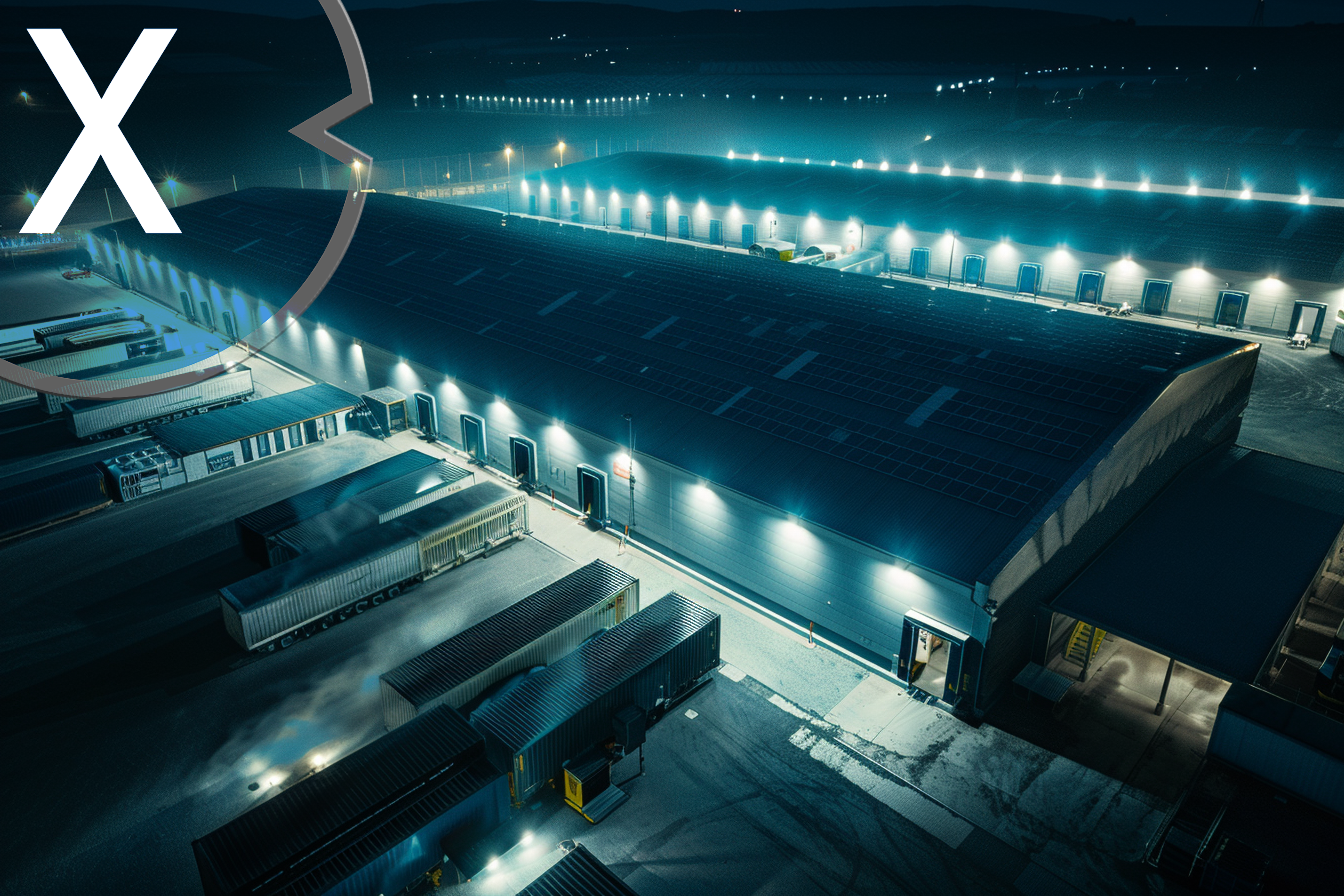
The energy concept forms the basis for the fresh produce storage/fresh produce warehouse and cold storage – Image: Xpert.Digital
❄️🌿 The energy concept as the basis for the construction and operation of cold storage and fresh food warehouses
🌡️🏭 Energy optimization in fresh and cold storage facilities: Sustainable energy solutions for warehouse cooling
The planning and operation of refrigerated and fresh food storage facilities place high demands on the energy concept. In these specialized warehouses, where temperature-sensitive goods are stored, precise control of energy flows is essential. This involves not only maintaining the required cooling capacity but also minimizing energy losses and ensuring efficient operation. A well-designed energy concept thus forms the basis for sustainable and economical fresh food and refrigerated logistics. It helps to reduce operating costs, minimize environmental impact, and simultaneously guarantee product quality.
As part of the planning process for a refrigerated or fresh produce warehouse, an analysis is conducted to identify areas of energy loss, potential heat ingress into the building, and untapped energy potential. Based on this analysis, measures are developed to address these potential weaknesses and ensure efficient energy use.
🔍 Focus on energy criteria
When planning an energy-efficient cold storage facility, several energy-related criteria play a central role. These are closely interrelated and influence both the operating costs and the environmental impact of the facility. Key factors include electricity consumption, transmission load, heat input, and the CO2 footprint.
electricity consumption
More than 70% of a cold storage facility's total energy consumption is attributable to the cooling process itself. This is in addition to energy used for lighting, office use, and the operation of equipment. Due to this high proportion, it is crucial to minimize electricity consumption through appropriate measures. The use of modern building technology and structural modifications can unlock significant savings potential. For example, the use of LED lighting systems, the integration of motion detectors, and the increased use of energy-efficient appliances can considerably reduce overall electricity consumption. Another option is the use of renewable energy sources, such as photovoltaic systems, which can supply the facility with some or even all of its own electricity.
Transmission load
The so-called transmission load describes the energy losses that occur through structural weaknesses such as joints, connections, walls, the roof, or the floor. Cold air can escape from the storage area through these points, while heat penetrates from the outside. Therefore, it is particularly important to ensure high-quality insulation and sealing in cold storage facilities. Modern, prefabricated building components offer a significant advantage here. These components are specifically designed for use in cold storage facilities and minimize transmission losses from the outset. Even in the planning phase, architects and engineers must ensure that all connection points and transitions are optimally insulated to prevent unnecessary energy losses.
Heat input
Heat input into a cold storage facility can be caused by various factors. People in the facility contribute body heat. Lighting and the goods stored within can also release additional heat. Furthermore, machinery and equipment operating in the cold storage facility contribute to the warming of the environment. To minimize heat input, thoughtful space and usage planning is essential. High-traffic areas where people and machines are working should be separated from the most sensitive storage areas as much as possible. The choice of lighting can also play a role: Energy-saving LED lights have the advantage of emitting significantly less heat compared to conventional incandescent or halogen lamps.
CO2 footprint
In times of climate change and stricter environmental regulations, the carbon footprint of cold storage facilities is playing an increasingly important role. To actively contribute to CO2 reduction, it is advisable to use environmentally friendly technologies. This includes the use of refrigeration systems with natural refrigerants, which are significantly more climate-friendly than synthetic refrigerants. Furthermore, the waste heat generated during refrigeration can be put to good use. This waste heat can be used, for example, to heat office spaces or other processes that require heat. Integrating a photovoltaic system on the roof of the cold storage facility can also significantly reduce the carbon footprint by allowing the facility to generate some of its own electricity.
🏗️ Structural measures to improve energy efficiency
A key aspect of the energy-efficient operation of a cold storage facility is structural measures that reduce energy consumption from the outset. This primarily involves choosing the right building materials. Insulated panels with a high thermal insulation value should be used for walls, roofs, and floors. These materials prevent heat from penetrating the building from the outside and cold from escaping. Another important point is the sealing of joints and connections. Special sealants can be used here to ensure a complete seal. Automatic door systems that only open when absolutely necessary also help to minimize energy loss.
Efficient space planning is also crucial. The refrigerated area should be designed so that warm zones with high foot traffic are separated from areas where goods are stored at low temperatures. This separation significantly reduces energy consumption, as less cold air is lost and the refrigeration systems don't have to work as hard.
🌐 Technological innovations for greater sustainability
In addition to structural measures, numerous technological innovations help reduce energy consumption in cold storage facilities. For example, modern refrigeration systems that use natural refrigerants such as ammonia or carbon dioxide are particularly efficient and environmentally friendly. Compared to conventional refrigerants, these refrigerants have a significantly lower greenhouse effect and thus actively contribute to reducing CO2 emissions.
Digitalization is playing an increasingly important role in fresh produce and refrigerated logistics. Smart control systems make it possible to monitor and optimize the energy consumption of cold storage facilities in real time. Sensors allow the temperature in different areas of the facility to be precisely measured and adjusted as needed. The electricity consumption of the refrigeration systems can also be optimized in this way. Through the use of machine learning and artificial intelligence, these systems can also learn when and where energy consumption is highest and make corresponding adjustments to reduce overall energy consumption.
👷♀️ The role of employees in energy management
In addition to technological and structural measures, employees in refrigerated or fresh food storage facilities also play a crucial role in energy management. A conscious approach to resources can significantly contribute to reducing energy consumption. For example, employees should be trained to open the doors of cold storage rooms as infrequently and briefly as possible to minimize heat loss. The economical use of lighting and machinery can also positively impact energy consumption. Regular training and awareness campaigns can raise employee awareness of energy conservation.
📝 Energy concept for fresh and cold storage
An efficient energy concept is essential for the operation of fresh and refrigerated warehouses. A combination of structural measures, technological innovations, and conscious energy management can significantly reduce energy consumption and minimize the carbon footprint. This not only helps lower operating costs but also makes a significant contribution to environmental protection. Companies that invest in these technologies and concepts are better positioned in the long term and can design their warehouse logistics sustainably and efficiently.
📣 Similar topics
- ❄️ Energy efficiency for refrigerated and fresh food storage
- ⚡️ Reducing electricity consumption: Strategies and measures
- 🧊 Minimize transmission losses: Insulation and sealing
- 🌡️ Controlling heat gain: Optimal room planning
- 🌍 Reduce your carbon footprint: Sustainable technologies
- 🏗️ Structural innovations for optimal energy efficiency
- 💡 Technological advances for sustainable logistics
- 👷♂️ The important role of employees in energy management
- 🔍 Analysis and planning: Identifying and eliminating energy losses
- 📈 The future of refrigeration technology: Digital and efficient
#️⃣ Hashtags: #EnergyEfficiency #ColdWarehouses #Sustainability #CO2Reduction #Innovations
Expert partner in warehouse planning and construction

We are here for you - Consulting - Planning - Implementation - Project Management
☑️ Smart City & Factory: Industry expert for energy-efficient 5G buildings and halls, as well as consulting and installation of solar systems
☑️ Xpert.Plus - Logistics consulting and logistics optimization
☑️ Industry expert, here with his own Xpert.Digital industry hub with over 2,500 specialist articles

Konrad Wolfenstein
I would be happy to serve as your personal advisor.
You can contact me by filling out the contact form below or simply call me on +49 7348 4088 965 .
I'm looking forward to our joint project.
Write to me



Xpert.Digital - Konrad Wolfenstein
Xpert.Digital is a hub for industry focusing on digitalization, mechanical engineering, logistics/intralogistics and photovoltaics.
With our 360° Business Development solution, we support renowned companies from new business to after-sales.
Market intelligence, smarketing, marketing automation, content development, PR, mail campaigns, personalized social media and lead nurturing are part of our digital tools.
You can find more information at: www.xpert.digital - www.xpert.solar - www.xpert.plus
Keep in touch