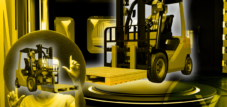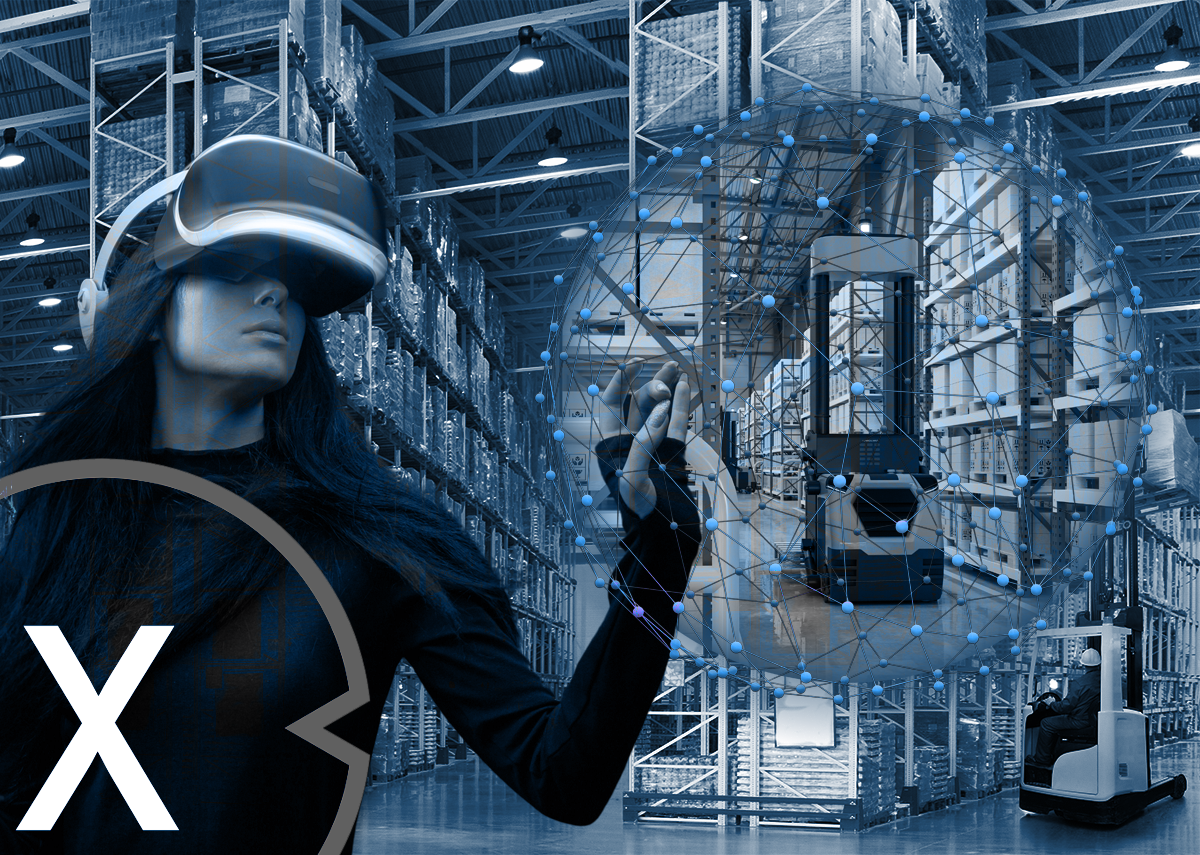
Narrow aisle forklifts and reach trucks in the Metaverse – Image: Xpert.Digital
Forklift Metaverse: Professional solutions for tight warehouses - narrow aisle forklifts and reach trucks
In today's digital age, finding innovative ways to effectively present products and solutions is crucial. One revolutionary method that enables this is the use of a Forklift Metaverse. This technology allows companies to showcase their entire product range at trade fairs, events, or on-site with customers, whether through a purely virtual product presentation or integration into the physical world via augmented reality.
For companies specializing in professional solutions for tight warehouse spaces, such as narrow-aisle forklifts and reach trucks, the Forklift Metaverse opens up entirely new possibilities. Instead of simply presenting photos or videos of the forklifts, customers can now experience an immersive and interactive experience.
In a purely virtual product presentation, the Forklift Metaverse allows customers to view the forklift models from every angle. They can use the detailed 3D view to get a precise picture of the machines and better understand their features and functions. Using simulations, customers can even run through various scenarios to see how the forklifts would perform in their warehouse or production environment. These virtual experiences give customers the opportunity to better assess the performance of the narrow-aisle and reach trucks and make informed purchasing decisions.
The Forklift Metaverse goes a step further by merging the physical and virtual worlds. Using augmented reality, customers can see the forklift models in their own environment. They can project virtual forklifts into their warehouse using their smartphones or AR glasses and view them from different angles. This allows them to visualize the size, proportions, and fit of the forklifts in their actual workspace and verify whether the machines fit into their warehouse racking and meet space requirements. Furthermore, augmented reality allows customers to interactively control the forklifts and test various functions to get a feel for their operation.
The Forklift Metaverse offers an impressive and effective way to showcase tight-space storage solutions such as narrow-aisle forklifts and reach trucks. By combining virtual presentations and augmented reality, customers can gain a comprehensive understanding of the forklifts' performance, features, and fit. This immersive and interactive experience helps customers make informed decisions and select the right warehouse solutions for their specific needs.
➡️ The Forklift Metaverse opens up new horizons for companies offering professional solutions for tight storage spaces. By utilizing this innovative technology, they can showcase their products in a unique way and offer customers an impressive experience. The Forklift Metaverse thus represents an important step towards the digital transformation of
Our Industrial Metaverse Configurator
Simply try out our universally applicable (B2B/Business/Industrial) Metaverse Configurator for all CAD / 3D demo options:
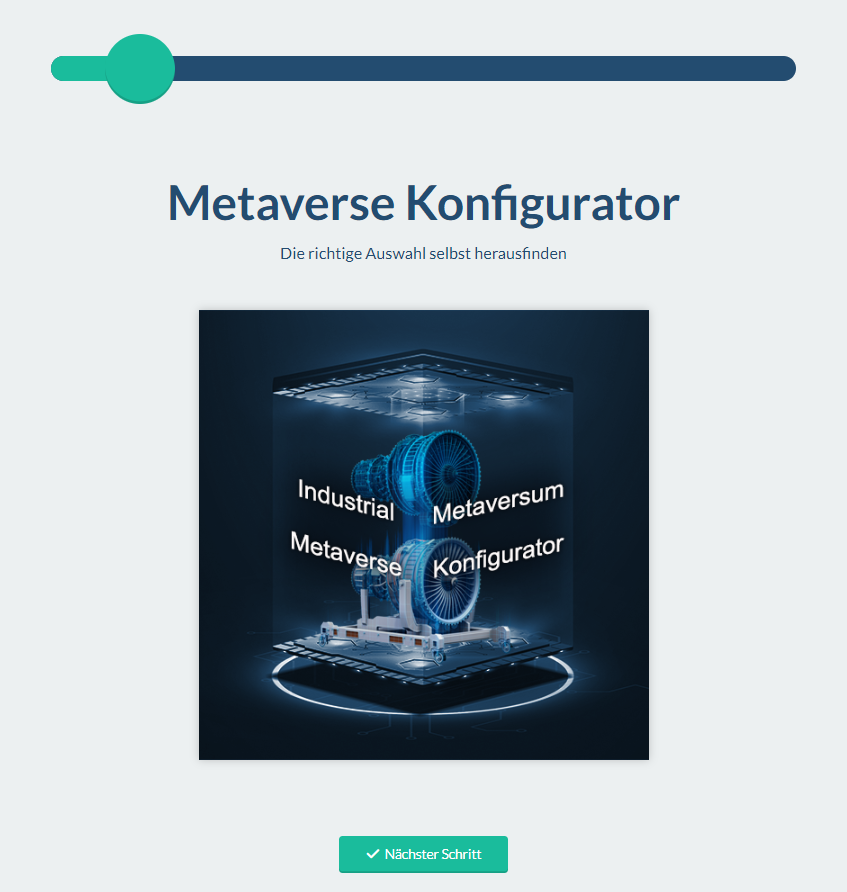

Xpert (B2B/Business/Industrial) Metaverse Configurator for all CAD / 3D data, usable on all end devices, one platform!
Related to this:
Professional solutions for tight warehouses: narrow aisle forklifts and reach trucks
In the world of warehouse logistics and material handling, efficient and space-saving solutions play a crucial role. For companies with limited storage space, narrow-aisle forklifts and reach trucks are indispensable pieces of equipment. These specially designed forklifts offer a multitude of advantages, enabling companies to optimize the use of available space while simultaneously increasing productivity.
The narrow aisle forklift, also known as a narrow aisle forklift, is particularly suitable for warehouses with limited space due to its narrow width. These forklifts are specifically designed to maneuver in narrow aisles that are normally inaccessible to conventional forklifts. Narrow aisle forklifts are typically equipped with telescopic forks, allowing the operator to lift loads to greater heights. This maximizes vertical space utilization and enables efficient storage.
Another important advantage of narrow-aisle forklifts is that they are often equipped with advanced navigation systems. These systems can monitor the forklift's position in real time and precisely control its movements. Some advanced narrow-aisle forklifts, for example, use laser scanners or induction loops to automatically guide the forklift along the aisle and avoid potential collisions. This not only increases safety in the warehouse but also optimizes workflows, as the forklift operator can concentrate on loading and unloading goods.
Reach trucks are another popular option for tight warehouse spaces. Unlike narrow-aisle forklifts, which operate in narrow aisles, reach trucks are used for high racking where pallets are stored at great heights. These forklifts are equipped with special booms, called reach masts, that can safely grip and lift loads. The reach truck allows operators to transport goods to greater heights without compromising stability.
Some modern reach trucks have intelligent features such as height measuring systems that automatically detect the height of the racks and adjust the reach accordingly. This contributes to efficient and safe handling of loads and reduces the risk of collisions with racks or obstacles.
Both narrow-aisle forklifts and reach trucks offer advantages such as improved space utilization, increased productivity, and enhanced efficiency in confined warehouse environments. The choice between the two depends on the specific requirements of the business. Factors such as warehouse space, shelf height, required load capacity, and specific product requirements should be considered when making this decision.
Narrow aisle forklifts and reach trucks are valuable investments for companies looking to maximize their storage capacity and optimize their warehousing processes. By using these professional solutions, companies can increase efficiency, reduce costs, and remain competitive by making optimal use of their limited storage space.
Top Ten: The ten best-known manufacturers and companies of narrow aisle forklifts and reach trucks
Please note that the ranking and details may change over time as the manufacturing landscape and technological developments evolve.
Crown Equipment Corporation
Crown is a leading global manufacturer of narrow aisle and reach trucks. The company is known for its innovative technologies and ergonomic designs.
Jungheinrich AG
Jungheinrich is a renowned manufacturer of material handling technology and offers a wide range of narrow-aisle and reach trucks. The company places great emphasis on efficiency and sustainability.
Toyota Material Handling Group
As part of the Toyota Group, Toyota Material Handling is one of the world's largest manufacturers of forklift trucks. They offer a wide range of narrow aisle and reach trucks, known for their quality and reliability.
KION Group AG
The KION Group is an international manufacturer of industrial trucks and offers a wide range of narrow-aisle and reach trucks under its brands such as Linde and STILL. The company is distinguished by its advanced technologies.
Hyster-Yale Materials Handling, Inc.
Hyster-Yale is a global provider of material handling solutions and manufactures high-quality narrow aisle and reach trucks. The company is known for its robust machines, which are suitable for demanding applications.
Mitsubishi Logisnext Co., Ltd.
Mitsubishi Logisnext is a leading manufacturer of forklift trucks, offering a wide range of narrow aisle and reach trucks. They are known for their advanced technology and reliability.
Clark Material Handling Company
Clark is an established manufacturer of forklift trucks and also offers a range of narrow-aisle and reach trucks. The company is known for its robust and durable machines.
Combilift Ltd.
Combilift specializes in the development of multi-directional forklifts and also offers narrow-aisle and reach trucks. Their machines are characterized by their versatility and flexibility.
UniCarriers Corporation
UniCarriers is a global manufacturer of forklifts, offering a wide range of narrow-aisle and reach trucks. The company is known for its high quality and advanced technology.
Doosan Industrial Vehicle Co., Ltd.
Doosan is a manufacturer of material handling equipment and also produces narrow aisle forklifts and reach trucks. The company places great emphasis on performance, safety, and user-friendliness.
Narrow aisle forklifts and reach trucks - The differences
Narrow aisle forklifts and reach trucks are both types of forklifts used in warehouses and logistics centers to facilitate material handling and storage. Although they perform similar tasks, there are some important differences between the two.
A narrow-aisle forklift, as the name suggests, is specifically designed for use in narrow aisles. These forklifts are typically narrower than conventional forklifts and can operate in aisles as narrow as 1.6 to 2.5 meters. They are distinguished by their ability to move sideways or turn on their own axis to navigate tight curves. This allows them to utilize available space more efficiently and maximize storage capacity. Narrow-aisle forklifts are often used in high-bay warehouses, where vertical space must be optimally utilized.
In contrast, a reach truck is not designed for use in narrow aisles. It is better suited for warehouses with wider aisles. Reach trucks are wider than narrow-aisle forklifts and therefore require aisles with a minimum width of approximately 3.5 meters. They feature a unique telescopic mast design that allows them to push loads far into or out of racks. This makes them ideal for stacking goods at great heights. Reach trucks are often equipped with additional features such as sideshifters or rotating forks to facilitate load maneuvering.
Another difference between the two types lies in their lifting capacity. Reach trucks are generally able to lift heavier loads than narrow aisle forklifts. This is because reach trucks often have more robust masts and a greater lifting height to allow stacking pallets on higher racks. Narrow aisle forklifts, on the other hand, are typically designed for lighter loads due to their narrower design and specialized lateral movement capabilities.
In terms of maneuverability, narrow-aisle forklifts are often somewhat more agile than reach trucks due to their lateral mobility. They can maneuver in tight turns and move precisely in narrow aisles. Reach trucks, on the other hand, can be somewhat less maneuverable due to their greater width and longer wheelbase.
It is important to note that both narrow-aisle forklifts and reach trucks are specifically designed for use in warehouse environments and require certain safety precautions. Operators of these types of forklifts must have specialized training and certifications to ensure workplace safety.
Narrow aisle forklifts and reach trucks are essential tools for the efficient operation of warehouses and logistics centers. While narrow aisle forklifts are optimized for use in narrow aisles and save space, reach trucks offer greater lifting capacity and allow goods to be stacked to greater heights. The choice between the two depends on the specific requirements of the warehouse and the type of loads to be transported.
The fully automated alternative?
In fully automated high-bay warehouses, so-called "automated storage and retrieval systems" (ASRS) represent the counterpart to narrow-aisle forklifts and reach trucks. These systems are revolutionizing the warehousing industry by offering an efficient and fully automated solution for storing and retrieving goods in high-bay warehouses.
The "automated storage and retrieval system" is referred to in German as "automatisches Lager- und Entnahmesystem". The abbreviation "AS/RS" is also frequently used, which translates to "automatisches Lager- und Versorgungssystem" in German.
ASRS systems consist of a combination of automated storage and retrieval machines (AS/RS) and a computer-controlled warehouse management system (WMS). Unlike conventional manual forklifts or semi-automated narrow-aisle forklifts, ASRS systems can be operated almost without human intervention.
An automated storage and retrieval system (AS/RS) is a specially designed device capable of retrieving pallets or containers from the shelves and transporting them to the correct storage location. These devices are equipped with sophisticated sensors and grippers to handle goods safely and efficiently. They are able to move precisely in the narrow aisles between the shelves, thus making optimal use of the available space.
The warehouse management system (WMS) controls and coordinates all warehouse operations. It manages information about inventory levels, the location of goods, and incoming orders. The system calculates optimal storage placement, plans processes, and assigns orders to the storage and retrieval machines (SRMs) for putaway and retrieval. This maximizes storage capacity and minimizes throughput times.
A key advantage of ASRS systems is their high speed and accuracy. Because they are fully automated, they operate around the clock without interruption and can process large quantities of goods quickly and precisely. This leads to increased efficiency, faster order processing, and optimized warehouse space utilization.
Furthermore, ASRS systems offer enhanced safety and reduce the risk of accidents caused by human error. The advanced sensors and safety features of the RBGs minimize potential collisions and ensure smooth operation.
It's worth noting that ASRS systems are available in various configurations to meet the specific needs of businesses. For example, some systems are designed for pallet storage, while others are optimized for handling containers or small parts. Selecting the right ASRS system depends on factors such as storage capacity, product types, and throughput requirements.
➡️ ASRS systems represent the ultimate counterpart to narrow-aisle and reach trucks in fully automated high-bay warehouses. They offer an efficient, precise, and safe solution for the storage and retrieval of goods and are a key element for the modernization and optimization of warehouse logistics in today's industry.
What are the advantages of narrow aisle forklifts and reach trucks compared to automated storage and retrieval systems (AS/RS)?
Narrow aisle forklifts and reach trucks offer several advantages compared to automated storage and retrieval systems (AS/RS):
flexibility
Narrow aisle forklifts and reach trucks can be used in various areas and warehouse environments because they are not tied to specific rail systems or other infrastructure requirements. They can also be used in existing warehouse facilities with conventional racking systems.
Cost efficiency
Compared to automated storage and retrieval systems, narrow-aisle and reach trucks are generally less expensive to purchase and install. They require less complex infrastructure and can be implemented more quickly.
adaptability
Narrow aisle forklifts and reach trucks can be flexibly adapted to changing warehouse requirements. They can be used in various areas and are capable of moving different types of loads.
Human interaction
Unlike automated storage and retrieval systems, narrow-aisle and reach trucks require an operator. This allows for human interaction and flexibility when handling special requirements, unusual loads, or unforeseen situations.
Space saving
Narrow aisle forklifts and reach trucks are able to maneuver in narrow aisles and therefore require less space in the warehouse. This allows for better use of available storage space and increases storage capacity.
➡️ However, it's important to note that automated storage and retrieval systems (AS/RS) also have their own advantages. They are generally faster and more efficient at performing repetitive tasks, especially in large, high-throughput warehouses. Using AS/RS can reduce labor costs and enable continuous 24/7 operation. The choice between narrow-aisle forklifts, reach trucks, and automated storage and retrieval systems depends on the specific requirements, budget, and objectives of the warehouse operation.
B2B Business Metaverse in Intralogistics - New Innovations, New Opportunities
Intralogistics has undergone tremendous technological advancements in recent years, enabling companies to streamline their operations and enhance their competitiveness. One of the most promising developments in this field is the use of digital twins in conjunction with the B2B business metaverse and a wide range of XR technologies, including extended reality, mixed reality, augmented reality, and virtual reality. Combined with the use of 2D matrix codes and virtual showrooms, this opens up numerous opportunities and advantages for the intralogistics industry.
A digital twin is a virtual representation of a real-world object or process. In intralogistics, digital twins can be used to create virtual models of warehouses, factories, or logistics operations. These virtual models provide detailed information and enable companies to analyze, simulate, and optimize their intralogistics processes. By using digital twins, companies can improve efficiency, identify bottlenecks, and resolve them before they actually occur.
The B2B Business Metaverse is another important aspect of this development. It is a virtual environment where companies can interact with each other. Within the B2B Business Metaverse, companies can present their digital twins, exchange information, and conduct business. This opens up new opportunities for collaboration between companies and facilitates the exchange of information and resources in intralogistics.
XR technologies, which include Extended Reality, Mixed Reality, Augmented Reality, and Virtual Reality, also play a crucial role. Extended Reality refers to all forms of reality enhancement, including Virtual Reality (VR), Augmented Reality (AR), and Mixed Reality (MR). These technologies allow users to immerse themselves in a virtual environment or overlay digital information onto their real-world surroundings. In intralogistics, XR technologies can be used to support work processes, improve training, and increase efficiency. For example, augmented reality applications can display important information about products, storage locations, and orders directly in the user's field of vision, accelerating picking and shipping processes and reducing errors.
Another important aspect is the use of 2D matrix codes, such as QR codes, in conjunction with XR technologies. These codes can be affixed to products, shelves, or other logistical elements and serve as identification features. By scanning the codes with a mobile device or special glasses, users can access additional information, instructions, or interactive elements. This allows, for example, warehouse workers to quickly and easily retrieve detailed information about a product or its storage location.
Virtual showrooms represent another exciting application. These are virtual environments where companies can showcase their products. Customers can visit these virtual showrooms and view products in a realistic setting. By using XR technologies, customers can virtually customize products, test different variations, and get a clear picture of their potential purchase. This allows companies to effectively present their product range and offer customers an immersive shopping experience.
➡️ The combination of all these technologies opens up numerous opportunities for the intralogistics industry. Companies can optimize their logistics processes, increase efficiency, reduce errors, and improve collaboration with other companies. By using digital twins in conjunction with the B2B business metaverse and XR technologies, companies can take their intralogistics processes to a new level and gain a competitive edge. These technologies are expected to continue to develop and become more widespread in the coming years, and companies should engage with them early on to leverage the many benefits they offer.

Xpert.Plus – industry expert, here with its own 'Xpert.Digital Industry Hub' in the field of mechanical engineering with over 1,000 specialist articles.
Xpert.Plus is a project by Xpert.Digital. We have many years of experience in supporting and consulting on warehouse solutions and in warehouse optimization, which we combine under Xpert.Plus in a large network.

Konrad Wolfenstein
I would be happy to serve as your personal advisor.
You can contact me by filling out the contact form below or simply call me on +49 7348 4088 965 (Munich) .
I'm looking forward to our joint project.
Write to me


Xpert.Digital – Konrad Wolfenstein
Xpert.Digital is a hub for industry focusing on digitalization, mechanical engineering, logistics/intralogistics and photovoltaics.
With our 360° Business Development solution, we support renowned companies from new business to after-sales.
Market intelligence, smarketing, marketing automation, content development, PR, mail campaigns, personalized social media and lead nurturing are part of our digital tools.
You can find more information at: www.xpert.digital – www.xpert.solar – www.xpert.plus
Keep in touch