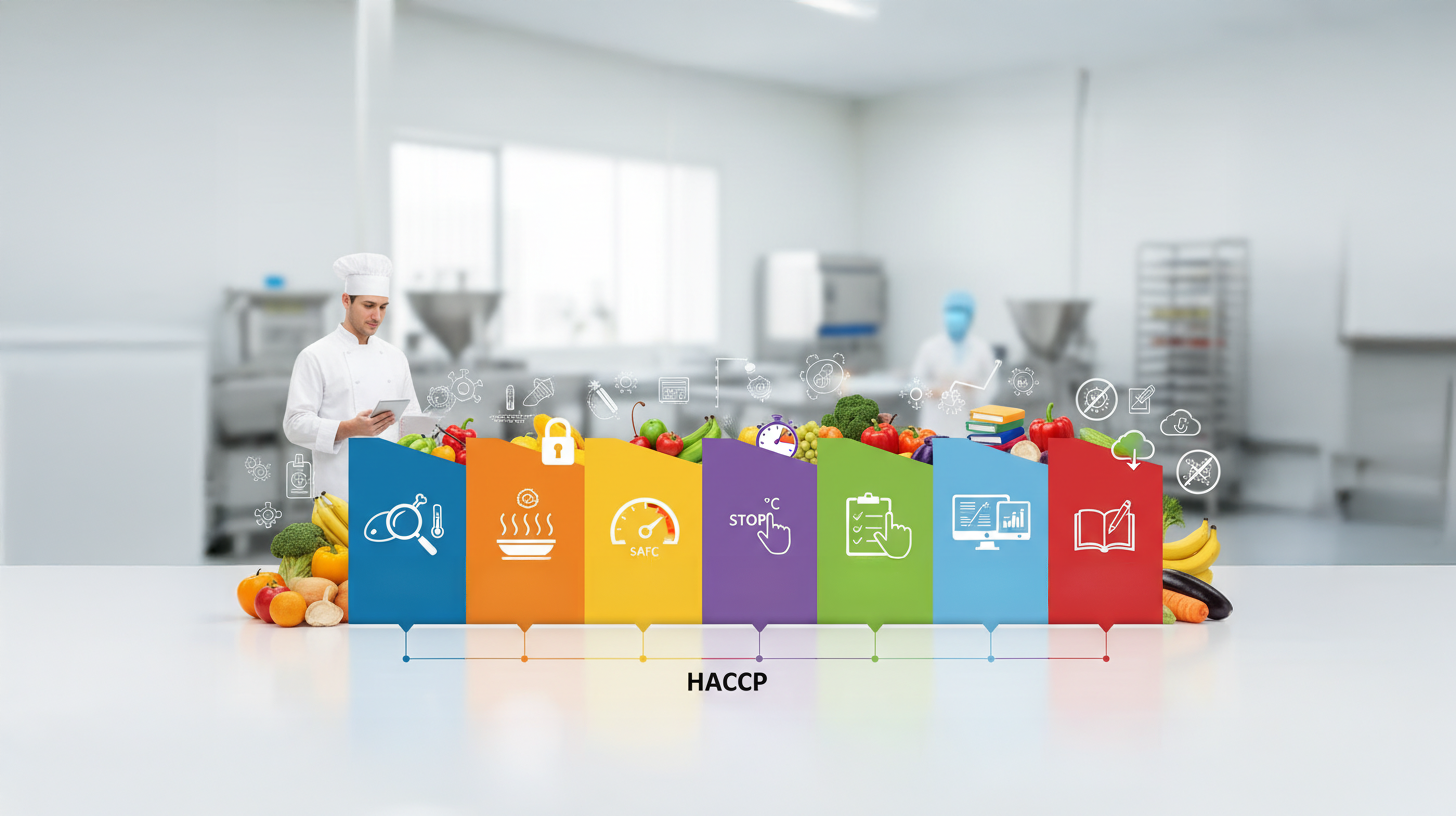
The HACCP concept: 7 steps to absolutely safe food – Comprehensive questions and answers on food safety – Image: Xpert.Digital
From NASA to your kitchen: The surprising story of the HACCP concept
### HACCP Obligation for Restaurants & Co.: Are You Really on the Safe Side? ### Critical Control Points: Do You Recognize the True Risks in Your Business? ### More Than Just a Regulation: How HACCP Can Save Costs and Avoid Scandals ###
What is the HACCP concept?
The HACCP concept stands for Hazard Analysis and Critical Control Points. It is a systematic, preventative system for ensuring food safety, aiming to identify, assess, and control potential hazards at all stages of food production, processing, and distribution.
The HACCP system is based on scientific principles and risk analyses and primarily serves to protect consumers from foodborne health risks. Unlike conventional inspection methods, which focus on testing finished products, HACCP shifts the focus to proactive prevention through the systematic control of all production steps.
How did the HACCP concept originate historically?
The history of the HACCP concept dates back to the era of space exploration. In 1959, NASA commissioned the American company The Pillsbury Company to develop 100% safe space food for astronauts. The error prevention concepts at that time originated from mechanical engineering and were unsuitable for food production.
Pillsbury applied the FMEA methodology, originally developed by the US military for technical applications in 1949, to the food industry and, together with NASA, developed a preventative concept that was made transparent and comprehensible through very precise documentation. Initially, identifying hazards and assessing their risks proved difficult due to a lack of experience.
The program only received its current name, HACCP, in 1971. During the 1970s and 1980s, various national and international organizations, including the World Health Organization (WHO), became aware of the new HACCP concept. The concept was continuously developed – from an initial three principles to six, and later to seven.
The WHO's Codex Alimentarius Commission adopted the seven principles and has recommended the application of the HACCP concept since 1993. Many countries and communities of states have now enshrined the HACCP concept in law, in the European Union through Regulation (EC) No. 852/2004 on the hygiene of foodstuffs, which has been binding for all member states since 1 January 2006.
What are the seven HACCP principles?
The HACCP concept is based on seven principles to be applied chronologically, which were established by the Codex Alimentarius Commission at the end of the 1980s:
The first principle involves hazard analysis. This identifies all potential hazards that can arise at every stage of production, from raw materials to the finished product. Hazard analysis is carried out in two steps: first, all possible hazards are identified; then, they are assessed to determine the risk they pose to food safety.
The second principle involves identifying critical control points (CCPs). These are process steps that can help prevent, eliminate, or reduce foodborne hazards. Determining the CCPs requires a thorough understanding of all process steps and the involvement of all departments that come into contact with the food.
The third principle involves setting limit values for critical control points. These limit values are either specified in legal regulations or must reflect the latest state of the art. These limit values are used to distinguish between acceptable and unacceptable levels in order to avoid, eliminate, or reduce identified hazards.
The fourth principle involves establishing and implementing procedures for monitoring critical control points. The operator must establish appropriate monitoring procedures to ensure that compliance with the limit values is continuously monitored.
The fifth principle involves determining corrective actions. If monitoring shows that the limit values cannot be met, appropriate corrective measures must be defined in advance so that they can be implemented immediately.
The sixth principle involves developing verification measures. To ensure that steps one through five are implemented in accordance with HACCP, the business owner must develop appropriate verification measures.
The seventh principle involves the creation of documentation and records. With this documentation and corresponding records, the food business operator demonstrates that they have implemented all the principles of the HACCP concept in compliance with the law.
What types of hazards are considered in the HACCP analysis?
HACCP hazard analysis considers all types of hazards that can cause adverse health effects. These can be biological, chemical, physical, or allergic in nature and are the fundamental elements that must be considered in any HACCP system.
Biological hazards arise from pathogenic microorganisms or other organisms that can harm health. These include parasites, which can act directly through infection or indirectly through the production of toxins. Examples of biological hazards are foodborne viruses, zoonoses such as Salmonella and Campylobacter, and other pathogenic bacteria. Biological hazards are primarily controlled through temperature control during preparation, refrigeration, and storage, as well as through appropriate hygiene measures.
Chemical hazards can be caused by various substances, including cleaning or disinfecting agents, pesticides, toxic metals, certain additives such as nitrites and nitrates, and veterinary drug residues. Other examples include mycotoxins, dioxins, antibiotics, and hormones. Chemical hazard control is achieved through monitoring the cleaning and disinfection process, maintaining premises and equipment, controlling raw materials, providing staff training, and properly storing food products separately from chemical substances.
Physical hazards refer to the presence of foreign objects in foodstuffs, such as glass, metal, stones, wood, plastic, or insects. Controlling physical hazards includes checking raw materials by suppliers, conducting inspections upon receipt and during production, providing and maintaining facilities and equipment, and training staff.
Allergic risks arise from allergens, which require strict controls to prevent contamination of allergen-free foods. Strict monitoring of allergen control ensures that all affected individuals receive allergen-free food.
How is an HACCP system implemented in practice?
Implementing a HACCP system requires a systematic approach, starting with five preparatory steps before the actual seven HACCP principles can be applied.
Assembling a dedicated HACCP team is the first preparatory step. This multidisciplinary team should consist of experts from various operational areas, such as quality management, quality assurance, production, engineering, warehousing, product development, purchasing, and project management. The team can either consist entirely of internal employees or be supplemented by external food safety experts.
The second step involves describing the products and processes. The HACCP team creates detailed descriptions of all food products manufactured in the facility, as well as the processes involved. These descriptions should include information on intended use, packaging, labeling, and considerations regarding shelf life and temperature.
The third step is to create a complete list of ingredients and raw materials. Listing and categorizing all ingredients, raw materials, additives, and packaging or casings helps companies identify areas of risk.
The fourth preparatory step involves developing a process flow diagram. Starting with the incoming raw materials, through product completion, and ending with the outgoing goods, each individual processing step is depicted in a diagram. This diagram serves as a precise representation of the manufacturing process and should be verified using a sample procedure in the plant.
The fifth step ensures compliance with hygiene requirements. Adherence to legal hygiene regulations forms a solid foundation and is a prerequisite for creating a HACCP plan. This includes all food hygiene measures such as buildings and equipment, qualified staff, training, plant hygiene, raw material management, cleaning and disinfection, and pest control.
After completing the preparatory phase, the HACCP team can begin developing the plan and systematically applying the seven HACCP principles.
What are the legal requirements for HACCP?
The legal basis for HACCP in the European Union is Regulation (EC) No. 852/2004 on the hygiene of foodstuffs, which has been binding for all Member States since 1 January 2006. This regulation is part of the EU's so-called hygiene package and obliges all food business operators to apply the HACCP principles.
Article 5 of the regulation obliges food business operators to establish, implement, maintain, and continuously adapt a HACCP self-monitoring system. Generally, all food businesses, such as bakeries, butcher shops, ice cream parlors, and many more, are required to have an HACCP system.
The primary responsibility for food safety lies with the food business operator. Food safety must be ensured at all stages of the food chain, and for foods that cannot be safely stored at room temperature, particularly frozen foods, the cold chain must not be interrupted.
Every food business operator must be able to demonstrate their operational HACCP concept through documents and records. They must ensure that these documents are always up-to-date. They must prove to the relevant authority that they meet these requirements. The HACCP concept must be plausibly documented in writing.
In addition, EU regulations on food hygiene stipulate that highly perishable foods such as meat, fish, eggs, vegetables, fruit, ice cream, and bread may only be produced, processed, or placed on the market by persons who have received training in the relevant field. This knowledge must be demonstrated upon request by the competent authority.
What are the advantages of implementing a HACCP system?
Implementing an HACCP system offers companies a multitude of benefits that go far beyond simply complying with legal requirements.
The primary benefit lies in protecting consumers from health risks that can be caused by food. At the same time, an HACCP system protects employees from health risks and contributes to job security.
From an economic perspective, HACCP offers significant advantages. The system enables the efficient use of resources for the production of safe food and contributes to improved food quality as well as the prevention of product recalls. By focusing on preventative measures, unnecessary costs are avoided. Companies with an HACCP system have better control over their product inventory and can reduce product recalls and liability risks, which can protect them from substantial financial losses.
HACCP helps build trust with direct customers such as retailers and processors. Meeting customer requirements for food safety strengthens business relationships and consumer confidence. An effective and well-documented HACCP system ensures orderly operations and contributes to both food safety and economic efficiency.
The system fosters a trusting partnership with food safety authorities and offers protection against high-profile scandals. In the event of product liability claims, the HACCP system serves as proof of due diligence.
HACCP certification demonstrates to customers and business partners that the company adheres to hygienic safety measures in beverage or food production and thus operates sustainably. Certificates such as the International Featured Standard (IFS) Food or the BRCGS Global Standard for Food Safety are proof of compliance with due diligence requirements.
Which critical control points are particularly important?
The identification and control of critical control points (CCPs) is a central component of the HACCP system. The most important CCPs vary depending on the type of food production, but some areas are particularly critical for food safety.
Preparation temperatures represent one of the most important critical control points. To ensure that the food does not contain pathogens from the raw materials, the preparation temperature must be controlled accordingly. At a preparation temperature of 100 degrees Celsius, all microorganisms are killed.
Cooling times and refrigerated storage temperatures are further critical factors. Bacteria can multiply as food cools, which is why proper control of cooling times and temperatures is necessary to minimize bacterial growth. Cold foods must be stored at the correct temperature to counteract the growth of microorganisms.
Temperature during hot storage is also of great importance. When storing ready-to-eat foods at high temperatures, it must be ensured that the temperature is high enough to prevent bacterial growth. The optimal temperature for storing hot foods is at least 65 degrees Celsius.
Controlling allergens is another important CCP. Foods containing allergens must be controlled in such a way that contamination of allergen-free foods is ruled out.
Goods receipt is often a critical control point (CCP) where all incoming goods must be checked for various contaminants before processing. Similarly, packaging and onward transport can be designated as CCPs to intercept any contaminants that may have entered the product during processing.
The more processing steps are carried out in a particular food processing plant, the more CCPs are generally required to adequately control the contamination risks.
🎯🎯🎯 Benefit from Xpert.Digital's extensive, five-fold expertise in one comprehensive service package | BD, R&D, XR, PR & Digital Visibility Optimization

Benefit from Xpert.Digital's extensive, five-fold expertise in a comprehensive service package | R&D, XR, PR & Digital Visibility Optimization - Image: Xpert.Digital
Xpert.Digital possesses in-depth knowledge across various industries. This allows us to develop tailored strategies precisely aligned with the requirements and challenges of your specific market segment. By continuously analyzing market trends and monitoring industry developments, we can act proactively and offer innovative solutions. The combination of experience and expertise generates added value and provides our clients with a decisive competitive advantage.
More information here:
Small businesses, big safety: Implementing HACCP made easy
How is documentation and recording carried out in HACCP?
Documentation and record-keeping constitute the seventh and final principle of the HACCP system and are crucial for demonstrating proper implementation. HACCP documentation is divided into two main parts.
The first part covers the development and implementation of the HACCP concept itself. This includes flowcharts, labeling, hazard analysis, and the determination of critical control points (CCPs).
The second part includes ongoing documentation and records such as temperature lists, time entries, the initiation of corrective actions, and other documents such as instructions for personnel and operational hygiene, cleaning plans, and other inspection plans.
The type and scope of documentation are not prescribed for any company. This is a decision for each company to make, particularly regarding whether and how it wishes to make its actions traceable for its own security and external transparency. Documents resulting from the HACCP concept must be stored in such a way that they are readily available when needed.
The documentation serves both as a basis for internal quality assurance and as proof for the authorities. Every food business operator must be able to demonstrate their operational HACCP concept through documents and records, ensuring that these documents are always up to date.
The documentation and checklists published in guides and manuals on HACCP should be understood as practical examples that provide guidance and suggestions for implementation in your own company. Beyond a certain company size, it is necessary and advisable to seek the support of external consultants or to collaborate with companies of a similar structure.
Which industries are required to implement HACCP?
HACCP is applicable and mandatory along the entire food production chain, from farm production to the consumer. The system extends to various sectors of the food and beverage industry and is not limited to food processing facilities.
All food businesses are required by EC Regulation 852/2004 to have a HACCP system in place. This includes, for example, bakeries, butcher shops, ice cream parlors, restaurants, catering companies, and food retailers. Every type of food service and food retail business is among the food industry companies that must implement HACCP.
The system is used in primary production, where food business operators must comply with the general hygiene requirements of Annex I to Regulation (EC) No 852/2004 in order to protect primary products from contamination and pollutant residues.
In the food processing industry, companies that manufacture, process, or distribute food products must implement comprehensive HACCP systems with appropriate documentation. This includes large production facilities as well as smaller retail and catering businesses.
The flexibility of the HACCP approach allows it to be adapted across different food types and processes, making it a universal standard for effective food safety management. Through its seven core principles, HACCP enables food businesses of all sizes to implement rigorous safety controls and maintain the highest food safety standards.
How is an HACCP system verified and monitored?
The verification and monitoring of a HACCP system is carried out through principles four and six of the HACCP concept and is crucial for the effectiveness of the entire system.
The fourth HACCP principle involves establishing a system for monitoring critical control points (CCPs). Organizations must define and implement effective procedures for the continuous monitoring of these CCPs. This monitoring ensures that the established limits are met and that the system functions as intended.
Continuous monitoring of CCPs is carried out through regular measurements and checks. CCPs are continuously monitored to ensure that the established limits are adhered to. This can be done through automated measurement systems, regular manual checks, or a combination of both methods.
The sixth HACCP principle involves establishing verification procedures. These serve to determine whether principles one through five are being properly applied and whether the HACCP system as a whole is functioning effectively. Verification reviews the entire HACCP plan and ensures that the HACCP system complies with regulations.
Verification activities can take various forms, including internal audits, record reviews, calibration of measuring instruments, validation of critical limits, and evaluation of the effectiveness of corrective actions. These regular checks ensure that the system not only works on paper but also functions successfully in practice.
Monitoring and verification are not one-off activities, but continuous processes that must be carried out regularly to maintain the effectiveness of the HACCP system and to make adjustments as needed.
What happens if there are deviations from the critical limits?
If monitoring shows that a critical control point is not under control and a limit value is exceeded, the corrective actions specified in the fifth HACCP principle are applied.
Corrective actions must be defined in advance for each critical control point so that they can be implemented immediately if necessary. These predefined actions ensure that deviations can be addressed quickly and appropriately, without wasting valuable time on decision-making.
Corrective actions have several objectives. First, the immediate risk to food safety must be eliminated. This may mean isolating, withholding, or disposing of affected products. Simultaneously, the cause of the deviation must be identified and rectified to prevent a recurrence.
The implementation of corrective actions must be fully documented. This documentation includes the type of deviation, the measures taken, the affected products, and the steps taken to eliminate the root cause. These records are essential for traceability and serve as evidence for regulatory authorities.
After corrective actions have been implemented, it must be verified that the critical control point is back under control and that the defined limits are being met. Only then can normal operations resume.
Analyzing deviations and corrective actions provides valuable information for the continuous improvement of the HACCP system. Frequent deviations at specific CCPs can indicate systemic problems that necessitate a revision of processes or limit values.
What training is required for HACCP?
The training and education of all relevant employees is an essential component of successful HACCP implementation and is legally required.
All members of the HACCP team and production staff must be comprehensively trained in the principles and requirements of the HACCP system. This training can be provided through external training programs or internal workshops and must ensure that everyone understands their specific roles and responsibilities.
According to EU regulations on food hygiene, highly perishable foods may only be produced, processed, or placed on the market by persons who have received training and possess the necessary expertise for their respective activities. This expertise must be demonstrated upon request by the competent authority.
Exempt from the training requirement are persons who have completed vocational training in which knowledge and skills in the field of food handling, including food hygiene, are imparted.
The training content must be tailored to the specific tasks and responsibilities of the employees. Managers and HACCP team leaders require in-depth knowledge of all aspects of the system, while production employees can focus on the aspects relevant to their work area.
Regular refresher training is necessary to keep knowledge up-to-date and to convey new developments or changes in the HACCP system. Training activities must be documented to provide proof of proper training for all employees.
How does HACCP integrate into existing quality management systems?
HACCP can be effectively integrated into existing quality management systems and contributes to the optimization of internal processes. An effective and well-documented HACCP system can be implemented in existing structures with reasonable effort.
Integration is best achieved by adapting existing documentation structures and workflows. Many quality management systems already have similar principles, such as risk assessment, process monitoring, and documentation, which can serve as a basis for HACCP.
HACCP complements existing quality systems through its specific focus on food safety. While general quality management systems often cover a broader range of quality aspects, HACCP focuses specifically on identifying and controlling hazards to food safety.
The synergy between HACCP and other management systems can lead to significant efficiency gains. Shared documentation structures, training programs, and monitoring procedures reduce administrative overhead and improve the overall efficiency of the company.
Several international standards, such as IFS Food, BRCGS, and FSSC 22000, have become established, promoting hygiene management in food companies and integrating HACCP as a fundamental building block. These standards provide frameworks for integrating HACCP into broader management systems.
What role does technology play in HACCP implementation?
Modern technology plays an increasingly important role in the effective implementation and monitoring of HACCP systems. Digitalization can significantly simplify the handling of the HACCP concept and increase efficiency.
Automated monitoring systems enable the continuous measurement and recording of critical parameters such as temperature, humidity, and pH values at critical control points. These systems can trigger alarms in real time when limits are exceeded, allowing for an immediate response.
Digital documentation systems are increasingly replacing paper-based records and offer advantages such as automatic timestamps, improved traceability, and simpler data analysis. Mobile applications enable employees to document checks and measurements directly on-site and immediately transfer them to the central system.
Data analytics tools can analyze large amounts of HACCP data to identify trends, detect potential problem areas, and develop preventative measures. These analytical capabilities support the continuous improvement of the HACCP system.
The industrial implementation of well-known processes such as heat treatment for the pasteurization of beverages and milk or the sterilization of canned goods, as well as modern processes such as the high-pressure treatment of packaged foods, make an important technological contribution to food safety.
Modern filtration technologies and ventilation systems with high-performance air filters effectively combat product contamination and support compliance with HACCP guidelines, especially in beverage and food production.
What are common challenges in HACCP implementation?
Implementing a HACCP system presents various challenges that companies must successfully overcome to establish an effective system.
One of the biggest challenges lies in the initial identification of hazards and their risk assessment, as was already evident in the historical development of the HACCP concept. Companies need sufficient experience and expertise to identify all potential hazards and assess them appropriately.
Assembling a competent HACCP team presents another challenge. The team must be multidisciplinary and include experts from various operational areas. Not all companies possess the necessary expertise internally and must bring in external consultants.
Proper documentation of the HACCP system requires significant resources and diligence. The type and scope of the documentation are not prescribed, which presents companies with the challenge of developing an appropriate documentation system that is both compliant with legal requirements and practical.
Continuous monitoring of critical control points requires discipline and resources. Employees must be trained and motivated to consistently perform and document the monitoring procedures.
Integrating HACCP into existing operational processes can encounter resistance, especially when processes need to be changed or additional work steps introduced. Change management and comprehensive employee training are necessary to foster acceptance.
Smaller companies face particular challenges, as they often lack the same resources as larger corporations. Collaborations with other companies of similar size or the use of industry-specific guidelines can be helpful in this regard.
Continuously updating and improving the HACCP system presents a long-term challenge. The system must be regularly reviewed and adapted to changing conditions, new findings, or amended regulations.
How is the effectiveness of a HACCP system measured?
The effectiveness of a HACCP system is measured using various indicators and evaluation methods that include both preventive and reactive aspects.
A primary indicator of effectiveness is the reduction or absence of foodborne illnesses and complaints related to the produced food. The absence of consumer complaints or regulatory objections suggests an effective system.
Analyzing monitoring data from critical control points (CCPs) provides important insights into system performance. Frequent exceedances of limits or recurring problems at specific CCPs can indicate weaknesses in the system that require improvements.
The number and type of corrective actions required serve as a further indicator. An effective HACCP system should lead to fewer deviations and corrective actions over time, as processes are optimized and potential problems are addressed preventively.
External audits and certifications by accredited bodies provide objective assessments of system effectiveness. Successful certifications according to standards such as IFS Food, BRCGS, or FSSC 22000 confirm compliance with international requirements.
Customer and business partner satisfaction and trust can serve as an indirect indicator of effectiveness. Positive feedback and a willingness to engage in long-term business relationships reflect confidence in food safety.
Internal metrics such as the number of product recalls, complaints, or quality defects provide quantifiable measures of system performance. A reduction in these negative events indicates improvements.
Regular review and evaluation of the HACCP system through verification procedures ensures that the system continuously demonstrates its effectiveness and is adapted as needed.
We are here for you - Consulting - Planning - Implementation - Project Management
☑️ SME support in strategy, consulting, planning and implementation
☑️ Creation or realignment of the digital strategy and digitization
☑️ Expansion and optimization of international sales processes
☑️ Global & Digital B2B trading platforms
☑️ Pioneer Business Development

Konrad Wolfenstein
I would be happy to serve as your personal advisor.
You can contact me by filling out the contact form below or simply call me on +49 7348 4088 965 .
I'm looking forward to our joint project.
Write to me


Xpert.Digital - Konrad Wolfenstein
Xpert.Digital is a hub for industry focusing on digitalization, mechanical engineering, logistics/intralogistics and photovoltaics.
With our 360° Business Development solution, we support renowned companies from new business to after-sales.
Market intelligence, smarketing, marketing automation, content development, PR, mail campaigns, personalized social media and lead nurturing are part of our digital tools.
You can find more information at: www.xpert.digital - www.xpert.solar - www.xpert.plus
Keep in touch