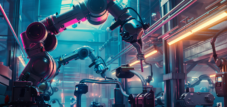
The multi-billion dollar food robotics market: This technology is currently changing everything we eat – for example, Connected Robotics from Japan – Image: Xpert.Digital
The silent revolution in the supermarket: How robots work behind the scenes to ensure greater quality and freshness
Robots in the food industry – from vision to lived practice
The food industry is currently undergoing a profound transformation. Automation, artificial intelligence, and networked robotics are no longer confined to sterile laboratory environments or high-volume automotive plants, but are increasingly finding their way into commercial kitchens, production lines, and even supermarket service counters. What was ridiculed as a technological gimmick just a few years ago has now become a crucial success factor for reducing costs, bridging skilled labor shortages, and simultaneously meeting the increased hygiene and quality demands of consumers.
This trend is particularly evident in the example of the Japanese company Connected Robotics. Founded in Tokyo in 2014, the company specializes in compact robotic cells that fully automate all steps of food preparation – from cooking and portioning to plating – while maintaining Japanese precision and hygiene standards in miniature.
The structural drivers behind the automation wave
Demographics and skills shortage
In both Europe and Japan, the population is aging rapidly, while interest in physically demanding or monotonous jobs is declining. In the Netherlands, an industry survey revealed that two-thirds of medium-sized food manufacturers stated they could no longer compensate for their labor shortage without robotics. A similar picture emerges in Germany, where, according to the Federal Employment Agency, around 500,000 skilled production workers could be lacking by 2030.
Robotic systems like those from Connected Robotics promise concrete relief: A single Delibot cell fills 250 containers with salads or side dishes per hour, thus replacing up to three employees working in two shifts. Since the machines require neither breaks nor night shift bonuses, investments of this magnitude often pay for themselves in less than three years – even in high-wage countries.
Increasing hygiene and quality requirements
At the same time, legal requirements for food safety are becoming increasingly stringent. Robots that operate with IP69K-protected surfaces and food-grade lubricants drastically reduce the risk of contamination. With integrated vision systems, they seamlessly document temperature profiles, fill levels, and browning degrees, enabling traceability without additional personnel.
Market dynamics and economic pressure
The global market volume for food robotics was approximately US$2.7 billion in 2024 and is projected to rise to between US$6 and US$15 billion by 2033, depending on the source, representing annual growth rates of nine to over twenty percent. Europe already accounts for around one-third of the market and has achieved robot penetration rates of up to 80 percent in certain sectors, such as packaging and sorting lines.
While traditional industries such as automotive are stagnating or reporting declining installation figures, the food and beverage segment recorded a three percent increase in industrial robots in 2023, sending a clear signal for further growth.
Connected Robotics – a practical example of precision in miniature
Company history and mission
Connected Robotics was founded by Tetsuya Sawanobori, who, after years in restaurant management, experienced firsthand the physical strain of kitchen work. This experience led to his vision of simplifying routine tasks through robotics while simultaneously eliminating operator errors. Today, the startup employs nearly 50 people at the Koganei campus of the University of Tokyo and has already completed several funding rounds in the high millions.
The most important robot systems
- Delibot: Two robotic arms, equipped with integrated force sensors, weigh out precise portions and fill bowls with salads, casseroles, or desserts to the gram. Weight tolerances are less than one percent, thus reducing the so-called "giveaway"—unintentional overfilling—by a significant margin.
- Soba robot: A single robot arm prepares buckwheat noodles, blanches and cools them in milliseconds and then portions them – all on less than four square meters of floor space.
- OctoChef: When preparing Takoyaki, a camera system monitors the surface color of each ball and rotates it with a special fork exactly when the ideal degree of browning is reached.
- Soft-serve robot: A precisely controlled valve regulates the amount of ice cream, so that each portion is ready to serve in under 15 seconds.
All cells can be pre-configured via simulation. This accelerates projects, reduces testing costs, and allows for quick product changes, for example, if the menu changes.
Integration into different production environments
Thanks to their compact design, the robots can be retrofitted in supermarket backrooms, canteen kitchens, or medium-sized ready-meal plants without completely rebuilding the existing infrastructure. A typical retrofit within one week significantly reduces the investment shock for small and medium-sized enterprises (SMEs).
Modular software allows gripping pressure, stirring speed, and valve openings to automatically adapt to new recipes. This means the same cell can fill yogurt containers in the morning, prepare sushi at lunchtime, and portion desserts in the evening, all without time-consuming retooling.
Technological fundamentals – why robots can now “produce food”
Advances in sensor technology and artificial intelligence
Food is soft, irregularly shaped, and often sticky – for a long time, this presented a challenge for robotic grippers. Only through 3D cameras, hyperspectral imaging, and machine learning algorithms is it possible to detect consistencies in real time and adapt the gripping strategy. Connected robotics combines force-torque sensors, weight sensors, and temperature sensors in the end effectors to achieve this.
While a conventional industrial robot used to slip when it came into contact with a slippery block of tofu, the AI model now recognizes the surface texture, selects a rubberized suction gripper, and continuously adjusts the vacuum pressure. This prevents pressure marks and ensures the product retains its shape.
Hygienic design and cleanability
IP69K-protected cabling, polished stainless steel covers without dead corners, and food-grade lubricants are the foundation for robotics to operate directly in wet areas. Conditions such as heat, steam, and aggressive cleaning agents necessitate special seals. Many robot arms can be completely cleaned within the production line or even rinsed using the Clean-in-Place (CIP) process, eliminating the need for manual disassembly.
Energy and space efficiency
Modern servo drives with regenerative braking reduce power consumption by up to 20 percent. At the same time, streamlined SCARA or delta kinematics achieve cycle times of less than one second for pick-and-place operations, guaranteeing high throughput even in the tightest spaces. In some fast-food restaurants, one OctoChef replaces two full-fledged cooking stations, saving several square meters of expensive kitchen space.
🎯🎯🎯 Benefit from Xpert.Digital's extensive, five-fold expertise in one comprehensive service package | BD, R&D, XR, PR & Digital Visibility Optimization


Benefit from Xpert.Digital's extensive, five-fold expertise in a comprehensive service package | R&D, XR, PR & Digital Visibility Optimization - Image: Xpert.Digital
Xpert.Digital possesses in-depth knowledge across various industries. This allows us to develop tailored strategies precisely aligned with the requirements and challenges of your specific market segment. By continuously analyzing market trends and monitoring industry developments, we can act proactively and offer innovative solutions. The combination of experience and expertise generates added value and provides our clients with a decisive competitive advantage.
More information here:
Smart automation: Efficiency and sustainability in the food industry
Practical benefits for ready meals and convenience food
Consistency and reproducibility
Consistent portioning accuracy prevents costly overfilling. In a typical potato salad tray at the deli counter, an average error of just five grams per serving translates to several tons of raw ingredients per year. Every ton of potatoes or mayonnaise saved not only reduces the amount of product used, but also waste and the carbon footprint – an effect that is increasingly important in sustainability assessments.
24/7 availability
Robots don't observe holidays or pay night shift bonuses. This is particularly interesting for supermarket chains that need to stock shelves with fresh produce early in the morning. Even if the robotic cell is operating at low capacity at night, it produces continuously, ensuring attractive payback times once it replaces two human shifts.
Data-based quality assurance
Every grasping movement, every valve opening, is recorded as a data point. Temperature curves prove that the soba robot was able to keep the water at a constant 99 degrees Celsius before the noodles were immersed in a five-degree Celsius bath. This creates digital batch records that can be used to prove, in the event of a complaint, that limit values were adhered to at all times.
Sustainability and food waste reduction
Because robots precisely repeat movements, less waste is produced. AI models adjust cooking times to the actual fill level, prevent overheating, and avoid evaporation losses. This further reduces energy consumption. In conjunction with sensors that document each portion, even more precise production plans can be created from the collected data, reducing overproduction.
Challenges in widespread implementation
Standardization and certification
Although ISO standards exist for robots, a Europe-wide, standardized certification framework for complete robotic cells is often still lacking. Small businesses, in particular, are deterred by the costs of individual risk analyses. Initiatives such as the EHEDG network are working to establish harmonized hygienic design guidelines specifically for robot applications.
Know-how gap in small and medium-sized enterprises
Robot programming was long considered the domain of academically trained engineers. Modern "no-code" interfaces promise a solution, but maintenance and troubleshooting still require trained personnel. Funding programs such as "Digital Technologies for the Food Industry" now make it easier for SMEs to get started by providing subsidies for training and test installations.
Cybersecurity
When production facilities are networked, the risk of cyberattacks increases. A compromised robot that unexpectedly exerts force can endanger both people and products. Certified VPN tunnels, encrypted communication protocols, and regular patches are therefore essential – as is the organizational separation of office and production networks.
Perspectives for the European market
In Germany, France, and Scandinavia, pilot projects are currently underway in which robots are being used in hospital kitchens or in canteens of automotive manufacturers. While Asia is forging ahead with robots in cooking and plating, Europe has so far focused more on packaging and palletizing applications, because the investment there immediately pays off in higher line throughput.
Nevertheless, interest in "front-of-house" robots is growing. The Soft-Serve robot from Connected Robotics has already been tested in fashion house food courts in Paris and Berlin. Customers can select their toppings via touchscreen, while the robot dispenses them precisely. The waiting time remains under 15 seconds, and the visual impact noticeably boosts sales.
Innovation areas beyond cooking
Automated rinsing and disinfection
Connected Robotics is working with partners on a robot that automatically sorts dish baskets, pre-rinses them, and feeds them into a conveyor dishwasher. An intelligent camera recognizes plate types, stacks them, and sends process data to a dashboard. The system reduces water and chemical consumption by analyzing the level of soiling and adjusting cleaning cycles accordingly.
Last-mile logistics
Pilot projects are underway in Tokyo where delivery robots bring warm bento boxes right to customers' doorsteps. This initiative is driven by the growing e-commerce segment for ready-made meals, which boasts replenishment rates exceeding 30 percent. Autonomous delivery vehicles complement stationary cooking robots, bridging the gap between production facilities and end consumers.
AI-supported quality inspection
Besides preparation, cameras are increasingly taking on the role of quality control. Hyperspectral sensors detect foreign objects, color deviations, or shape defects even before the goods are packaged. Such systems work tirelessly, registering details that the human eye, in a rapid sequence, would miss.
Economic evaluation and ROI calculation
A typical investment in a Delibot cell – depending on the configuration – ranges between €200,000 and €300,000. Assuming that two employees are replaced in shift work, and with average wage costs of €40,000 per year, this results in a payback period of approximately 36 months.
In addition, there are savings in waste, energy, and rework costs. At the same time, continuous throughput increases: Where employees fill heavy salad bowls less precisely after three hours, the robot maintains a constant weight in grams. This reduces complaint rates and strengthens the brand image.
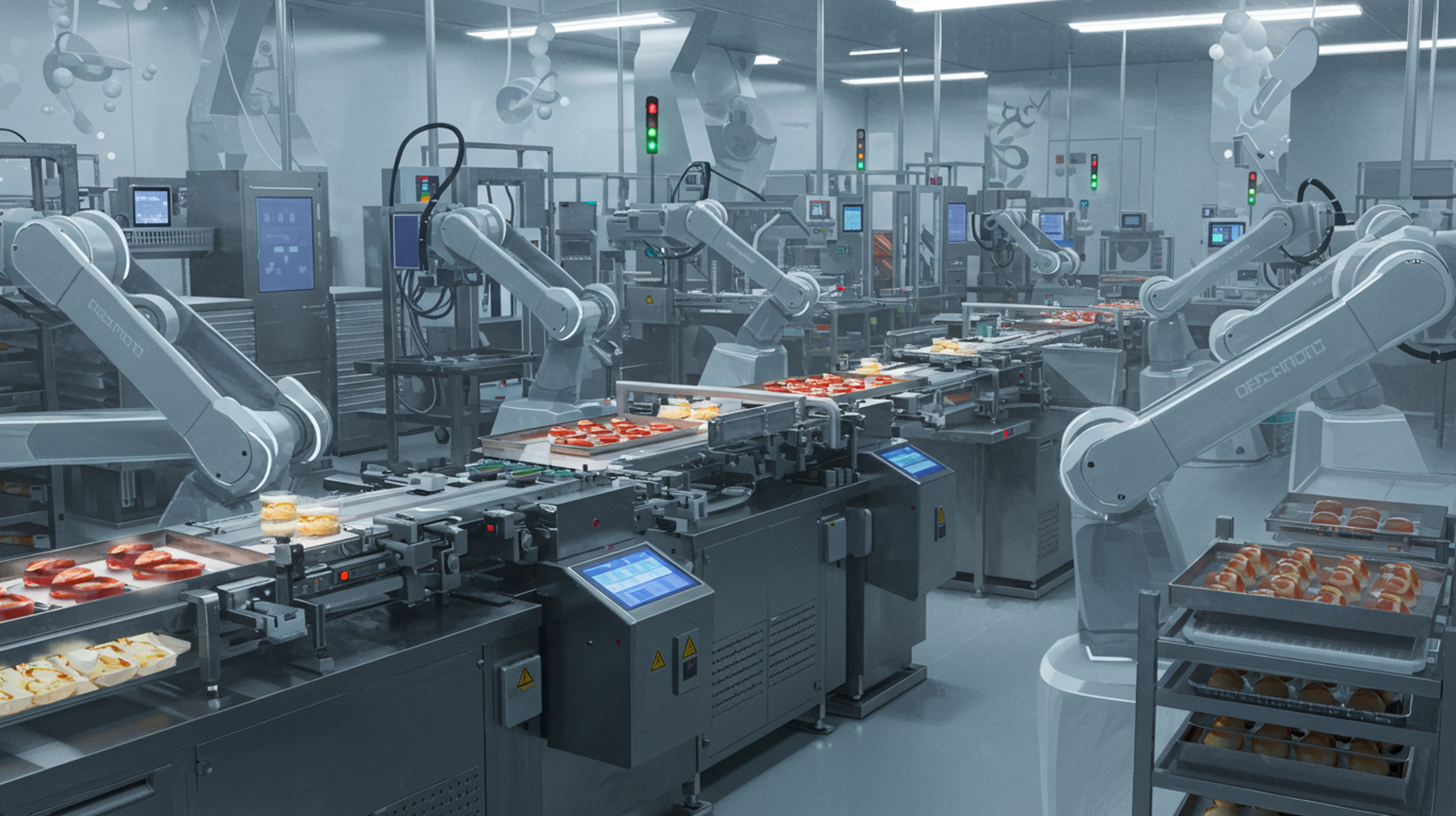
Precision at the touch of a button: Smart robot cells are transforming production
Market researchers predict that the food robotics market will at least double by the early 2030s, with some scenarios even forecasting a tripling. Experts anticipate particularly high growth rates in ready-meal applications – specifically, plating, packaging, and end-of-line palletizing.
The combination of dwindling staffing levels, rising food prices, and the continued trend toward convenience foods is forcing manufacturers to increase line speeds while simultaneously minimizing errors. Small, highly precise robotic cells with hygienic design, such as those offered by Connected Robotics, are therefore considered a blueprint for future investment waves in Europe and North America.
Political programs – such as the European Farm to Fork Strategy – explicitly promote digital transformation to combine sustainability and competitiveness. Cloud-based robotics platforms offer over-the-air software updates and allow pay-per-use models that reduce the financial risk for users.
Robots in the food industry are no longer a promise of the future, but a proven solution to pressing current problems: staff shortages, increasing hygiene requirements, and cost pressures. Companies like Connected Robotics demonstrate that precision, data networking, and space-saving design can go hand in hand.
Thanks to the continuous development of sensors and artificial intelligence, robots can now master tasks that were considered "too soft, too irregular, too sticky" just a few years ago. This is giving rise to new business models – from robot-assisted front-of-house cooking to autonomous delivery – that not only reduce process costs but also improve the customer experience.
Those who invest strategically in lean, scalable systems now gain a measurable advantage. The wave of automation is unstoppable – it's already sweeping through commercial kitchens and ready-meal factories and will reach its full force in the coming years. Companies that take this step early not only secure efficiency gains but also the necessary resilience to thrive in a volatile market environment.
We are here for you - Consulting - Planning - Implementation - Project Management
☑️ SME support in strategy, consulting, planning and implementation
☑️ Creation or realignment of the digital strategy and digitization
☑️ Expansion and optimization of international sales processes
☑️ Global & Digital B2B trading platforms
☑️ Pioneer Business Development

Konrad Wolfenstein
I would be happy to serve as your personal advisor.
You can contact me by filling out the contact form below or simply call me on +49 7348 4088 965 .
I'm looking forward to our joint project.
Write to me


Xpert.Digital - Konrad Wolfenstein
Xpert.Digital is a hub for industry focusing on digitalization, mechanical engineering, logistics/intralogistics and photovoltaics.
With our 360° Business Development solution, we support renowned companies from new business to after-sales.
Market intelligence, smarketing, marketing automation, content development, PR, mail campaigns, personalized social media and lead nurturing are part of our digital tools.
You can find more information at: www.xpert.digital - www.xpert.solar - www.xpert.plus
Keep in touch