


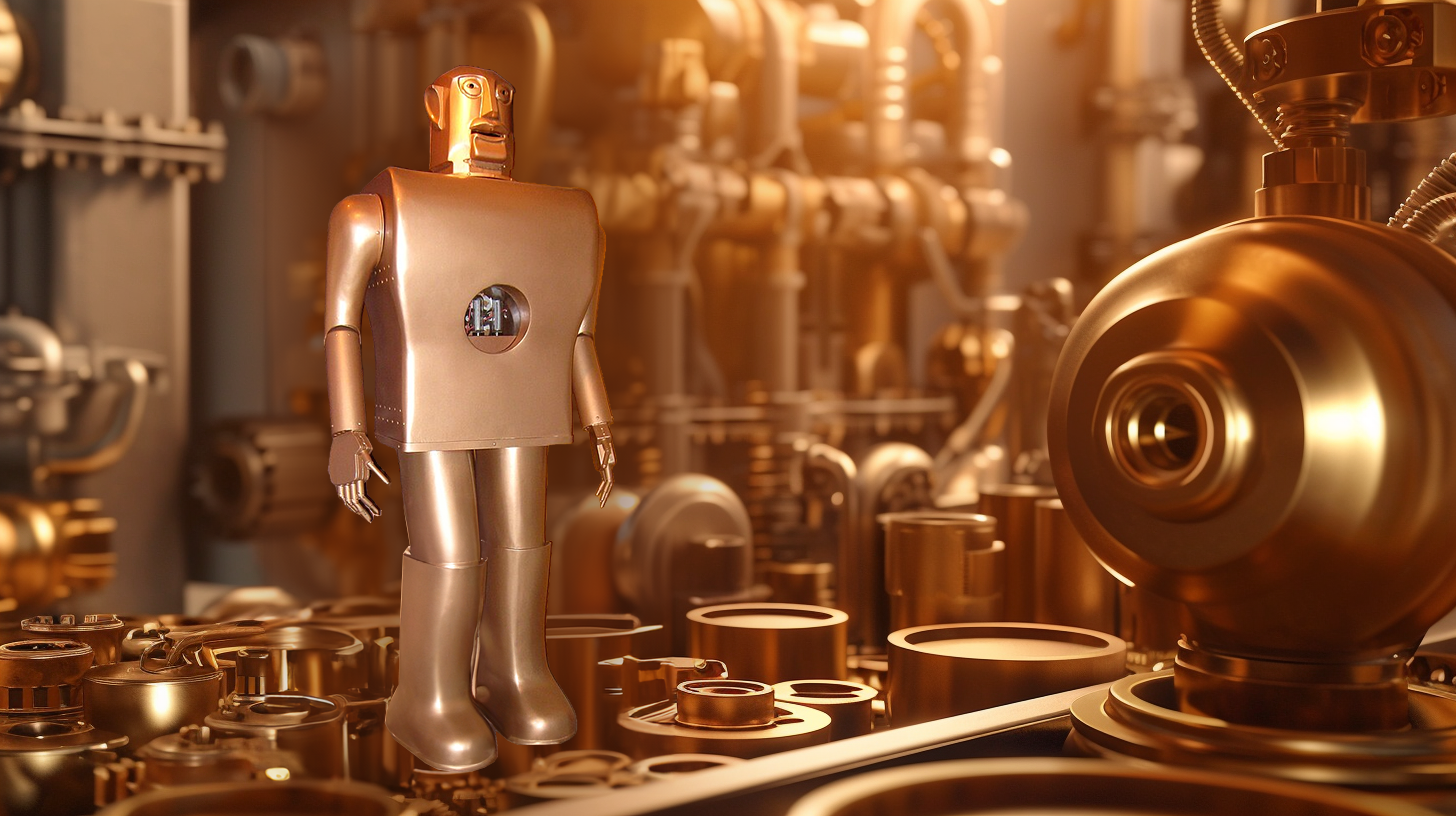
Would you have known? When and who developed the first humanoid robot?
From myth to machine: The fascinating story of the first humanoid robot
The first steps in the history of humanoid robots
The question of the first humanoid robot takes us on a fascinating journey through the history of technology, imagination, and the relentless human drive to see ourselves reflected in mechanical engineering. While the term "robot" in its modern form was coined only in the 20th century, the roots of the concept reach much further back. It is therefore essential to distinguish between the first publicly presented humanoid robot and its many predecessors and developmental stages.
Electricity: A milestone of the 1939 World's Fair
It is true that Westinghouse set an impressive milestone with "Elektro" at the 1939 World's Fair in New York. This colossal figure, over two meters tall, was not only a technological achievement of its time but also a spectacular demonstration that captured the public's imagination. "Elektro" was more than just a mere machine; it embodied the emerging fascination with what seemed technically possible. It could move, albeit to a limited extent, speak a few sentences, and even, in what was probably a rather symbolic gesture, "smoke" a cigar. These abilities, however simple they may seem from today's perspective, catapulted it into the ranks of one of the first popular humanoid robots and thus shaped the public perception of this field.
Mythology and early concepts in the history of the humanoid robot
However, "Elektro" was not the beginning of the humanoid robot's history, but rather a significant point on a long line of development that stretches back to antiquity. Greek mythology was already rich in ideas of artificial humans or automata, often associated with divine powers or magical abilities. These myths served not only as entertainment but also as a reflection of human desires and fears regarding control and life itself. They illustrate that the idea of the humanoid automaton is not a product of the modern age but is deeply rooted in our culture.
Leonardo da Vinci and the connection between technology and art
Over the centuries, there have been repeated attempts to put these ideas into practice. One of the first significant steps in this direction was Leonardo da Vinci's sketch of a simple automaton in armor around 1495. Although these drawings were never realized as an actual machine, they testify to da Vinci's visionary thinking and his ability to combine technical and artistic ideas. He saw mechanics not merely as a craft, but as a way to expand the boundaries of human creation and to imitate life itself.
Jacques de Vaucanson and the Mechanical Flute Player
Another milestone was Jacques de Vaucanson's mechanical flute player in 1738. This complex marvel of mechanics was not only a technical masterpiece but also proof that machines were capable of replicating highly complex tasks. It represented an early, albeit still very crude, form of automation and demonstrated how far mechanical art had already progressed in the 18th century. The flute player was not merely an object of entertainment but also an object of admiration and wonder, demonstrating the potential of machines to imitate life.
Modern humanoid robots: From the MM 7 to the WABOT-1
Developments in robotics during the 20th century finally demonstrated that dreams and concepts from the past were taking tangible form. While Viennese engineer Claus Scholz constructed the MM 7 in 1962, a robot capable of more complex movements, Japan's Waseda University took a decisive step towards the development of modern humanoid robots in 1973 with the WABOT-1. The WABOT-1 is considered the first modern humanoid robot that not only possessed rudimentary movements but was also capable of processing visual and auditory information and engaging in basic communication with humans. This set a new standard for robot development, laying the foundation for subsequent advancements.
The path from "electric" to the current state of robotics
The journey from Elektro to WABOT-1 is a testament to humanity's enduring curiosity and drive for progress. While Elektro captured public attention and sparked the imagination, developments like the MM-7 and WABOT-1 paved the way for the sophisticated humanoid robots we know today. It is important to emphasize that the development of humanoid robots is not an isolated effort by a single individual or institution, but a collective endeavor of humankind that continually generates new innovations and advancements.
A look at the history and future of humanoid robotics
The history of the humanoid robot is therefore not only a history of technology, but also a history of dreams, imagination, and the human desire to push the boundaries of what is possible. It is a story that is far from over and will continue to confront us with exciting developments and new questions. Ultimately, the humanoid robot is more than just a machine – it is a reflection of our own humanity and our relentless pursuit of progress and knowledge. The question of who invented the "first" humanoid robot is therefore complex and multifaceted, as there was no single moment of invention, but rather a continuous process of evolution and progress.
Related to this: