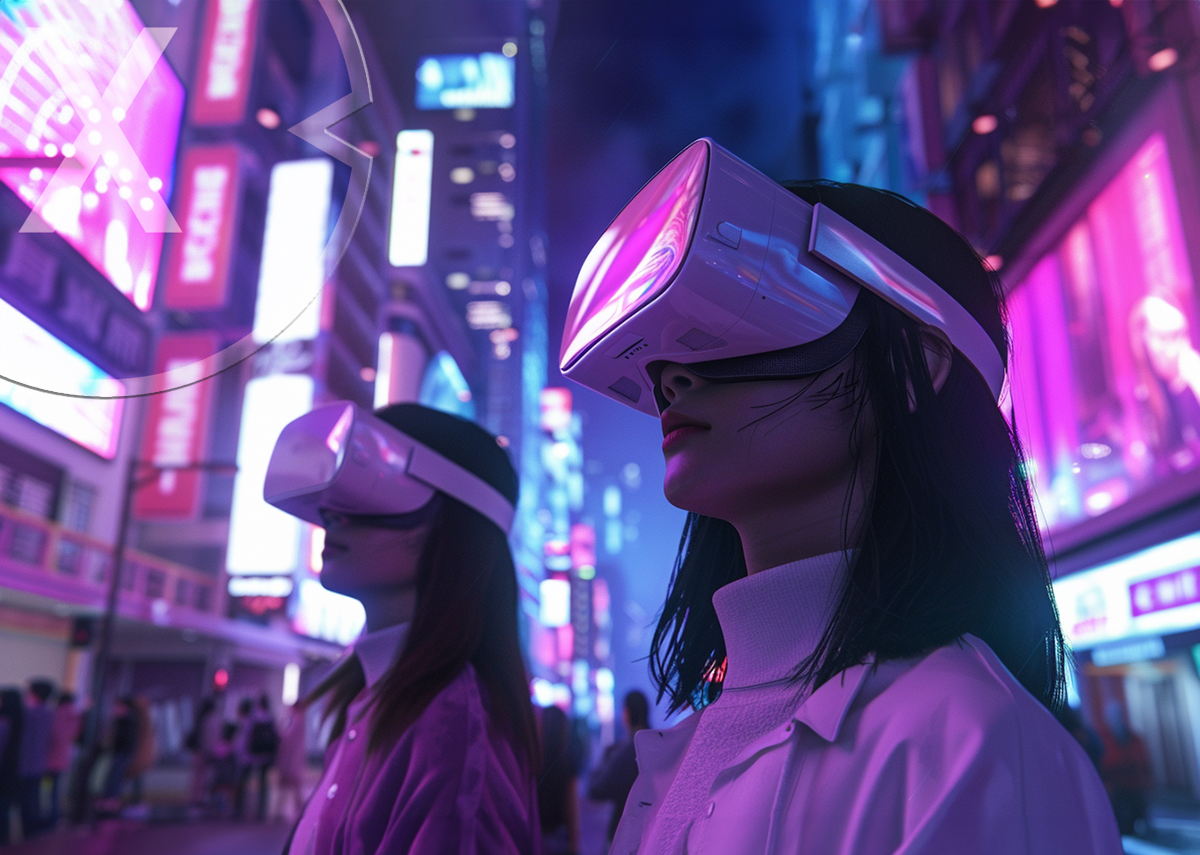
The Metaverse – For many decision-makers, still a difficult-to-understand future concept with great potential – Image: Xpert.Digital
🤔 Understanding the Metaverse: Challenges and Opportunities of the Future
🌐 The mysterious metaverse: A glimpse into the digital parallel world
The metaverse is currently one of the most discussed topics in the technology industry, but also one of the most difficult concepts to grasp. Many people—and even professionals in companies—struggle to understand the idea of the metaverse, let alone fully comprehend its future implications. It's a digital parallel world that combines virtual reality (VR), augmented reality (AR), blockchain technology, and other advanced digital solutions to create an immersive, interactive environment. Yet, despite the grand visions and hype, the metaverse remains a nebulous concept for many.
🚧 Understanding problems in the corporate environment
A recent survey reveals that an overwhelming majority of businesses are struggling to keep track of developments in the metaverse. A full 86 percent of the business leaders surveyed stated that they find it difficult to understand the evolution of the metaverse. This uncertainty is compounded by the fact that the metaverse is currently used as a catch-all term for various applications that can differ significantly. 76 percent of respondents indicated that they find it confusing that so many different technologies and applications are grouped under the same umbrella term.
Another problem many business leaders have with the metaverse is the sheer difficulty of imagining what it actually is and what it will look like. Sixty percent of those surveyed admitted that they struggle to visualize the metaverse in practice. This is not surprising, as the concept is still in its infancy and many of the technologies that are meant to make it possible are still under development. The idea of a fully immersive, virtual world is still too abstract for many.
😨 Fear of the unknown
Around 19 percent of the surveyed business leaders stated that the metaverse even frightens them. These fears are quite understandable. New technologies often bring uncertainty, and the metaverse is no exception. The idea that jobs could be shifted to a virtual environment or that economic transactions increasingly take place in a virtual world is causing concern for many. The question of how one will navigate such a digital world remains open and contributes to this sense of unease.
Furthermore, the metaverse also presents potential challenges regarding security and data privacy. While the integration of blockchain technology for managing digital assets and identities offers new opportunities, it simultaneously raises the question of how this sensitive data can be protected in a virtual environment. Such concerns contribute to many people's fear of the new technology.
🛠️ The role of technology providers
Providers of metaverse technologies therefore face a major challenge: they must not only establish the technical foundations but also better explain the metaverse's potential applications. Clear communication about the advantages and potential uses of the metaverse is crucial for gaining the trust of businesses and users. Furthermore, it would be desirable for the various stakeholders to agree on common standards and terminology to reduce confusion.
Simply outlining the technological possibilities is not enough. Companies need to understand the specific added value the metaverse offers them. For example, the metaverse could be used in the future for virtual meetings and conferences, or as a platform for selling digital products and services. These scenarios must be communicated clearly and understandably so that companies can consider investing in this technology.
🌟 Potential and future prospects
Despite the current confusion and uncertainty, many companies recognize the immense potential of the metaverse. Investments in the metaverse are expected to increase significantly in the coming years. Last year, only 2 percent of companies invested in technologies directly related to the metaverse. This number may seem small, but the trend is clearly upward. By 2023, 6 percent of companies already plan to invest in the metaverse, and this figure is expected to rise to 9 percent by 2025. Particularly noteworthy is that after 2025, a full 22 percent of the surveyed companies anticipate making their own investments in the metaverse.
This increase in investment shows that companies are committed to the technology for the long term, even if they are currently struggling with understanding it. Many companies see the metaverse as an opportunity to tap into new business areas and better position themselves in the digital world of the future. Particularly in sectors such as e-commerce, education, real estate, and entertainment, the metaverse could give rise to entirely new business models.
🛍️ Application areas of the metaverse
The potential applications of the metaverse are manifold. A prominent example is e-commerce. Even today, there are initial applications where customers can shop in virtual stores without leaving home. In the metaverse, this shopping experience could be made even more personalized and immersive. Customers could stroll through virtual stores, view products in 3D, and try them out in real time before making a purchase.
The metaverse also offers exciting perspectives in the field of education. Virtual classrooms and learning environments could revolutionize access to education by offering pupils and students worldwide the opportunity to participate in immersive learning experiences. This could play a crucial role, particularly in developing countries or remote areas, in making education accessible to more people.
The metaverse could also play a significant role in the real estate sector. Virtual property viewings are already a growing trend, but the metaverse could elevate this experience to a whole new level. Potential buyers could view houses and apartments in a fully immersive environment, gaining a realistic impression of the property before making a decision.
🚀 Challenges and hurdles
Despite its great potential, the metaverse faces significant challenges before it can become a mainstream technology. One of the biggest hurdles is technological infrastructure. Powerful networks and fast internet connections are essential for a smooth and immersive metaverse experience. However, broadband coverage remains limited in many parts of the world, which could hinder access to the metaverse for large segments of the population.
Legal and ethical questions also need to be addressed. Managing digital property rights, protecting privacy, and ensuring security in a virtual world are complex issues that have not yet been fully resolved. Governments and international organizations will be required to develop guidelines and regulations to ensure that the metaverse is safe and accessible for everyone.
🔮 The Metaverse – A Future Full of Possibilities
The metaverse is still in its infancy, and many people—especially in business—struggle to grasp the full extent of its potential. The lack of clarity surrounding its definition and its numerous applications contribute to this confusion. At the same time, it's important to acknowledge the legitimate fears and concerns people have about new technologies like the metaverse.
Nevertheless, the increasing willingness to invest shows that many companies recognize the potential of the metaverse and are ready to embrace this new digital world. It is now up to technology providers to clearly communicate the potential applications and create the necessary technical and legal frameworks. If these challenges are overcome, the metaverse could become a key technology of the future and fundamentally change many areas of our lives.
📣 Similar topics
- 🌐 The future of the internet: The metaverse
- 🤔 Understanding problems in the corporate environment: The metaverse
- 🚀 The next stage of the digital revolution: The metaverse
- 📈 Investing in the future: The Metaverse
- 🌟 The possibilities of the metaverse: An overview
- 🤝 The role of technology providers in the metaverse
- 🚫 Challenges and obstacles on the road to the metaverse
- 🌐 The global significance of the metaverse
- 📊 The economic potential of the metaverse
- 🔮 The future of the digital world: The metaverse
#Metaverse #DigitalRevolution #FutureOfTheInternet #Technology #Innovation
🗒️ Xpert.Digital: A pioneer in the field of Extended and Augmented Reality


Finding the right Metaverse agency, planning office, or consulting firm - Image: Xpert.Digital
🗒️ Finding the right Metaverse agency, planning office, or consulting firm – Search and search: Top Ten Tips for Consulting & Planning
In the age of digitalization, where technologies such as Extended Reality (XR) and the metaverse are constantly gaining in relevance, Xpert.Digital is positioning itself as a thought leader and pioneer. With over 1,500 specialist articles, Xpert.Digital is establishing itself as a central point of contact for the industry.
🌌 Extended Reality (XR): The best of both worlds
Extended Reality is an umbrella term encompassing Virtual Reality (VR), Mixed Reality (MR), and Augmented Reality (AR). Xpert.Digital is dedicated to creating impressive XR experiences that are both informative and entertaining.
- Interactive experiences: XR allows users to immerse themselves in virtual worlds and interact with their environment in ways that were previously unimaginable.
- Education and training: XR can be used for educational purposes to convey complex topics and concepts in an understandable and tangible way.
- Entertainment: Whether games, films or art – XR opens up new horizons in digital entertainment.
🔮 Augmented Reality (AR): Seeing the world with digital eyes
Augmented Reality, a particular focus of Xpert.Digital, makes it possible to integrate digital information or graphics into the real world. The possibilities are virtually limitless.
- Marketing and advertising: AR can be used to create interactive advertising campaigns that engage customers in a completely new way.
- Everyday assistance: From navigation apps that project the route directly onto the street, to furniture apps that show what a new sofa would look like in the living room – AR makes it possible.
🌐 The Metaverse: The Next Big Thing
The metaverse is a virtual world where people can interact through avatars and create shared experiences. Xpert.Digital recognizes the enormous potential of the metaverse and is working to translate this potential into usable products and services.
- Social interaction: The Metaverse offers the opportunity to connect with people from all over the world and share common experiences.
- Economy and trade: In the Metaverse, virtual goods and services can be traded, opening up completely new business models and sources of income.
- Creative freedom: From building your own worlds to designing individual avatars – the metaverse is a place of endless creative possibilities.
🚀 Xpert.Digital at the forefront of innovation
Xpert.Digital demonstrates how a company can be at the forefront of the technological revolution. With their focus on XR, AR, and the metaverse, they are well-positioned to shape and define the future of digital interaction.
More information here:
💡 Understanding the Metaverse: Overcoming Fears and Insecurities
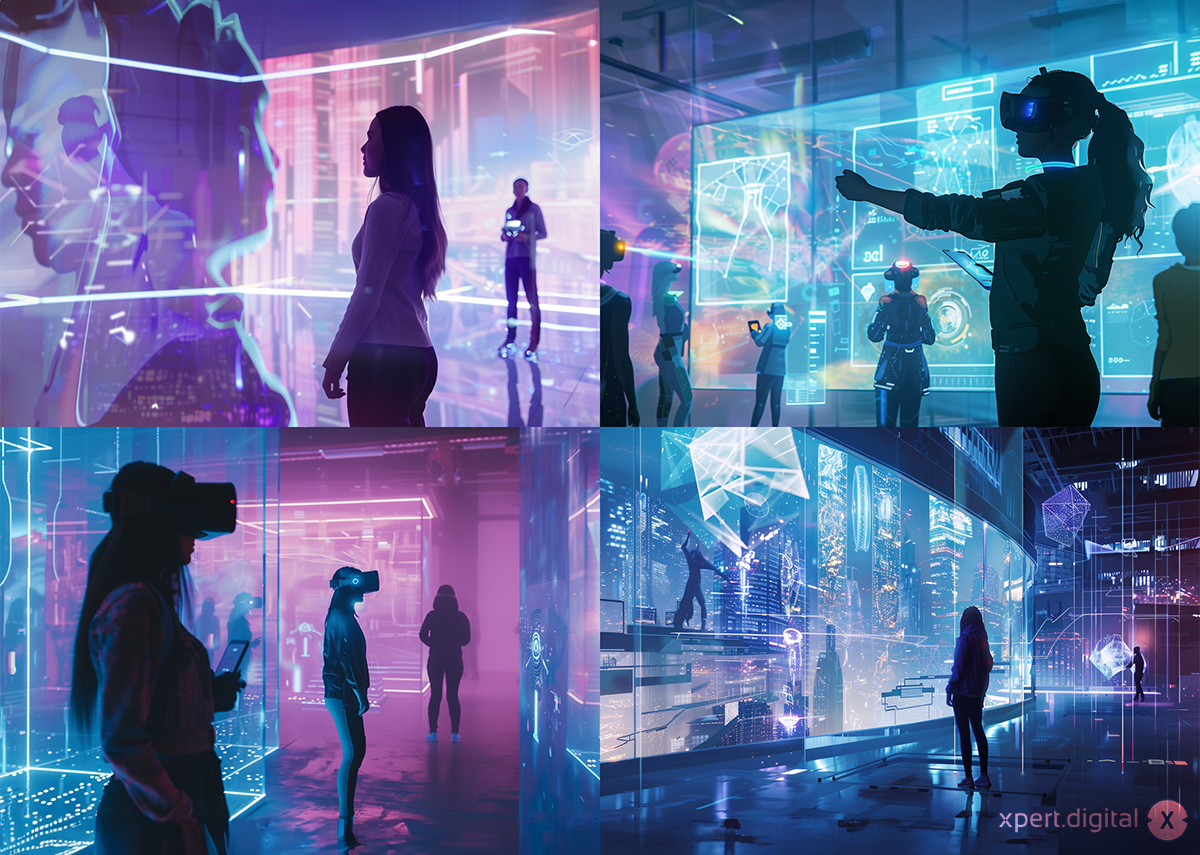
The metaverse is a fascinating yet complex concept that poses challenges for many people – Image: Xpert.Digital
🌐✨ The metaverse is a fascinating yet complex concept that poses challenges for many. The idea of a virtual universe that transcends physical reality is difficult for many to grasp. This is also evident in the corporate world, where 86 percent of managers report having difficulty keeping up with developments in the metaverse. Around 76 percent of respondents find it confusing that so many different applications are grouped under the term "metaverse." Furthermore, 60 percent struggle to form a clear picture of the metaverse. For approximately 19 percent of respondents, the metaverse is even associated with fear.
🚀 Challenges and potential of the metaverse
The uncertainty surrounding the metaverse is not unfounded. The term itself is difficult to define and encompasses a wide range of technologies and applications, from augmented reality (AR) and virtual reality (VR) to blockchain technologies. These technologies allow users to immerse themselves in virtual worlds and interact with digital assets. A key element of the metaverse is the ability to create and exchange unique digital goods such as non-fungible tokens (NFTs).
Despite existing uncertainties, the metaverse offers enormous potential. The market for metaverse technologies is growing rapidly and is being driven by major technology companies such as Apple, Google, and Meta Platforms. According to forecasts, the market will expand at an annual growth rate of 41.6 percent until 2030. Investments in the metaverse are also increasing: while only 2 percent of companies invested in this area last year, 9 percent are already planning such investments for 2025.
🎮 Applications of the Metaverse
The metaverse offers numerous applications that extend far beyond the gaming sector. It can be used as a tool to solve real-world problems by providing virtual functions that are difficult to implement in the physical world. For example, virtual offices can create a realistic work environment and foster collaboration among colleagues. The metaverse also opens up new possibilities in education: Virtual classrooms and learning environments can facilitate access to education and offer personalized learning experiences.
The metaverse could also play an important role in healthcare. Virtual doctor's visits or therapy sessions could improve access to medical services while simultaneously reducing costs. Furthermore, the metaverse opens up new possibilities for social interaction and the building of communities in virtual worlds.
🌐 Technological developments
The technological development of the Metaverse is progressing rapidly. Advances in VR and AR technologies, as well as the integration of artificial intelligence (AI) and blockchain, are crucial for the Metaverse's further development. These technologies enable users to have even more immersive experiences and seamlessly switch between virtual and physical worlds.
A significant trend is the increased integration of blockchain technology into metaverse projects, particularly in e-commerce. This technology enables secure transactions and the exchange of digital goods without central authorities. Furthermore, companies are working on developing new hardware, such as mixed-reality headsets, designed to further enhance interaction with the metaverse.
🔒 Challenges for the future
Despite its promising developments, the metaverse also faces challenges. Data privacy concerns are a key issue, as more and more personal data is collected in virtual worlds. Furthermore, the metaverse requires a robust infrastructure to ensure a smooth user experience.
Another problem is market fragmentation: many different platforms compete with each other, which makes interoperability difficult. To fully exploit the metaverse's potential, standards must be developed that enable seamless integration of different technologies.
🔮 Future prospects
The future of the metaverse is promising, but also uncertain. While some experts are optimistic and believe that the metaverse will fundamentally change our daily lives, others are skeptical and warn against inflated expectations. Nevertheless, it is clear that the metaverse is a long-term trend that will extend well beyond 2024.
Companies should prepare to leverage the opportunities of the metaverse while carefully weighing the associated risks. The evolution towards an immersive internet based on AR and VR offers tremendous potential for innovation across various sectors – from manufacturing and commerce to education.
Overall, the metaverse remains an exciting field with great potential for transformative changes in our digital world. It will be interesting to observe how this technology develops in the coming years and what new opportunities it will open up for us.
📣 Similar topics
- 🌐 The Metaverse: An Overview of Developments and Challenges
- 🚀 Potential and benefits of the metaverse for businesses
- 🤖 Artificial intelligence and the metaverse: An unbeatable duo
- 🏥 Healthcare in the Metaverse: Virtual Solutions for Real-World Problems
- 🕹️ More than just gaming: Diverse applications of the metaverse
- 💼 Virtual Work Environments: The Future of Collaboration in the Metaverse
- 📈 Growth forecasts: The enormous market potential of the metaverse
- 🔒 Data protection and security: Challenges in the metaverse
- 🌍 Social Interactions and Communities in the Metaverse
- 🔧 Key technologies: AR, VR and Blockchain in the Metaverse
#️⃣ Hashtags: #Metaverse #VirtualReality #ArtificialIntelligence #FutureTechnology #Digitalization
🖥️ Extended Reality View (ER View): Immersive environments with XR technologies
🛠️ ER View
"Extended Reality View" (ER View) is a term generally used to describe an immersive digital environment that utilizes various elements of extended reality (XR). XR is an umbrella term encompassing technologies such as virtual reality (VR), augmented reality (AR), and mixed reality (MR).
🚀 Meaning and potential
In the context of "Extended Reality View", ER View is an indication that it is a visual representation or interface that enables an enhanced perception of reality by embedding digital information into the real world or creating fully immersive virtual environments.
🌍 Integration and application
The goal is to integrate the user more deeply into a simulation or an enhanced experience by merging physical and digital worlds.
🏗️ Real-world examples
For example, an “Extended Reality View” could be used in an application such as architecture to view a building in 3D before it is built, or in medicine to provide a detailed view of organs for training purposes.
We are here for you - Consulting - Planning - Implementation - Project Management
Xpert.Digital - Pioneer Business Development
Smart Glasses & AI - XR/AR/VR/MR industry expert
Consumer Metaverse or Metaverse in general
If you have any questions, require further information or advice, please feel free to contact me at any time.

Konrad Wolfenstein
I would be happy to serve as your personal advisor.
You can contact me by filling out the contact form below or simply call me on +49 7348 4088 965 .
I'm looking forward to our joint project.
Write to me


Xpert.Digital - Konrad Wolfenstein
Xpert.Digital is a hub for industry focusing on digitalization, mechanical engineering, logistics/intralogistics and photovoltaics.
With our 360° Business Development solution, we support renowned companies from new business to after-sales.
Market intelligence, smarketing, marketing automation, content development, PR, mail campaigns, personalized social media and lead nurturing are part of our digital tools.
You can find more information at: www.xpert.digital - www.xpert.solar - www.xpert.plus
Keep in touch