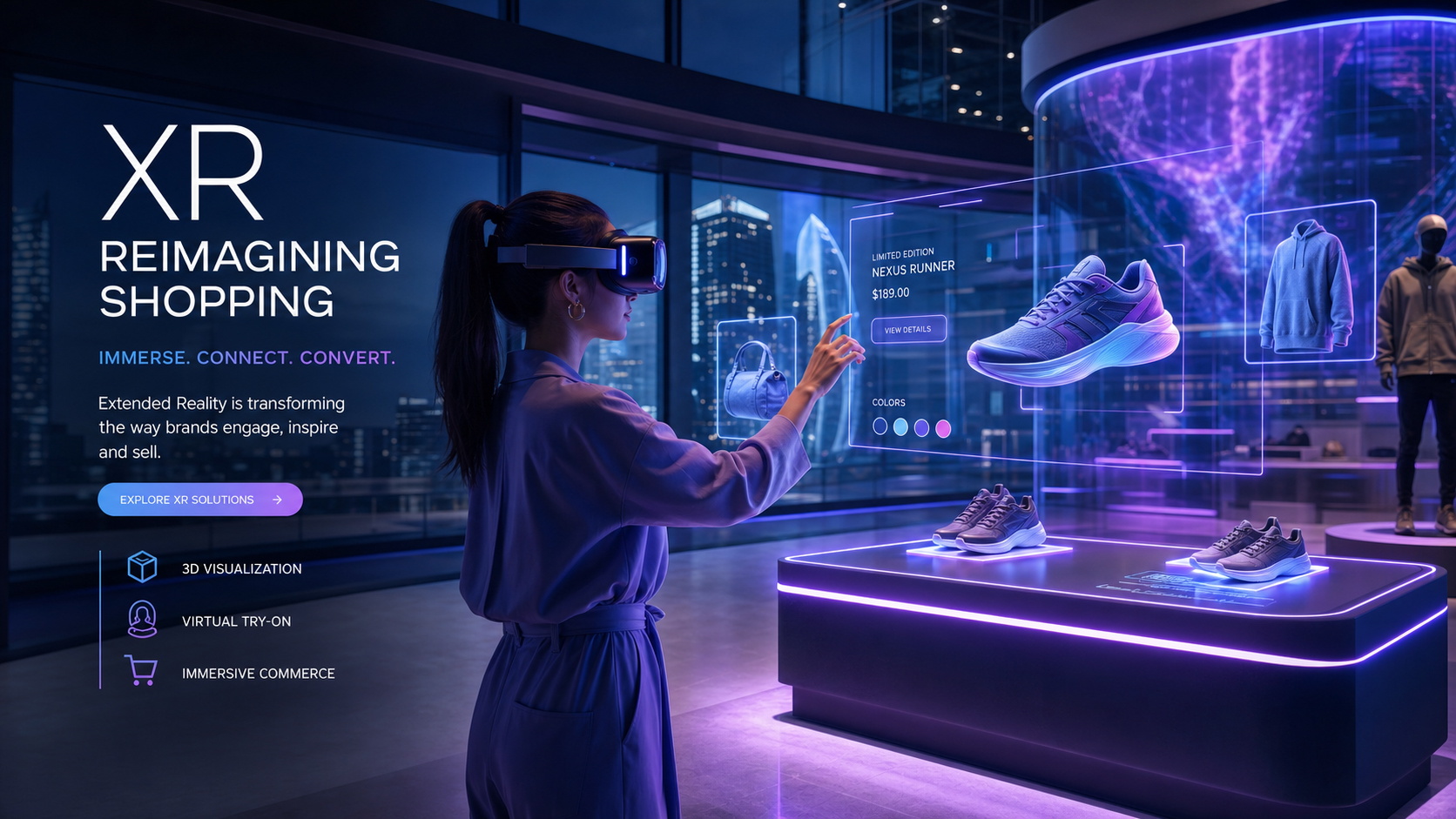
Extended Reality in Marketing: How virtual worlds generate real sales – Image: Xpert.Digital
AR as a returns killer: Why IKEA, Gucci and others no longer rely on classic catalogs
No longer just a technological gimmick: How Virtual Reality became the most powerful tool in marketing
The future of shopping is here: 10 brands making millions with Extended Reality (XR)
Below you will find the complete text, including a newly written, comprehensive introductory text (between the first headings and the main body). The entire text has been thoroughly checked for spelling, grammar, punctuation, and correct German spelling (with "ß") and only made minor corrections in a few places (e.g., "scannbare" with a double "n", capitalization after a colon in complete sentences).
Why companies that still rely on catalogs and store shelves have already been overtaken by the future
The hype surrounding the metaverse may have subsided somewhat in the media, but away from the loud headlines, a quiet revolution is taking place, profoundly changing the core of commerce. While many still believe that virtual and augmented realities are futuristic gimmicks for tech-savvy niche audiences, forward-thinking brands have long since moved on to the next level. They have recognized that traditional marketing channels are reaching their physical and digital limits: catalogs are flat, shop windows offer only limited space, and e-commerce across all sectors is suffering from a costly and debilitating flood of returns.
This is precisely where Extended Reality (XR) comes into play as a strategic game-changer. It's no longer about PR gimmicks or fleeting wow factors, but about solid business principles. When customers can view a shoe photorealistically on their own feet before buying it, configure a life-size vehicle in their living room, or literally smell their holiday destination before booking, the typical hurdles to a purchase decision disappear. Trust in the product increases, sales cycles melt away, and return rates plummet.
This shift marks the essential transition from a mere advertising campaign to a firmly integrated technological infrastructure. The following examples impressively demonstrate that those who use XR systematically to solve concrete business problems not only generate measurable revenue but are also laying the foundation for tomorrow's customer loyalty.
A new category of marketing is emerging
Extended Reality, or XR for short, is the umbrella term for Augmented Reality, Virtual Reality, and Mixed Reality. These three technologies share the common feature of merging digital content with the user's perception, whether through superimposed objects in the real environment, entirely computer-generated worlds, or a combination of both. What began in recent years as a technological novelty for early adopters has evolved into an integral part of professional marketing strategies.
Brands are adopting XR today not because it seems trendy, but because it solves concrete business problems. These include lower return rates in online retail, shorter sales cycles in B2B, training large workforces across multiple locations, and store concepts that increase customer traffic and brand recall. Global spending on XR technologies is projected to exceed $85 billion by 2030. This growth forecast is not based on speculation, but on repeatable, documented business successes of individual companies, which will be examined in detail below.
Ten examples from different industries demonstrate how strategically planned technology use can have a measurable economic impact. Each of these examples represents a unique business problem for which XR provided a solution that would not have been achievable with traditional marketing tools.
When the car becomes an avatar: BMW and the breaking of showroom boundaries
The physical car dealership showroom has always defined a strict upper limit to what can be shown to customers. Only a fraction of all available equipment options are ever on display in a dealer's lot. A photo catalog, on the other hand, compresses a three-dimensional object into a flat image that conveys little about the size, materiality, or spatial presence of a vehicle.
BMW has overcome this limitation with a mixed-reality showroom program. Customers put on a headset, and a vehicle appears before them in its original size. They can walk around it, open the door, change the paint color, and reconfigure the interior. In the end, they experience the exact car they want to buy, not the nearest approximation that happens to be in the lot.
Every interaction within this virtual environment simultaneously generates a data point. Which configurations hold attention the longest? Which features do potential customers repeatedly return to? At what point does interest wane? This behavioral data flows directly into product development, pricing architecture, and inventory strategy, transforming a mere sales promotion measure into a real-time market research tool.
The can as a remote control into the Marvel Universe: Coca-Cola's global AR activation
Most brand activations are inherently limited to a specific location. A pop-up event, a trade fair booth, or an experiential installation each only reaches those people who happen to be in the right place at the right time. Augmented reality eliminates this limitation.
The collaboration between Coca-Cola and Marvel used scannable packaging on Coca-Cola and Coca-Cola Zero Sugar products in more than fifty countries to unlock AR animations of over thirty Marvel characters. The physical product itself became an interactive experience. Consumers were no longer just buying a beverage, but an interaction.
Coca-Cola has now used augmented reality in several campaigns of this scale, including AR vending machines that make the purchasing process more playful and encourage sharing on social networks. The strategic principle behind this is consistency: AR is treated as a repeatable channel and not as a one-off activation that disappears after the campaign ends.
The tape measure disappears from the living room: IKEA's AR product visualization
The longest phase of any well-thought-out purchasing process is the evaluation phase. Buyers often know exactly what they need, but not whether a specific product fits their specific spatial context. This uncertainty lengthens sales cycles, creates additional rounds of coordination, and leads to abandoned purchases.
IKEA addressed this problem with the IKEA Place app, which projects true-to-scale, three-dimensional furniture models into the user's real-world environment via the smartphone camera. A sofa appears in the corner of the room, a bookshelf fills the wall. The key purchasing decision is thus made within minutes, instead of being deliberated over several days.
For companies that sell equipment, office infrastructure, or physical systems to commercial customers, this has a direct consequence. A facility manager who can preview a product in their own workspace eliminates the most common cause of decision delays. AR visualization not only improves the customer experience but also accelerates the entire sales cycle, and the value of this friction reduction at the evaluation stage often outweighs the benefits of additional investment at the top of the funnel.
When the shoe already fits before purchase: Gucci's approach to reducing returns
Product returns are among the most underestimated cost factors in retail marketing. The return rate in online clothing and shoe retail regularly exceeds thirty percent, and the reason is almost always the same: customers were unable to realistically assess the product before purchasing it.
Gucci integrated AR try-on capabilities into its iOS app, enabling users to see true-to-scale representations of sneakers on their own feet in real time, including precise motion tracking and photorealistic material rendering. The brand then expanded this offering through a partnership with Snapchat, launching the platform's first global AR shoe try-on campaign.
The strategic logic behind this was twofold: to reduce returns from existing customers while simultaneously building brand loyalty among a younger audience that will develop future purchasing power. Luxury brand loyalty develops over decades, and AR offered Gucci a cost-effective tool to establish this relationship years before the target group reaches the financial maturity to purchase. For any retail brand with a significant return rate, the calculation is simple: reduced return processing costs are immediately measurable, while increased customer confidence and organic sharing on social networks provide additional revenue.
Make-up as permanent infrastructure instead of a marketing gimmick: L'Oréal's platform strategy
Most AR campaigns run for a quarter, generate press coverage, and are then discontinued. L'Oréal has chosen a different approach.
In 2018, the group acquired Toronto-based ModiFace, which had spent seventeen years developing leading technology for virtual beauty try-on. It was L'Oréal's first acquisition of a technology company, not a beauty brand. During the quarterly results, the group's management at the time described the move as a significant milestone on the path to becoming a digitally enhanced beauty company. The strategic intention was to embed AR capabilities across its entire brand portfolio. Within a year, ModiFace technology was integrated into thirty-six brands in sixty-five countries, with an average of one new AR project per day. By 2023, the company reported more than one hundred million virtual try-on sessions in a single year. Customers who used the virtual try-on feature were three times more likely to make a purchase than those who didn't. The technology was no longer just a marketing initiative, but a key revenue driver. Companies that use XR as a campaign channel are seeing incremental returns. Companies that understand XR as infrastructure and systematically roll it out across their entire business achieve increasing returns.
🎯🏢🥽 Enterprise XR Solution Hub for B2B projects – from digital twins to customized extended reality solutions

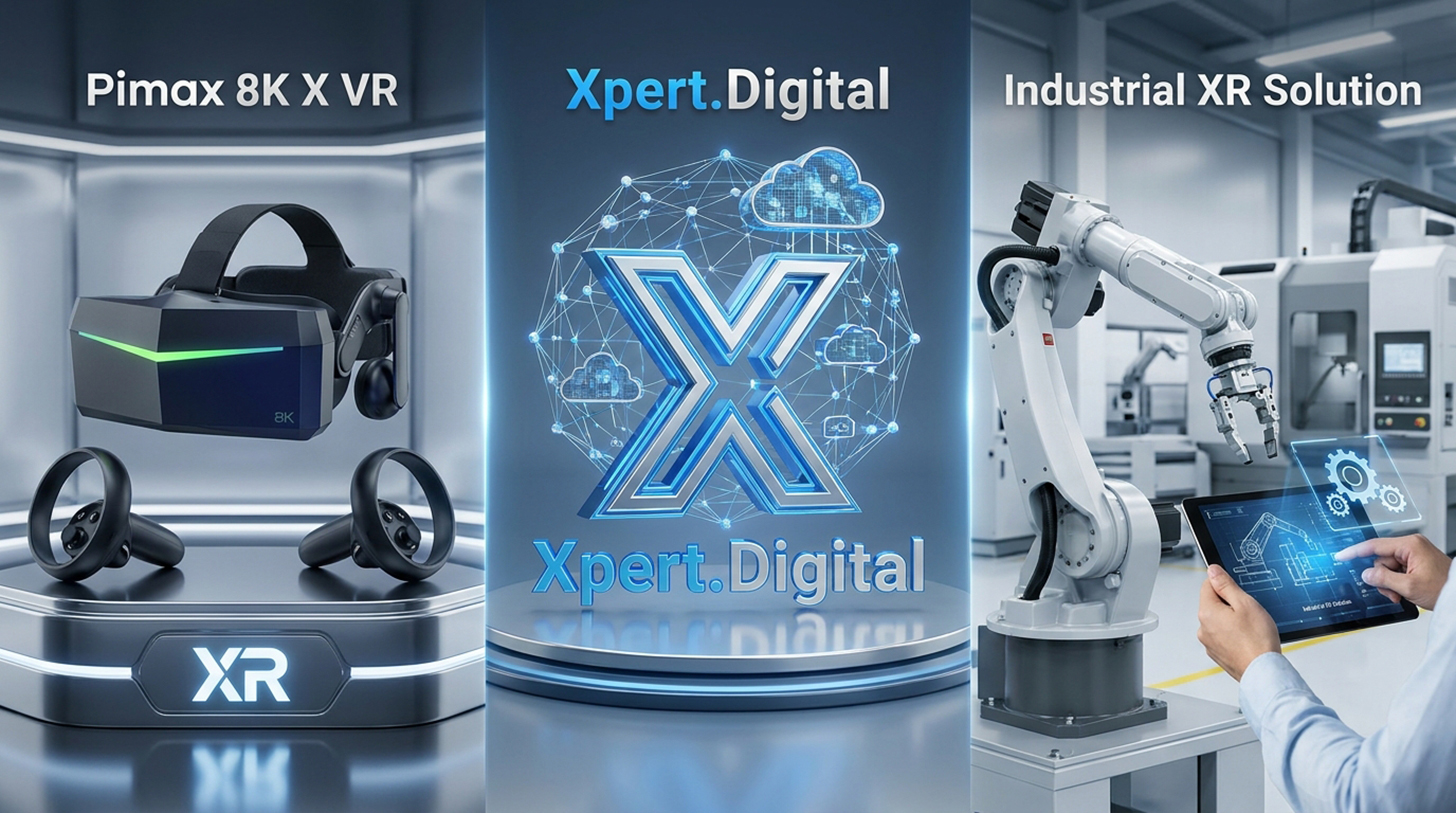
Enterprise XR Solution Hub for B2B projects – from digital twins to customized mixed reality solutions – Image: Xpert.Digital
Xpert.Digital acts as a holistic Enterprise XR Solution Hub, seamlessly integrating high-performance Pimax hardware into industrial B2B workflows. From digital twin analysis in engineering ("top floor") to immersive training on the production floor ("shop floor"), companies receive a customized, comprehensive solution including strategic consulting and support.
More information here:
XR in action: How Walmart, Nike and Sephora are solving specific business problems
The training hall that's in every store: Walmart's VR training initiative
Organizations that need to train thousands of people across dozens of locations all face the same problem: how to ensure quality and consistency when not all trainees can be in the same room? Virtual reality solves this problem in a way that traditional classroom teaching never could.
Walmart launched a VR training program in 2017 that eventually reached over one million employees in thousands of US stores. Oculus headsets were deployed in every store, equipped with immersive simulations of customer service, operations, and security. A Black Friday rush, a de-escalation situation with a customer, the rollout of new technology: every employee went through the same scenario under the same simulated stress conditions.
The documented results are clear: Training time for certain modules decreased by 96 percent, while VR-trained employees consistently performed better than their colleagues in subsequent evaluations. A sales team that has already practiced difficult customer interactions in a realistic simulated environment delivers a more consistent customer experience in real-world branch operations than one encountering such situations live for the first time. VR training is therefore a direct investment in actually delivering on the brand promise.
Smell your vacation before you book: Marriott's virtual travel preview
The challenge for travel and hospitality brands has always been that the actual product is the experience itself, and this experience cannot be viewed before purchase. Virtual reality fundamentally changes this situation.
Marriott Hotels developed a systematic response to this with its GetTeleported campaign, installing so-called VR teleporter booths in eight US hotel lobbies. Guests put on Oculus Rift headsets and were transported to a black sand beach on Maui or to the top of a London skyscraper. Warmth, wind, and fine mist further enhanced the visual impression, creating a physical sensation of actually being there in a way that no brochure could have achieved.
Marriott followed up with VR Postcards, delivered to hotel guests via room service. Three travelers from the Andes, Beijing, and Rwanda shared their stories in 360-degree environments that guests could experience directly from their rooms, with each story positioning a Marriott property as the natural starting point of its journey. The ability to allow potential customers to emotionally experience a product before booking is one of the most effective conversion tools available, and virtual reality makes this possible at a cost and scale that physical sampling programs could never achieve.
A spaceship in the middle of a drugstore: ULTA Beauty's immersive store experience
The structural challenge facing brick-and-mortar retail lies in the fact that online shopping offers a convenience that physical stores cannot match. The successful response is not to focus on convenience, but to offer something online shopping cannot: a physical, sensory, and emotionally engaging experience that is unavailable anywhere else.
The digital innovation team at ULTA Beauty achieved precisely that. Using MetaQuest technology, they created a space-themed dreamscape around Ariana Grande's REM Beauty line, where customers could explore products through spatial storytelling. It wasn't just a screen in the store, but a fully realized world that customers entered, moved around in, and took home as a lasting memory.
The documented results included improved product education, a measurable increase in customer traffic at participating locations, and stronger brand loyalty metrics. ULTA Beauty also secured its reputation as a digital innovation leader in beauty retail – a positioning that strengthens customer loyalty and attracts brand partnerships, accelerating future growth. Spending ten minutes in an immersive brand experience develops a fundamentally different relationship with the brand than someone who simply walked past a shelf.
The mirror that sells back: Nike's gesture-controlled AR try-on
Nike has provided another example of how brick-and-mortar retail can be transformed back into an experiential environment with a gesture-controlled AR mirror in its flagship store in Williamsburg, New York. Developed in collaboration with Snapchat, the smart mirror installation allowed customers to virtually try on caps and glasses and browse through different looks simply by using hand gestures, without needing to download an app.
Eliminating any installation hurdles significantly lowered the barrier to entry and simultaneously combined entertainment with sales. An integrated AR basketball game rewarded participants with digital discount codes that could be redeemed immediately, directly linking the sense of accomplishment with purchase incentives. According to Snapchat, customers interacted with the mirror far more frequently than with traditional window displays, while foot traffic at the location measurably increased. Every interaction with the mirror also provided data on which products generated the most attention, thus directly informing assortment and layout decisions. Nike demonstrates that a single physical device in a store can simultaneously serve as an entertainment format, a sales promotion tool, and a data source.
Digital makeup bag as a sales driver: Sephora's playful AR campaign
Sephora has demonstrated how AR can be used not only for product presentation but also to directly boost sales during a seasonally limited timeframe. For a campaign in Saudi Arabia during Ramadan, the retailer partnered with Snapchat to develop a playful AR lens where users completed a short mobile game and received a voucher code at the end, which could be redeemed on the website.
Within four weeks, over 1,200 transactions were processed directly through this Lens experience, representing five percent of the website's total transaction volume during that period. The campaign also saw a significant increase in brand awareness and an above-average return on investment compared to traditional advertising formats. Sephora thus strategically used AR as a short-term, yet highly effective sales channel within a culturally significant timeframe when purchase intent and mobile usage were particularly high. In parallel, Sephora utilizes its Virtual Artist application for ongoing AR inspiration and exploration, enabling customers to engage with products in a personal and intimate way even before making a purchase decision.
The unspoken rule behind all success stories
The most effective XR deployments share a common characteristic: they were developed around a specific, measurable business problem, rather than the technology itself. Each of the ten brands first identified where existing marketing tools reached their limits and then strategically deployed XR to fill precisely that gap.
BMW realized that photography cannot convey the reality of a premium vehicle. Walmart realized that a classroom cannot replicate the pressure of a bustling store. Marriott realized that a brochure cannot make a destination seem real enough to trigger a booking. ULTA Beauty realized that a shelf display does not create the kind of brand recall that generates lasting loyalty. Nike realized that a window display does not allow for playful, data-driven interaction. Sephora realized that a seasonal window, with the right incentives, can translate directly into sales.
XR doesn't simply expand the existing marketing foundations of every brand; it opens up categories of experience, interaction, and measurability that no previous channel could offer in this way. This is precisely the crucial difference between a technological experiment and a robust growth strategy: it's not the technology itself that creates economic value, but its disciplined alignment with a clearly defined business objective. For companies still hesitant, the window of opportunity for XR to act as a differentiator is rapidly shrinking, because what was considered a competitive advantage in the cases described is already becoming a fundamental requirement in many industries for simply being noticed in the competition for attention, trust, and ultimately, purchasing decisions.
Your global marketing and business development partner
☑️ Our business language is English or German
☑️ NEW: Correspondence in your native language!

Konrad Wolfenstein
I and my team are happy to be available to you as your personal advisor.
You can contact me by filling out the contact form here wolfenstein@xpert.digital:or simply call me at +49 7348 4088 965. My email address is
I'm looking forward to our joint project.
☑️ SME support in strategy, consulting, planning and implementation
☑️ Creation or realignment of the digital strategy and digitization
☑️ Expansion and optimization of international sales processes
☑️ Global & Digital B2B trading platforms
☑️ Pioneer Business Development / Marketing / PR / Trade Fairs
🎯🎯🎯 Data-driven B2B industry hub as a quasi-in-house solution

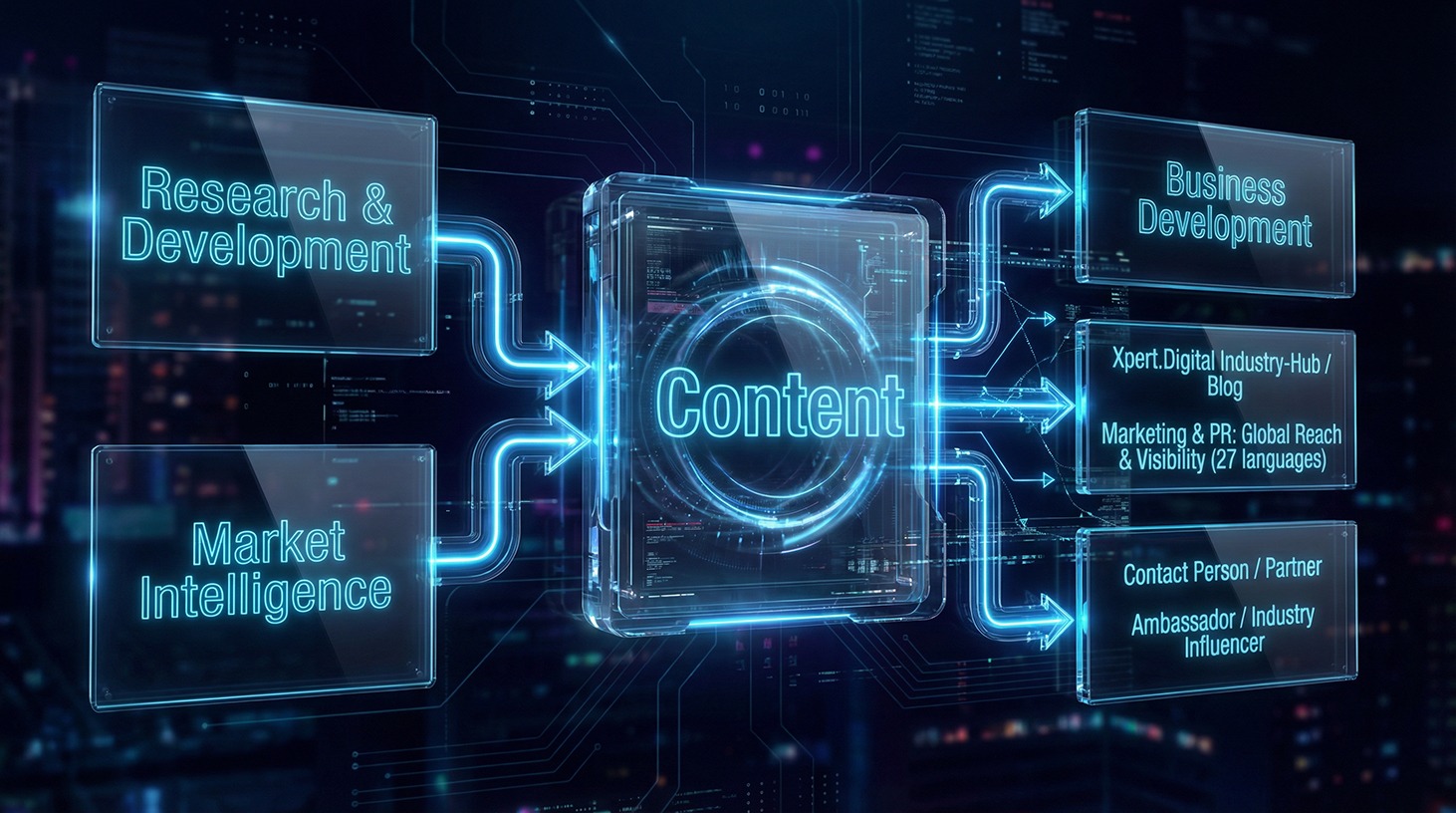
The quasi-in-house solution: How Xpert.Digital closes operational gaps in B2B marketing and sales – Smart Content-Driven Business - Image: Xpert.Digital
Xpert.Digital is a data-driven B2B industry hub led by Konrad Wolfenstein . The company acts as an external, quasi-in-house solution for industrial partners, closing operational gaps in marketing, content, and sales – without requiring additional resources on the client side.
More information here: