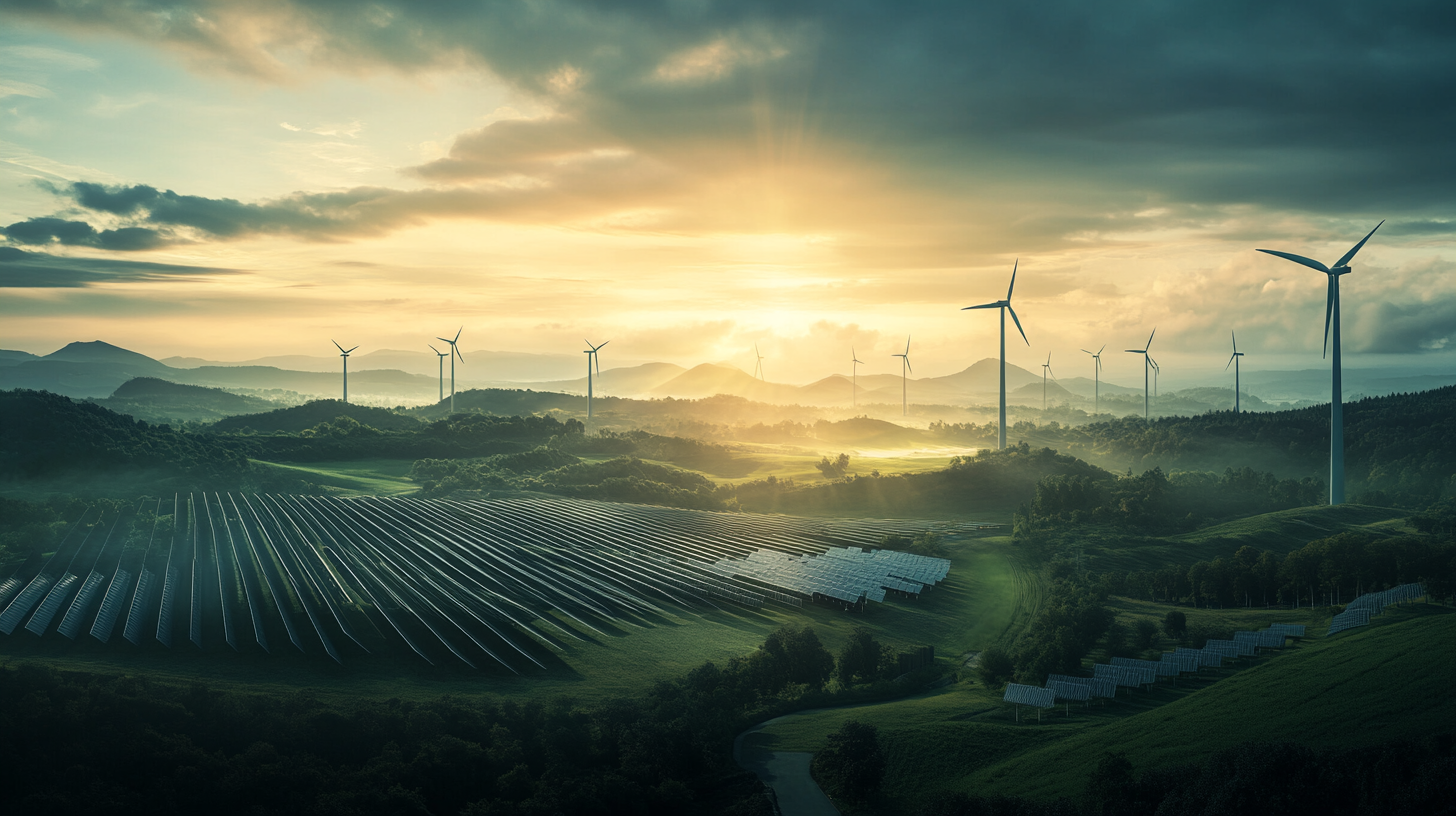
The expansion of renewable energies in Germany – wind turbines and solar parks: progress and challenges – Creative image: Xpert.Digital
Challenges and successes: The contradictory reality of Germany's energy transition
Transformation under pressure: Germany between energy transition and resistance
Germany's energy transition presents a complex picture of ambitious goals, considerable progress, and significant challenges. While Germany has achieved remarkable success in expanding wind power capacity, closer examination reveals regional resistance, land-use conflicts, and economic hurdles. This multifaceted situation shapes the current transformation of the German energy system and warrants a nuanced analysis.
Related to this:

Expansion status and targets of the energy transition
The energy transition is one of the central projects of German climate policy. With the ambitious goal of increasing the share of renewable energies in the electricity mix to 80 percent by 2030, the German government has enshrined concrete expansion targets in the Renewable Energy Sources Act (EEG) and the Offshore Wind Energy Act. By 2030, the installed capacity of wind turbines is to more than double to 145 gigawatts and reach 230 gigawatts by 2045. The targets for solar energy are even more ambitious: 215 gigawatts by 2030 and 400 gigawatts by 2045.
However, the actual expansion figures paint a mixed picture. In 2024, the annual target for wind power was not met – installed capacity fell 4.9 gigawatts short of the target. Solar energy, on the other hand, exceeded expectations, surpassing the annual target by a remarkable 11.8 gigawatts. Initial figures for 2025 indicate ongoing challenges: By the beginning of March, only 0.4 gigawatts of wind power had been installed, representing about five percent of the target of 9.2 gigawatts. For solar energy, installations with a total capacity of 2.5 gigawatts have been installed so far, accounting for approximately 14 percent of the annual target of 18 gigawatts.
Despite this discrepancy between targets and actual implementation, there are positive signs for the future. The year 2024 marked a milestone in wind turbine permits. By mid-December, permits had been granted for nearly 2,000 wind turbines with an impressive total capacity of approximately 11.3 gigawatts – a historic high. This represents an increase of 48 percent compared to the previous year. North Rhine-Westphalia (3.4 gigawatts), Lower Saxony (1.6 gigawatts), as well as Schleswig-Holstein and Mecklenburg-Western Pomerania, are leading the way in this development.
Regional resistance and structural challenges
Despite the overall positive trend in wind turbine permits, significant regional differences and resistance exist. This is particularly evident in southern Thuringia, where the regional planning authority, led by Michael Brodführer (CDU), has announced that it will no longer designate any new priority areas for wind turbines until further notice. The underlying problem is multifaceted: The increase in wind energy priority areas from the current 600 hectares to approximately 8,000 hectares by 2032, as demanded by the federal and state governments, is considered unrealistic. Furthermore, it is argued that the existing electricity grid is not designed for such an expansion of capacity.
These structural challenges are exacerbated by local citizen protests. A prime example is the planned wind farm northeast of Tambach-Dietharz in Thuringia, which is facing massive opposition. The project envisions up to twenty wind turbines, reaching heights of up to 250 meters, on an area of 284 hectares. The citizens' initiative "No Wind Power in the Forest" has already collected more than 5,000 signatures against the project, demonstrating the deep-rooted nature of the resistance within the local population.
Brodführer's demand for more realistic guidelines that are based on the actual energy needs of the region and can be supported by municipalities and residents reflects a fundamental tension: On the one hand, there is a need for an accelerated expansion of renewable energies to achieve the national climate targets, on the other hand, this expansion encounters local reservations and infrastructural limits.
Land use conflicts and social acceptance
The debate surrounding the expansion of renewable energies is further shaped by questions of land use. An interesting perspective is provided by comparing the land use required by renewable energy facilities with that of golf courses. Studies show that in many industrialized countries, including Germany, golf courses occupy more land than wind farms and solar installations combined. This finding raises fundamental questions about society's prioritization of land use.
The discussion first gained attention in Great Britain in 2022 when the environmental organization Greenpeace UK pointed out that golf courses there cover an area of 1,256 square kilometers, while solar parks only occupy 230 square kilometers. This comparison illustrates that considerable land reserves exist which could theoretically be used for the energy transition, but currently serve a leisure activity with comparatively little broad societal impact.
Researchers emphasize that golf courses not only require large areas but also cause significant environmental impacts through intensive lawn maintenance, high water consumption, and the use of chemical pesticides. These ecological costs stand in striking contrast to the frequently voiced criticism of landscape alteration caused by wind and solar power plants. The juxtaposition of these different land uses stimulates a societal discussion about which land-use priorities should be set if ambitious climate protection goals are to be achieved simultaneously.
Related to this:

Economic hurdles and technical challenges
In addition to spatial and societal aspects, economic factors represent another key challenge for the expansion of renewable energies. Grid fees, in particular, play a crucial role in the profitability of photovoltaic systems. These fees, levied for using the electricity grid, can significantly influence the profitability of solar installations and thus decisively shape investment decisions.
The situation worsened further in 2024, as the previous subsidy of €5.5 billion from the Economic Stabilization Fund was discontinued. This leads to a greater financial burden on grid operators, which is directly reflected in increased charges for consumers. The higher costs reduce the profitability of photovoltaic systems and can deter potential investors, thus hindering the goal of accelerating the expansion of renewable energies.
Another fundamental problem with solar energy is its unreliability. Since the sun doesn't shine around the clock, efficient electricity generation depends on continuous sunlight. To address this issue, energy storage systems are essential, capable of storing excess energy during periods of abundant sunshine. However, these technologies, such as batteries or pumped-storage hydroelectric plants, are expensive and require careful planning. Integrating different renewable energy sources, for example by combining solar and wind power, represents another approach to overcoming this challenge, but requires corresponding grid capacity and flexibility.
Perspectives and solutions for the future
Despite the numerous challenges, experts are optimistic that the expansion of renewable energies in Germany will gain momentum. The wind energy sector is pleased with the development of permits and speaks of 2024 as an "absolutely successful year." Bärbel Heidebroek, President of the German Wind Energy Association, emphasizes that the federal government's reforms are having an effect and that the increased number of permits should also become visible in the actual expansion from the end of 2025 onwards.
Jürgen Quentin of the German Wind and Solar Association sees the increased number of permits as a fundamental trend reversal resulting from the legal changes implemented by the previous coalition government. This positive assessment gives hope that the discrepancy between permits and actual expansion will decrease in the coming years.
To overcome regional resistance, a differentiated approach that takes local conditions and needs into account appears necessary. This could mean adapting regional expansion targets to existing network capacities and investing more heavily in network expansion. Furthermore, participatory planning approaches that involve citizens early on and offer them opportunities to participate in the projects could increase acceptance.
Balance between ambition and reality
The expansion of renewable energies in Germany is at a turning point. The federal government's ambitious goals are facing a variety of challenges – from regional resistance and land-use conflicts to economic and technical hurdles. At the same time, the record number of permits issued for wind turbines shows that the legal framework has been effectively improved.
The future of the energy transition will depend on the extent to which a balance can be struck between national climate targets and local realities. A successful transformation process requires not only technical solutions and regulatory adjustments, but also a societal dialogue about land-use priorities and a fair distribution of the burdens and benefits of the energy transition. Only by reconciling ecological necessities, economic interests, and social acceptance can the energy transition in Germany succeed and truly assume a leading role in Europe.
Related to this:
Your partner for business development in the fields of photovoltaics and construction
From industrial rooftop PV to solar parks and larger solar parking lots
☑️ Our business language is English or German
☑️ NEW: Correspondence in your native language!

Konrad Wolfenstein
I and my team are happy to be available to you as your personal advisor.
You can contact me by filling out the contact form here wolfenstein@xpert.digital:or simply call me at +49 7348 4088 965. My email address is
I'm looking forward to our joint project.