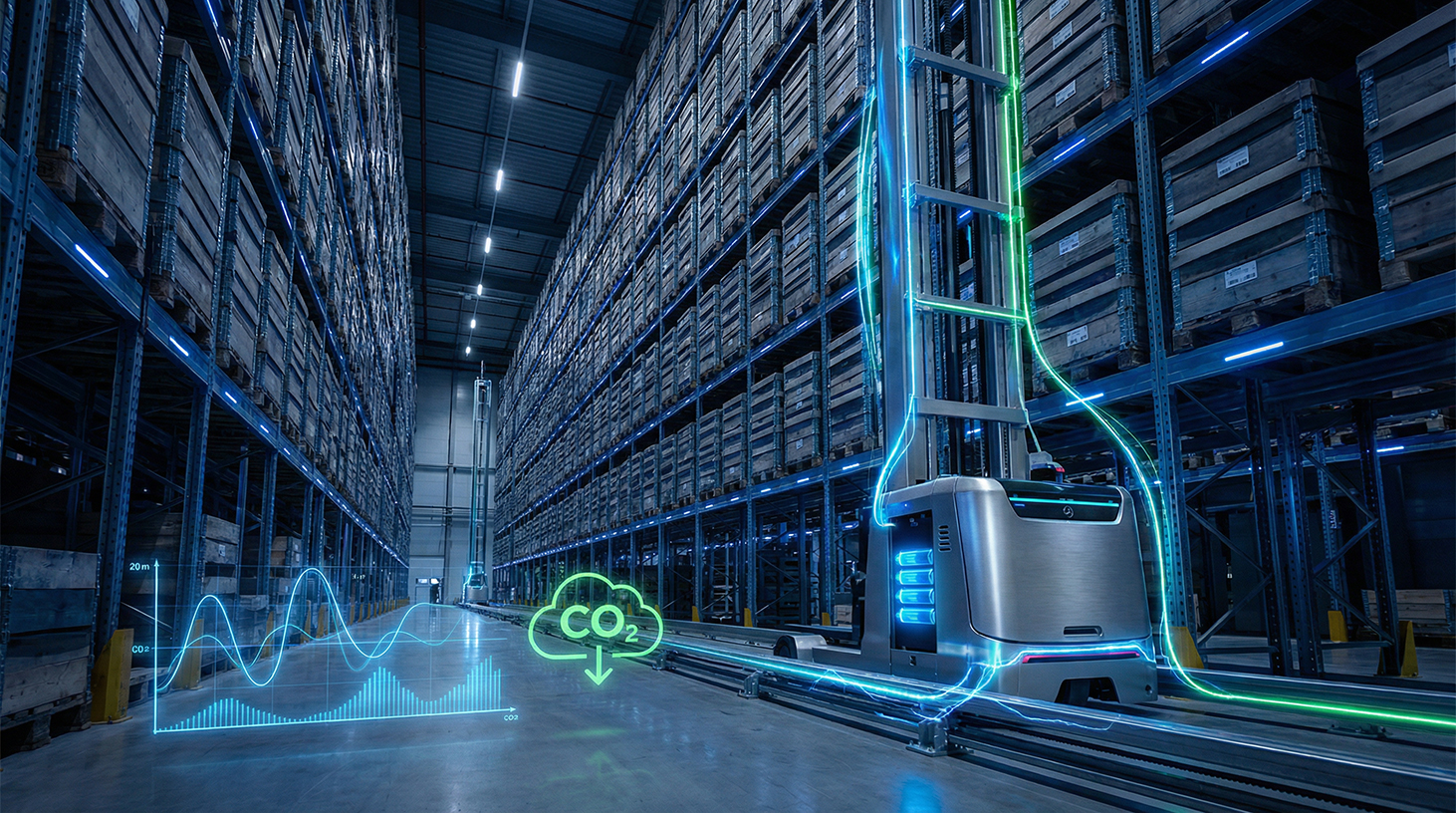
Smart Power Technology: Energy-efficient storage and retrieval machines with supercapacitor technology – Global regulatory pressure as a driver – Creative image: Xpert.Digital
New EU rules from 2026: Why old high-bay warehouses are becoming an expensive cost risk
Up to 65% lower electricity costs: The secret of energy-efficient high-bay warehouses
Amortization in just 3 years: Why smart logistics companies are now relying on Smart Power Technology
Intralogistics is facing a radical transformation: Global climate regulations and persistently high industrial electricity prices are transforming energy efficiency from a purely environmental concern into a matter of survival for companies. High-bay warehouses, in particular, are coming under scrutiny. However, while many operators still literally let the energy released when their storage and retrieval machines brake dissipate as unused heat, an established technology is revolutionizing the market: supercapacitors.
Intelligent systems like CAPDRIVE not only store braking and deceleration energy in a matter of seconds, but also reduce electricity costs by up to 65 percent and drastically decrease the required feed-in from the public grid. This article explores why modern energy storage systems often pay for themselves in new buildings within just three years, how they reduce not only electricity costs but also the expenses for the entire electrical infrastructure, and why smart power technology will soon become a regulatory requirement in light of new EU directives.
Global regulatory pressure as a driver of technological reorientation
The question of energy efficiency in intralogistics is no longer an academic debate about the future – it is an operational obligation that companies cannot ignore. The global regulatory framework for energy saving has become fundamentally stricter in recent years, and the logistics and warehousing sector is a particular focus. The European Green Deal, launched in 2019, forms the overarching growth strategy of the European Union on the path to climate neutrality by 2050. At the heart of this strategy is the revised EU Energy Efficiency Directive (Directive (EU) 2023/1791), which will trigger binding compliance obligations for companies from 2026 onwards – including mandatory energy audits for companies with an annual energy consumption of more than 10 terajoules. Logistics and warehousing companies are explicitly among the sectors directly affected.
In parallel, China and the USA have established their own binding frameworks. The Chinese National Energy Conservation Law (NEngG), first enacted in 1997 and fundamentally revised in 2007, aims to reduce energy consumption in all end-use sectors and to establish energy efficiency as a lever for economic and social development. In the USA, the EPA's ENERGY STAR program demonstrates how government accreditation structures guide industrial investment decisions: In 2022, 86 US manufacturing facilities achieved ENERGY STAR certification, collectively saving over 105 trillion British heat units and avoiding more than six million tons of CO₂ emissions – an amount equivalent to the emissions from the electricity consumption of over 1.1 million American households. The political message is clear: Energy efficiency is no longer just an environmental consideration, but a key competitive advantage.
The situation is particularly serious for Germany and the DACH region. In 2025, the average German industrial electricity price was 17.99 cents per kilowatt-hour – a level that puts operators of energy-intensive automation systems under considerable economic pressure. In this context, any technology that significantly reduces electricity consumption from the grid takes on a strategic dimension that extends far beyond the issue of energy.
From braking resistance to smart energy architecture – the technical development path
To understand the economic significance of modern energy recuperation technologies, it is necessary to understand the technological development path of storage and retrieval machines (SRMs). During operation in a high-bay warehouse, an SRM performs thousands of acceleration and braking maneuvers daily – each of which generates kinetic energy that must be dissipated somewhere. The simplest and historically oldest solution is the braking resistor: The electrical energy generated during braking is simply converted into heat and thus dissipated.
In a second development stage, DC link coupling was introduced, in which several drives are connected via a common DC link and a single braking resistor is sufficient for all drives. Excess energy from a braking drive can be directly used by another drive currently accelerating in the same system. This method, already established as standard at LTW Intralogistics, enables energy savings of 10 to 15 percent compared to systems without DC link coupling and delivers excellent results thanks to intelligent control technology. The fact that this is not yet a universal standard in the industry reveals a structural inefficiency: Many operators are unnecessarily paying daily for energy that could easily be recovered.
A third stage involves feeding excess energy back into the grid, where it is fed back into the public electricity network via a grid feed-in module. This solution is technically elegant, but not ideal: the efficiency of the feed-in process is limited, and the economic compensation for fed-in energy is far below the purchase price. The crucial weakness lies in the asymmetry: one buys energy at a high price and feeds it back in cheaply.
Supercaps as game changers: Physical principles with immediate economic impact
The highest level of development – and the actual subject of this analysis – is DC link coupling with integrated energy storage based on supercapacitors, or supercaps for short. Supercaps, also known as ultracapacitors or electric double-layer capacitors (EDLCs), store energy not through chemical reactions like batteries, but electrostatically. This results in two crucial advantages for industrial applications: firstly, extremely fast charging and discharging capability, measured in seconds, which is perfectly suited to the short braking and acceleration cycles of an RBG (Rail-Driven Car), and secondly, exceptionally high cycle stability, which far surpasses battery systems and is crucial for continuous industrial operation.
LTW Intralogistics has consistently implemented this technology under the product name CAPDRIVE. The CAPDRIVE RBG utilizes state-of-the-art supercapacitor technology to store energy generated during braking and lowering loads, and then feed it back into travel or lifting operations as needed. This results in energy savings of up to 35 percent compared to RBGs without DC link coupling, with the current physical and technical maximum of supercapacitor technology reaching 40 percent. Even more significant for the business calculation is another effect: grid feed-in – i.e., the power drawn from the public electricity grid – decreases by approximately 80 percent. This figure not only transforms the energy bill but also changes the entire electrical infrastructure of a company.
The global supercapacitor market reflects the growing relevance of this technology: It was estimated at around US$2.9 billion for 2024 and is projected to expand at a compound annual growth rate (CAGR) of 18.2 percent until 2034. A separate market research institute estimates the market at US$0.54 billion for 2025 and forecasts a CAGR of 15.27 percent until 2030. The difference in absolute figures results from differing definitions of the market segment, but the trend is clear: Supercapacitors are experiencing a boom, ranging from electromobility and stationary energy storage to intralogistics.
Practical calculation: What CAPDRIVE specifically means in terms of investment and return
Abstract energy efficiency promises don't convince investors. What matters are figures from real-world operations. LTW Intralogistics implemented a CAPDRIVE system in its own high-bay warehouse on Achstrasse in Wolfurt, Vorarlberg, and documented the results. This case study provides a rare insight into actual economic viability.
The technical basis: The investigated RBG operates at a height of 20 meters and uses supercapacitors to recuperate braking energy. Energy recovery is 35 percent, and grid feed-in is reduced by 70 percent. The main supply cable shrinks from a conventional 4×16 mm cross-section to a 4×2.5 mm cross-section – a vivid illustration of how dramatically the connected load drops.
The economic calculation sharply divides into two scenarios:
In a greenfield project, meaning a new building where the entire electrical infrastructure is being planned from scratch anyway, the additional cost for the energy storage system, including the electronic infrastructure, is only 10 percent compared to a conventional solution. Energy costs are reduced by 65 percent, and the payback period is just three years. In other words, an operator who plans a new high-bay warehouse today and forgoes CAPDRIVE is not making a neutral decision – they are making a decision that will result in unnecessarily high follow-up costs over the entire lifespan of the facility.
In the brownfield scenario, i.e., retrofitting an existing plant, the investment costs increase by 60 percent compared to a conventional solution. Energy costs still fall by the same 65 percent, but the amortization period extends to six years. With a typical industrial electricity price of around 18 cents per kilowatt-hour and the simultaneous significant reduction in grid connection charges, this result is also economically robust. This is because the decisive factor lies not primarily in the energy savings themselves, but in the drastic reduction of peak loads and thus the significantly lower grid charges – a cost factor that is often underestimated in industry.
An important point to note for interpretation: The key figures vary considerably depending on the operating location and local electricity pricing model. In countries with very low grid fees or flatter load price structures, the savings effects are lower; in Germany or Switzerland, with their pronounced capacity price component, they are correspondingly higher.
LTW Intralogistics Solutions

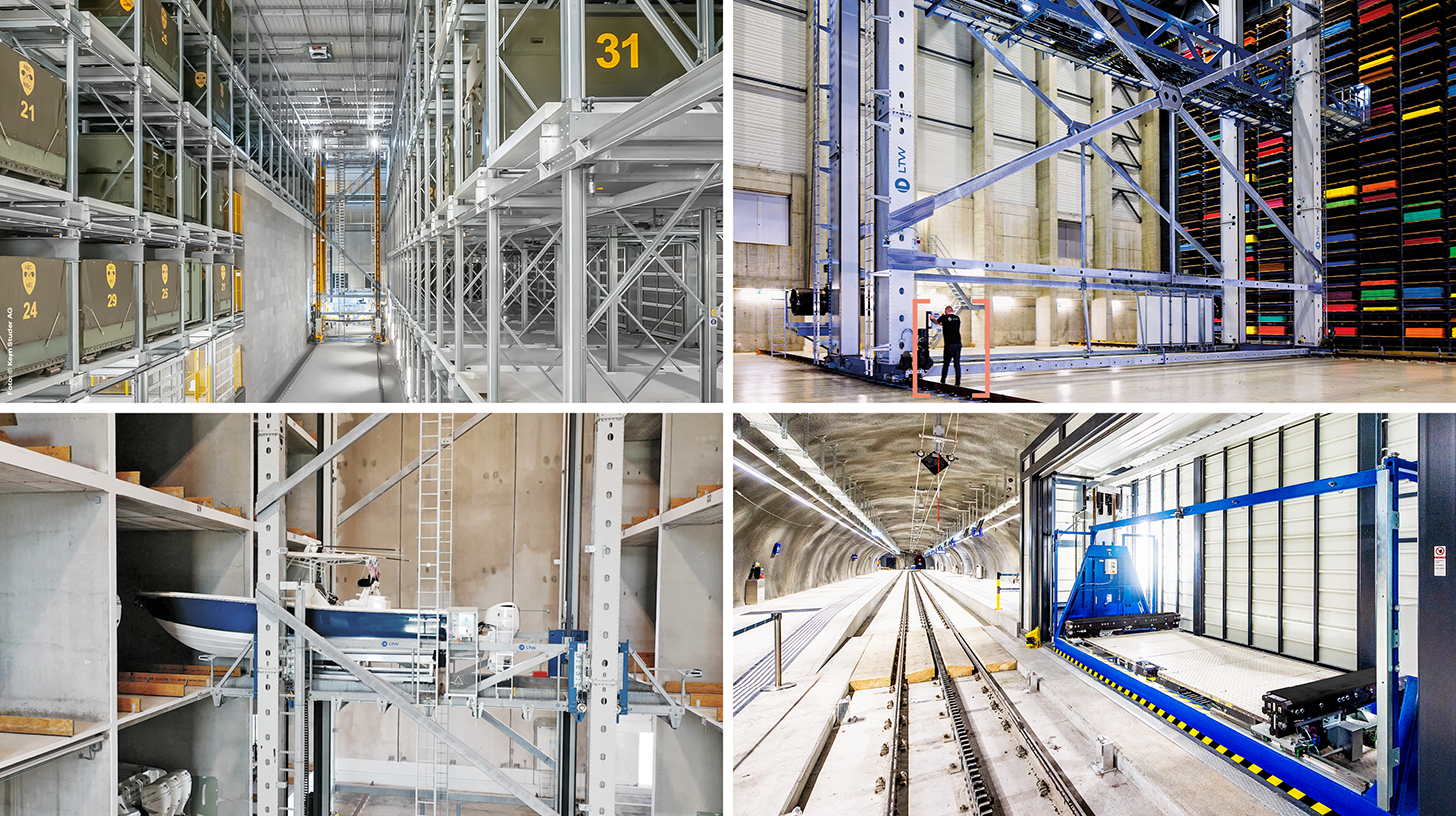
LTW Intralogistics – Engineers of Flow - Image: LTW Intralogistics GmbH
LTW offers its customers not individual components, but integrated complete solutions. Consulting, planning, mechanical and electrotechnical components, control and automation technology, as well as software and service – everything is networked and precisely coordinated.
In-house production of key components is particularly advantageous. This allows for optimal control of quality, supply chains, and interfaces.
LTW stands for reliability, transparency, and collaborative partnership. Loyalty and honesty are firmly anchored in the company's philosophy – a handshake still means something here.
Related to this:
Energy management is becoming mandatory – here's how you can benefit
Market penetration and strategic implications for the industry
A look at market acceptance reveals a remarkable pattern: Since 2022, 15 percent of all newly built stacker cranes have been equipped with energy storage. This is revealing for several reasons. On the one hand, the figure shows that the technology has left the laboratory testing phase and is now in widespread use. On the other hand, it also means that 85 percent of all newly installed systems still manage without this economically superior technology – an enormous, untapped market potential.
The global automated storage and retrieval systems (AS/RS) market is experiencing significant growth. Market volume was estimated at approximately US$1.15 billion for 2024, with a projected annual growth rate of over 7 percent. The growth drivers are well-known: the e-commerce boom, rising labor costs, space constraints in urban areas, and the pressure to automate the entire supply chain. The question is no longer whether high-bay warehouses will be built, but how they will be built – and this is precisely where the question of what share of the growth will be attributable to energy-efficient systems becomes clear.
The rising demand for green technology in intralogistics is not merely a marketing signal. It is driven by hard structural forces: supply chain transparency requirements, ESG reporting obligations, CO₂ pricing, and the increasing pressure from institutional investors on sustainable business models. Companies that plan their intralogistics today without an energy efficiency strategy will struggle to meet the corresponding compliance requirements tomorrow.
In addition, there is the regulatory requirement: From October 2026, companies with an annual energy consumption exceeding 10 terajoules are obligated to conduct regular, independent energy audits. From October 2027, companies with an annual consumption of more than 85 terajoules must implement a certified energy management system according to ISO 50001 or an equivalent standard. Logistics, warehousing, and production facilities are explicitly included in the affected categories – CAPDRIVE technology and comparable systems thus become not only an economic opportunity but also a compliance tool.
Technology limits, system comparisons and innovation perspectives
A serious analysis cannot ignore the limitations of the technology. Currently available supercapacitor systems reach their physical limit at a maximum energy recovery rate of 40 percent. This is inherent in the nature of electrostatic storage: supercapacitors have a limited energy density compared to lithium-ion batteries. Their defining characteristic – the ability to perform extremely fast charge and discharge cycles – simultaneously limits the total amount of energy that can be stored.
Another factor is the significant variation in economic indicators depending on the installation location. In high-bay warehouses with large lifting heights and frequent load changes – precisely where stacker cranes consume a lot of energy – supercapacitor systems reach their full potential. At lower storage heights or lower cycle frequencies, the effect decreases accordingly. The height of 20 meters shown in the case study is in the middle to upper range of practical applications, which means the results can be considered representative, but not universally applicable.
From a technological perspective, combining supercapacitors with batteries is the next logical step. Hybrid energy storage systems could combine the speed of supercapacitors with the higher energy density of lithium-ion batteries, thus pushing the boundaries of technological advancement. Fraunhofer IPA has already developed a novel hybrid storage system called "PowerCap" within the "FastStorageBW II" project, which establishes precisely this combination and has been successfully tested in a storage and retrieval machine. The technological roadmap therefore clearly points toward increasing performance.
| Technology level | Energy saving | Strengthen | Weaken |
|---|---|---|---|
| DC link coupling (standard RBG) | 10–15 % | Cost-effective, already standard at LTW, good results | Limited savings potential |
| DC link coupling with feedback | 15–20 % | Recuperative solution | Less than ideal efficiency, higher price |
| CAPDRIVE with supercapacitors | 30–35 % | Maximum savings, reduction of peak loads, compensation of grid fluctuations | Higher investment costs, max. 40% technical limit |
A comparison of the three commercially available LTW technology levels reveals clear economic differences: Simple DC link coupling (standard DC link coupling) achieves energy savings of approximately 10–15% and, due to its cost-effectiveness and established use in LTW systems, is an attractive basic solution, but offers only limited savings potential. DC link coupling with regenerative braking increases savings to around 15–20% and operates regeneratively, although efficiency is not ideal and the solution involves higher acquisition costs. CAPDRIVE systems with supercapacitors offer the most significant savings, enabling approximately 30–35%, as well as reducing peak loads and balancing grid fluctuations; however, this is offset by higher investment costs and a maximum technical efficiency of around 40%. Overall, standard DC link coupling represents a cost-effective entry point, but regenerative braking is less economically advantageous compared to local storage, while CAPDRIVE with supercapacitors offers the maximum energy and grid benefits but requires the highest investment.
This tiered approach is significant from an investor's perspective: Those seeking entry into energy-efficient intralogistics will find DC link coupling to be an affordable, readily available solution. Those aiming for maximum impact and accepting the amortization period will choose the CAPDRIVE system. There is no optimal middle ground – while feeding energy back into the grid is technically feasible, it is clearly less economical than local storage.
System relevance beyond energy costs: grid stability and infrastructure costs
An often overlooked aspect of supercapacitor technology concerns the infrastructure level. Reducing grid feed-in by up to 80 percent not only means lower ongoing operating costs – it fundamentally changes the structural and electrical requirements of a plant. As the cable example shows, the required cable cross-section drops from 4×16 mm to 4×2.5 mm. That's a reduction by a factor of 6.4 in cable thickness. Overall, this leads to lower installation costs for the entire electrical infrastructure, smaller transformers, fewer switchgear, and reduced expenses for cable routes – an effect that is particularly pronounced in greenfield projects and reduces the amortization period to three years.
Furthermore, supercapacitor systems offer a function that is often overlooked in economic evaluations: bridging short-term grid fluctuations. In industrial areas with unstable grid quality, a voltage drop can temporarily shut down an automated storage facility – resulting in significant consequential costs due to production interruptions, manual interventions, and IT restarts. An integrated energy storage system acts as a buffer, thereby increasing plant availability. This resilience aspect will become increasingly important in the future, as the feed-in of volatile renewable energies is degrading grid quality in some regions of Europe.
Another systemic advantage lies in peak load optimization. Industrial electricity tariffs in Germany and Austria typically include a capacity charge component, where the measured maximum peak load within a billing period – usually 15-minute intervals – significantly influences grid fees. The CAPDRIVE system dampens precisely these peaks by supplying energy from storage instead of the grid during periods of high demand. The cost savings from lower grid fees can significantly outweigh the direct energy savings – an economic logic that is often overlooked when considering only kilowatt-hours.
The strategic imperative of Smart Power Technology
The analysis of Smart Power Technology in the context of energy-efficient intralogistics leads to a clear core message: Supercapacitor-based recuperation systems for storage and retrieval machines are not a technology of the future – they are an economically superior technology of the present, whose market penetration falls far short of its potential.
The economic logic is compelling. Anyone planning a high-bay warehouse today would be well advised to view the additional 10 percent cost for a CAPDRIVE system for what it is: an investment with a documented payback period of three years and energy cost savings of 65 percent over the entire lifespan of the system. Given industrial electricity prices of around 18 cents per kilowatt-hour and the foreseeable introduction of CO₂ pricing, which will further increase energy costs, this calculation improves with each year of operation.
The challenge lies less in the technology than in the decision-making culture. In many companies, the purchase and planning of intralogistics systems still follow the outdated paradigm of minimizing investment costs without considering the entire life cycle. Those who only look at the initial investment will perceive CAPDRIVE as more expensive. Those who calculate the total cost of ownership will reach the opposite conclusion.
At the same time, it is important to realistically assess the limitations of the technology. The current energy recovery ceiling is around 40 percent, economic results vary considerably depending on the location, and the payback period for brownfield projects extends to six years. These nuances mean that a careful, site-specific economic analysis is essential – one-size-fits-all solutions fall short.
What remains is the image of a technology that represents the transition from energy waste to energy intelligence in automated warehouse logistics. Brakes, which in conventional systems only generate heat, become energy generators. Peak loads that tie up expensive grid capacity are reduced. Grid fluctuations that cause production interruptions are buffered. Smart Power Technology is not a marketing term – it is the precise description of a new logic of energy use in intralogistics.
Consulting - Planning - Implementation

Konrad Wolfenstein
I would be happy to serve as your personal advisor.
You can contact me at wolfenstein∂xpert.digital or
Just call me on +49 7348 4088 965 .
Your intralogistics experts

Consulting, planning and implementation of complete solutions for high-bay warehouses and automated storage systems - Image: Xpert.Digital
More information here: