Electromobility: Europe is racing ahead – Image: Olivier Le Moal|Shutterstock.com
Electromobility: Europe is racing ahead
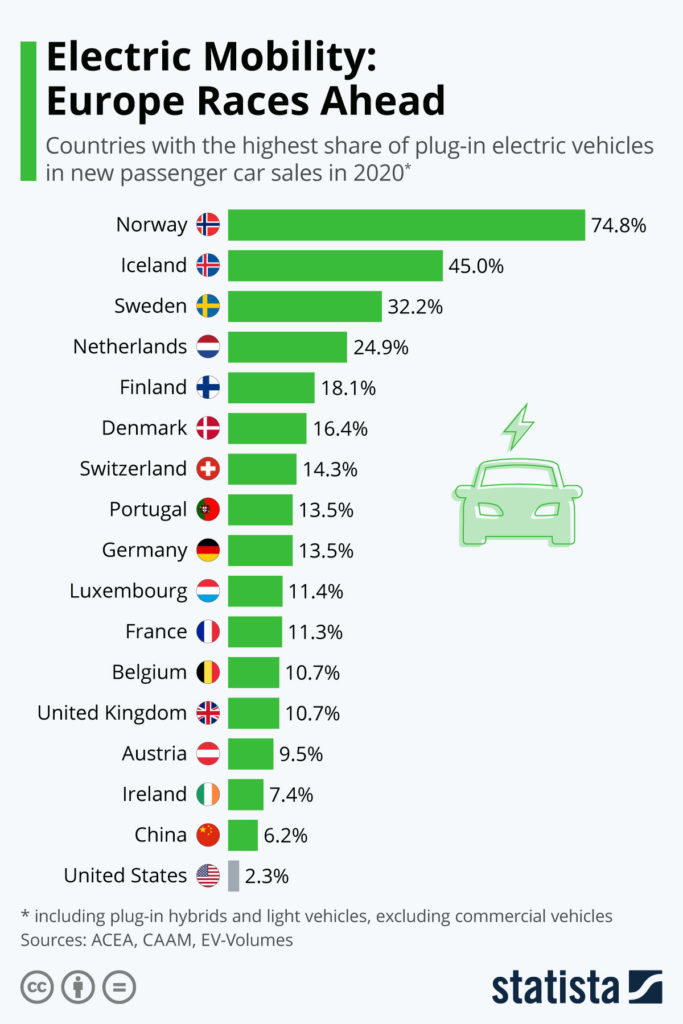
Despite challenging circumstances and the negative impact of the pandemic on the automotive industry, electric vehicles made significant strides in many countries in 2020. According to estimates from industry tracker EV Volumes, plug-in electric vehicles accounted for 4.2 percent of global light vehicle sales last year, up from 2.5 percent in 2019. While only eight countries reported an EV share of 5 percent or more in 2019, 13 countries managed to increase the share of electric vehicles in new car sales to over 10 percent in 2020. As in previous years, Norway was a positive outlier with a 75 percent share of plug-in electric vehicles, while Iceland, Sweden, and Finland were also among the top five – a testament to the rapid adoption of electric cars in the Nordic countries. China, by far the largest market for electric vehicles in terms of sales, fell out of the top 10 with a share of 6.2 percent of passenger car sales in the country. Meanwhile, the United States fell further behind with an EV share of just 2.3 percent.
While Norway's policies (such as tax breaks, toll exemptions, and other incentives) have proven highly effective in promoting electric vehicles, the Norwegian model cannot simply be transferred to other countries. Firstly, the country levies high vehicle import tariffs and registration taxes, making cars significantly more expensive than in the US, for example. By waiving these tariffs for electric vehicles, Norway subsidizes their purchase to an extent that a larger country like the US could not afford. Secondly, Norway is a very wealthy country (ironically, thanks to its oil reserves) with a high level of income. According to Statistics Norway, the median household income after taxes in 2018 was $54,000, roughly the same as in the US but more than double the EU average.
Electric Mobility: Europe Races Ahead
Despite difficult circumstances and the pandemic's negative impact on the the automotive industry, electric vehicles made a giant leap forward in many countries in 2020. According to estimates from industry tracker EV-Volumes, plug-in electric vehicles accounted for 4.2 percent of global light vehicle sales last year, up from 2.5 percent in 2019. While just eight countries reported an EV share of 5 percent or higher in 2019, 13 countries managed to push electric vehicles past 10 percent of new light vehicle sales in 2020. Like in prior years, Norway was a positive outlier with a 75-percent share of plug-in electric vehicles, while Iceland, Sweden and Finland also featured in the top 5 – a testament to the quick adoption of electric cars in Nordic countries. China, which is by far the largest market for electric cars in terms of unit sales, fell out of the top 10 with electric vehicles accounting for 6.2 percent of passenger car sales in the country. Meanwhile the United States fell further behind with an EV share of just 2.3 percent.
While Norway's policy measures (eg tax exemptions, toll exemptions and other incentives) did prove highly effective in promoting electric cars, the Norwegian model cannot be easily transferred to other countries. First and foremost, the country imposes hefty vehicle import duties and car registration taxes, making cars significantly more expensive than say in the United States. By waiving these duties for electric vehicles, Norway is effectively subsidizing EV purchases at a level that a larger country such as the US couldn't afford. Secondly, Norway is a very wealthy country (ironically thanks to its oil reserves) with a high level of income. According to Norway's national statistical institute, the country's median household income after taxes was around $54,000 in 2018, which is roughly level with the United States but more than twice as high as the EU average.

Electromobility: Europe is racing ahead – Image: Statista
Related to this:
- Electromobility: Norway is racing ahead
- Electromobility is coming slowly, but it is coming
- Charging infrastructure for electric mobility in Germany
Keep in touch