E-Commerce Automation – Image: Xpert.Digital / gualtiero boffi|Shutterstock.com
E-commerce has transformed supply chains, and speed and precision are paramount. Modern intralogistics based on digitalization and automation is therefore essential to remain competitive in this increasingly fierce market. And digitalization is by no means simply a matter of switching from paper to electronic invoicing. To stay competitive, companies need ever more intelligent intralogistics systems. This applies both to courier, express, and parcel (CEP) servicesthat handle shipping and returns, and to internal logistics, including warehousing and order picking.
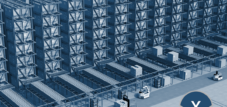
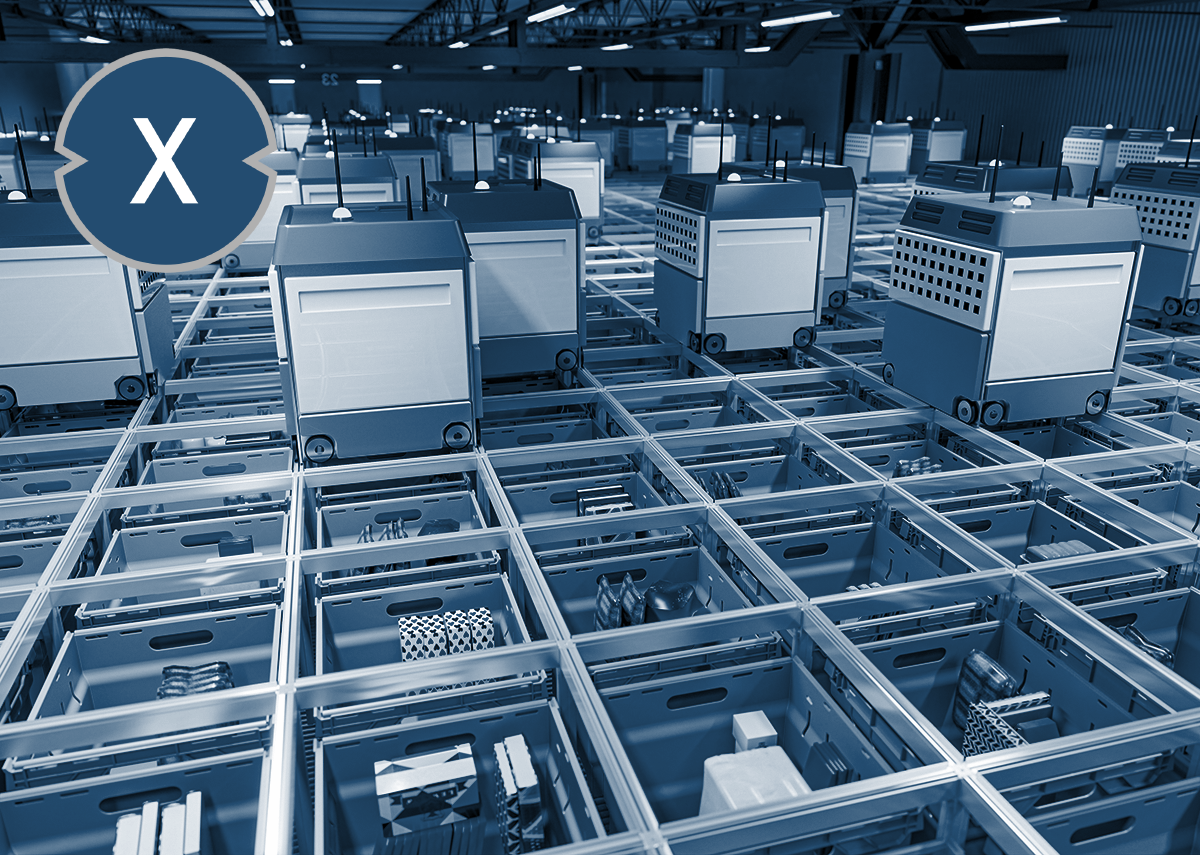
The trend here is toward ever-increasing automation. Industry leader Amazon with its acquisition of the US company Kiva Systems . This innovative and highly flexible intralogistics solution uses mini-robots to automatically transport shelves to picking stations. Admittedly, it's a large-scale solution that isn't suitable for every company. But smaller-scale options are also available. For example, the use of shuttle systems in the warehouse offers smaller retailers a way to automate their processes.
Efficient intralogistics is crucial for success
Whether it involves restructuring the warehouse layout or implementing modern storage systems, efficient intralogistics helps eliminate weaknesses in the warehouse. The effort required is worthwhile because, ultimately, processes run more smoothly, and orders can be processed faster, more precisely, and more cost-effectively. And this form of process optimization is not a one-off step; continuous monitoring of intralogistics is essential for long-term success.
This is especially true when business is growing. Companies quickly run the risk of losing track of their own warehouse productivity. This can happen, for example, when existing equipment can no longer keep pace with the increased flow of goods.
At that point, it's time for the growing company to consider a larger, ideally customized, internal logistics solution. A key component of this is selecting suitable warehouse systems to ensure a smooth flow of goods within the company. It's crucial that all components are optimally coordinated. Once this is achieved, such a solution can minimize time and resource losses and, despite its sometimes substantial initial investment, pay for itself relatively quickly.
📦 Logistics consulting for industry and mechanical engineering - for logistics managers and warehouse managers
Do you need expert support in implementing your requirements? Do you have questions about Smart Factory, Smart Logistics, or digitalization?
🏬 Warehouse optimization and automation for industry, production and trade
Automating warehouses and supply chains is a key element of warehouse optimization. We can help you with that.
🛒 E-commerce warehousing solutions for returns, fast shipping (same-day delivery), and error-free order picking
E-commerce has specific requirements, and competition is constantly intensifying. It's no coincidence that e-commerce is considered a driving force behind market changes. Our strength lies in our digital expertise, which enables us to deliver innovative solutions and implementations.
The future belongs to digital intralogistics
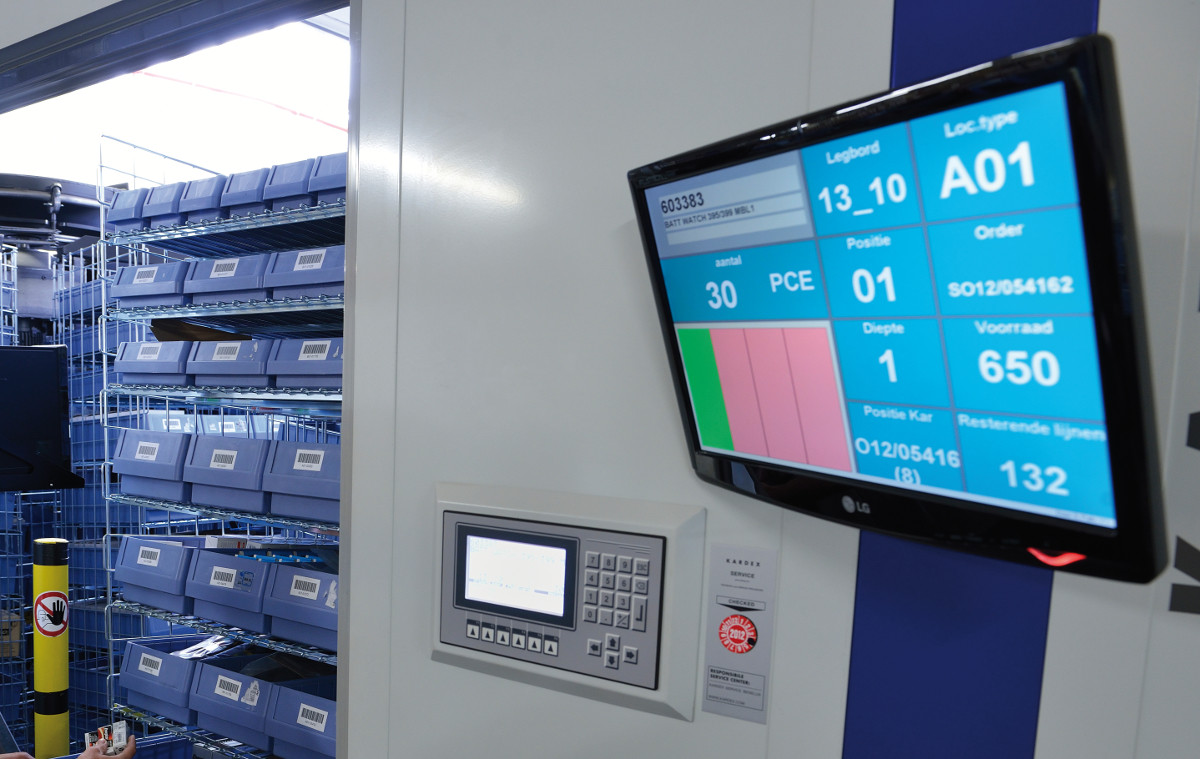
However, to operate optimally, these technically complex automated systems often require constant, predictable inventory levels and a homogeneous product range. This means they need precisely the aspects that are frequently lacking in e-commerce.
Automatic = (in)flexible?
Nevertheless, automation in warehousing will be increasingly emphasized in the future, according to the study "E-Commerce & Intralogistics 2020 Systems" by the market research company Technomar, supported by the German E-Commerce and Distance Selling Association (BEVH). The study aimed to identify the future use of automated systems in the logistics processes of the e-commerce sector. According to the study, automated systems are already in use by 26 percent of companies, despite their often limited flexibility. The main arguments cited for their use are the high performance and precision of these systems. For companies that have currently decided against automation, the reasons for their decision include a heterogeneous product range and/or pronounced fluctuations in demand, as well as a lack of willingness to invest – particularly among startups.
But what should an ideal logistics system for e-commerce look like? What should companies prioritize when selecting their logistics, and when is it time to fully or partially automate their operations?
The study also provides some answers to this question. To optimize storage, order picking, and subsequent shipping, decisions must be made individually based on the specific requirements of each company.
Homogeneous product range, consistently high demand
Automation is easiest here, as the storage equipment can operate at a consistently high performance level when similar goods are requested, leading to optimal system utilization. Automated storage shuttles or vertical carousel storage systems are well-suited for this application.
Wide product range, consistently high demand
Heterogeneous items can also be stored effectively in automated systems. The additional use of containers for differently sized goods is recommended here. This approach ensures high storage performance despite a heterogeneous product range.
Wide product range, fluctuating demand
This target group currently faces the greatest challenges in implementing a standardized automated solution. Their primary need is for high flexibility in handling fluctuating orders, which currently gives manual systems an advantage. However, these too can be complemented by automated systems, such as efficient transport and conveyor technology or robotic solutions (see Amazon's Kiva and similar systems).
Service concepts and customized solutions
In any case, it is essential to tailor the solution to the individual customer. Customized solutions and concepts require close collaboration between manufacturer and customer. Detailed planning is the focus of this process. The actual construction of the system follows and is simply the implementation of the preceding work.
Often, the solutions are based on modular systems that are customized or expanded to meet individual customer needs. Therefore, for an optimal and tailored system, it is crucial to involve the customer as early as possible. Initial details are usually discussed in a workshop where both parties agree on the approach. Furthermore, ongoing meetings are necessary to ensure that all participants are always up-to-date and any changes can be immediately incorporated into the planning.
Logistics consulting: Xpert.Plus for intralogistics solutions and automation in the e-commerce sector
Xpert.Plus is a project by Xpert.Digital. We have many years of experience in supporting and consulting on warehouse solutions and in warehouse optimization, which we combine under Xpert.Plus in a large network.

Konrad Wolfenstein
I would be happy to serve as your personal advisor.
You can contact me by filling out the contact form below or simply call me on +49 7348 4088 965 (Munich) .
I'm looking forward to our joint project.
Write to me


Xpert.Digital – Konrad Wolfenstein
Xpert.Digital is a hub for industry focusing on digitalization, mechanical engineering, logistics/intralogistics and photovoltaics.
With our 360° Business Development solution, we support renowned companies from new business to after-sales.
Market intelligence, smarketing, marketing automation, content development, PR, mail campaigns, personalized social media and lead nurturing are part of our digital tools.
You can find more information at: www.xpert.digital – www.xpert.solar – www.xpert.plus
Keep in touch