


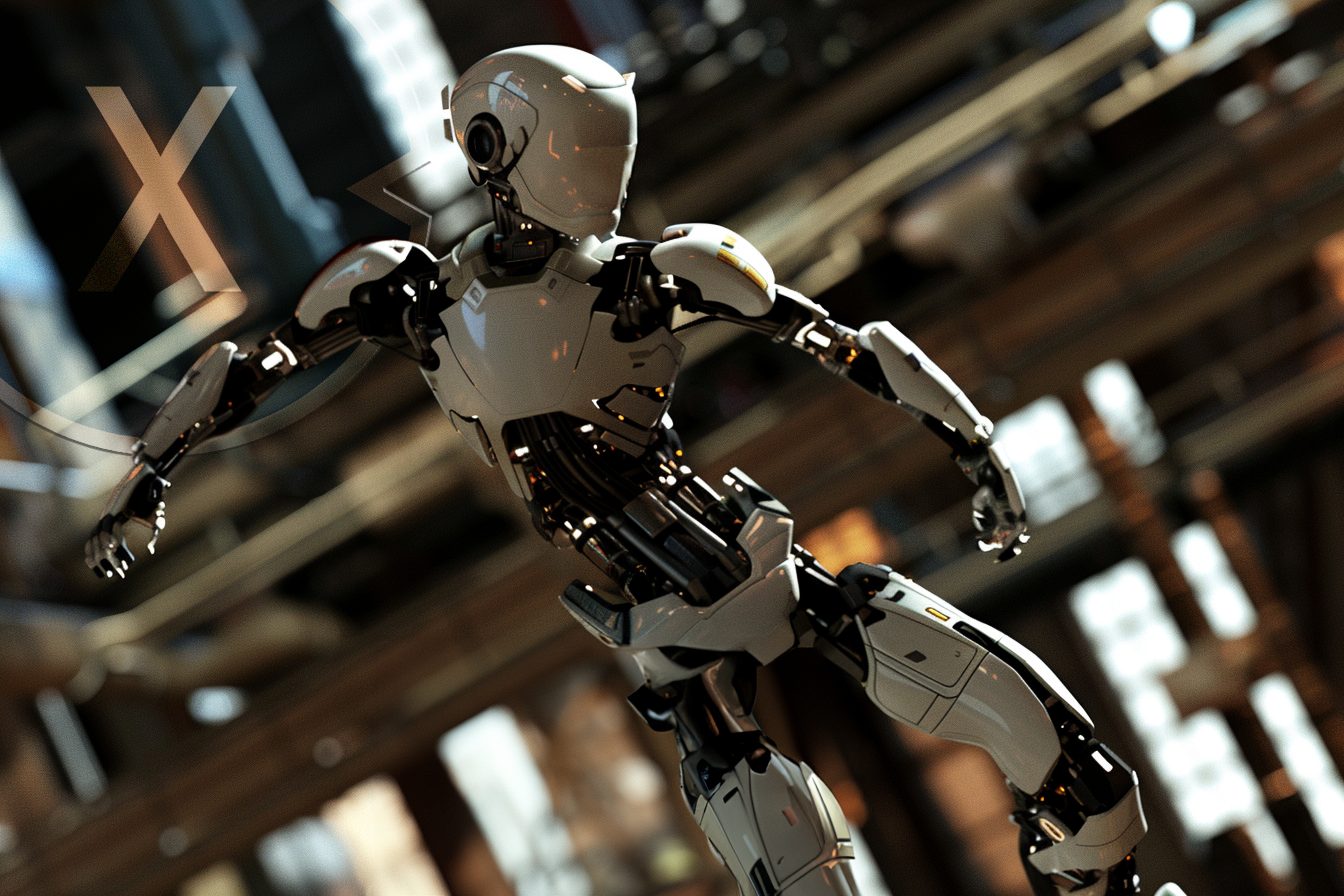
AI Humanoid Robotics and Service Robots: Breakthroughs and Innovations in Dynamic Robotics and the Service Sector – Creative Image: Xpert.Digital
Imitating human movements: The impressive world of humanoid robotics
The world of humanoid robotics has made remarkable progress in recent years. These robots, modeled on the human body, not only represent technical masterpieces but also demonstrate the immense potential for future applications across various industries. They can perform complex tasks, interact with their environment, and even mimic human movements and gestures. The following section presents some of the outstanding humanoid robots and exoskeletons that are shaping the robotics landscape.
1. Tesla's Optimus: The next generation humanoid robot
Tesla, known for its innovations in the electric vehicle sector, has taken a significant step into robotics with the introduction of Optimus. This humanoid robot was designed to perform dangerous, repetitive, or tedious tasks. Optimus is approximately 173 cm tall and weighs 57 kg. It can carry a payload of up to 20 kg and reaches a maximum walking speed of 8 km/h.
The robot is equipped with advanced sensors and cameras that enable it to precisely perceive its surroundings. Elon Musk described the vision behind Optimus: "Our goal is to create a useful humanoid robot that is commercially viable." With the integration of Tesla's advanced AI (Augmentative Intelligence) technology, Optimus has the potential to be used in areas such as manufacturing, logistics, and even in the home.
2. Boston Dynamics' Atlas: The epitome of dynamic movements
Atlas, from Boston Dynamics, is considered one of the most advanced humanoid robots in the world. It is known for its impressive balance and agility. Atlas can walk, jump, perform somersaults, and navigate complex obstacle courses. These capabilities demonstrate the potential of advanced robotics in terms of mobility.
The developers of Atlas emphasize the importance of dynamic movements: "We want to create robots that achieve or even surpass human mobility and dexterity." Atlas serves as a research platform to expand the boundaries of robotics and open up new areas of application.
3. UBTECH's Walker X: The service robot for everyday life
Walker X from UBTECH Robotics is a bipedal humanoid robot designed for service applications in homes and offices. Standing 145 cm tall and featuring a sleek design, Walker X can open doors, serve drinks, and interact with smart home appliances.
The robot uses a combination of visual and auditory perception to communicate with people. UBTECH describes Walker X as "a step towards a future where robots are an integral part of our daily lives." Its ability to recognize and respond to human gestures makes it a promising candidate for assistance tasks.
4. Exoskeletons: Extending Human Capabilities
Alongside autonomous humanoid robots, exoskeletons are also gaining importance. These wearable robotic suits support the human body and enhance its capabilities. Companies like ULS Robotics are developing exoskeletons that can be used in industry, medicine, and the military.
ULS Robotics' exoskeletons enable users to lift heavy loads without straining their bodies. They are particularly useful in sectors such as mining, logistics, and construction. A ULS Robotics representative emphasizes: "Our exoskeletons are designed to increase safety and efficiency in the workplace." By reducing fatigue and the risk of injury, they contribute to a more sustainable working environment.
5. The importance of humanoid robotics for the future
The development of humanoid robots goes beyond mere technological achievements. It reflects humanity's quest to create machines that not only function but can also interact with us. Humanoid robots have the potential to be used in fields such as caregiving, education, service, and rescue missions.
A key aspect is the ethical and social acceptance of this technology. The question arises as to how robots can be integrated into society without jeopardizing human jobs or crossing ethical boundaries. Experts agree that human-robot collaboration must be carefully designed.
6. Challenges and future developments
Despite impressive progress, developers face challenges such as energy efficiency, autonomy, and natural interaction. The movements of humanoid robots should not only be functional but also aesthetically pleasing to promote positive public acceptance.
The future of humanoid robotics is promising. With the increasing integration of artificial intelligence and machine learning, robots will be increasingly able to learn from experience and adapt to new situations. This opens up possibilities for personalized assistance and complex problem-solving.
7. Shaping the future
Humanoid robots like Tesla's Optimus, Boston Dynamics' Atlas, and UBTECH's Walker X demonstrate the rapid development in robotics. They embody the potential to revolutionize many aspects of our lives, from industry to everyday household tasks. At the same time, they underscore the need to combine technological innovation with ethical responsibility.
The coming years will be crucial in shaping how these technologies are developed and integrated into our society. It is in our hands to seize the opportunities and overcome the challenges to create a future where humans and robots live and work together harmoniously.
Related to this: