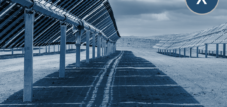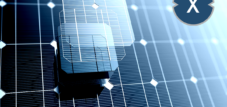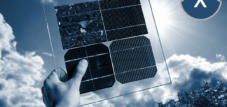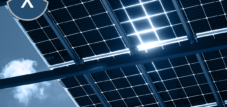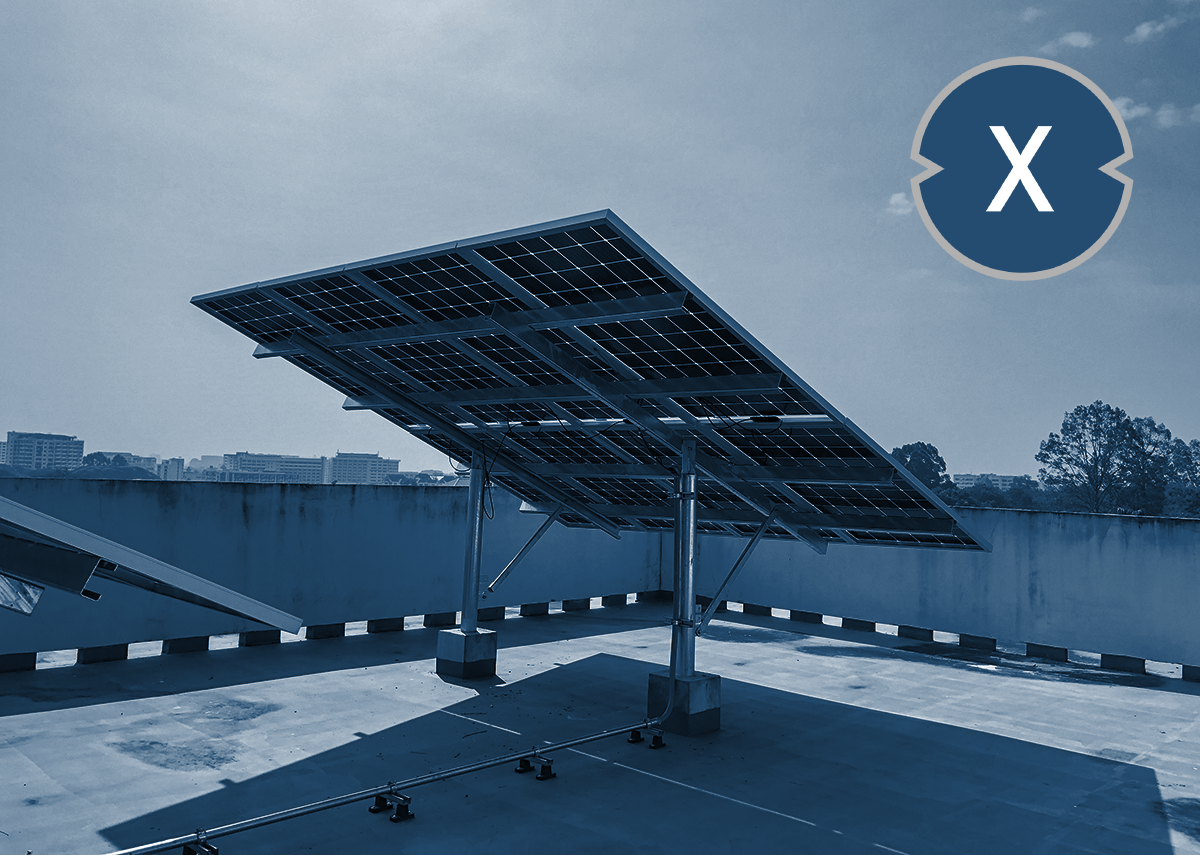
Bifacial double-glass solar modules – Image: Xpert.Digital / Jak76|Shutterstock.com
Bifacial technology for increased performance
Regardless of whether N-type or P-type solar cells are used (more on this below), there is a way to significantly increase the efficiency of solar modules. This is bifacial technology. Unlike monofacial solar cells, which only generate PV power when their top surface is illuminated, bifacial solar cells are designed to generate power from both their top and bottom surfaces. The increased light absorption achieved in this way considerably improves the module's efficiency.
Naturally, the efficiency on the underside is not as high as on the top side, which faces the sun. Nevertheless, depending on the location, distance from the ground, and external conditions, the efficiency can increase by more than 19% due to the increased irradiance on the underside. This can lead to an increase in the overall system capacity of between 10 and 30 Wp. For example, the output of a module that previously delivered 290 Wp increases to 320 to 360 Wp.
When installing bifacial systems, it is important to ensure that they are mounted at a sufficient distance from the surface below to allow for the additional light transmission. For surfaces with low to medium reflectivity, such as a tiled roof or grass, the minimum distance should be at least 40 centimeters. For highly reflective surfaces (e.g., snow), the distance to the ground should be greater than 1.5 meters.
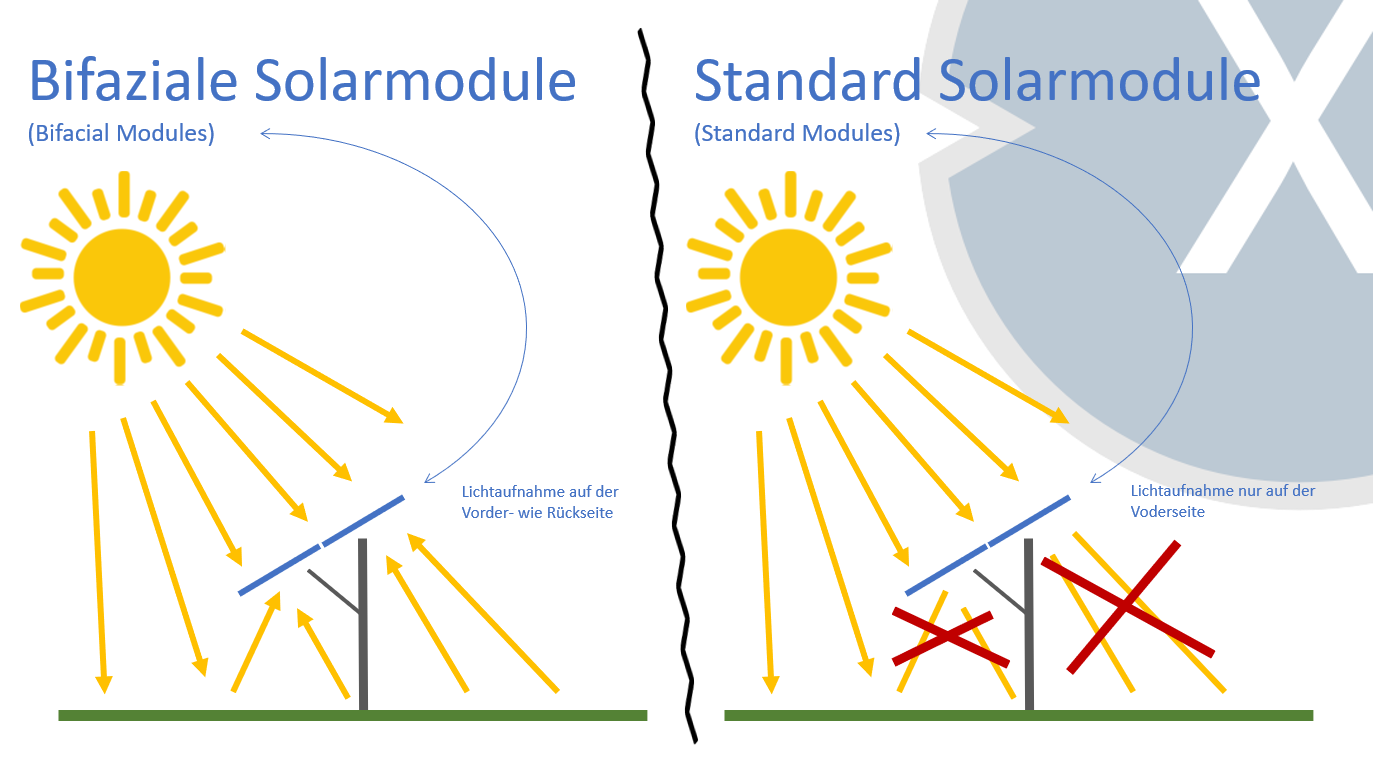
How bifacial solar modules work – Image: Xpert.Digital
The subtle difference: P-type and N-type solar cells
In photovoltaic (PV) technology, even the slightest discrepancies in chemical composition can lead to significant differences in efficiency and economic viability. A prime example is the comparison of P-type and N-type solar cells. These differ in their cell structure: P-type solar cells are based on a positively charged silicon substrate, while N-type solar cells are designed in the opposite way, with the negatively doped side serving as the cell's base.
Although the first solar cell, developed in the USA in 1954, was an N-type cell, the P-type cell became dominant in subsequent years. This was because, in the early days, the modules were primarily used in the aerospace industry, where they proved to be more robust. Only in recent years have solar cell manufacturers begun to rethink their approach, due to the greater power output of N-type cells. This is mainly due to the longer lifespan of these cells, as, unlike the P-type, they are not susceptible to the "boron-oxygen defect." This defect leads to a decrease in efficiency over time. Furthermore, N-type solar cells are less prone to metallic impurities in the silicon.
However, N-type solar cells are currently more expensive to produce, due to decades of focus on P-type cells. Their production led to economies of scale in the value chain, which still need to be established for N-type manufacturing. Furthermore, the production of N-type solar modules involves additional steps, which further increases costs. However, due to their higher efficiency, the market share of N-type cells is steadily increasing, and it is likely only a matter of time before they replace P-type cells as the dominant solar cell technology.
Glass-glass / double-glazed modules
In the glass module with bifacial cell technology, light is captured on both the front and back of the module. Increasing the amount of light captured increases the module's efficiency.
Related to this:
Solar modules: Bifacial modules for greater efficiency and increased light yield – consultation, planning & solutions

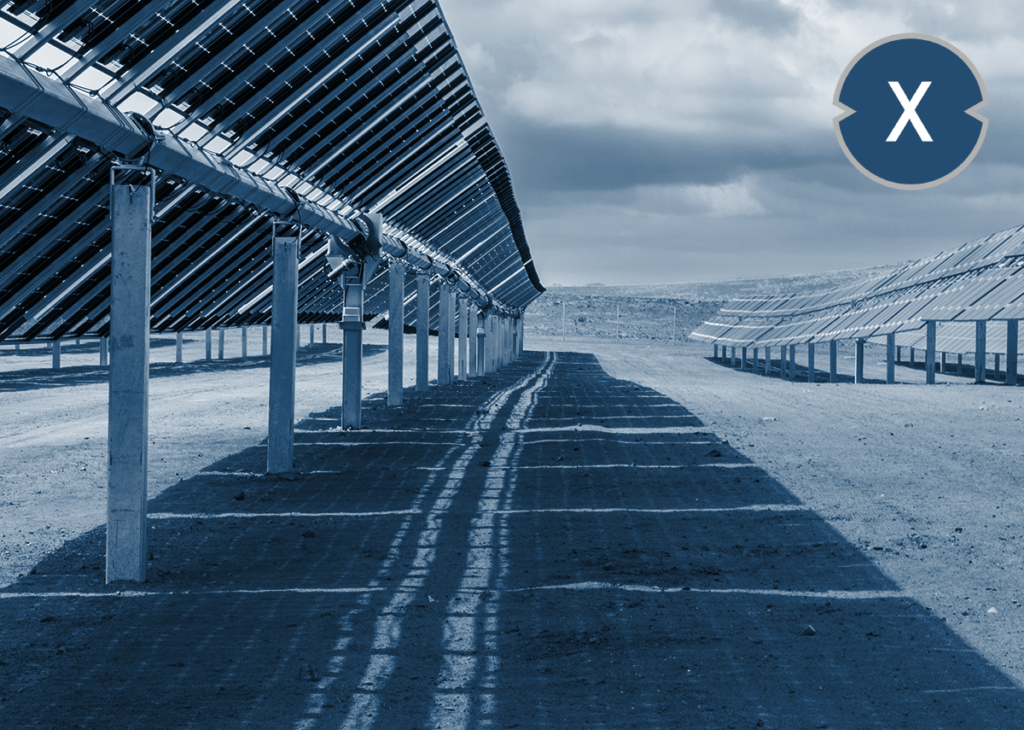
Bifacial solar modules – Image: Xpert.Digital / abriendomundo|Shutterstock.com
Bifacial solar cells have a broader application perspective due to their bifacial generation capacity and higher system efficiency, and are particularly suitable for areas with more snow and distributed generation systems such as roofs, open spaces, fences and noise barriers.
The efficiency of the cell's rear side can reach more than 19%, and the incident backbeams can be used to improve the system's generating capacity, with the capacity increase per unit area being up to 10% ~ 30%.
More information here:
📣 Solar modules and photovoltaic solutions (roof-mounted, ground-mounted systems such as solar carports) for industry, retail and municipalities
Everything from a single source, specifically designed for solar solutions for large parking areas. Refinance or offset your future costs with your own electricity generation.
🎯 For solar installers, plumbers, electricians and roofers
Consultation and planning including a non-binding cost estimate. We connect you with strong partners in photovoltaics.
👨🏻 👩🏻 👴🏻 👵🏻 For private households
We have a regional presence throughout the German-speaking world. We have reliable partners who will advise you and implement your wishes.

- Planning solar panels or solar installations on warehouses, commercial buildings and industrial buildings
- Industrial plant: Planning a solar open-field plant or open-area plant
- Planning photovoltaic systems with solar solutions for freight forwarding companies and contract logistics
- B2B Photovoltaic Systems and Solar Solutions & Consulting
The right solar modules for your solar system: Xpert.Solar offers planning and consulting services for photovoltaic carports, rooftop photovoltaic systems, and solar systems in general. We also support you in finding the right and suitable photovoltaic solar modules!

Konrad Wolfenstein
I would be happy to serve as your personal advisor.
You can contact me by filling out the contact form below or simply call me on +49 7348 4088 965 .
I'm looking forward to our joint project.
Write to me



Xpert.Digital – Konrad Wolfenstein
Xpert.Digital is a hub for industry focusing on digitalization, mechanical engineering, logistics/intralogistics and photovoltaics.
With our 360° Business Development solution, we support renowned companies from new business to after-sales.
Market intelligence, smarketing, marketing automation, content development, PR, mail campaigns, personalized social media and lead nurturing are part of our digital tools.
You can find more information at: www.xpert.digital – www.xpert.solar – www.xpert.plus
Keep in touch