


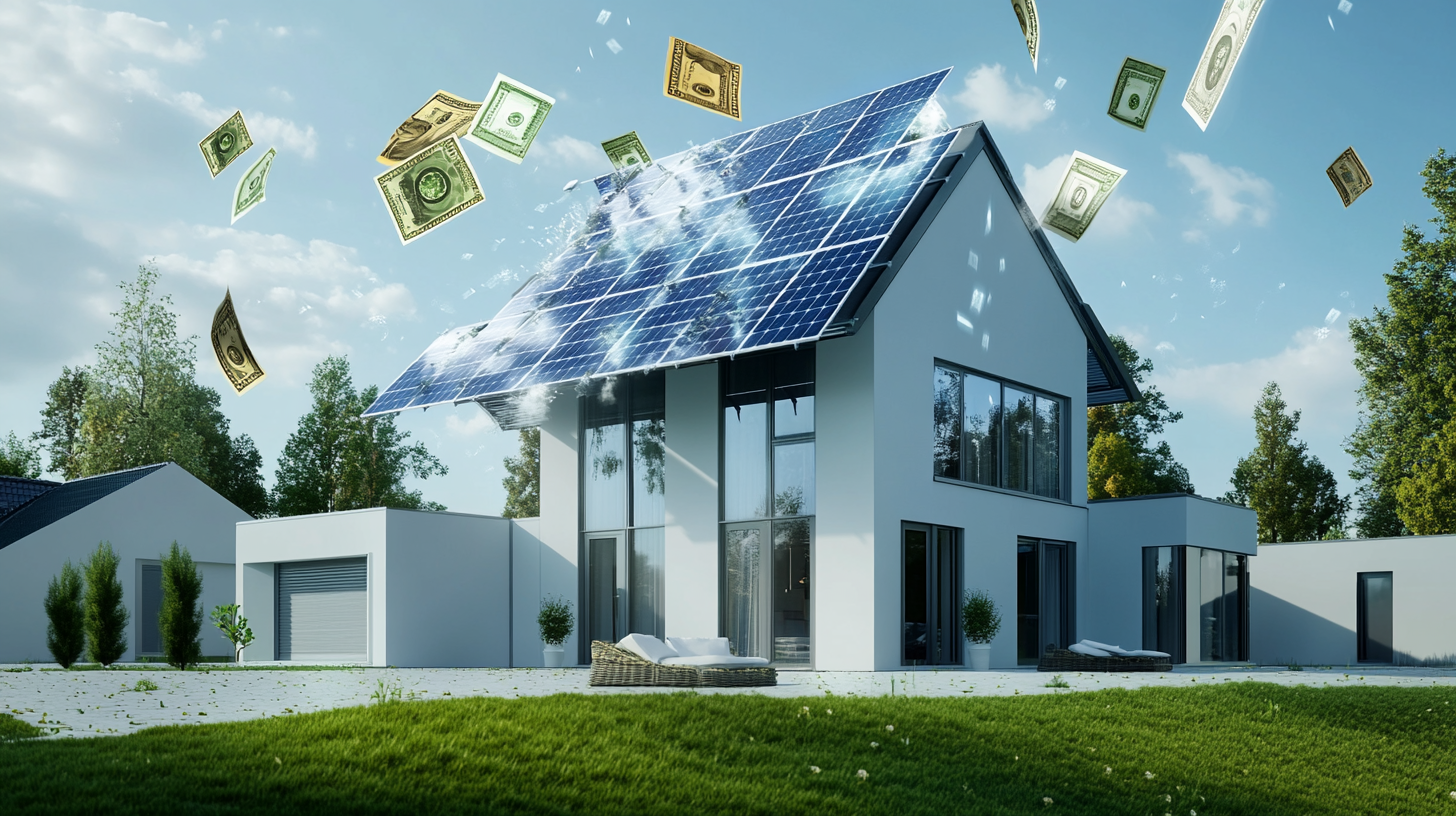
Forget the feed-in tariff: Discover the secret of direct PV marketing (and get the maximum return!) – Creative image: Xpert.Digital
More than just feeding electricity into the grid: The lucrative business with your solar power (and what you absolutely need to know)
Direct marketing of solar power: An in-depth analysis of the opportunities and challenges
The energy transition, a term on everyone's lips these days, has fundamentally changed the way we generate and consume energy. At the heart of this transformation is photovoltaics (PV), a technology that allows us to convert sunlight directly into electricity. For private households that have invested in a PV system, the question often arises: How can the generated solar power be used and marketed optimally? In addition to the traditional feed-in tariff, regulated by the Renewable Energy Sources Act (EEG), direct marketing is increasingly coming into focus. This model offers the possibility of selling surplus solar power directly on the electricity exchange, which can be more lucrative than the fixed feed-in tariff under certain circumstances. But what conditions must be met, what revenues are realistic, and what costs are associated with this option? We will examine these questions in detail below.
The mechanisms of direct marketing in detail
Direct marketing, although the name suggests that PV system operators sell their electricity themselves on the exchange, works somewhat differently in practice. Private system operators do not operate directly on the energy market, but rather work with specialized companies known as direct marketers. These companies act as intermediaries, purchasing the surplus solar power and trading it on the electricity exchange. In return, the system operators receive monthly payments, from which a commission for the direct marketer's services is deducted.
The remuneration for PV system operators depends on the type of direct marketing. There are two basic models: subsidized direct marketing and other direct marketing. Subsidized direct marketing, based on the so-called market premium model, applies to PV systems that are still covered by the German Renewable Energy Sources Act (EEG) and therefore entitled to EEG subsidies. Other direct marketing, on the other hand, is aimed at PV systems whose 20-year subsidy period has already expired and which wish to sell their surplus electricity without EEG subsidies.
Related to this:
The market premium model: A hedge against falling stock market prices
The market premium model is a sophisticated system that ensures PV system operators who opt for direct marketing receive at least the amount they would have been entitled to under the feed-in tariff. The basis for the remuneration is the market value of the electricity generated on the power exchange. This market value, expressed in cents per kilowatt-hour (kWh), is not constant but fluctuates depending on supply and demand in the market.
If the market value of the electricity sold falls below the fixed feed-in tariff, the so-called market premium comes into play. This premium, paid by the grid operator, compensates for the difference between the monthly average price on the electricity exchange and the applicable value for the respective PV system according to the German Renewable Energy Sources Act (EEG). The applicable value for the market premium is even slightly higher than the feed-in tariff, thus providing additional support. This ensures that operators of PV systems under the subsidized market premium model always receive at least as much money as they would from the fixed feed-in tariff, with the possibility of generating additional revenue through higher exchange prices.
The economic dimension: revenues, costs, and the influence of the market
The question of whether direct marketing is economically viable is complex and depends on a multitude of factors. These include, in particular, the size and output of the PV system, the household's own consumption, current electricity prices on the exchange, and the costs of direct marketing.
Revenues from direct marketing are heavily dependent on fluctuations in the electricity market. While exchange prices were very high in the past, particularly during the energy crisis, they have recently fallen significantly, negatively impacting direct marketing income. It is therefore crucial to closely monitor and analyze market developments in order to make informed decisions. The feed-in tariff guaranteed under the German Renewable Energy Sources Act (EEG) provides a degree of stability and security in this regard.
The costs of direct marketing consist of various elements. These include commissions for the direct marketer, which can vary depending on the provider. These commissions can be charged either as a flat fee per kilowatt-hour marketed or as a fixed monthly fee. In addition, there are the costs for operating a smart metering system, which is mandatory for direct marketing.
Requirements for direct marketing: Smart meter and contract design
To participate in direct marketing, certain technical and contractual requirements must be met. The most important technical requirement is the installation of a smart meter. This intelligent metering system records the generated and fed-in electricity quantities every 15 minutes and automatically transmits this data to the direct marketer and the grid operator. The costs for the smart meter are generally borne by the metering point operator, although there are different regulations depending on consumption and system size.
At the contractual level, it is necessary to conclude a contract with a direct marketer who has the appropriate exchange approval. The direct marketer handles the registration of the PV system with the responsible grid operator for direct marketing and manages the entire marketing process. Switching from the traditional feed-in tariff to direct marketing is generally possible on a monthly basis and offers a degree of flexibility.
The elimination of remote controllability for small PV systems: A relief for private households
An important change that came into effect in May 2024 concerns the remote controllability of PV systems. For smaller systems, the requirement for remote controllability by the direct marketer has been eliminated. Likewise, there is no longer an obligation to retrieve actual feed-in data. These changes represent a significant simplification for private PV system operators, as they reduce the complexity of direct marketing. However, for larger systems with a capacity exceeding 25 kW, remote controllability remains necessary to ensure grid stability.
When is direct marketing worthwhile? It's an individual decision
The question of whether direct marketing is worthwhile cannot be answered in general terms, but depends on individual circumstances. Generally speaking, subsidized direct marketing is particularly attractive for new solar power plants that would otherwise only benefit from the currently low feed-in tariffs. For these plants, the market premium guarantees a minimum income, and there is the chance of additional revenue if electricity prices rise.
Existing solar installations that still receive a relatively high feed-in tariff are unlikely to generate additional revenue through direct marketing at present. However, after the 20-year funding period expires, these installations have the option of continuing to feed their electricity into the grid until the end of 2032. Compensation will then be based on the annual market value of solar power, which is reduced by the grid operator's marketing costs.
Outlook for the future: Market developments and new technologies
Direct marketing of solar power is a dynamic and constantly evolving market. The increasing number of PV systems is leading to a growing importance of direct marketing for efficiently feeding surplus electricity into the grid. Furthermore, new technologies such as battery storage are playing an increasingly vital role in optimizing self-consumption and increasing the flexibility of the electricity supply. By using storage systems, PV system operators can increase self-consumption and store surplus solar power during periods of lower demand, feeding it back into the grid during periods of higher demand.
Digitalization also has a major impact on direct marketing. More and more companies are offering innovative platforms that simplify and optimize the marketing of solar power. These platforms enable PV system operators to track their electricity production in real time, analyze market prices, and optimally manage the marketing of their electricity.
The role of politics: Framework conditions for a successful energy transition
Policymakers play a crucial role in shaping the framework for the direct marketing of solar power. Support programs, regulatory requirements, and the creation of incentives for the use of renewable energies are of central importance for the success of the energy transition. Transparent and reliable policies are essential to promote investment in renewable energies and strengthen public trust in the energy transition.
Direct marketing as an opportunity and a challenge
Direct marketing of solar power is a promising option for PV system operators who want to profitably sell their surplus electricity. It offers the opportunity to participate in the fluctuations of the electricity market and, ideally, achieve higher revenues than with the fixed feed-in tariff. At the same time, however, direct marketing also presents challenges, particularly the dependence on market prices and the associated costs.
It is therefore crucial to thoroughly research and conduct an individual profitability analysis before deciding for or against direct marketing. Choosing the right direct marketer, optimizing self-consumption, and considering current market trends are key factors for success. With the right strategy, direct marketing can make a significant contribution to the energy transition while simultaneously improving the profitability of PV systems.
Direct marketing thus represents an exciting alternative to traditional feed-in tariffs. It reflects the changing energy landscape, characterized by increasing decentralization and the involvement of end consumers. The future will show how direct marketing develops and what role it will play in shaping a sustainable energy supply. However, it is undeniable that it is an important building block on the path to a decarbonized world.
Related to this:
Your partner for business development in the fields of photovoltaics and construction
From industrial rooftop PV to solar parks and larger solar parking lots
☑️ Our business language is English or German
☑️ NEW: Correspondence in your native language!

Konrad Wolfenstein
I and my team are happy to be available to you as your personal advisor.
You can contact me by filling out the contact form here wolfenstein@xpert.digital:or simply call me at +49 7348 4088 965. My email address is
I'm looking forward to our joint project.