
AI and Cloud | Digital Dependence: What the lack of an exit option really costs companies – Creative image on the topic, with AI: Xpert.Digital
Cloud, software, AI: Why cheap IT offers can become expensive in the long run
Those who cannot switch providers lose their negotiating power
Digital sovereignty: The costs missing from many IT bills
Digital services from the cloud, specialized software, and AI applications make companies more efficient. Therefore, using external technologies is not automatically a disadvantage – and complete digital independence is neither realistic nor necessarily economically viable. Problems arise when a business relationship is so deeply intertwined with data, processes, and expertise that switching providers is virtually impossible or only feasible at exorbitant cost. In such cases, a company loses not only flexibility but potentially also negotiating power.
Many cost-benefit analyses overlook these follow-up costs. They consider license fees, implementation, and operation, but not the costs incurred when a provider raises prices, changes contract terms, or a service fails. Digital sovereignty, therefore, doesn't mean operating every technology in-house. It means understanding one's own dependencies and being able to change decisions if necessary. This article explains why this ability to opt out has economic value—and how companies can realistically assess it.
Digital sovereignty begins where IT's wishful thinking ends
Anyone who cannot leave their supplier has already sold their negotiating power
Digital dependency is not inherently a management error or an economic disadvantage. Companies purchase specialized services because external providers can perform certain tasks faster, more reliably, or more cost-effectively. No one needs to develop their own processors, operate a global data center network, or train a language model from scratch to be successful in business. Division of labor is one of the most important sources of economic productivity.
This division of labor becomes problematic when a freely chosen business relationship transforms into a binding agreement without any economically viable alternative. A company can be satisfied with its cloud provider and still find itself in a weak position. The crucial factor is not just how well the collaboration functions today, but also what happens when prices, contract terms, technical requirements, or political frameworks change.
This is precisely where many cost-benefit analyses have a significant gap. They include license fees, implementation costs, training, and ongoing operations. What is often missing is the economic value of the ability to change a decision later.
Digital sovereignty is therefore less a question of technological self-sufficiency than a question of entrepreneurial capability. Those who fail to assess dependencies do not automatically make cost-effective decisions; they merely postpone part of the cost.
The overlooked balance between purchase price and room for maneuver
When investing in machinery, it would be unusual to consider only the purchase price. Maintenance, spare parts supply, energy consumption, downtime risks, and residual value are all essential components of a sound calculation. A similarly comprehensive approach is taken with digital infrastructure, but often with a blind spot: the future replaceability of the chosen system.
A low-priced software offer may appear economically attractive, even though it generates high long-term commitment costs. Data is stored in proprietary structures, business processes are adapted to specific functions, and employees are trained on vendor-specific tools. Interfaces connect other applications to the system. With each additional project, the effort required to later disconnect these connections increases.
The initial purchase decision thus changes the cost structure of all subsequent decisions. A service is no longer just a single item in the IT budget, but becomes an organizational reference point.
This explains why a later alternative might seem unattractive despite lower ongoing costs. It doesn't just have to be better or cheaper; it also has to overcome the switching costs incurred in the meantime. The existing provider benefits from a relationship that the customer has often built up themselves through customizations, integrations, and training.
A complete economic analysis must therefore distinguish between the price of a service and the costs of its irreplaceability.
What actually reveals the German dependency
The scale of the problem is illustrated by a representative survey of 602 companies with at least 20 employees in Germany. The survey was conducted between calendar weeks 33 and 39 of 2026. According to the survey, 96 percent of the companies source digital technologies or services from abroad. Among these companies, 94 percent consider themselves dependent. Respondents estimate that, in the event of a complete disruption of their digital imports, they would have an average remaining business lifespan of 16 months. The previous year, this figure was 14 months.
These figures require careful interpretation. The survey captures foreign digital technologies in general, not exclusively those from countries outside Europe. Therefore, it does not allow for a blanket equation of foreign influence with dependence on non-European countries. Furthermore, it only describes companies with 20 or more employees. It is not possible to draw direct conclusions about all micro-enterprises from this data.
The 16 months figure is not a technically measured restart time, nor is it a guarantee that individual business processes would function for that long. It represents an average self-assessment for a widespread outage scenario. A company may remain operational overall while sales, production, or customer service are already significantly impacted.
The economic message remains clear: Digital inputs are no longer interchangeable accessories. They are now a prerequisite for business performance.
Why an average value doesn't provide reassurance
An average masks differences that are crucial for business management. A consulting firm, an automated production plant, and an international logistics provider have different digital dependency profiles. Even within a single company, some processes can continue running for weeks using backup methods, while others become critical after just a few hours.
The survey highlights this close connection to the core business. In the event of a disruption in digital imports, 93 percent of importing companies expect repercussions for production or service provision. For sales and distribution, the figure is 91 percent, and for logistics and supply chains, it is 87 percent. Purchasing and procurement reach 79 percent, customer service 78 percent, and IT operations and technical infrastructure 69 percent. These figures describe the expected impact, not the actual extent of the damage.
Therefore, a reliable analysis requires more than simply comparing one's own situation with a national average. A process-oriented approach is needed: Which services are unavailable and when? What alternative procedures exist? How long will they last? Which customers, suppliers, and locations are affected?
The decisive factor is not the abstract lifespan of the entire company. It is the period after which a specific digital bottleneck is no longer economically viable.
The ability to opt out is different from data ownership
Many companies answer the question about their independence by pointing to regular data backups. This is important, but it doesn't go far enough. Having a copy of the data doesn't necessarily mean that the associated business processes can be continued elsewhere.
Several tasks lie between data export and operational recovery. Data structures must be understood, relationships preserved, and permissions reconstructed. Applications require a suitable runtime environment. Interfaces to customers, suppliers, and internal systems must be restored. Additionally, logs, configurations, automations, and, if necessary, evidence of previous processing steps must be addressed.
An exported customer directory, for example, is no substitute for a functioning customer management system. A collection of documents is no substitute for a searchable knowledge platform with traceable access rights. A database image is no substitute for a fully operational application.
Therefore, companies should differentiate between at least three time metrics: the duration of data export, the duration of technical recovery, and the time until stable business use is restored. Only the third metric shows when the company is truly operational again.
Those who only know the first one may overestimate their ability to exit.
Why dependency costs money even without a crisis
The costs of digital integration don't only arise when a provider fails or a business relationship ends. They are already at play during normal operations through the distribution of bargaining power.
A customer with a viable alternative can react differently to price increases than a customer whose switch would take several years. The provider doesn't need to know the individual situation in detail. High, industry-standard switching barriers can already contribute to customers accepting less favorable conditions for longer.
The economic mechanism is simple: the more expensive the switch, the greater the price difference the customer can tolerate in favor of the existing provider. This difference is not necessarily an abuse. It initially reflects a weak alternative market position.
In addition, there are indirect ties. Discounts may be tied to minimum purchase quantities. Attractive package prices can encourage the use of other products from the same provider. A technical upgrade then appears inexpensive in the short term, but simultaneously increases the costs of a later separation.
Therefore, the company must consider not only the discount negotiated today, but also whether this discount comes at the cost of limiting future choices.
The correct calculation compares two future paths
A common misjudgment arises when the perceived costs of switching to a new solution are compared with the current costs of inaction. This comparison is incomplete. Maintaining the existing solution also alters the economic future.
A proper comparison considers two development paths over the same period. On the one hand, there is continued operation, expected price changes, necessary expansions, additional commitments, and remaining risks. On the other hand, there are migration, parallel operation, training, potential performance losses, and the subsequent costs and benefits of the new solution.
It is important to distinguish between expenses already incurred and future payments that can be influenced. Past implementation costs cannot be recouped by adhering to the existing system. The decisive factors are primarily those costs and benefits that will differ from today onward.
Similarly, an alternative should not be preferred simply because it appears more open. If it results in permanently higher operating costs, delivers inferior performance, or creates new risks, these disadvantages must be fully taken into account.
Digital sovereignty does not justify a separate calculation. Its economic value must be demonstrated through a complete accounting.
A numerical example reveals the hidden price
A deliberately simplified model illustrates the relationship. A company pays one million euros annually for a central digital platform. A more easily interchangeable architecture would initially cost an additional 600,000 euros and increase ongoing expenses by 80,000 euros per year.
Over five years, this will result in additional nominal costs of one million euros. Without further consideration, the project appears to be a pure cost increase.
The company's planning now assumes that the better exit position allows for annual price concessions averaging €120,000. Over five years, this would amount to €600,000. It also assumes that a prepared migration would be €700,000 cheaper if needed. Assuming a 30 percent probability of occurrence for the model, this corresponds to a simplified expected benefit of €210,000.
This would mathematically explain €810,000 of the additional costs. The remaining €190,000 would have to be justified by further advantages, reduced operational risks, or additional revenue. Otherwise, the measure would not be economically viable under these assumptions.
This example is not a market forecast. All amounts and probabilities are model assumptions. However, it illustrates the information required for a decision. A real investment calculation would also include, among other things, payment dates, discounting, taxes, and alternative scenarios.
Why probabilities should not be confused with certainty
Risks cannot be managed by assigning them seemingly precise percentage values. Particularly in the case of geopolitical conflicts, far-reaching treaty changes, or structural supply disruptions, a reliable statistical basis is often lacking.
Nevertheless, foregoing any quantification is not a better solution. A combination of verifiable bandwidths, scenarios, and load limits is more sensible.
For example, a company can examine the consequences of a moderate price increase, a significant reduction in individual functions, or a complete system failure. It can then determine which protective measures remain effective across multiple scenarios. A documented data structure can be helpful during both a standard migration and a disaster recovery.
A low calculated expected value should not automatically lead to a false sense of security. A rare event can cause damage that exceeds the company's financial capacity. For such risks, an additional assessment of the maximum manageable burden is necessary.
The economic question, therefore, is not only what the average expected damage is. It is also what damages the company absolutely cannot afford to be caught unprepared for.
Willingness to change jobs has its own independent economic value
A company doesn't actually have to leave a provider for a credible switching option to be valuable. The mere existence of an alternative can help negotiate better terms or take advantage of technological developments more quickly.
This relationship is similar to a financial option. The company pays today for the possibility of trading later under more favorable conditions. Unlike a rigid contractual obligation, it is not required to exercise this option.
Value arises from uncertainty. No one can reliably predict the price trends, performance, and strategic direction of all providers in five years. The more a technology field changes, the more crucial the ability to revise decisions becomes.
However, not every theoretical alternative is a viable option. An untested export function, a lack of skilled workers, or an unaffordable migration significantly limit its practical benefits. A robust switching option requires technical preparation, organizational responsibility, and a plausible cost framework.
Sovereignty cannot therefore be derived solely from contractual formulations. It must be enforceable in a crisis.
🎯🎯🎯 Data-driven B2B industry hub as a quasi-in-house solution


The quasi-in-house solution: How Xpert.Digital closes operational gaps in B2B marketing and sales – Smart Content-Driven Business - Image: Xpert.Digital
Xpert.Digital is a data-driven B2B industry hub led by Konrad Wolfenstein . The company acts as an external, quasi-in-house solution for industrial partners, closing operational gaps in marketing, content, and sales – without requiring additional resources on the client side.
More information here:
Why digital independence is not only a technical but also an economic goal
Artificial intelligence intensifies the bond on multiple levels
With AI, dependency arises not only from the choice of a model. Companies connect models to internal data repositories, search systems, programming interfaces, security rules, and operational processes. Employees develop working methods that fit specific expenditures and skills.
With increasing use, the model can evolve from an interchangeable service into an integral part of the application architecture. Particularly relevant in this process are customized input templates, technical integrations, model-dependent business logic, and established workflows. A change then no longer merely affects access to a different model, but rather the functionality of the entire application.
The economic consequences are significant: AI usage that is initially inexpensive can later generate high adaptation costs, even though the actual data remains within the company.
Furthermore, a change in model can alter quality. An application may still function technically, but deliver different results. This might not be a problem for a non-binding draft text. However, additional tests may be required for classifying complaints, evaluating technical documentation, or supporting operational decisions.
Interchangeability in AI therefore requires considering technical and professional equivalence separately.
The cheapest AI call is not automatically the cheapest solution
In AI applications, easily comparable usage prices often draw attention to the wrong metric. Low costs per request say little about how economically an entire business process operates.
A less expensive model may require more queries, longer input processes, or more extensive human post-processing. A more expensive model can be more cost-effective if it delivers usable results more frequently on the first attempt. Conversely, a powerful, expensive solution may be unnecessarily complex for simple, routine tasks.
The key metric from a business perspective is therefore the cost per technically acceptable result. This includes computing costs, data preparation, quality control, corrections, and potentially the costs of incorrect decisions.
The option to exit the contract must also be considered. If a seemingly inexpensive AI solution can only be replaced with considerable effort, then it represents a price advantage subject to an additional commitment.
Companies should therefore not only compare models, but complete processing chains. Only then will it become clear where one model is economically superior and where a low unit price merely obscures higher subsequent costs.
The knowledge base determines later mobility
For many business AI applications, a significant part of the value lies not in the model itself, but in the business information it unlocks. Technical documentation, service reports, product data, process descriptions, and internal experience are what make an application truly useful for business.
Therefore, how this information is processed and managed is crucial. If original documents, metadata, access rights, and processing steps are readily available and traceable, systems built upon them can be replaced more easily. However, if only a vendor-specific intermediate form exists, switching systems can require considerable reconstruction work.
No false assumptions should arise. Not every technical intermediate product has to be universally applicable without modification. Different search and AI systems may require different processing methods. What is economically important is that the basis for further processing is preserved.
A robust data strategy therefore not only protects against data loss. It also preserves the ability to rediscover existing knowledge using different tools.
This makes data maintenance an investment in future productivity and not merely an administrative side task.
Open interfaces are only helpful if they are actually usable
Open standards and documented interfaces can reduce switching costs. However, they do not automatically prevent all system lock-in. Two systems can support the same technical exchange formats and still differ significantly in terms of functionality, permissions, or data interpretation.
An interface is only economically valuable if it transmits the required information completely, reliably, and within a manageable timeframe. Limitations in scope, speed, or functionality can significantly reduce its practical usability.
The same applies to an upstream mediation layer between the application and the AI model. It can simplify the technical connection of multiple providers. However, this does not eliminate differing model capabilities, response formats, and quality profiles.
Therefore, companies should not simply ask about the existence of a standard. They should examine which operational switching tasks are actually eliminated as a result.
An economically sound architecture abstracts away those differences whose standardization would generate more benefits than costs. It does not attempt to reduce all providers to an identical, minimal set of functions. Excessive interchangeability can also become expensive if it unnecessarily excludes specialized, productive functions.
Having multiple providers does not yet constitute reliable risk diversification
Distributing work among multiple service providers seems like an obvious response to dependency. However, the number of contracts is not a reliable measure of a company's independence.
Two applications can have different brands and still rely on the same infrastructure, identity management, or technical foundation. A shared bottleneck then remains. Similarly, distribution across multiple clouds can create new dependencies, especially when complex integrations are required.
In addition, there are ongoing costs. Different platforms require expertise, monitoring, security concepts, and coordinated operating procedures. Without sufficient scalability, this diversity can overwhelm the organization.
The crucial question, therefore, is not how many providers are involved. It is which causes of failure are actually isolated and which critical services remain available in the event of a disruption.
A pre-configured backup environment for a few key processes can be more economically viable than deploying all applications redundantly. Diversification should be judged by its impact, not by the number of logos used.
Open source shifts responsibility instead of resolving it
Open-source software can reduce dependence on a single vendor. Companies generally gain different options for reviewing, modifying, or maintaining code through alternative service providers.
However, this does not automatically mean that operation and further development are inexpensive or risk-free. Security updates, integration, documentation, and technical support remain necessary. If these tasks are not handled internally, dependencies on external specialists arise.
Even having your own data center doesn't eliminate all responsibilities. It shifts responsibility to hardware procurement, energy supply, network operation, personnel, and technical upgrades.
Economic evaluation must therefore distinguish between ownership, control, and actual capability. A company can formally operate its own software and yet have only a single service provider who reliably understands it. Conversely, an external service can be used with sufficient autonomy if switching options are well-prepared.
The relevant question is not whether a solution is externally sourced or internally implemented. The decisive factor is whether the company can effectively assert its critical interests and continue providing its services under changed conditions.
European origin does not replace an examination of dependencies
A provider's location can be significant for legal frameworks, contract enforcement, and business requirements. However, it does not answer all questions of digital sovereignty.
A European service may source important preliminary services from outside Europe. A locally offered AI service may be based on an external model. A domestic data center may be technically closely integrated with an internationally controlled platform.
Conversely, a non-European provider is not necessarily economically unsuitable for every application simply because of its origin. Crucial factors include data types, criticality, contractual rights, technical export options, and realistic alternatives.
A detailed analysis therefore considers the entire value chain. Where is data processed? Who controls key components? Which subcontractors are involved? Which capabilities remain with the customer?
Geographical origin is therefore an important criterion, but not a complete assessment of quality. Those who confuse it with technical interchangeability risk an expensive false sense of security.
Sovereignty can enable additional revenues
The analysis so far has focused on costs and risks. However, for some companies, digital capability also has a revenue dimension.
A customer may place particular importance on data being processed in specific environments, applications remaining usable across different platforms, or ensuring traceable business continuity. If a provider can meet such requirements, this may expand their reachable market.
However, this does not automatically lead to a price increase. Companies must demonstrate that the feature in question is actually a decisive factor in the purchase decision. General agreement on digital independence does not yet constitute a reliable willingness to pay.
Therefore, an analysis of specific business opportunities is advisable. Which customer groups require these characteristics? Which projects would be impossible without them? What additional effort would be required? How likely is a contract to be signed?
In this way, digital sovereignty transforms from an abstract positioning into a verifiable component of the business model. Its market value is not reflected in a catchy label, but in demonstrably acquired or secured customer relationships.
Industry and logistics need tiered fail-safe operation
The industrial and logistics sectors particularly illustrate why blanket sovereignty targets are of little use. A delayed evaluation of operational key performance indicators has different consequences than the failure of a production-related control system or a central warehouse application.
The crucial factor is the connection between the digital disruption and the physical process. Can a warehouse continue order picking? Can goods movements be correctly recorded retrospectively? Can transport orders still be transmitted? Will necessary quality and origin information remain available?
Not every function requires the same level of security. For some processes, a temporarily simplified operation is sufficient. Others require locally available information, prepared backup procedures, or particularly short recovery times.
Even manual emergency solutions must be realistically evaluated. A process that works with low order volumes can collapse during seasonal peaks. Staffing levels, training levels, and available workstations limit the actual capacity for replacement.
An economically sound strategy therefore combines digital architecture with operational capacities. It prioritizes protecting those processes whose disruption would have the greatest consequences.
Measurable change objectives are more effective than general guiding principles
A commitment to digital sovereignty changes little initially. It only becomes effective when it translates into verifiable requirements.
For example, a company can specify the timeframe within which critical data must be fully exportable. For core applications, it can define the minimum operational capability required in a backup environment. Similarly, the estimated costs of a migration can be updated regularly.
A single metric is not enough. Short export times are of little use if months of subsequent technical rework are required. Low switching costs are not very meaningful if the alternative cannot provide essential functions.
Suitable metrics should therefore combine time, cost, and performance. In addition, the question of when the last practical verification took place must be considered.
The crucial step forward lies in the transition from assertion to proof. It is not the mere existence of an exit strategy that creates security, but rather the reliable evidence that essential parts of this strategy function under realistic conditions.
Responsibility belongs to the company's management
Digital dependencies are often addressed where they become technically visible: in IT. However, their economic consequences extend far beyond that.
Procurement influences contract terms and conditions. Specialist departments decide on process adjustments. The finance function assesses investments and risk tolerance. Information security and the legal department review further requirements. Management determines which disruptions and limitations are acceptable.
If each function optimizes only its own specific area, an unfavorable overall result can easily occur. A low purchase price can be offset by high subsequent maintenance costs. A particularly user-friendly application can complicate the recovery of core processes. A maximally standardized infrastructure can create efficiency but simultaneously exacerbate a common point of failure.
Therefore, a common basis for decision-making is needed. Critical dependencies and their economic consequences should be documented and reassessed for larger investments.
This does not mean delegating every technical decision to management. It means not allowing significant business risks to arise unintentionally from many small, individual decisions.
A sensible starting point begins with a few critical systems
A complete overhaul of the entire IT infrastructure is neither financially feasible nor necessary for many companies. A phased approach is more economically viable.
The process begins with an overview of the systems without which essential services cannot be provided. Next, their dependencies, recovery times, and switching barriers are examined. Finally, measures can be specifically selected that create the greatest degree of operational capability with manageable effort.
This could involve better documentation, regularly audited data copies, or decoupling a particularly critical interface. In the case of AI, an independent, expert test database can help to evaluate alternative models more quickly. For a centralized application, a prepared export including a recovery test might be more important than immediately switching vendors.
The benefit of such measures also lies in generating better information. A company can recognize which risks are actually significant and which were previously overestimated.
Digital sovereignty will then develop not as a one-off large-scale project, but as a systematic improvement in entrepreneurial decision-making capabilities.
Maximum independence is not the economic goal
Complete digital independence would be neither realistic nor productive for most companies. It would limit the advantages of specialization, tie up resources, and potentially increase the cost of access to powerful technologies.
The right goal, therefore, is a reasonable balance between efficiency, performance, and reversibility. A company may deliberately commit to a close relationship with a supplier if the benefits justify this decision and the remaining risks are acceptable.
The problem is not the consciously entered-into dependency. The problem is the unvalued dependency, which does not appear in cost-benefit analyses and only becomes visible in the event of a price increase, a disruption, or a strategic realignment.
This distinction is particularly important in the context of AI. The desire for complete interchangeability must not unnecessarily hinder productive applications. Conversely, the enthusiasm for short-term performance gains must not lead to data, processes, and expertise gradually migrating into structures that are difficult to disentangle.
An experienced management team evaluates both sides. They ask not only which solution delivers the most performance today, but also under what conditions this performance will still be economically viable tomorrow.
The crucial calculation begins before the contract is signed
Digital sovereignty does not derive its economic value from technological isolation. It arises from the ability to consciously enter into, manage, and, if necessary, modify relationships with digital providers.
To achieve this, companies must combine previously separate factors: ongoing costs, implementation expenses, switching costs, operational risks, negotiating leverage, and potential market opportunities. Only by considering these factors together can they determine whether an additional investment in interchangeability is justified.
Sometimes the outcome will favor the existing provider. Sometimes a more open architecture is worthwhile. In other cases, it's sufficient to prepare for the exit without actually implementing it. A robust analysis must allow for all three outcomes.
The central management question is therefore not whether a company uses external technology. It is whether it maintains its operational capability at an acceptable cost.
Answering this question before signing a contract means you're not just buying a digital service. You're also deciding how much freedom you'll have in the next price negotiation, the next technological change, and the next crisis.
📈🚀 From visibility to trust 👀🤝 Your scalable path with Xpert.Digital

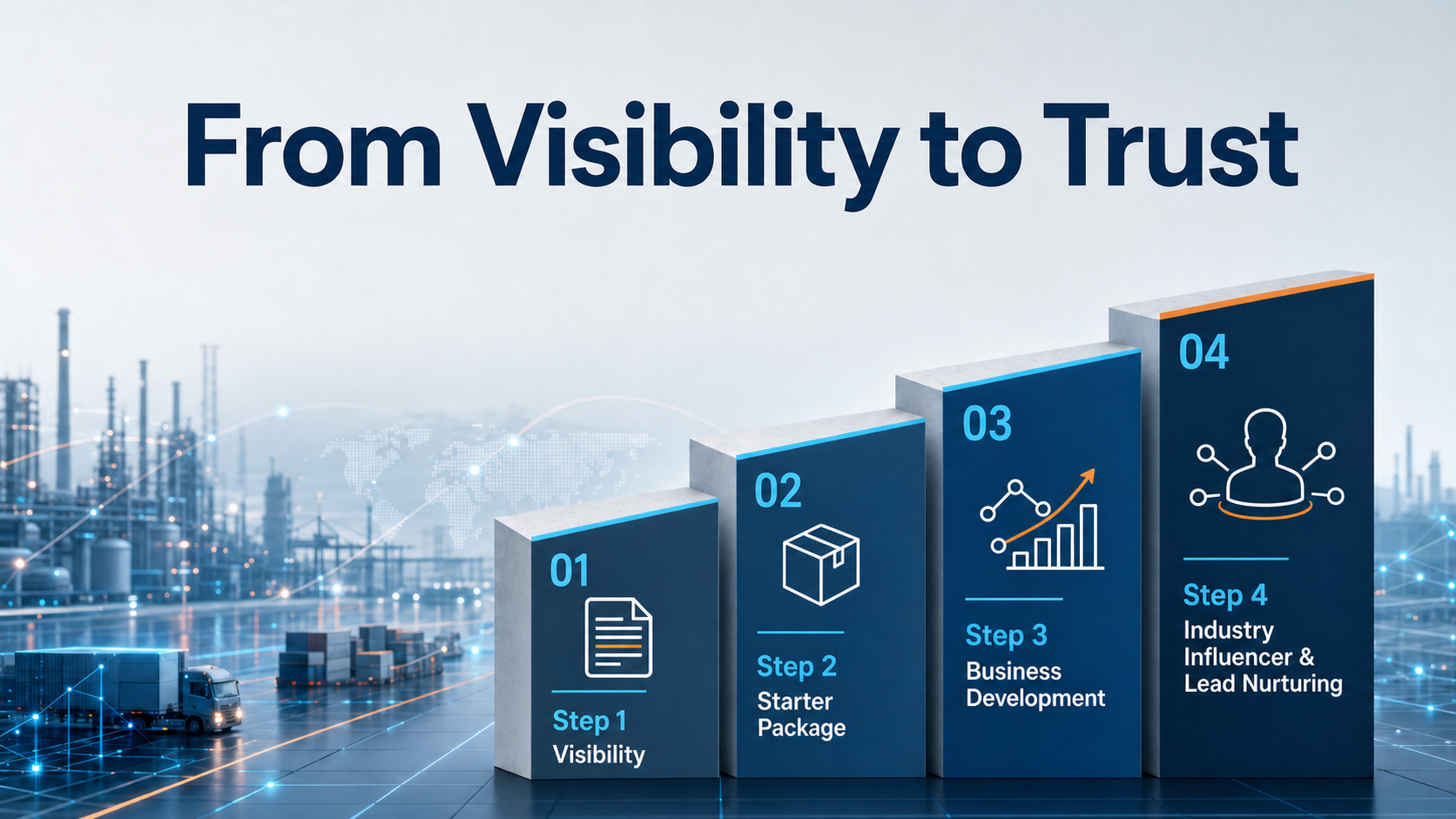
From visibility to trust: Your scalable path with Xpert.Digital - Image: Xpert.Digital
In industrial B2B, sustainable business relationships rarely emerge overnight. They develop step by step – through visibility, professional relevance, recurring touchpoints, and growing trust. Xpert.Digital's 4-stage model addresses precisely this: It offers a structured path that begins with a manageable entry point and can evolve into deeper collaboration in business development if needed.
Instead of relying on loud marketing promises, this model puts the relationship at the forefront. Companies start with clearly defined, easily calculable measures and then decide, based on their own experience, how far they want to expand the collaboration. A key factor for this undisturbed trust-building process: The platform completely avoids annoying advertising ads, so the editorial focus remains solely on the companies' expertise.
More information here:
Your global marketing and business development partner
☑️ Our business language is English or German
☑️ NEW: Correspondence in your native language!

Konrad Wolfenstein
I and my team are happy to be available to you as your personal advisor.
You can contact me by filling out the contact form here wolfenstein@xpert.digital:or simply call me at +49 7348 4088 965. My email address is
I'm looking forward to our joint project.