Decline in transactions on the German industrial and commercial real estate market in the first half of 2023 – Image: Monkey Business
Logistics in transition: Impact of the decline in real estate transactions on the warehousing and logistics sector
The first half of 2023 was characterized by a noticeable decline in transactions on the German industrial and commercial real estate market. This development had far-reaching effects on various sectors.
Challenges in the warehousing and logistics sector
The effects of the decline in transactions are noticeable in several sectors. Particularly in the warehousing and logistics sector, there have been significant changes. Demand for warehouse space and logistics properties has decreased, which could indicate a slowdown in economic activity and potential uncertainties in the global supply chain. Companies specializing in courier, express, and parcel services have faced a reduced order volume, leading to a reassessment of their business strategies.
Related to this:
Innovation approaches and technologies
In light of these challenges, innovative approaches and technologies are crucial for maintaining efficiency in the logistics sector. The increased use of automated guided vehicles (AGVs) and the implementation of Industry 4.0 concepts offer opportunities to boost productivity and adapt to changing market demands. Digitalization plays a central role in optimizing processes, improving supply chain tracking, and creating seamless communication between different stakeholders.
E-commerce and future prospects
The e-commerce sector is also influencing changes in the logistics industry. The increasing popularity of online shopping is leading to a greater need for warehouse capacity and efficient shipping solutions. Companies must prepare to meet the rising demands of online customers while simultaneously keeping an eye on their environmental impact. Creating new logistics centers and integrating sustainable practices could be important steps in this direction.
A look into the future
Despite the temporary downturn in the first half of 2023, the industrial and commercial real estate market is likely to regain momentum in the long term. The changing economic dynamics create opportunities for innovation and adaptation. Companies that invest in technologies that increase efficiency and can respond flexibly to market developments are likely to be better positioned to foster future growth.
In light of current challenges and future prospects, it is essential that logistics companies operate flexibly and respond to changing market demands. By leveraging technology, implementing sustainable practices, and creating efficient logistics solutions, companies can positively impact their competitiveness and long-term development.
Decline in transactions on the German industrial and commercial real estate market: An overview
The first six months of 2023 saw a remarkable slowdown in the German industrial and commercial real estate market. This decline in transactions affected various sectors and industries, raising important questions about the reasons and potential consequences.
Reasons for the decline in transactions: Structural changes and uncertainties
The noticeable decline in transactions on the German industrial and commercial real estate market can be partly explained by structural changes and uncertainties. The ongoing pandemic, trade restrictions, and the associated economic uncertainties have led to a more cautious approach from many investors. Additionally, changes in work models, such as increased remote work, may have influenced demand for certain types of properties.
Challenges in the warehousing and logistics sector: Changes in purchasing behavior and supply chains
The warehousing and logistics sector was particularly affected by this decline. The shift in consumer purchasing behavior towards online shopping had led to increased demand for warehouse space. However, this trend was slowed in the first months of 2023 by reduced transaction activity. Companies that wanted to invest in modern logistics and warehousing facilities were hampered by the uncertainty.
New dynamics in the retail sector: adapting to changing needs
The retail sector also faced new challenges. The shift towards e-commerce and changing customer preferences have meant that retailers need to have a stronger presence in urban centers and high-traffic areas to be successful. However, this often requires restructuring and new investments, which were approached more cautiously due to the uncertain market conditions.
The importance of technology and sustainability: Long-term trends persist
Despite the temporary decline in transactions, long-term trends such as the importance of technology and sustainability in the real estate sector remain. Commercial properties that are energy-efficient and integrate state-of-the-art technologies will continue to be in demand once investors regain confidence.
Outlook for the second half of the year: Potential recovery and opportunities
While the first half of 2023 was marked by uncertainty, there are indications that the second half of the year could bring some recovery and opportunities for the German industrial and commercial real estate market. Progress in managing the pandemic and a potential improvement in economic conditions could boost investor confidence and lead to increased transaction activity.
The decline in transactions in the first half of 2023 demonstrates how closely the real estate market is linked to economic and social developments. The various sectors are adapting to new realities and seeking ways to successfully position themselves in a changing landscape.
Plan your solar system for the most common applications conveniently online with our solar system planner!
With our user-friendly solar system planner, you can design your individual solar system online. Whether you need a solar system for your home, your business, or for agricultural purposes, our planner allows you to consider your specific requirements and develop a customized solution.
The planning process is simple and intuitive. You simply enter the relevant information. Our planner takes this information into account and creates a customized solar system that meets your needs. You can try out different options and configurations to find the optimal solar system for your application.
Furthermore, you can save your plan to review it later or share it with others. Our customer service team is also available to answer any questions and provide support to ensure your solar system is optimally planned.
Use our solar system planner to design your individual solar system for the most common applications and accelerate the transition to clean energy. Get started now and take an important step towards sustainability and energy independence!

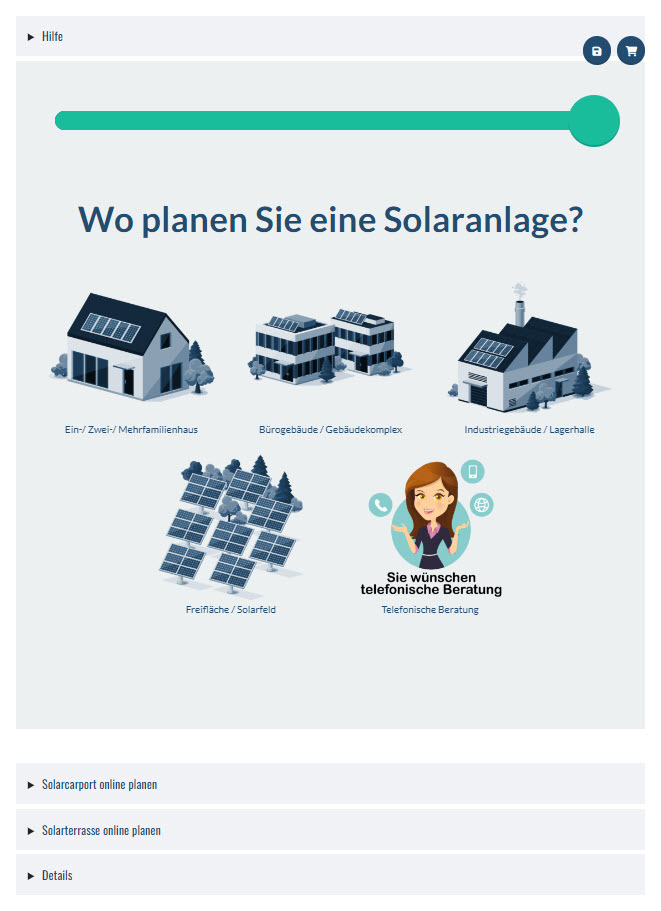
The solar system planner for the most common applications: Plan your solar system online here - Image: Xpert.Digital
More information here:
📣 Energy-efficient renovation and new construction, consulting, planning and implementation for industry, retail and municipalities
Our experienced team supports you in optimizing your buildings to reduce energy consumption and promote sustainable energy use with photovoltaics. We analyze your individual needs and develop customized concepts that are both economically and ecologically sound. Whether it's the energy-efficient renovation of existing buildings or the construction of new, energy-efficient structures, we are here to help. Industrial plants, retail buildings, and municipal facilities can reduce their energy costs, minimize their environmental impact, and simultaneously improve the comfort and efficiency of their buildings with our tailored solutions.
👨🏻 👩🏻 👴🏻 👵🏻 Energy-efficient renovation and new construction, consulting, planning and implementation for private households
We offer comprehensive support for private households in the energy-efficient renovation and new construction of buildings with photovoltaics. Our experienced team is at your side to assist you with consulting, planning, and implementing your sustainable energy solutions. We analyze your energy consumption, identify potential savings, and develop customized concepts to improve your energy efficiency. From improving building insulation and installing energy-efficient windows and doors to installing photovoltaic and solar thermal systems – we guide you step by step to make your home more energy-efficient and environmentally friendly. Trust in our expertise and benefit from the numerous advantages that energy-efficient renovation and the use of renewable energies offer. Together, we'll create a sustainable future for your home.
Sustainable logistics: Environmentally friendly practices as a competitive advantage
A new beginning: Opportunities and challenges for the logistics sector after the decline in transactions
The decline in transactions on the German industrial and commercial real estate market has had a particularly strong impact on the logistics sector. Despite the challenges, however, promising opportunities are also emerging for companies willing to adapt to the changed conditions.
Changes in purchasing behavior and supply chains: Adaptation is crucial
The accelerated shift to online shopping has driven up demand for logistics and warehouse space. The increased volume of goods and the need for fast deliveries have intensified the pressure on logistics companies. Flexibility and efficiency are crucial to meeting rising consumer demands.
Exploring new technologies: Automation and Artificial Intelligence
To meet increased demands, logistics companies are increasingly relying on technologies such as automation and artificial intelligence. Automated warehouses, self-driving delivery vehicles, and intelligent route planning are examples of innovations that enable efficiency gains while simultaneously alleviating the shortage of skilled workers in the logistics sector.
Sustainability as a competitive advantage: Green logistics in focus
Sustainability is a key trend in the modern logistics sector. Customers and investors are increasingly valuing environmentally friendly practices. Logistics companies are investing in electric vehicles, renewable energy for warehouses, and optimized delivery routes to reduce their environmental footprint while simultaneously cutting costs.
Flexibility and innovation: Logistics companies on the path to long-term growth in a changing market
The logistics sector is facing a crucial phase of change, where flexibility and innovation are essential to ensure long-term growth.
Adaptability to change: Flexible warehouse and supply chains
The global pandemic has highlighted the importance of adaptability. Logistics companies that can react flexibly to unforeseen events are better positioned to overcome bottlenecks and provide continuous service to their customers.
Exploring new delivery models: Same-day delivery and micro-depots
Consumer expectations for fast deliveries are constantly rising. Logistics companies are working on innovative solutions such as same-day delivery and micro-depots to reduce delivery times and offer a seamless experience.
Related to this:
Cooperation and networks: Strengthening competitiveness
In a changing market, collaborations between logistics companies and technology partners can be advantageous. Shared networks and resources can increase efficiency and enhance competitiveness within the industry.
Skills shortage and further training: Investing in the workforce of tomorrow
The logistics sector is struggling with a shortage of skilled workers, particularly in the area of technology experts. Investments in the training and development of employees are crucial to strengthening skills and meeting the demand for qualified personnel.
reinventing oneself
The challenges faced by the logistics sector as a result of the decline in real estate transactions simultaneously offer companies an opportunity to reinvent themselves and achieve long-term growth through flexibility, innovation, and sustainable practices. Adapting to the new realities and leveraging new technologies will be crucial for success in this evolving market.
Logistics in the Age of Innovation: Technological Solutions for a Dynamic Industry
Innovative approaches in logistics: Technologies and strategies for changing market demands
Changing market demands and the decline in transactions on the German real estate market have increased the pressure on the logistics industry to use innovative technologies and approaches to adapt and grow.
Automation and robotics: Increasing efficiency along the supply chain
The introduction of automated processes and robotics in logistics has accelerated. Warehouses use robots for picking and packing goods. This not only reduces error rates but also speeds up the entire process and contributes to increased efficiency.
Drone deliveries and autonomous vehicles: The future of delivery
Drone deliveries and autonomous delivery vehicles are technologies that are increasingly coming into focus. Some companies have already successfully tested drones for delivering smaller packages. Autonomous vehicles have the potential to shorten delivery times and make logistics more environmentally friendly overall.
IoT and real-time tracking: Transparency along the supply chain
The Internet of Things (IoT) enables real-time tracking of goods and the collection of data on the delivery status. This improves transparency along the supply chain, minimizes delays, and allows for more efficient resource planning.
E-commerce and logistics: Adapting to increasing demands and sustainable future prospects
The rise of e-commerce has presented the logistics industry with unique challenges. But at the same time, it also offers the opportunity to develop sustainable approaches.
Same-day delivery and fulfillment center: Fast and efficient deliveries
The increasing consumer demand for fast deliveries has led to the development of same-day delivery services. Fulfillment centers specializing in the rapid picking and shipping of goods are gaining in importance.
Redesigning urban deliveries: Micro-depots and e-mobility
In urban areas, delivery challenges are becoming increasingly complex. Establishing micro-depots near cities and using electric vehicles can reduce traffic congestion and contribute to sustainable deliveries.
Sustainability in logistics: Reducing emissions and waste
E-commerce has led to an increase in packaging material. Logistics companies are increasingly relying on sustainable packaging solutions that minimize waste and reduce environmental impact.
Last mile and artificial intelligence: Efficient route planning
The last mile of the supply chain is often the most time-consuming and expensive part. Artificial intelligence helps optimize routes and deliveries to use resources more efficiently.
The logistics industry is facing exciting times in which innovative technologies and approaches can not only increase efficiency but also lay the foundation for sustainable and future-oriented development. E-commerce is driving this transformation and offers companies the opportunity to adapt to changing market demands and grow successfully.
Smart City & Intelligent Cities, Hubs & Columbarium – Urbanization Solutions – Urban Logistics Consulting and Planning


Smart City & Intelligent Cities, Hubs & Columbarium – Urbanization Solutions – City Logistics Consulting and Planning – Image: Xpert.Digital / jamesteohart|Shutterstock.com
More information here:
Construction industry 2023 – Construction sector collapses – Housing construction in free fall – Bankruptcies loom


Construction industry 2023 – Construction sector collapses – Housing construction in free fall – Image: yuttana Contributor Studio|Shutterstock.com
More information here:
What impact will the CO2 tax have on companies in the coming years if they do not reduce their CO2 emissions?

Fatal impact of the CO2 tax without a reduction in CO2 emissions – Image: Xpert.Digital / BigBlueStudio|Shutterstock.com
More information here:
Write to me


Keep in touch