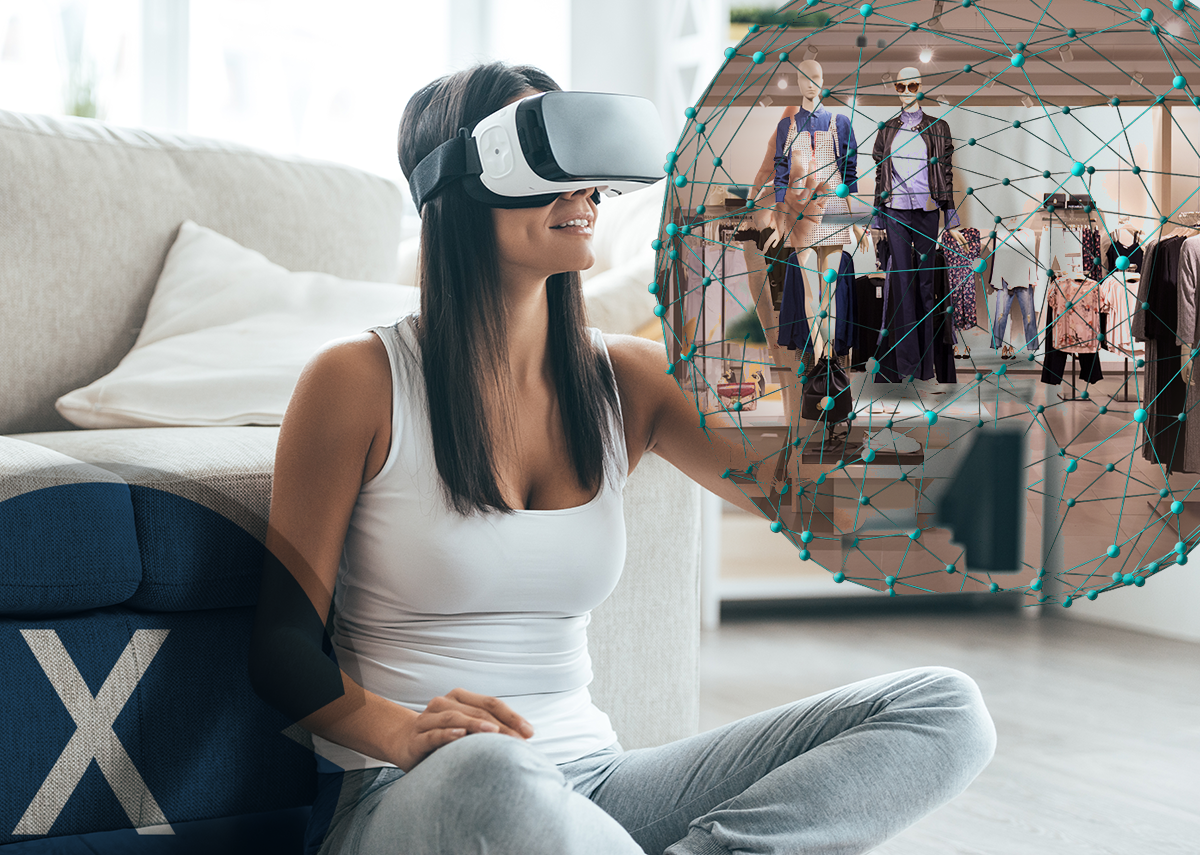
The Customer Metaverse – Customer Experiences and Consumer Experiences – Image: Xpert.Digital
Customer experiences and consumer experiences with the Customer Metaverse
The business world has changed dramatically in recent years, and a crucial factor driving business success is the customer metaverse. This concept refers to the entirety of digital touchpoints a customer has with a company, whether on websites, social media, mobile apps, or virtual platforms. The goal is to create seamless and compelling customer experiences that foster long-term relationships and strengthen brand loyalty. Let's take a closer look at the key aspects of this fascinating trend:
1. The merging of the digital and physical worlds
The Customer Metaverse represents a merging of the digital and physical worlds. Today, customers expect a seamless experience across online and offline channels. Companies are leveraging Augmented Reality (AR) and Virtual Reality (VR) to create immersive shopping experiences, allowing customers to virtually try out products before purchasing them. They are also integrating Internet of Things (IoT) technologies to provide customers with personalized offers and recommendations based on their behavior and preferences.
2. AI and personalized interactions
Artificial intelligence (AI) plays a crucial role in the customer metaverse. Companies use advanced algorithms to analyze customer behavior and enable personalized interactions. Chatbots are a prime example. They offer fast and efficient customer service around the clock and, thanks to their AI support, can simulate real conversations. Through machine learning, these chatbots are constantly improving their ability to understand and resolve customer issues.
3. The power of social media
Social media has become an integral part of the customer metaverse. Customers share their experiences, rate products and services, and their opinions significantly influence the purchasing decisions of other consumers. Companies rely on influencer marketing to increase brand awareness and reach target audiences. Customer service via social media is also becoming increasingly important, as customers often expect faster and more public responses.
4. Omnichannel Strategies
To ensure a consistent customer experience, companies are increasingly relying on omnichannel strategies. Customers can seamlessly switch between different channels without disrupting their experience. For example, customers could research a product online, then buy it in a physical store, and later provide feedback via a mobile app. A strong omnichannel presence fosters customer loyalty and increases satisfaction.
5. Data protection and trust
With the increasing use of technology in the customer metaverse, the importance of data privacy also grows. Customers share a great deal of personal data to receive personalized experiences, and companies must ensure that this data is protected and treated confidentially. Data privacy policies and transparency in data collection are therefore crucial for gaining and maintaining customer trust.
6. New opportunities for customer experiences
The customer metaverse is revolutionizing how businesses interact with their customers. It offers exciting opportunities to create impressive customer experiences while simultaneously building long-term customer relationships. The combination of technology, AI, social media, and omnichannel strategies enables companies to successfully position themselves in the digital age. However, data privacy and trust are key factors that must be considered to fully leverage the benefits of this trend. By understanding their customers' needs and expectations and providing them with unique experiences, companies can differentiate themselves from the competition and build strong brand loyalty.
Our Industrial Metaverse Configurator
Simply try out our universally applicable (B2B/Business/Industrial) Metaverse Configurator for all CAD / 3D demo options:
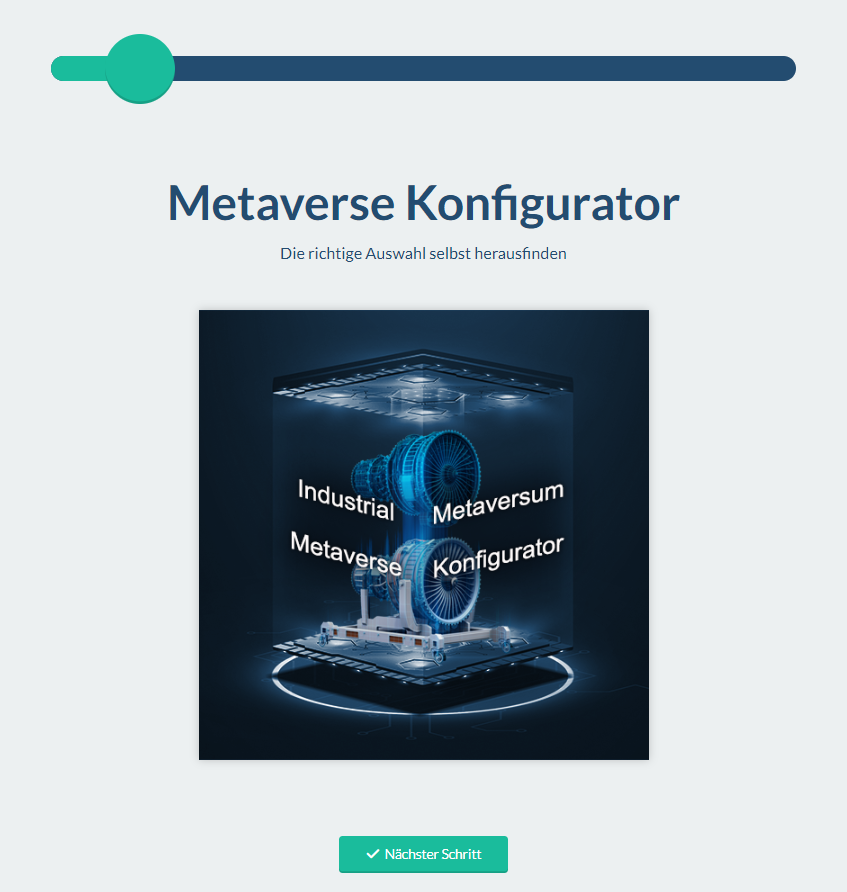

Xpert (B2B/Business/Industrial) Metaverse Configurator for all CAD / 3D data, usable on all end devices, one platform!
Related to this:
The Metaverse Revolution: Customer Loyalty and Brand Strategies in the Digital Age
In this section, we take a comprehensive look at the concept of the metaverse and how it significantly impacts customer experience and brand strategies. The metaverse is an immersive online environment where people can interact, buy, and sell using technologies such as blockchain, VR, AR, IoT, 5G, AI, and gaming. We will highlight the importance of a well-thought-out metaverse strategy and flexible technologies for creating virtual spaces, emphasizing the crucial role of customer experience and trust in this process.
The Metaverse Revolution
The metaverse goes beyond mere technological hype – it represents a true revolution in the digital age. It enables a seamless fusion of the physical and virtual worlds, thereby influencing many aspects of our lives. Companies are increasingly recognizing this potential and using it to strengthen customer loyalty and future-proof their brand strategies.
Metaverse and customer experiences
In the metaverse, customer interaction in virtual environments takes center stage. Companies can create unique customer experiences that go far beyond what is possible in the physical world. By using virtual reality (VR) and augmented reality (AR), products and services can be presented in entirely new ways. Customers have the opportunity to try out products in virtual environments before purchasing them or to participate in realistic simulations that address their needs and interests.
Trust in the Metaverse
With the introduction of the metaverse, questions arise regarding security and customer trust in virtual environments. Blockchain plays a crucial role here, as this revolutionary technology enables transparent and secure transaction processing. Companies that rely on blockchain can gain their customers' trust and build long-term customer relationships.
Flexibility and technology in the metaverse
The technologies that enable the metaverse are constantly evolving. Therefore, flexibility is crucial. Companies must be prepared to adapt to the latest technological developments and adjust their metaverse strategy accordingly. For example, the rollout of 5G enables faster and more reliable connectivity, while AI helps create personalized customer experiences.
The role of gamification in the metaverse
Another important aspect of the metaverse is the integration of gamification. Game-like elements can enhance the customer experience and motivate customers to actively engage with the brand. By creating playful challenges and rewards, companies can strengthen customer engagement and build long-term loyalty.
Improving customer experiences
The metaverse undoubtedly offers companies an exciting new space to enhance their customer experiences and optimize their brand strategies. By integrating technologies such as blockchain, VR, AR, IoT, 5G, and AI, companies can create unique virtual spaces that elevate the customer experience to a whole new level. Customer loyalty and trust are crucial to ensuring long-term success.
Take the step into the metaverse now and shape the future of customer experience! We are happy to assist you with any questions or support you may need in implementing your metaverse strategy.
The Customer and Consumer Metaverse: Customer loyalty and personal experiences in focus
The customer and consumer metaverse are terms used in the context of extended reality (XR) technologies to describe the future of digital interaction and virtual experiences. Essentially, the metaverse is an expanded virtual space that encompasses both physical and virtual elements, allowing users to interact within an immersive environment.
The customer metaverse refers to how companies and brands use the metaverse to interact with their customers and offer them personalized experiences. It's a kind of digital ecosystem where companies create virtual spaces to showcase their products, services, and brand messages. For example, customers can enter virtual stores, try out products, customize them, and interact with other customers or brands.
The Consumer Metaverse, on the other hand, refers to the experiences and interactions of individual users within the metaverse. It is the space where consumers create their virtual identity, interact with other users, engage in virtual activities, play games, create and consume digital content, and participate in virtual events and activities. The Consumer Metaverse offers users the opportunity to live out their fantasies, explore new worlds, and build social connections in virtual reality.
The differences in approach between the Customer Metaverse and the Consumer Metaverse lie primarily in their goals and intentions. The Customer Metaverse focuses on providing customers with personalized and tailored experiences to strengthen brand loyalty and boost sales of products and services. Companies leverage XR technologies to create immersive shopping experiences where customers can virtually try out, customize, and purchase products.
In contrast, the Consumer Metaverse focuses on the individual needs and preferences of users. It's about offering them unique and entertaining experiences that go beyond everyday life. Users can immerse themselves in virtual worlds, experience adventures, create digital artwork, and interact with other users. The Consumer Metaverse allows people to immerse themselves in the digital world and explore their own fantasies and interests.
Despite these differences, there are also commonalities between the Customer and Consumer Metaverses. Both concepts utilize XR technologies such as Virtual Reality (VR), Augmented Reality (AR), and Mixed Reality (MR) to enable immersive and interactive experiences. Both the Customer and Consumer Metaverses aim to expand the boundaries of digital interaction and offer users new possibilities.
Furthermore, social interactions play a crucial role in both the customer and consumer metaverses. Businesses can interact with customers in virtual spaces and gather feedback to improve their products and services. In the consumer metaverse, users can connect with other users, forge friendships, and build virtual communities.
Opportunities for businesses
The customer and consumer metaverses represent exciting developments in the digital world. They offer companies the opportunity to develop innovative business models and strengthen customer loyalty. At the same time, they open up entirely new avenues for digital experience and self-expression for consumers. With the rise of XR technologies, we can expect an increasing fusion of physical and virtual reality in the future, which has the potential to revolutionize our understanding of communication, entertainment, e-commerce, and social interactions.
The Customer Metaverse: A Revolution for the Consumer Experience
The metaverse is an exciting new way to revolutionize the consumer experience. Through interactivity, personalization, and adventure, we can create a unique experience for our customers and put them at the heart of everything we do. In this article, we'll explore how the metaverse enables the connection between the physical and virtual worlds, facilitates the discovery of new products, allows the use of AI-powered bots, and profoundly impacts how we, as a company, interact with our customers.
The power of interactivity and personalization
A key aspect of the metaverse is interactivity. It allows us to interact with our customers in a completely new way. Imagine our customers being able to explore our products in a virtual environment, view them from different angles, and even interact with them as if they were physically present. This immersive experience allows us to gain a deeper understanding of our customers' needs and preferences and offer tailored solutions.
The merging of physical and virtual
The metaverse opens up the possibility of blurring the lines between physical and virtual experiences. Take the retail sector, for example. By extending our physical stores into the virtual world, we can offer our customers a seamless shopping experience, regardless of their location. They can explore, try on, and purchase our products from the comfort of their own homes, just as if they were in one of our physical stores. This not only provides convenience for our customers but also allows us to tap into new markets and maximize our business potential.
AI-powered bots for a personal connection
The Metaverse also offers us the opportunity to deploy AI-powered bots to establish a personal connection with our customers. These intelligent bots can meet our customers' needs and desires by providing tailored recommendations, answering questions, and resolving issues. By leveraging this technology, we can create a 24/7 customer service platform that strengthens customer trust and increases their satisfaction.
The meaning of "The Drop" in consumer advertising
In the metaverse, "The Drop" plays a crucial role in consumer advertising. Through the airdrop method, virtual collectibles can be distributed as rewards for customer loyalty. These virtual collectibles have high emotional value and create a special bond between our company and our customers. With clever marketing strategies centered around "The Drop," we can capture the attention of our target audience and strengthen brand loyalty.
Games and competitions for customer loyalty
Another important aspect of the Metaverse is the integration of games and competitions to engage our customers. We can create virtual games and competitions that are not only entertaining but also foster customer loyalty. By offering attractive rewards and prizes, we motivate our customers to actively participate in our virtual events and identify even more strongly with our brand.
Insights from the merging of metaverse and physical environment
The fusion of the metaverse and the physical environment allows us to gain valuable insights into our customers' behavior and preferences. By analyzing their interactions in the virtual world and in our physical stores, we can understand precisely what they truly want. We can then use these insights to further improve our products and services, optimize our marketing, and strengthen customer loyalty.
The metaverse as a driver of industry-wide change
The metaverse has the potential to transform entire industries. From entertainment to education, from healthcare to retail – the possibilities are endless. As a company, we must act proactively and seize the opportunities the metaverse offers. By developing innovative approaches and utilizing the latest technologies, we can position ourselves as leaders in our industry and gain a sustainable competitive advantage.
Game changer customer metaverse
The metaverse is undoubtedly a game-changer for the consumer experience. Through interactivity, personalization, and adventure, we can create unique and unforgettable experiences for our customers. The merging of the physical and virtual worlds opens up new possibilities for reaching our customers and interacting more closely with them. With the help of AI-powered bots, we can establish a personal connection and offer our customers first-class customer service. "The Drop" and virtual competitions allow us to capture our customers' attention and strengthen their loyalty. We can gain valuable insights by analyzing our customers' behavior in the virtual world and in our physical stores. As a company, we should see the metaverse as an opportunity to revolutionize our industry and actively shape the future. By leveraging the potential of the metaverse and developing innovative strategies, we can secure our place at the forefront of our industry and achieve sustainable growth.
Related to this:
The Customer Metaverse: The Future of Virtual Reality (VR) and Web 3.0
In the digital world, we are on the cusp of an exciting new chapter: the metaverse. This constantly evolving virtual parallel universe, accessed through personal avatars, is gaining increasing importance as the next stage of the internet (Web 3.0). It offers immersive experiences such as social interaction, shopping, and learning. Meta (formerly Facebook) is at the forefront, striving to unite all brands and services into a seamless virtual platform. Although the technology is not yet fully mature, Meta's vision is to create a connected virtual realm. Businesses must adapt to this virtual landscape to succeed by focusing on user-friendly interfaces and personalized customer interactions. The metaverse also holds potential for remote work and skills development. While still in its early stages, companies like Walmart, Nike, Ralph Lauren, and Kaufland have already expressed interest in metaverse commerce, reflecting a growing market trend.
The importance of Web 3.0
Web 3.0 represents the next evolutionary stage of the internet, embodied by the metaverse. Compared to Web 1.0, which primarily consisted of static websites, and Web 2.0, which introduced social networks and user interactions, Web 3.0 is characterized by an immersive experience and the seamless integration of virtual content. The metaverse is at the heart of Web 3.0, as it provides users with a comprehensive and engaging digital environment.
Meta: The driving force behind the metaverse
Meta is one of the leading companies driving the development of the Metaverse. With a clear vision, Meta strives to create an open platform where developers, businesses, and users alike can create their own content and experiences. Meta's Metaverse aims to encompass a diverse range of applications, from social interaction and entertainment to education, e-commerce, and much more.
The Metaverse and its impact on businesses
The metaverse offers companies countless opportunities to showcase themselves and connect with their customers. Establishing a strong presence in the metaverse can lead to improved brand awareness and customer loyalty. However, it's crucial that companies adapt their strategies to the unique requirements of the metaverse.
User-friendly interfaces and personalized interactions
In the metaverse, user experience is of paramount importance. Companies must ensure their virtual interfaces are intuitive and user-friendly to enable seamless navigation and interaction. Furthermore, personalized interactions can increase customer engagement by offering customized experiences.
Metaverse Commerce: Opportunities and Challenges
The emerging trend of metaverse commerce offers companies the opportunity to offer their products and services in a digital environment. Major brands like Walmart, Nike, Ralph Lauren, and Kaufland have already begun expanding their presence in the metaverse. However, they must also consider the challenges associated with integrating e-commerce into the metaverse, such as the security of payment transactions and the protection of customer privacy.
The Metaverse Economy and its Future: Potential and Opportunities for E-Commerce
Today's world is grappling with the emerging concept of the metaverse—a virtual reality shaped by technologies such as augmented reality (AR), virtual reality (VR), blockchain, and artificial intelligence (AI). These developments have the potential to fundamentally transform e-commerce. Non-fungible tokens (NFTs) are already widespread in the metaverse economy, and businesses are offering virtual experiences. Fashion and luxury brands have a particularly strong presence in this virtual world, while industry giants like Amazon and Salesforce are shaping the future of e-commerce within the metaverse. The increasing adoption of blockchain will transform payment methods in the metaverse, while the gaming industry plays a key role in its development. The metaverse economy promises to elevate e-commerce to a new level, offering diverse application scenarios for engaging with target audiences. In this section, we examine the current developments and challenges in metaverse e-commerce.
Virtual reality and the new dimension of e-commerce
The convergence of virtual reality and e-commerce opens up fascinating opportunities for both consumers and businesses. In the metaverse world, consumers can enjoy an immersive and engaging shopping experience that rivals the physical shopping experience. Virtual showrooms allow customers to view, try on, and test products in a simulated environment before making a purchase decision. Integrating AR technology into the shopping process gives brands the opportunity to integrate their products into consumers' everyday lives, resulting in an emotional and personalized shopping experience.
NFTs and the Transformation of Ownership
NFTs have revolutionized the way we think about owning digital assets. In the metaverse economy, unique and distinctive virtual items can be bought and sold as NFTs. These virtual possessions can be displayed and traded in virtual worlds, creating a new dimension of ownership. For brands, this opens up the possibility of offering exclusive digital collectibles that hold significant value for their target audience.
Blockchain and the secure future of metaverse e-commerce
Blockchain technology plays a crucial role in the metaverse economy, particularly in the areas of payment methods and security. By using blockchain, transactions can be processed securely and transparently, which strengthens consumer trust. Smart contracts enable automated and reliable payments, delivering a seamless experience for e-commerce transactions in the metaverse.
Gaming as a driver of metaverse development
Gaming has played a pioneering role in the development of the metaverse. The gaming industry has driven innovative technologies like VR and AR, creating virtual worlds that captivate millions of players worldwide. The integration of e-commerce into gaming environments allows companies to offer virtual goods and services that enrich and monetize the gaming experience.
The promising future of the metaverse and e-commerce
The metaverse is still in its early stages, and there are countless opportunities for the future. E-commerce in the metaverse is expected to continue growing and spawn new business models. Virtual influencers could become key opinion leaders for brands, while AI-powered personalization streamlines the shopping experience. Companies should engage with the metaverse early on and develop innovative strategies to capitalize on the opportunities this exciting new ecosystem offers.
Metaverse economy: Potential for e-commerce
The metaverse economy has the potential to revolutionize e-commerce as we know it. Technologies like AR, VR, blockchain, and AI are creating immersive and personalized shopping experiences that boost consumer engagement. NFTs enable the virtualization of ownership, opening up new opportunities for brands to offer exclusive digital goods. Gaming plays a central role in the evolution of the metaverse, offering businesses the chance to interact with their target audience in virtual environments. The future of the metaverse holds many exciting developments, and companies should seize these opportunities to expand their e-commerce strategies and strengthen their presence in this emerging ecosystem.
Opinion & Criticism of “Metaworse”: The Metaverse is rubbish – and risky, pointless & dangerous for companies | Mechanical Engineering & Industry


Metaverse – Criticism of the metaverse plans of large digital corporations and monopolists – Image: Xpert.Digital / Athitat Shinagowin|Shutterstock.com
More information here:
New territory for newcomers: What you should know now about blockchain, tokens, NFTs, wallets, cryptocurrency and the metaverse
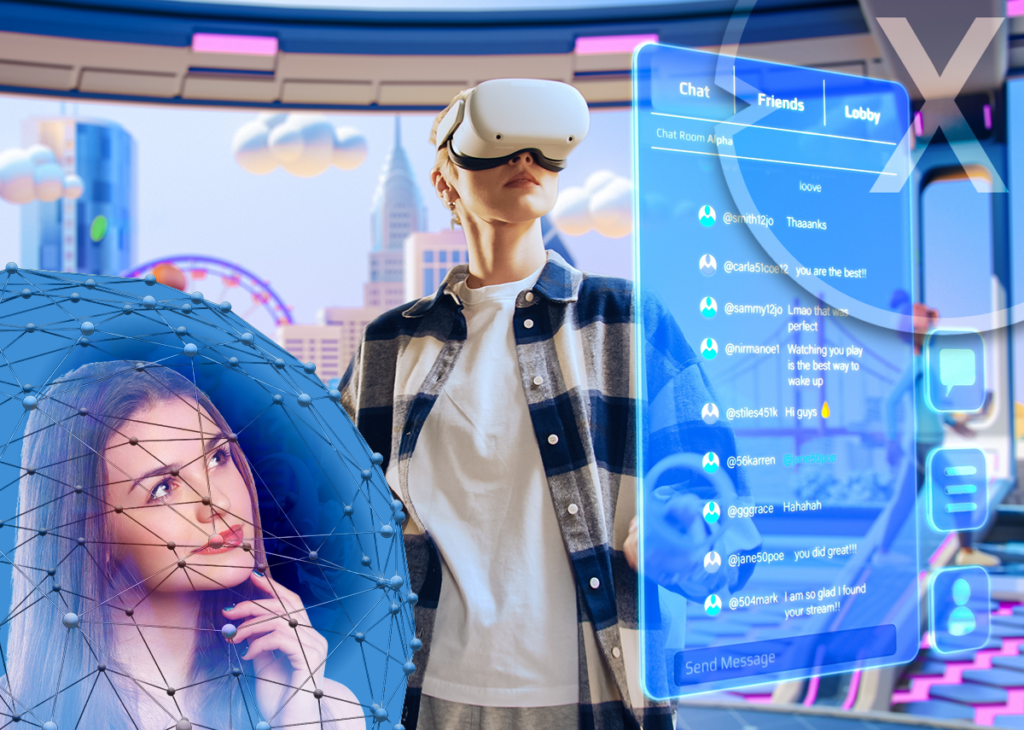
(Consumer) Metaverse: New territory for newcomers – What you should know now – Image: Xpert.Digital
In today's digital world, terms like blockchain, NFTs, wallets, cryptocurrencies, and the metaverse have become increasingly prevalent. For newcomers, these terms can initially seem confusing and complex. Here, we attempt to explain these concepts clearly and provide you with important and interesting details.
More information here:

Xpert.Digital – Pioneer Business Development

Konrad Wolfenstein
I would be happy to serve as your personal advisor.
You can contact me by filling out the contact form below or simply call me on +49 7348 4088 965 .
I'm looking forward to our joint project.
Write to me


Xpert.Digital – Konrad Wolfenstein
Xpert.Digital is a hub for industry focusing on digitalization, mechanical engineering, logistics/intralogistics and photovoltaics.
With our 360° Business Development solution, we support renowned companies from new business to after-sales.
Market intelligence, smarketing, marketing automation, content development, PR, mail campaigns, personalized social media and lead nurturing are part of our digital tools.
You can find more information at: www.xpert.digital – www.xpert.solar – www.xpert.plus
Keep in touch