

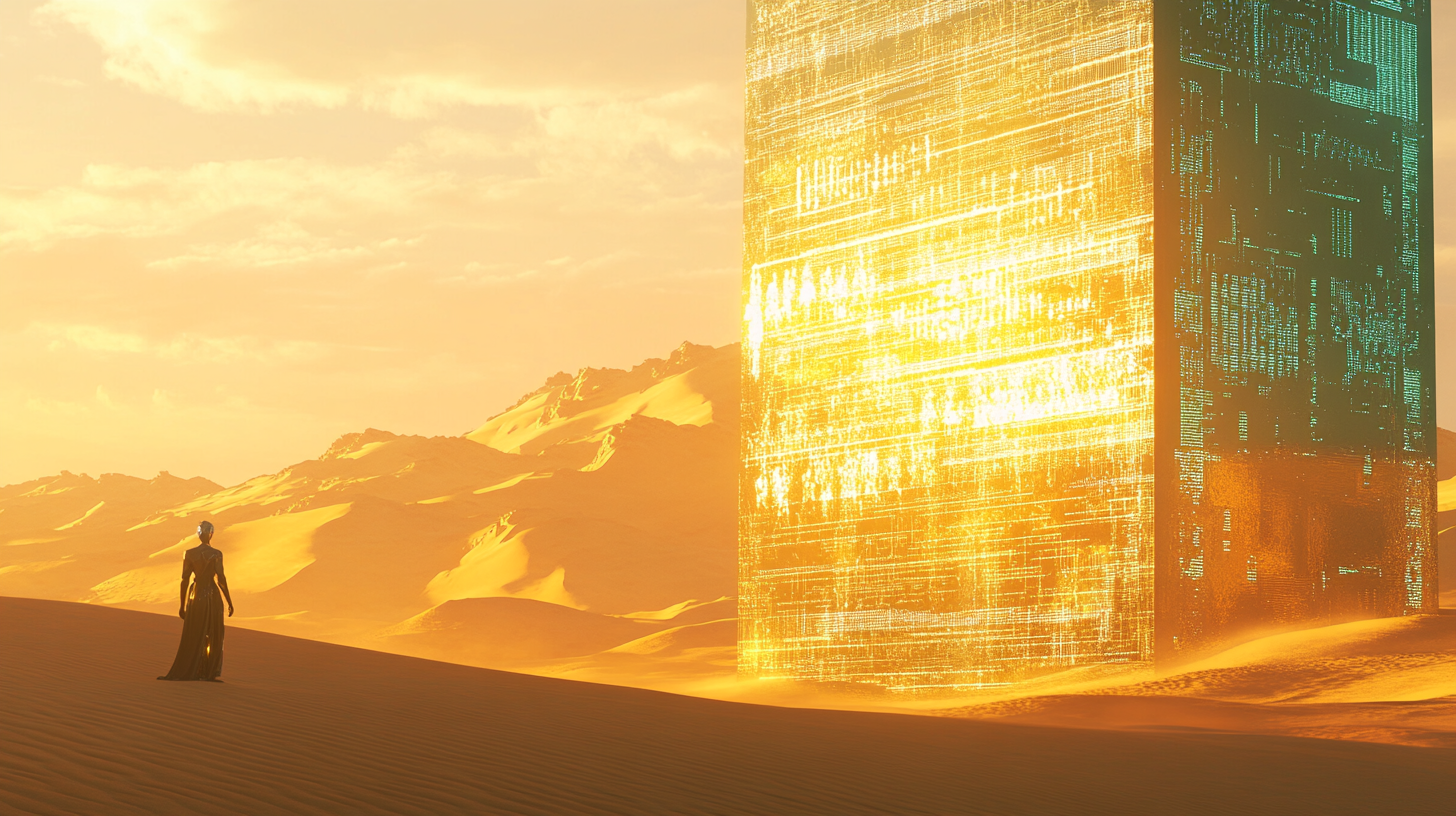
Can artificial intelligence promote creative work and development? – Image: Xpert.Digital
🎯 Does development or creative work require artificial intelligence?
🎨🤖✨ At first glance, one might think that AI is the opposite of creativity. But in fact, AI can serve as a powerful tool to foster creative thinking and stimulate new developments.
The new possibilities that AI offers in visualization automatically make the entire process more flexible. It creates the feeling that anything is possible. With the help of AI, projects can be implemented that would not have been possible without this technology.
Artificial intelligence has made enormous strides in recent years, influencing many areas of our lives, including creative fields such as art, music, design, and writing. While some fear that AI could displace human creativity, others see it as an opportunity to explore new horizons and expand creative processes.
A key aspect is AI's ability to analyze large amounts of data and recognize patterns that are difficult for humans to grasp. This allows artists and developers to draw inspiration from a wide variety of sources and generate innovative ideas. For example, AI can assist in composing music by suggesting new melodies or in designing products by generating unique shapes and structures.
🎵 “AI is not meant to replace human creativity, but to enhance it.”
Working with AI allows people to take their creative abilities to a new level. It's about combining the strengths of humans and machines to achieve extraordinary results.
A practical example of AI's use in creativity is the use of AI-generated images. Artists are using algorithms like Generative Adversarial Networks (GANs) to create artworks that were previously unimaginable. This technology makes it possible to discover new styles and expand existing art forms.
In the music industry, composers are experimenting with AI to create new soundscapes. Programs can learn from millions of musical pieces and create new compositions that resemble human works but are nonetheless unique. This leads to a fusion of technology and art, enabling new genres and forms of expression.
"The future of creativity lies in the collaboration between humans and machines." Through this symbiosis, boundaries can be overcome and the potential of the human mind expanded.
🚀 Another advantage of AI in creative processes is increased efficiency.
Routine tasks can be automated, freeing up more time for the actual creative work. For example, in the film industry, time-consuming steps such as rendering scenes can be accelerated by AI.
But there are also challenges. The question arises as to what extent AI can truly be creative. Creativity is closely linked to human experience, emotions, and an understanding of context. While AI is based on data and algorithms, it lacks consciousness and the capacity to feel. Therefore, some argue that AI merely reproduces existing patterns and does not generate genuinely original ideas.
Furthermore, we must consider the ethical and societal implications. If AI is capable of creating art, questions of copyright and originality arise. Who owns a work created by a machine? And how do we assess the quality of such works compared to human art?
✋ There are also concerns regarding the potential dependence on AI.
If we rely too heavily on technology, we risk neglecting our own creative abilities. It's important to find a balance and ensure that AI serves as a complement, not a replacement.
In education, AI tools can be used to teach students creative skills. Interactive learning platforms that utilize AI can be used to design individualized learning paths and foster creativity. This prepares the next generation to operate in a world where technology and creativity are closely intertwined.
💡 In summary, artificial intelligence is a valuable tool in development and creative work
It does not replace human creativity, but rather complements it and opens up new possibilities. It is up to us to use this technology responsibly and to view it as a partner in our creative process.
The question of whether development or creative work needs AI cannot be answered in general terms. It depends on the perspective and the area of application. However, it is clear that AI has the potential to fundamentally change the way we create and develop.
It is in our hands to harness the benefits of AI without losing the essence of human creativity. By viewing technology as a tool, not a replacement, we can shape a future where humans and machines work together harmoniously.
Related to this: