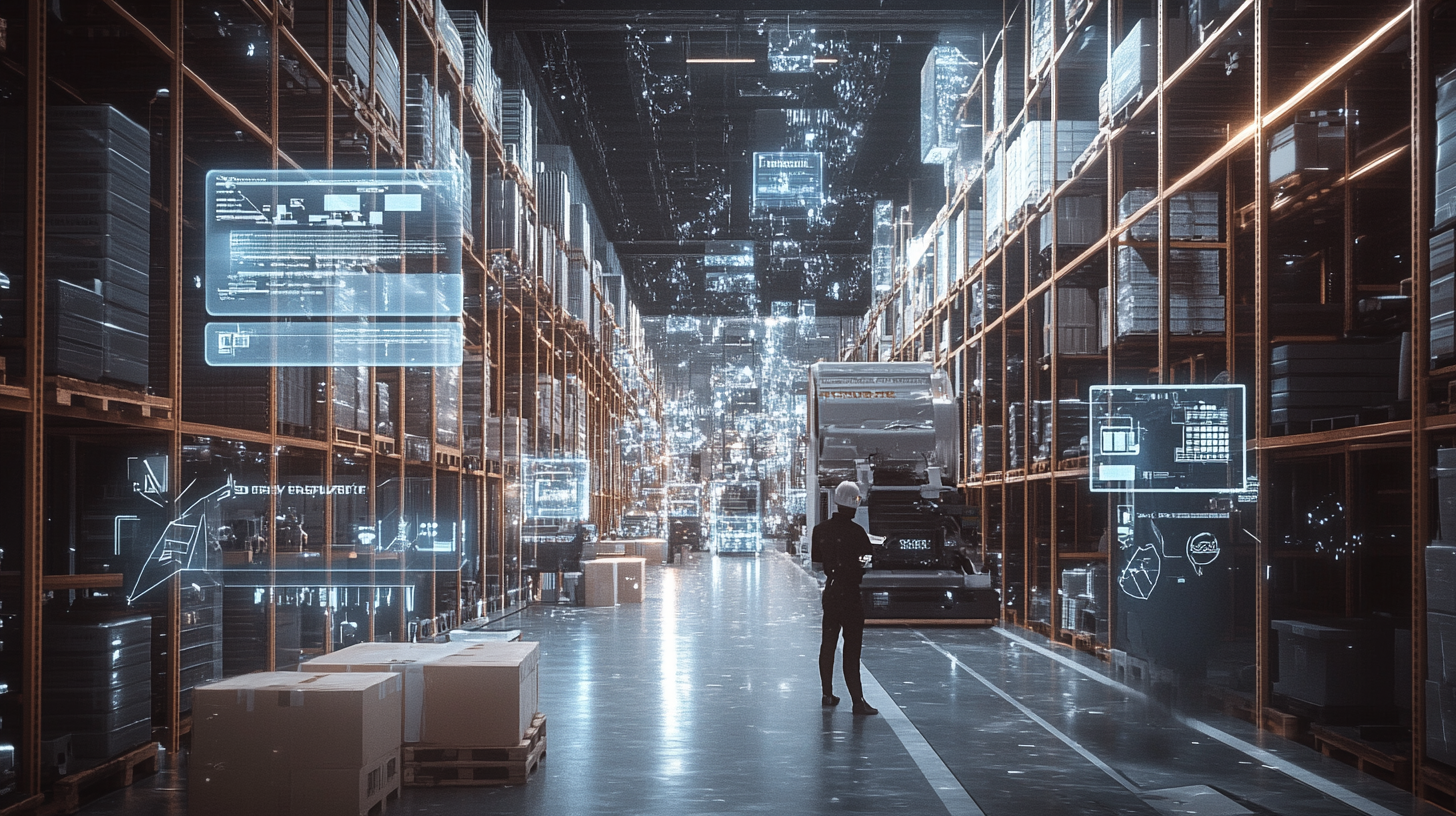
Refrigerated and fresh food logistics buffer storage 4.0: Cool, smart, automated – AI-controlled pallet warehouses and high-bay racking solutions – Image: Xpert.Digital
Between buffer storage and AI systems: How modern warehouse concepts are changing the industry
Modern logistics has developed rapidly in recent decades and now encompasses a wide range of warehousing solutions, from simple intermediate storage facilities and specialized buffer warehouses for fresh and refrigerated goods to highly automated, AI-controlled high-bay and pallet warehouses. The goal of all these systems is to ensure the most efficient, smooth, and secure flow of goods possible. "Time is a crucial factor in the logistics industry," many experts emphasize, and this is precisely why sophisticated warehouse concepts have become indispensable for companies that want to optimize their supply chains and maintain their competitive edge. The following provides a comprehensive overview of the most important warehouse types and their applications, supplemented by relevant aspects such as sustainability, future technologies, and employee workload reduction. All information is presented to the best of our knowledge and belief, creating a practical and reliable picture.
1. Fundamentals of modern warehouse logistics
Warehouse logistics encompasses far more than simply stacking goods on shelves. It is a strategic tool for managing the flow of goods and stabilizing supply chains. Companies that want to operate successfully today need warehouse structures precisely tailored to their specific requirements. Various factors play a role here: from the type of goods stored and their perishability to anticipated customer ordering patterns, space utilization, and the degree of automation.
"The days when companies simply used an empty building for storage are long gone." Today, warehouses are high-tech centers equipped with sophisticated measuring and control instruments. These enable constant monitoring of temperature and humidity, seamless traceability of every single product, and an automated flow of goods that minimizes downtime and prevents bottlenecks. This comprehensive system is often complemented by technologies such as robotics, sensors, artificial intelligence, and comprehensive warehouse management systems that centrally coordinate all warehouse operations.
2. Buffer storage for fresh and refrigerated logistics
Buffer warehouses play a crucial role in fresh and refrigerated logistics. Especially with food, pharmaceuticals, or other temperature-sensitive products, it is essential to have storage areas where goods can be temporarily stored without losing quality or becoming unusable. "Every minute counts in the cold chain," is a common saying in the industry. Therefore, short distances and rapid handling processes are key success factors for buffer warehouses.
- Refrigerated storage facilities with constant temperatures: The correct temperature ranges ensure that perishable goods do not spoil before delivery. Deep-freeze storage facilities are often in the range of -25 to -28 °C, while cold storage facilities for fresh goods require temperatures of 2 to 8 °C.
- Short storage times and high turnover rates: Rapid storage and retrieval prevent food from losing its freshness. This requires seamless coordination between production, logistics, and retail.
- Continuous digital monitoring: Temperature and humidity are monitored in real time. Digital sensors immediately report any anomalies, allowing those responsible to react promptly if the cold chain is interrupted or technical malfunctions occur.
- Use of reusable crates: Reusable packaging facilitates order picking and conserves resources. Furthermore, standardized dimensions ensure smooth processes at interfaces such as conveyor belts, sorting systems, or in trucks.
A buffer stock can be designed to bridge storage gaps of just a few hours, or it can hold stocks for several days to absorb seasonal fluctuations, production disruptions, or supply bottlenecks. "Those who don't have buffer stocks risk significant losses," experts say, referring to the risk of running out of stock in the event of unforeseen circumstances.
3. Automated pallet storage
While buffer warehouses are primarily relevant for short-term supply chain balancing, automated pallet warehouses serve long-term, high-volume storage. Enormous quantities of goods can be stored here, often in a very confined space. The advantages are obvious:
- High storage density: By using the storage area vertically, more pallets can be accommodated per square meter.
- Automated storage and retrieval processes: Storage and retrieval machines or autonomous industrial trucks handle the transport of pallets. Central control software manages order processing, storage locations, and order picking.
- Minimized error rate: Since manual intervention is reduced, the risk of incorrect picking or damage to goods during transport decreases.
- Relief for employees: Heavy physical tasks such as lifting pallets are eliminated. The workforce can concentrate on supervisory and strategic tasks, which often increases job satisfaction.
In many industries, warehouse automation has long been standard practice. "Automation is no longer just a trend, but a necessity," is the prevailing sentiment in large logistics companies. Especially for fast-moving goods such as beverages or promotional items in retail, automated pallet warehouses are a suitable means of handling peak loads quickly.
4. High-bay warehouse (HBW)
High-bay warehouses are, in a sense, the gold standard of storage systems. They can reach heights of up to 45 meters, thus offering highly efficient use of vertical space. During construction, a distinction is made between built-in warehouses and freestanding silo warehouses. In a built-in warehouse, the racking system is integrated into an existing building, while a silo warehouse is characterized by the racking system simultaneously forming the building envelope.
Other characteristics of high-bay warehouses:
- Storage and retrieval machines (SRMs) or shuttle systems: These automated systems move in the aisles between the tall racks and lift the pallets to the appropriate heights. Shuttle systems are often faster and more flexible than traditional SRMs.
- Integrated warehouse management systems (WMS): A professional WMS manages all inventory centrally, controls inbound and outbound processes, and plans order picking. This allows for optimal capacity utilization and reduced delivery times.
- Safety and maintenance: Because work is carried out at great heights and a lot of technology is used, regular safety inspections and maintenance intervals are essential. "Safety is paramount in high-bay warehouses," emphasize logistics experts, especially since accidents at great heights can have serious consequences.
High-bay warehouses are used in many industries: from the automotive industry to the chemical and pharmaceutical industries, and even wholesale trade. They are a particularly attractive option when turnover rates are high and land space is limited.
5. AI-driven automated warehouse systems
The next evolutionary step in warehouse logistics is the integration of artificial intelligence (AI). "Artificial intelligence can take the efficiency of warehouse systems to a whole new level," say experts. AI algorithms analyze large amounts of data to better understand warehouse processes and continuously optimize them.
- Predictive analytics and predictive maintenance: With the help of predictive analytics, machines can be serviced before malfunctions occur. This reduces downtime and allows the warehouse to operate continuously.
- Dynamic process adaptation: AI recognizes, for example, seasonal patterns or order peaks and can adjust picking behavior accordingly. Furthermore, the system learns from the past and derives forecasts for the future.
- Resource conservation: AI-optimized processes enable more efficient use of energy and space. For example, robots can plan their routes to minimize empty trips.
- Increased system performance and redundancy: AI systems are designed to automatically find alternative routes in the event of disruptions, thus maintaining the flow of goods. Multiple structures and redundant control elements reduce the risk of a complete system failure.
However, a solid data foundation and appropriate IT infrastructure are required to successfully implement AI systems. This demonstrates that logistics is increasingly becoming a data-driven discipline in which digital competence and IT security play a significant role.
6. Advantages of automated storage systems
The implementation of automated warehouse solutions – whether with or without AI – brings numerous advantages:
- Increased efficiency and productivity: Automation reduces waiting times, optimizes transport, and accelerates order picking. This allows more goods to be processed in less time.
- Improved product availability: More precise inventory management means items can be located more quickly and delivered faster. This increases customer satisfaction and reduces stock shortages.
- Error reduction: Sources of error such as incorrect labeling, incorrect storage or order picking occur significantly less frequently through digitally controlled processes.
- Optimized space utilization: High-bay warehouses and compact shuttle systems, in particular, make maximum use of the available space. This reduces the cost per item stored.
- Relief for employees: Monotonous and physically demanding tasks such as lifting heavy loads are eliminated. Employees can concentrate on more complex tasks, such as monitoring and controlling processes or quality control.
- Sustainability: Reduced energy and resource consumption through improved system utilization and proactive planning. Shorter travel distances and well-planned routes also lower the CO₂ footprint.
7. Sustainability and security as key themes
In times of climate change and societal transformation, sustainability is playing an increasingly important role. "Green logistics is far more than just a buzzword," emphasize industry experts. Modern warehouse systems are therefore increasingly designed not only to be efficient but also to reduce their ecological footprint. Examples include:
- Energy-efficient storage and retrieval machines: Electrically powered vehicles with recuperation systems can recover braking energy and feed it back into the cycle.
- Intelligent lighting systems: Motion detectors and LED technology significantly reduce electricity consumption in the warehouse.
- Thermal insulation and cooling concepts: Especially in buffer storage facilities for fresh and refrigerated logistics, optimal insulation is crucial to minimize the required cooling energy.
Safety is another key issue. Where large machines and people work together in close proximity, clear rules are essential. While automated systems are generally safer because they reduce the potential for human error, they also require comprehensive safety measures to prevent anyone from entering machine areas or being endangered by autonomous robots. Regular staff training and transparently communicated emergency plans are therefore indispensable.
8. Areas of application and future prospects
The storage concepts described are used in almost all sectors of the economy. Key areas of application include:
- Food industry: Buffer warehouses are of central importance here for fresh and refrigerated logistics. Short turnaround times are essential to flexibly absorb production fluctuations and delivery peaks.
- Automotive and mechanical engineering: High-bay warehouses for large and heavy components, some of which need to be delivered just in time.
- Chemicals and pharmaceuticals: Highest demands on cleanliness and temperature control, sometimes also hazardous goods storage, which must meet strict legal requirements.
- E-commerce and retail: Automated pallet warehouses and AI-controlled picking systems handle enormous order volumes, especially during peak periods such as before holidays.
The future of warehouse logistics promises further innovations, particularly through the increased use of AI, robots, and networked systems. In "smart warehouses," devices communicate with each other autonomously. Intelligent sensors constantly monitor the environment, while algorithms continuously optimize the flow of goods. In the long term, fully autonomous warehouses could even become a reality, requiring human intervention only in exceptional circumstances.
However, the necessary transition poses a significant challenge for many companies. Besides high investment costs, expertise and employee acceptance are also crucial. "Successful implementation requires a learning-oriented corporate culture," is a frequently quoted principle in the industry.
9. Warehouse logistics is as diverse as the requirements
From simple buffer storage for fresh and refrigerated goods to fully automated, AI-supported high-bay or pallet warehouses – warehouse logistics is as diverse as the demands placed upon it. Every warehouse concept has its place and fulfills specific tasks in the supply chain. Choosing the right system depends on numerous factors, including product type, turnover rate, available space, and budget.
Automated warehouse systems with AI components offer a high degree of efficiency, error prevention, and adaptability. However, they require a solid data foundation, careful planning, and qualified personnel to realize their full potential. Buffer warehouses for fresh and refrigerated logistics remain essential, as they keep sensitive goods within an optimal temperature range and can quickly forward them when needed.
"The future belongs to flexible, intelligent, and sustainable warehouse systems"—this statement from the industry shows where things are headed. Sustainability and security are becoming increasingly important, and companies that invest in modern warehouse technology gain a competitive advantage. Many businesses are already modernizing their warehouses and implementing automation, not least due to the rising volume of e-commerce and customer expectations for fast delivery times.
Nevertheless, the human element remains important. Even though many processes are automated, experts are needed to monitor, maintain, and optimize the systems. A holistic approach that harmonizes technology and people will therefore continue to be the key to success.
Looking into the crystal ball reveals that robotics, AI, big data, and sustainability will be among the most important drivers of further development. More and more companies are recognizing that intelligent warehouse systems not only reduce costs but also promote resource conservation. Particularly in the area of cold chain logistics, intensive research continues to be conducted to reduce energy consumption and emissions. Technology is advancing rapidly, and new solutions that we may not even be able to imagine today are already on the horizon.
Modern warehouse logistics is far more than just "arranging pallets." It's a highly complex, technical interplay of processes, equipment, and human expertise, constantly adapting to new challenges. From simple buffer storage for perishable goods to fully automated AI-powered high-bay warehouses, every warehouse concept fulfills a vital purpose in the supply chain and contributes to keeping companies competitive and innovative. Investing in the right warehouse solution today lays the foundation for a successful future in an increasingly globalized and interconnected economy.

Expert partner in warehouse planning and construction

In short: From buffer storage for fresh produce and refrigerated logistics warehouses to automated AI high-bay warehouses and pallet warehouses
Modern logistics encompasses a wide range of warehousing solutions, from simple buffer storage to highly automated, AI-driven systems. Here is an overview of the different types of warehouses and their applications:
Buffer storage for fresh and refrigerated logistics
Buffer warehouses play a crucial role in fresh and refrigerated logistics. They serve as temporary intermediate storage to compensate for fluctuations in the supply chain and ensure the smooth operation of production, order picking, and delivery.
Special features of fresh produce logistics:
- Cold storage with constant temperatures (e.g. -25 to -28°C for frozen food)
- Short storage times and high turnover rates
- Permanent digital monitoring to minimize downtime
- Use of reusable crates for simplified order picking
Automated pallet storage
Automated pallet warehouses offer an efficient solution for storing large quantities of goods. They are characterized by the following features:
- High storage density and efficient space utilization
- Automated storage and retrieval processes
- Reduced error rates and short lead times
- Relieving employees of heavy physical work
High-bay warehouse (HBW)
High-bay warehouses can be up to 45 meters high and are particularly suitable for companies with limited space and high storage volume:
- Optimal use of available storage space
- Option for built-in storage or freestanding silo storage
- Use of storage and retrieval machines (SRMs) or shuttle systems
- Integration of warehouse management systems (WMS) for efficient process control
AI-controlled automated warehouse systems
The latest generation of warehouse systems uses artificial intelligence for even more efficient processes:
- AI-based algorithms for monitoring and optimizing warehouse processes
- Automatic adaptation and improvement of processes
- Predictive maintenance to avoid unplanned downtime
- Increased system performance and redundancy
Advantages of automated storage systems
Implementing automated warehouse solutions offers numerous advantages:
- Increased efficiency and productivity
- Improved product availability and shorter delivery times
- Reducing errors and improving quality control
- Optimized space utilization and energy efficiency
- Relieving employees of monotonous and physically demanding tasks
Choosing the right warehouse system depends on various factors, such as storage volume, product type, available space, and throughput requirements. From simple buffer storage to highly complex, AI-driven systems, modern logistics offers solutions for every need, helping businesses remain competitive and efficient.

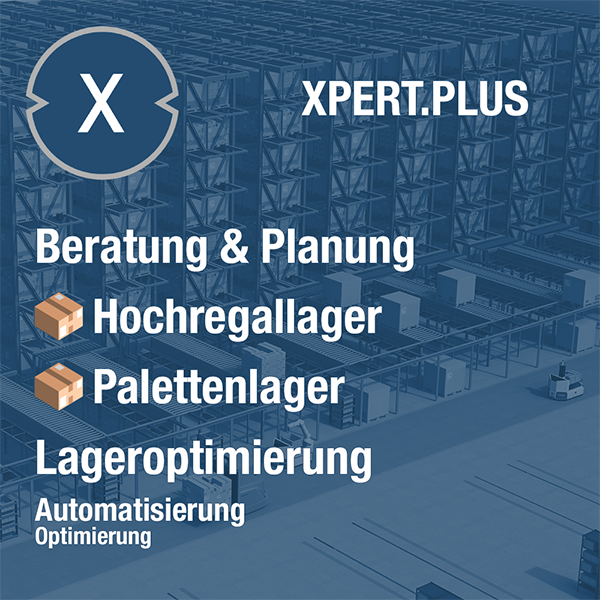
Xpert.Plus Warehouse Optimization - High-bay warehouses and pallet warehouses: Consulting and planning
We are here for you - Consulting - Planning - Implementation - Project Management
☑️ SME support in strategy, consulting, planning and implementation
☑️ Creation or realignment of the digital strategy and digitization
☑️ Expansion and optimization of international sales processes
☑️ Global & Digital B2B trading platforms
☑️ Pioneer Business Development

Konrad Wolfenstein
I would be happy to serve as your personal advisor.
You can contact me by filling out the contact form below or simply call me on +49 7348 4088 965 .
I'm looking forward to our joint project.
Write to me


Xpert.Digital - Konrad Wolfenstein
Xpert.Digital is a hub for industry focusing on digitalization, mechanical engineering, logistics/intralogistics and photovoltaics.
With our 360° Business Development solution, we support renowned companies from new business to after-sales.
Market intelligence, smarketing, marketing automation, content development, PR, mail campaigns, personalized social media and lead nurturing are part of our digital tools.
You can find more information at: www.xpert.digital - www.xpert.solar - www.xpert.plus
Keep in touch