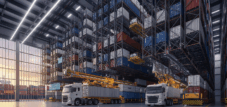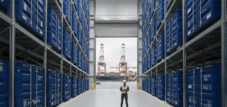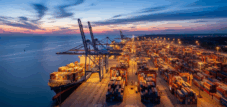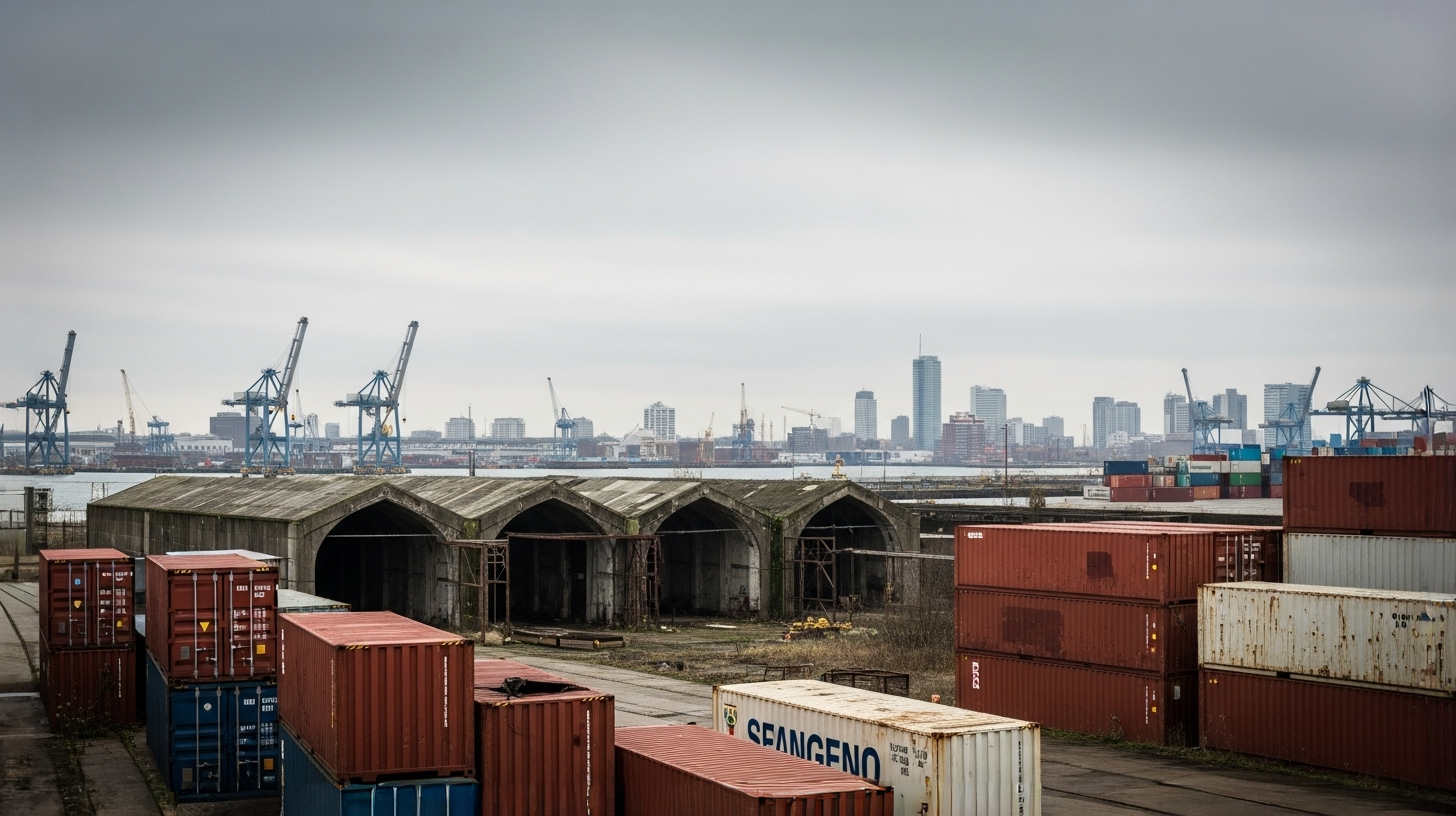
Container specialist files for insolvency: Bremen-based Dettmer Container Packing and its importance for German port logistics – Symbolic image: Xpert.Digital
Bremen, Hamburg, Duisburg affected: What the insolvency of container packer DCP means for freight transport
What happened at Dettmer Container Packing?
On October 13, 2025, the stevedoring company Dettmer Container Packing, or DCP for short, filed for insolvency at the Bremen District Court. The company is a joint venture between the two established logistics groups BLG Logistics and Dettmer Group, each holding 50 percent of the limited partnership capital. According to the official press release from the shareholders, persistent economic difficulties and a lack of a viable business plan are the reasons for this drastic step. Of particular concern is the fact that not only is DCP itself affected, but its wholly-owned subsidiary, PCB Packing Betriebsgesellschaft, is also highly likely to file for insolvency, as the two companies are very closely linked.
How many jobs are affected?
The insolvency has far-reaching consequences for employees at three different locations in Germany. DCP itself employs 148 people, while its subsidiary PCB has another 91 employees. A total of 239 jobs are therefore at risk. These are distributed across the three locations: Bremen (133 jobs), Hamburg (75 jobs), and Duisburg (24 jobs). The affected employees are now worried about their professional future, while the Bremen District Court is expected to appoint a provisional insolvency administrator after a creditors' committee has been formed.
What role does the container packing industry play in the German port economy?
Container packing service providers like DCP are a vital part of the German port industry. They handle the packing, repacking, and repair of containers—activities essential for the smooth flow of international trade. These companies form a critical link in the logistics chain, and their failure can quickly lead to bottlenecks. The sector is particularly important for major German port cities like Bremen, Hamburg, and Duisburg, which compete fiercely with other European ports for market share.
How important is Bremen as a logistics location?
Bremen is one of Germany's most important logistics hubs and boasts a centuries-old tradition in port operations. The ports of Bremen are among the most important universal ports in Europe and work seamlessly together with Bremerhaven. The port and logistics sector directly employs up to 40,000 people in the region, and more broadly, every third job in Bremen is dependent on transport and cargo handling. Around 77,000 people in the state of Bremen are employed directly and indirectly in port-related jobs. Its role as a hub for international trade not only makes Bremen a significant logistics center but also forms the foundation for successful industrial and foreign trade companies.
What specific services did DCP offer?
DCP had established itself as a key player in the container packing services sector. With approximately 100,000 square meters of warehouse space, the company was considered one of the leading players in this field. Founded as a joint venture between two established logistics groups, the company developed over the years into a major service provider in overseas container transport. Its business model was based on a multi-port concept at its locations in Bremen, Hamburg, and Duisburg, where services were offered to customers in international trade. In addition to traditional container packing, its core business included cargo space optimization, handling of heavy goods, and container repairs.
What exactly is meant by container packing?
Container packing encompasses all activities related to the professional packaging, repacking, and loading of containers. It's not just about simply filling containers, but about optimizing the available cargo space by considering various factors. This includes ensuring proper weight distribution, securing cargo according to international CTU packing guidelines, and minimizing stowage losses. Cargo space optimization also plays a crucial role, with intelligent planning used to achieve maximum container utilization. Modern container packing service providers often use specialized software that generates optimal stowage plans in seconds, calculating the center of gravity and load distribution.
What does the DCP's multiport concept mean?
The multiport concept meant that DCP offered its services at several port locations simultaneously. This enabled the company to serve customers at various key transshipment hubs in Germany. Bremen, Hamburg, and Duisburg are strategically important ports for German foreign trade. Bremen and Bremerhaven handle 61.9 million tons of cargo annually. Hamburg, with its approximately 100 global liner services, is highly networked and a central hub for container traffic. As the world's largest inland port, Duisburg has excellent connections to European seaports. By maintaining a presence at all three locations, DCP was able to offer its customers flexible, cross-site solutions.
What economic problems led to the insolvency?
According to the official statement, the market situation and industry conditions have deteriorated significantly, which has had a lasting negative impact on DCP's profitability. Despite several restructuring measures supported by the shareholders, no stabilization could be achieved that would have allowed the company to continue operations. The German transport newspaper Deutsche Verkehrs-Zeitung had previously confirmed the difficult situation of the company, which specializes in container packing and repair. The shareholders apparently tried for an extended period to save the company through restructuring measures, but ultimately had to give up.
What is the current situation of the container packing industry as a whole?
The container packing industry is under considerable pressure. It is part of a logistics sector grappling with structural problems. Container packing services are a crucial link in global supply chains, yet the entire industry is suffering from various challenges. According to industry analyses, more than half of all European freight forwarders are struggling with growth issues due to a shortage of skilled workers. Geopolitical conflicts and technical failures have placed particular strain on supply chains. The situation in European container traffic is complex, with challenges stemming from longer container dwell times at terminals, delays, diversions, and logistical bottlenecks.
What role do geopolitical factors play?
Geopolitical tensions are having a significant impact on global shipping routes and, consequently, on the entire container industry. Sanctions, trade wars, and high tariffs are forcing companies to develop new logistics strategies. Security challenges in the Red Sea and the need for alternative routes have been particularly driving up costs. Ships forced to circumnavigate Africa incur substantial additional costs, estimated at around $1,000 per container. Passage through the Bab al-Mandab Strait has decreased by over 50 percent. These developments are impacting the entire supply chain, including container packing service providers who rely on a smooth flow of containers.
How severely is the logistics industry affected by bankruptcies?
The logistics sector is particularly hard hit by the wave of insolvencies. According to the Federal Statistical Office, the number of regular insolvency filings in Germany rose by 16.8 percent in 2024 compared to 2023. The situation is especially dramatic in the transport and warehousing sector, i.e., logistics, with 11.5 insolvencies per 10,000 companies. This is twice the average across all sectors. The transport industry thus tops the list of worst-performing sectors. In 2024, an average of 121.8 insolvencies per 10,000 companies were reported in the transport sector, almost twice as many as in the construction industry. These figures demonstrate that freight transport continues to be under enormous economic pressure.
Why are logistics companies particularly affected?
The high insolvency rate in the logistics sector has several structural causes. Low margins, long payment terms, and short contract durations leave investors little room for restructuring. The transportation and warehousing sector is twice as affected by payment defaults as the industry average. High fixed and operating costs are difficult to adjust when revenues decline. Added to this are high operating costs and intense competitive pressure. The ongoing driver shortage further exacerbates the situation. The repercussions of COVID-19 aid, which many companies now have to partially repay, are also a burden. Small and medium-sized transport companies, in particular, are struggling with rising operating costs, high wage expenses, a lack of qualified personnel, and increasing market regulation.
How dramatic is the truck driver shortage in Germany?
The shortage of truck drivers in Germany has reached alarming proportions. Currently, there is a shortage of over 70,000 truck drivers, and this number is increasing by approximately 20,000 annually. The age structure of professional drivers is particularly worrying. 39 percent of professional freight drivers are already 55 years of age or older, which is significantly higher than the average across all professions. In the coming years, many experienced drivers will reach retirement age and leave the workforce. Forecasts indicate that by 2028, Europe could be short more than 745,000 drivers, representing 17 percent of all jobs in the sector. The annual cost of the driver shortage to the German economy is estimated at ten billion euros.
Why is the profession of truck driver so unattractive?
The reasons for the truck driver shortage are manifold. Besides the aging workforce, the high costs of obtaining a truck driver's license and professional qualifications also play a role, averaging 3.7 times the monthly minimum wage. The profession is unattractive to young people and women. Only 5 percent of drivers in Europe are under 25, and the proportion of women is a mere 6 percent. Long working hours, a lack of social recognition, and unattractive salaries make the profession unappealing. Transport prices would actually need to rise so that drivers could be paid more fairly, but competitive pressure makes this virtually impossible. This further exacerbates the shortage of new recruits.
Your container high-bay warehouse and container terminal experts

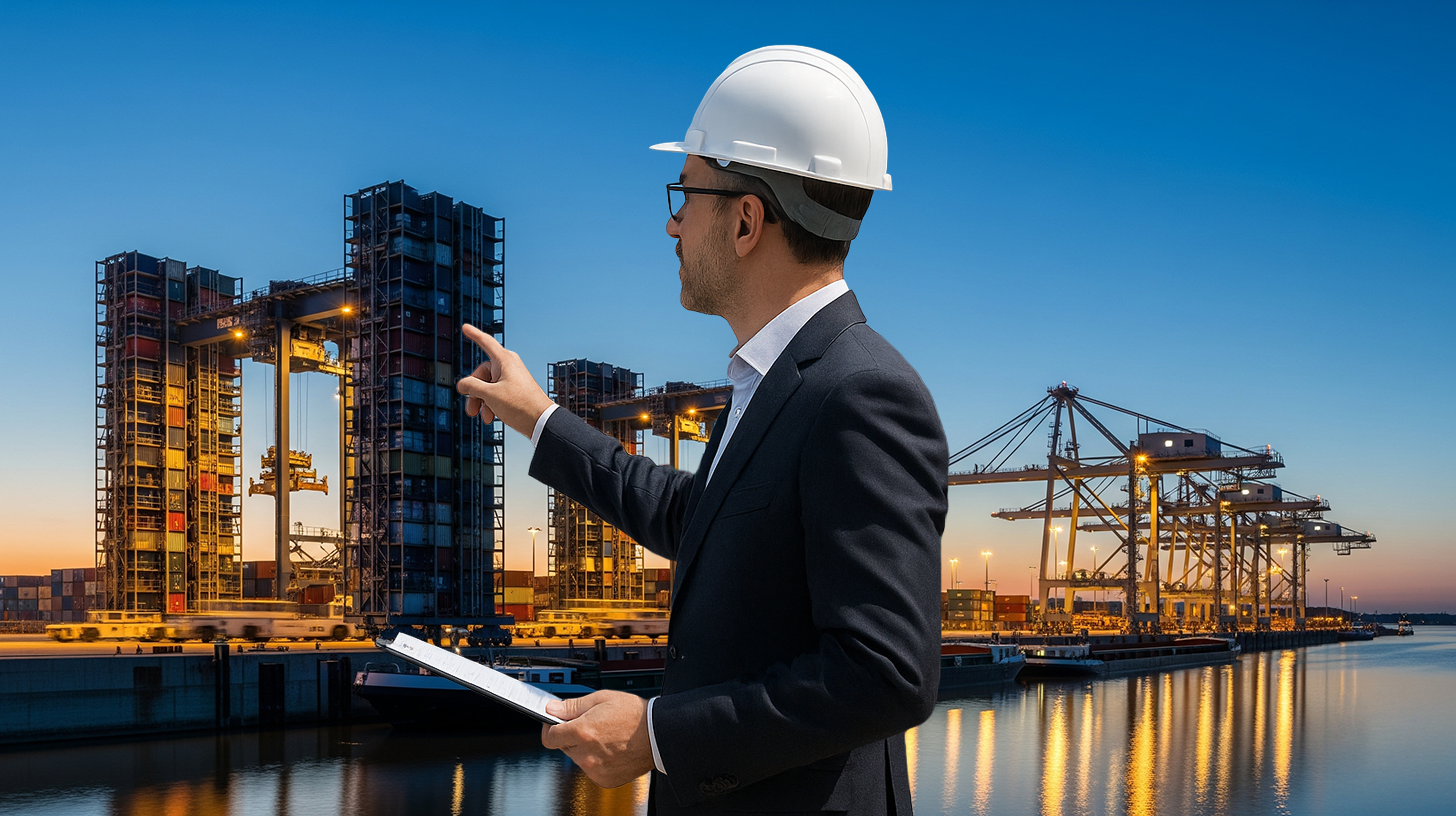
Container terminal systems for road, rail and sea transport in the dual-use logistics concept of heavy-lift logistics - Creative image: Xpert.Digital
In a world marked by geopolitical upheavals, fragile supply chains, and a new awareness of the vulnerability of critical infrastructure, the concept of national security is undergoing a fundamental reassessment. A state's ability to guarantee its economic prosperity, the provision of essential goods and services to its population, and its military capability increasingly depends on the resilience of its logistical networks. In this context, the concept of "dual-use" is evolving from a niche category of export control to a broader strategic doctrine. This shift is not merely a technical adjustment but a necessary response to the "paradigm shift" that demands a profound integration of civilian and military capabilities.
Related to this:
Nothing works without foreign truck drivers — the silent dependency
What role do foreign truck drivers play?
Foreign truck drivers play a central role in German freight transport. In Germany, roughly one in three truck drivers does not hold a German passport. One in four professional drivers in Germany comes from abroad, with a total of nearly 133,000 foreign drivers employed in the sector in 2020. Almost half of the trucks on German roads are registered abroad. The market share of foreign trucks in Germany is steadily increasing. In 2023, foreign vehicles accounted for 12.8 percent of the weight of goods transported, but 45.7 percent of the transport performance. Most foreign trucks originated from Eastern and Southeastern European countries, with Polish trucks leading the way.
Why are many transport companies withdrawing from Germany?
According to media reports, many transport companies are withdrawing from the German market because the business is no longer profitable. The economic weakness in Germany, France, and Great Britain means lower export volumes, fewer orders, and increased price pressure, especially for companies from Central and Eastern Europe. High energy and personnel costs, as well as a heavy tax and bureaucratic burden compared to other countries, make Germany an unattractive location. The erosion of integration in the European logistics market is reducing competitiveness. Companies from other EU countries are increasingly seen not as partners for increasing efficiency, but as competitors.
How are the shareholders BLG Logistics and Dettmer Group reacting?
Both parent companies, BLG Logistics and the Dettmer Group, each holding 50 percent of the limited partnership capital, assured in their statement that they would constructively support the insolvency proceedings. The goal is to achieve the best possible solution in the interest of employees, business partners, and creditors. Business operations will initially continue. Other companies within the two groups are not affected. This demonstrates that, despite the insolvency of their joint subsidiary, the shareholders are committed to minimizing damages and finding the best possible solution for all parties involved.
Who is BLG Logistics?
BLG Logistics Group is an internationally operating seaport and logistics service provider headquartered in Bremen, Germany. The company was founded in February 1877 by 65 merchants as the Bremen Warehouse Company. Today, the BLG Group has nearly 100 locations and branches in Europe, the Americas, Africa, and Asia. Its operating divisions – Automotive, Contract, and Container – provide services to automotive, industrial, and commercial customers. The Group employs approximately 11,000 to 20,000 people worldwide. The Automotive and Container divisions are leaders in Europe. In fiscal year 2024, the BLG Group achieved stable revenues of €1.2 billion.
Who is the Dettmer Group?
The Dettmer Group is a long-established logistics company specializing in maritime logistics. Founded in 1947 by Bernhard Dettmer, the company's business areas include inland waterway shipping, air freight handling, warehousing and transshipment, container packing, waste management and disposal, operation of a kerosene pipeline, tank farms, truck transport, and rail transport services. Dettmer Shipping operates over 30 tankers on all Western European waterways under the German flag. The company is a family-run business, which fosters rapid business decisions to find customized and swift solutions for its clients.
What happens next in the insolvency proceedings?
The Bremen District Court is expected to appoint a provisional insolvency administrator this week after the formation of a creditors' committee. The administrator's assessment will determine whether a restructuring is possible. The provisional insolvency administrator's task is to secure the insolvent debtor's assets for the benefit of the creditors. They will examine the company, prepare an expert report, and determine whether the assets are sufficient to cover the costs of the proceedings. Typically, a so-called "weak" provisional insolvency administrator is appointed with reservation of consent. This means that the management continues to make decisions but must coordinate closely with the provisional insolvency administrator.
What role does the creditors' committee play?
The creditors' committee is an important decision-making body for creditors in insolvency proceedings. The insolvency court mandates its appointment in larger cases. The creditors' committee typically consists of an odd number of members, although committees with three or five members are more common in practice. The members are selected by the insolvency court. The creditors' committee's main tasks include participating in the selection of the insolvency administrator, supporting and monitoring the insolvency administrator, and approving particularly significant legal transactions. The creditors' committee also has the right to request the insolvency administrator's dismissal for good cause.
What are the chances for restructuring DCP?
The chances of restructuring insolvent logistics companies are extremely slim in 2025. According to a recent analysis by the restructuring consultancy Falkensteg, the rescue rate for logistics insolvencies is only 16.7 percent. While across all sectors around 33.7 percent of large insolvent companies are still rescued, in 2024 only three out of 18 insolvent transport companies were able to continue operating through a company sale. Low margins, long payment terms, and short contract durations leave investors little room for restructuring. The market is unattractive to investors due to high infrastructure costs, strict regulatory requirements, and the shortage of skilled workers.
What does the insolvency mean for supply chains?
The DCP bankruptcy hits an already strained market segment. Container packing services are a crucial link in global supply chains. The collapse of an established service provider with 100,000 square meters of warehouse space and locations in Bremen, Hamburg, and Duisburg could lead to bottlenecks in the logistics chain. The affected ports must now find alternative service providers, or other container packing companies must take over the capacity. This could result in delays and increased costs in international trade. The situation is particularly critical because supply chains are already under pressure from geopolitical conflicts, technical failures, and a shortage of skilled workers.
What does the future hold for the container industry?
The container industry faces significant challenges but also demonstrates resilience. Despite geopolitical uncertainties and economic difficulties, demand for container transport remains strong. In the first half of 2025, container throughput in major European ports such as Antwerp and Rotterdam increased slightly, while other segments declined. However, the industry must address various challenges, including adapting to new environmental regulations and implementing technological innovations to reduce emissions. The digitalization and automation of port logistics is becoming increasingly important, and concepts such as smart ports, which rely on the combined use of information technology, are gaining traction.
What impact will the wave of bankruptcies have on the German economy?
The high number of insolvencies, particularly in the logistics sector, has far-reaching consequences for the entire German economy. The German Chamber of Industry and Commerce estimates that more than 22,000 companies will file for insolvency this year, which equates to over 60 insolvencies per day. This is not good news for Germany as a business location. The causes are declining exports, especially to the USA, as well as falling industrial production and the persistently weak economy. Bottlenecks in the logistics sector can lead to delivery delays and potential supply shortages for businesses and society. Negative effects on other industries that depend on freight transport are unavoidable.
What do experts demand to stabilize the system?
To stabilize the industry, experts are calling for improved economic conditions. Businesses need swift and tangible reforms. High energy and personnel costs, as well as significant tax and bureaucratic burdens compared to other countries, are cited as the main challenges. To address the driver shortage, urgent measures are needed, such as improving working conditions, targeted recruitment of young talent, and increasing the attractiveness of the profession. Simplified recognition of foreign qualifications is also considered essential. Investments in modern infrastructure and the implementation of key transport infrastructure projects are equally necessary.
What is the situation in the other German port cities?
The other major German port locations, Hamburg and Duisburg, are also grappling with similar challenges. Hamburg, Germany's largest port, is highly networked globally with around 100 liner services. In 2024, China topped the list of Hamburg's partner countries for container handling with 2.2 million TEU. The digitalization of port logistics is also progressing in Hamburg, with concepts like smartPORT logistics for the efficient management of traffic and goods flows. Duisburg, the world's largest inland port, is a key hub for intermodal transport. The city offers ideal connections for container transport by rail, barge, or truck. All three locations where DCP operated are of central importance to German foreign trade.
What does this mean for the future of port logistics?
The insolvency of DCP is a warning sign for the entire port logistics industry in Germany. It demonstrates that even established companies with decades of experience and strong shareholders cannot withstand current market conditions. The industry's structural problems, ranging from a shortage of skilled workers and high operating costs to geopolitical uncertainties, necessitate fundamental reforms and adjustments. At the same time, digitalization offers opportunities for greater efficiency and competitiveness. Ports must evolve into smart ports and optimize their processes. Only through investments in modern technologies, improved working conditions, and the removal of bureaucratic hurdles can German port logistics maintain its position in international competition.
Consulting - Planning - Implementation

Markus Becker
I would be happy to serve as your personal advisor.
Head of Business Development
Consulting - Planning - Implementation
Konrad Wolfenstein
I would be happy to serve as your personal advisor.
You can contact me at wolfenstein∂xpert.digital or
Just call me on +49 7348 4088 965 .
Our EU and German expertise in business development, sales and marketing
Our EU and German expertise in business development, sales and marketing - Image: Xpert.Digital
Industry focus areas: B2B, digitalization (from AI to XR), mechanical engineering, logistics, renewable energies and industry
More information here:
A thematic hub offering insights and expertise:
- Knowledge platform covering global and regional economies, innovation and industry-specific trends
- A collection of analyses, insights, and background information from our key areas of focus
- A place for expertise and information on current developments in business and technology
- A hub for companies seeking information on markets, digitalization, and industry innovations