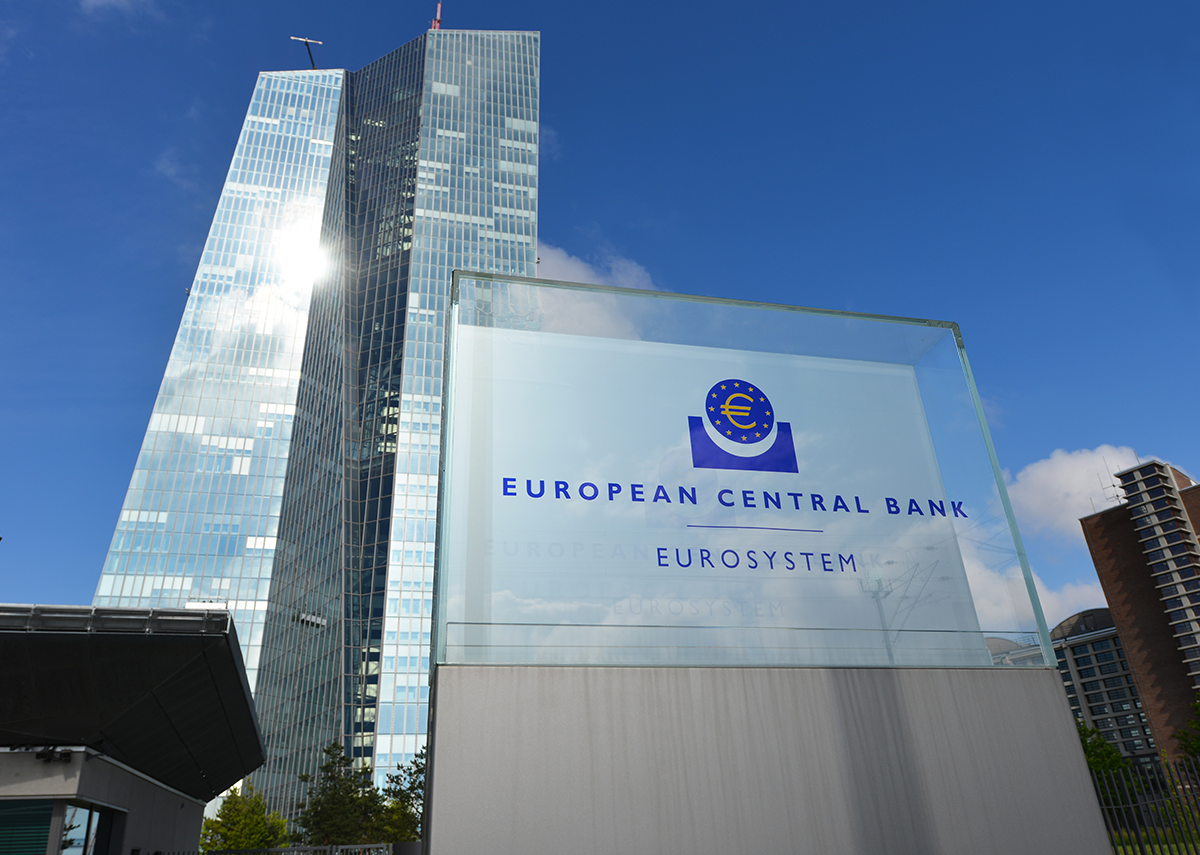
European Central Bank (ECB) in Frankfurt am Main – Image: nitpicker|Shutterstock.com
Consumer prices are rising significantly in many countries
Central banks have the monetary policy tools at their disposal to counteract this: they could stop the flood of money, raise key interest rates, and thus reduce credit demand and money creation. However, as the chart based on Bloomberg rates shows, not all central banks believe that immediate countermeasures are necessary. Accordingly, the European Central Bank (ECB), for example, will likely maintain its low-interest-rate policy until the end of next year. The central bankers are thus not being swayed by the currently high inflation. The ECB's monetary policy aims to keep the inflation rate constant and at the two percent mark in the long term. For a transitional period, the inflation rate can also exceed this mark. Therefore, the recent rise in consumer prices above the two percent target is not yet a reason for the ECB to intervene. ECB President Christine Lagarde believes that the measures to combat the coronavirus pandemic have led to "supply constraints in certain sectors." Once these effects subside, inflation would also fall again.

Concerns about the euro – Image: Stefan Dinse|Shutterstock.com
According to Bloomberg's forecast, interest rates are expected to remain stable in Australia, India, Japan, and Switzerland. The US Federal Reserve is also expected to keep the Federal Funds Rate at its current level. The Federal Funds Rate is the interest rate at which American financial institutions, such as banks and savings banks, lend money to each other to balance their reserve requirements with the central bank. However, other media reports indicate that the Federal Reserve intends to reduce its securities purchases from $120 billion per month in the near future.
Other central banks, however, could end the era of very cheap money more quickly in light of rising inflation rates. This includes the UK. Bloomberg experts expect the bank rate to rise from the current 0.1 percent to 0.25 percent by the end of 2022. The bank rate determines the interest rate the Bank of England pays to commercial banks that hold funds with the central bank. It influences the lending rates that banks charge their customers.
Argentina, Turkey, and China are all forecast to see interest rate cuts. China's economy is not struggling with high inflation, but it faces several downside risks, including power shortages, virus outbreaks, and weak consumer spending. Bloomberg predicts that the People's Bank of China will therefore loosen its monetary policy and support the economy by injecting more liquidity into the banking system, likely cutting the reserve requirement ratio by 50 basis points in October or November 2022. A more immediate interest rate cut is considered unlikely, as this move would only exacerbate the financial imbalances that authorities are seeking to curb. Bloomberg experts criticize Turkish President Erdogan's monetary policy as "unorthodox." Consumer prices in Turkey have risen by as much as 19 percent, yet the Central Bank of Turkey recently cut its key interest rate significantly and is expected to do so again by the end of 2022. Erdogan evidently believes that high interest rates would only fuel inflation and slow economic growth. He wants to stimulate loans and investment through low interest rates.
Monetary policy refers to the economic policy measures a central bank takes to achieve its objectives. A restrictive monetary policy aims to combat inflation by reducing the money supply and raising interest rates. An expansionary monetary policy, on the other hand, increases the money supply and is accompanied by lower interest rates.
Energy price increase

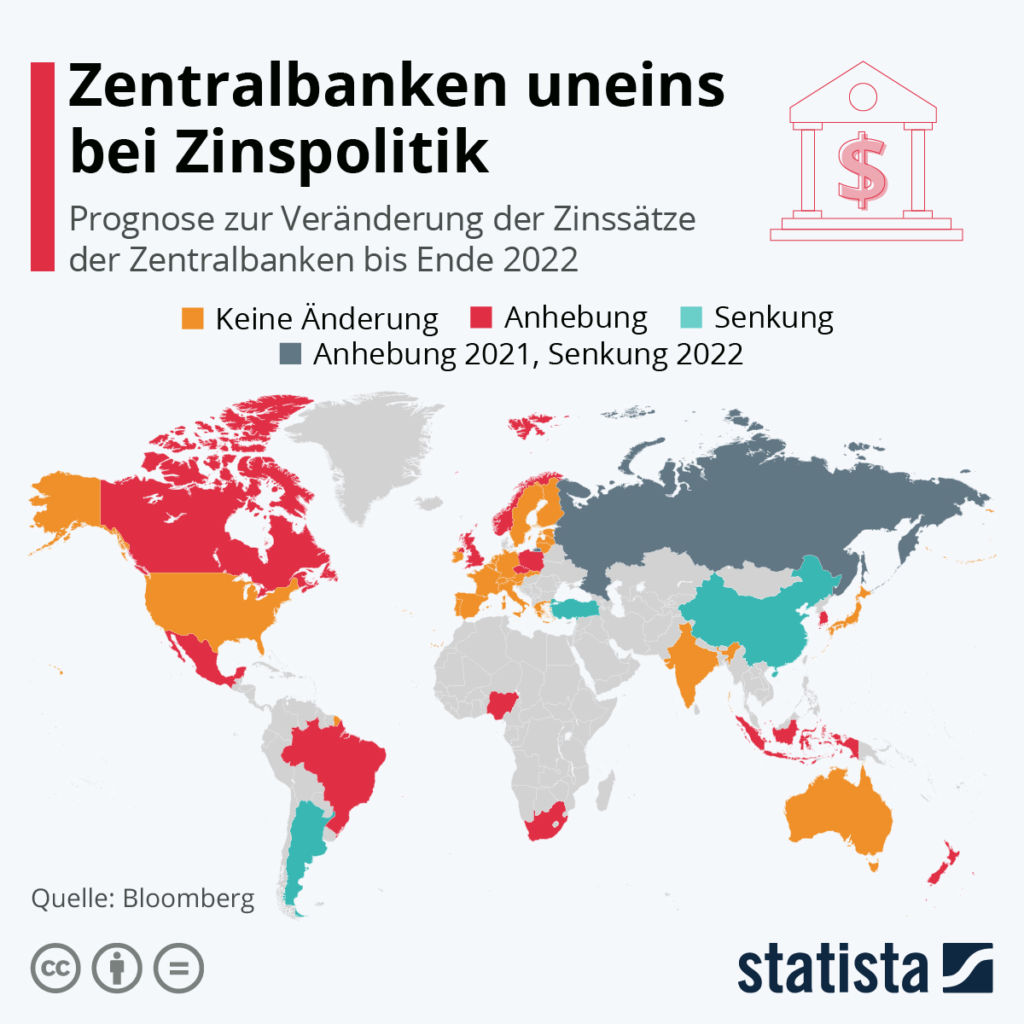
Central banks disagree on interest rate policy – Image: Statista
What current development is causing you the most concern regarding savings?
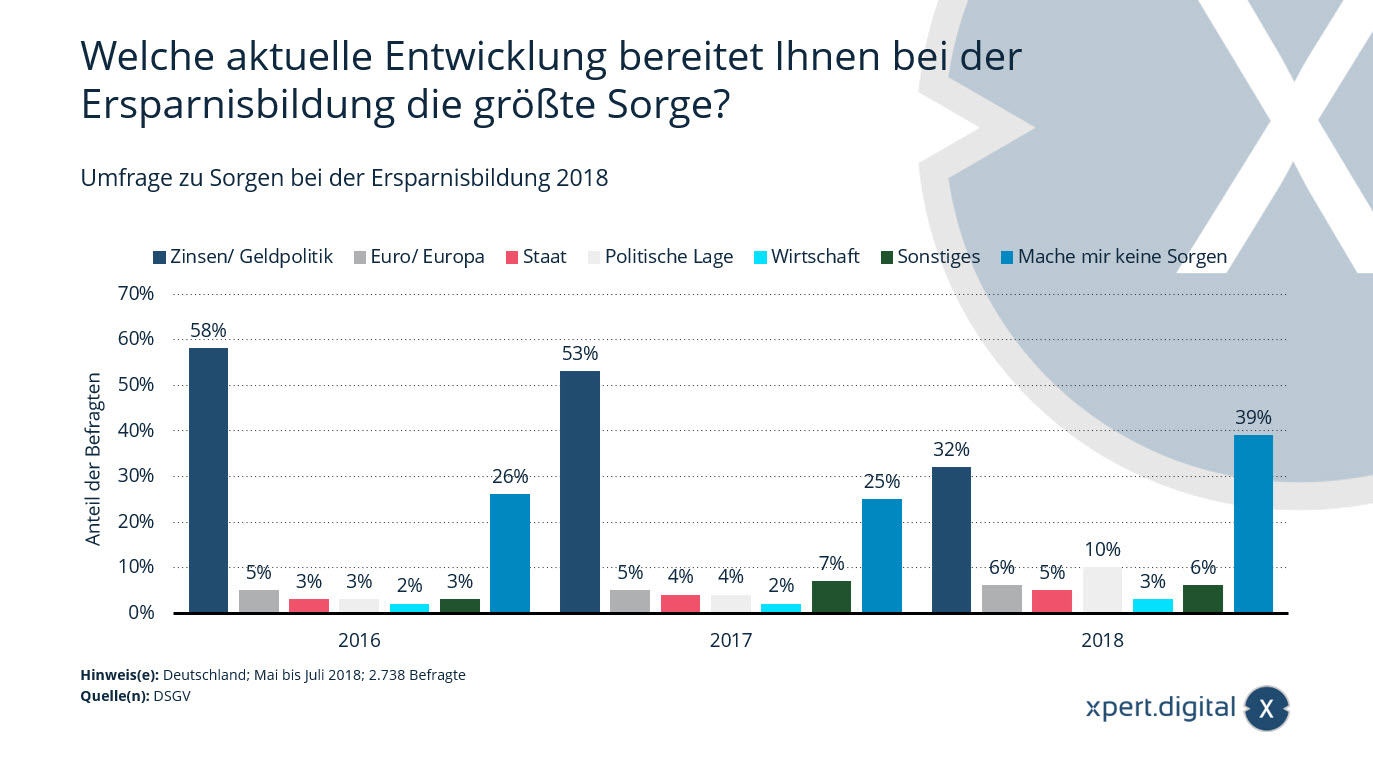
What current development is causing you the most concern regarding your savings? – Image: Xpert.Digital
This statistic shows the results of a survey revealing the biggest concerns of Germans regarding saving. At the time of the survey, conducted in 2018, the interest rate policy of the European Central Bank was the biggest worry for the Germans surveyed concerning their ability to save. Approximately 32 percent of all responses related to this issue.
Survey on concerns about saving 2018
What current development is causing you the most concern regarding savings?
Interest rates/Monetary policy
- 2016 – 58 %
- 2017 – 53 %
- 2018 – 32 %
Euro/Europe
- 2016 – 5 %
- 2017 – 5 %
- 2018 – 6 %
State
- 2016 – 3 %
- 2017 – 4 %
- 2018 – 5 %
Political situation
- 2016 – 3 %
- 2017 – 4 %
2018 – 10 %
Business
- 2016 – 2 %
- 2017 – 2 %
- 2018 – 3 %
Miscellaneous
- 2016 – 3 %
- 2017 – 7 %
- 2018 – 6 %
I'm not worried
- 2016 – 26 %
- 2017 – 25 %
- 2018 – 39 %
2014: The Eurozone on the road to deflation
The eurozone is slipping into deflation. This would mean that prices are falling continuously instead of rising. Economists fear this effect because it can stifle investment and thus jeopardize growth and jobs. For this reason, the European Central Bank (ECB) has once again lowered its key interest rate – to 0.15 percent. The interest rate for bank deposits has even been reduced into negative territory, to -0.1 percent.
The ECB hopes this will stimulate inflation in the eurozone. The target is around 2.0 percent. Most recently, a rate of 0.5 percent was reported for the eurozone, as our chart shows. The problem: While countries like Greece are already experiencing deflation, others are significantly above it. Higher inflation could cause problems here. Interest rate policy remains a balancing act.
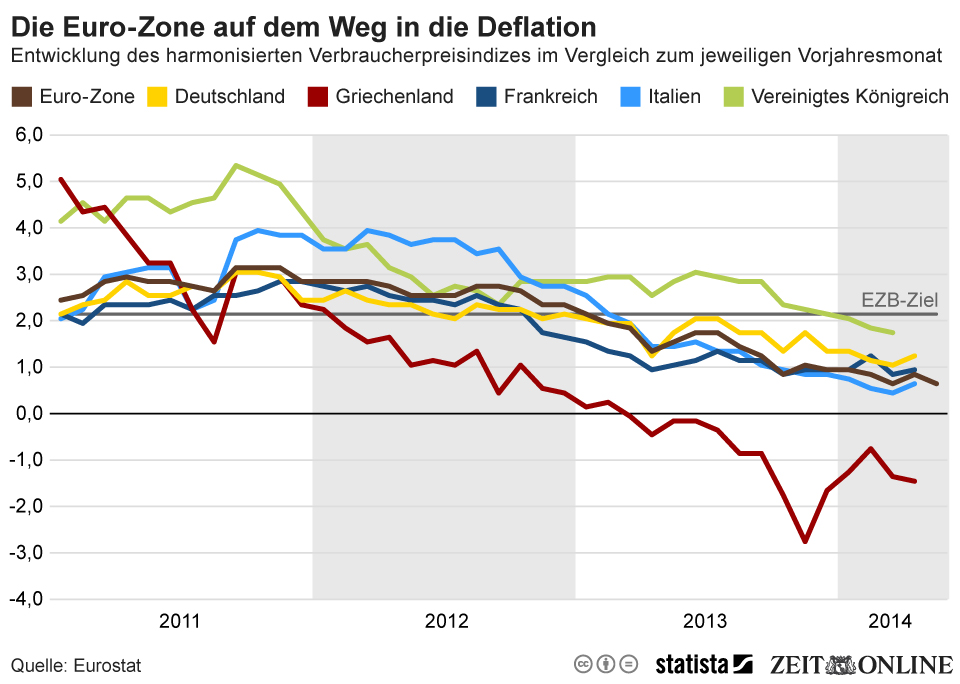
2014: The Eurozone on the road to deflation – Image: Statista
Price trends in Germany - PDF for download


Inflation and Consumer Prices – PDF Download
Cost of living - PDF for download
Cost of living – PDF Download
Write to me


Xpert.Digital – Konrad Wolfenstein
Xpert.Digital is a hub for industry focusing on digitalization, mechanical engineering, logistics/intralogistics and photovoltaics.
With our 360° Business Development solution, we support renowned companies from new business to after-sales.
Market intelligence, smarketing, marketing automation, content development, PR, mail campaigns, personalized social media and lead nurturing are part of our digital tools.
You can find more information at: www.xpert.digital – www.xpert.solar – www.xpert.plus
Keep in touch