Energy-efficient new construction or energy-efficient renovation of commercial properties – Image: Xpert.Digital
Energy-efficient new construction vs. energy-efficient renovation of commercial properties: An overview
➡️ Attention! We have special solutions for roofs lacking stability for photovoltaic systems! ⬅️
The decision between constructing a new energy-efficient building and renovating existing commercial properties is of great importance today. Given rising energy costs, stricter environmental regulations, and a growing awareness of sustainability, companies face the challenge of designing their properties to be both environmentally sound and economically viable.
Advantages of energy-efficient new construction
The energy-efficient construction of new commercial properties offers a multitude of advantages that should be taken into account:
1. State-of-the-art energy efficiency standards
In new buildings, the latest energy efficiency standards and technologies can be implemented. This enables optimal use of renewable energies and leads to long-term cost savings.
2. Individual design options
A new building offers the opportunity to design the building from the ground up according to the specific requirements of the company. This includes not only energy efficiency, but also the room layout, the use of natural light, and the integration of state-of-the-art technologies.
3. Image and Marketing
An energy-efficient new building can positively influence a company's image. More and more customers and investors value sustainable business practices, which means such a building is perceived as a flagship for environmental awareness and progress.
Energy-efficient renovation of commercial properties
Renovating existing commercial properties represents a sustainable alternative. The following aspects should be considered:
1. Comprehensive energy audits
Before renovation, it is important to conduct a detailed analysis of the building to identify weaknesses and potential for optimization. An energy audit provides the basis for targeted measures.
2. Gradual modernization
Renovation can be carried out in stages, thus avoiding disruptions to business operations. The financial burden can also be better managed through the phased implementation of energy efficiency measures.
3. Utilize funding opportunities
Many governments and organizations offer financial incentives for energy-efficient renovation projects. These subsidies can significantly reduce investment costs and accelerate the return on investment.
Choosing the right construction company
Regardless of whether it is a new building or a renovation, choosing the right construction company is of central importance:
1. Experience and expertise
The chosen construction company should have experience in planning and implementing energy-efficient commercial properties. Reference projects and expertise are indicators of the company's quality.
2. Holistic approach
A professional construction company considers not only the structural aspects, but also the technical and economic factors. A holistic approach ensures an optimal result.
The role of the solar company
The integration of solar energy into commercial properties is becoming increasingly important:
1. Photovoltaic systems
Solar companies can plan and install customized photovoltaic systems for commercial properties. These generate clean energy and contribute to reducing operating costs.
2. Energy feed-in to the grid
Excess energy from photovoltaic systems can be fed into the electricity grid. This can not only lead to a reduction in energy costs, but also to additional revenue through the sale of surplus energy.
Sustainable decisions for the future
The choice between energy-efficient new construction and energy-efficient renovation of commercial properties depends on many factors. Both economic and environmental aspects play a role. A competent construction company, in combination with an experienced solar energy company, can help businesses find the optimal solution for their needs and thus make sustainable decisions for the future.
📣 Energy-efficient renovation and new construction, consulting, planning and implementation for industry, retail and municipalities
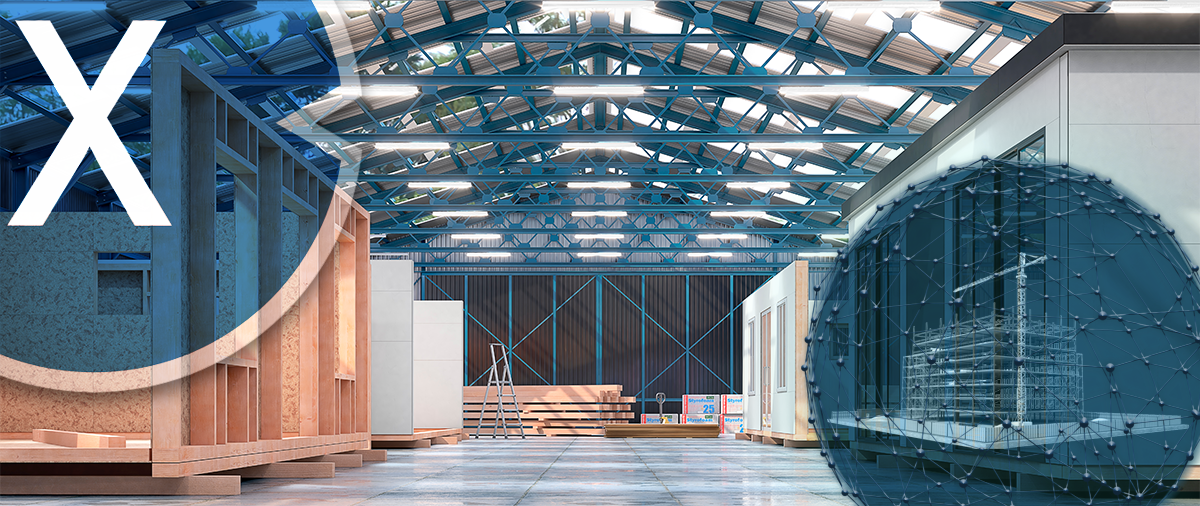
Our experienced team supports you in optimizing your buildings to reduce energy consumption and promote sustainable energy use with photovoltaics. We analyze your individual needs and develop customized concepts that are both economically and ecologically sound. Whether it's the energy-efficient renovation of existing buildings or the construction of new, energy-efficient structures, we are here to help. Industrial plants, retail buildings, and municipal facilities can reduce their energy costs, minimize their environmental impact, and simultaneously improve the comfort and efficiency of their buildings with our tailored solutions.
👨🏻 👩🏻 👴🏻 👵🏻 Energy-efficient renovation and new construction, consulting, planning and implementation for private households
We offer comprehensive support for private households in the energy-efficient renovation and new construction of buildings with photovoltaics. Our experienced team is at your side to assist you with consulting, planning, and implementing your sustainable energy solutions. We analyze your energy consumption, identify potential savings, and develop customized concepts to improve your energy efficiency. From improving building insulation and installing energy-efficient windows and doors to installing photovoltaic and solar thermal systems – we guide you step by step to make your home more energy-efficient and environmentally friendly. Trust in our expertise and benefit from the numerous advantages that energy-efficient renovation and the use of renewable energies offer. Together, we'll create a sustainable future for your home.
Plan your solar system for the most common applications conveniently online with our solar system planner!
With our user-friendly solar system planner, you can design your individual solar system online. Whether you need a solar system for your home, your business, or for agricultural purposes, our planner allows you to consider your specific requirements and develop a customized solution.
The planning process is simple and intuitive. You simply enter the relevant information. Our planner takes this information into account and creates a customized solar system that meets your needs. You can try out different options and configurations to find the optimal solar system for your application.
Furthermore, you can save your plan to review it later or share it with others. Our customer service team is also available to answer any questions and provide support to ensure your solar system is optimally planned.
Use our solar system planner to design your individual solar system for the most common applications and accelerate the transition to clean energy. Get started now and take an important step towards sustainability and energy independence!

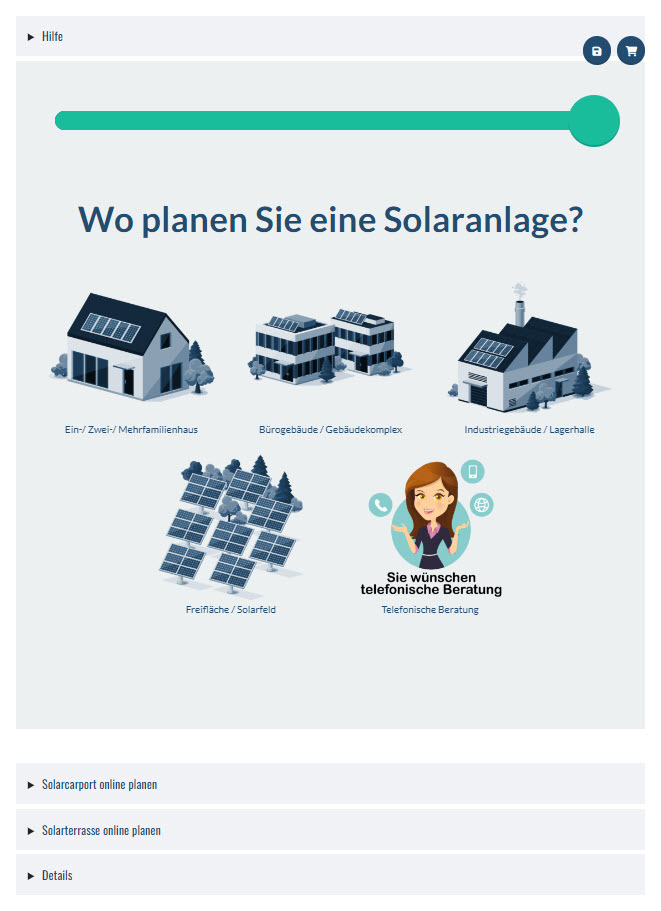
The solar system planner for the most common applications: Plan your solar system online here - Image: Xpert.Digital
More information here:
The future of heating in commercial properties: from carbon fiber to heat pumps
Emission-free heating systems of the future for commercial properties in retail, office buildings and e-commerce
The need for decarbonization has significantly boosted interest in emission-free heating systems for various applications. In this context, commercial properties in the retail sector, office buildings, and the burgeoning e-commerce sector have come into particular focus. The development of innovative technologies such as the Carbon Heat System, infrared heating, heat pumps, and air conditioning systems makes it possible to generate heat efficiently while minimizing environmental impact.
Carbon Heat System (carbon fiber heaters)
The use of carbon fiber as a heating medium is an exciting step towards sustainable heating solutions. Carbon fiber has high thermal conductivity and can therefore efficiently generate and transfer heat. Unlike traditional heating systems, the Carbon Heat System does not require the combustion of fossil fuels, resulting in no direct emissions. These heaters are ready for use quickly because they emit heat directly via radiation, similar to infrared heaters.
Infrared heaters
Infrared heaters use electromagnetic radiation in the infrared range to directly heat objects and surfaces without heating the surrounding air. This makes them extremely efficient, as no heat is lost. In commercial properties such as retail stores, office buildings, and e-commerce warehouses, infrared heaters can be used to provide comfort without unnecessary energy waste.
Heat pumps
Heat pumps are a proven technology that extracts heat from the ambient air, ground, or groundwater and makes it usable for heating purposes. They require only electrical energy to operate the heating process. Modern heat pumps offer high performance and are ideally suited for commercial properties. In combination with renewable energy sources, heat pumps can be a sustainable solution for heating office buildings and warehouses in the e-commerce sector.
Air conditioners with heat pump function
Most air conditioning systems can not only cool but also heat by reversing the heat transfer process. This allows for year-round use and increased efficiency. By using air conditioning systems with a heat pump function in commercial buildings, an integrated heating and cooling system can be created that ensures both user comfort and reduced energy consumption.
News and developments
In recent years, there has been remarkable progress in the research and development of emission-free heating systems for commercial properties. New materials and concepts are improving the efficiency of carbon fiber and infrared heating systems. Heat pump technologies are continuously being optimized to achieve maximum performance under varying environmental conditions. Furthermore, growing awareness of the ecological footprint of buildings is leading to increased investment in innovative heating solutions.
Zero-emission heating systems of the future offer a promising answer to the challenges of climate change and sustainability in the commercial sector. The combination of carbon heat systems, infrared heaters, heat pumps, and air conditioners with heat pump functionality provides diverse options for heating commercial properties comfortably and in an environmentally friendly manner.
Infrared heat in detail: Carbon fiber heaters and their alternatives
Next-generation heating systems: An insight into carbon fiber and infrared
Carbon fiber heaters and infrared heaters are not the same, although they both use infrared radiation to generate heat in different ways. Here are the differences between the two technologies:
Carbon fiber heaters
Carbon fiber heaters actually use carbon fiber as a heat source. Carbon fiber has high thermal conductivity and can generate and transfer heat very efficiently. These heaters consist of thin carbon fiber elements that are electrically heated. The heating of the carbon fiber causes it to emit infrared radiation, which is then absorbed by surfaces and objects in the room. These surfaces warm up, similar to how sunlight warms them. The surrounding air is heated less, resulting in a pleasant and direct feeling of warmth.
Infrared heaters
Infrared heaters also use infrared radiation to generate heat. However, this radiation does not heat the air, but rather the surfaces and objects in the room. The heated surfaces then gradually release the heat into the surrounding air, creating a comfortable indoor climate. Infrared heaters can use various heating elements, such as metal or ceramic plates, which then generate the infrared radiation.
Main difference
The main difference between the two technologies lies in the heat source itself. Carbon fiber heaters use carbon fiber as a heating element, while infrared heaters utilize various materials such as metal or ceramic to generate infrared radiation. Both technologies, however, share the characteristic of offering an efficient and direct form of heat transfer without significantly heating the air.
Sustainable commercial real estate: Drivers, trends and benefits for investors and tenants
Sustainability becomes business-ready: How ecological aspects increase the value of commercial real estate
In recent years, the focus on sustainability and environmental protection has intensified in almost all aspects of life. This trend is also reflected in the real estate sector, particularly with regard to commercial properties. Investors and tenants are increasingly valuing sustainability criteria such as energy efficiency and environmentally friendly construction methods. This text examines the growing importance of sustainability in commercial real estate and its impact on the market.
Sustainability criteria as a decision factor for investors
Investors are increasingly recognizing that sustainability offers not only environmental benefits but also economic advantages. Commercial properties built with energy efficiency in mind and utilizing environmentally friendly technologies often have lower operating costs. Energy costs can be significantly reduced through the use of solar energy, smart building automation, and efficient insulation materials. This leads to long-term cost savings and improved returns for investors.
Certifications and standards for sustainable commercial real estate
Various certifications and standards have been developed to promote sustainable practices in the real estate industry. A prominent example is the LEED (Leadership in Energy and Environmental Design) certificate, which rates buildings according to strict criteria regarding energy efficiency, water use, and environmentally friendly materials. Investors increasingly prefer properties with such certificates, as they are perceived as being of higher quality and more profitable in the long term.
Tenant preferences and employee satisfaction
Tenants of commercial properties are increasingly prioritizing sustainability. Companies recognize that a sustainable workplace not only improves their environmental footprint but also boosts employee satisfaction. Surveys show that many employees feel a stronger commitment to companies that are dedicated to sustainability. Sustainable office buildings, which, for example, feature natural light, good indoor air quality, and green courtyards, create a more pleasant working environment.
Regulatory requirements and tax incentives
Governments worldwide are increasingly implementing environmental regulations for buildings and real estate. This includes requirements for energy efficiency, reducing greenhouse gas emissions, and using sustainable building materials. Investors in sustainable commercial properties can benefit from tax incentives and subsidies. This encourages the trend toward retrofitting existing buildings and constructing new, sustainable properties.
Innovations in the construction industry
The increasing demand for sustainable commercial real estate has spurred the construction industry to innovate. New technologies are enabling the development of energy-efficient building envelopes, intelligent building systems, and renewable energy solutions. Modular construction methods and the increased use of recyclable materials contribute to reducing the ecological footprint.
Sustainability criteria in commercial real estate
The increasing importance of sustainability criteria in commercial real estate demonstrates that sustainability is not only an ethical concern but also offers economic advantages. Investors recognize the long-term cost savings and improved returns, while tenants benefit from a more pleasant working environment and a positive corporate image. Regulatory requirements and technological innovations are further driving this trend and shaping the future of the commercial real estate industry towards greater sustainability and environmental compatibility.
Summary: Energy-efficient new construction and energy-efficient renovation of commercial properties 🌞🏭
The choice between energy-efficient new construction and energy-efficient renovation of commercial properties is crucial in light of rising energy costs, environmental regulations, and sustainability awareness.
Advantages of energy-efficient new construction
🏢 State-of-the-art energy efficiency standards: New buildings allow the use of current energy efficiency standards and renewable energy technologies, resulting in long-term cost savings.
📐 Individual design options: New buildings can be adapted to company requirements, not only in terms of energy efficiency, but also regarding room layout, use of natural light, and technology integration.
🌍 Image and marketing: Energy-efficient new buildings positively influence a company's image, as sustainable practices are increasingly appealing to customers and investors.
Energy-efficient renovation of commercial properties
🔍 Comprehensive energy audits: Detailed building analysis is essential before renovations to identify weaknesses and optimization potential.
🛠 Phased modernization: Renovations can be carried out gradually to avoid disrupting business operations and to better control costs.
💰 Utilizing funding opportunities: Governments and organizations offer incentives for energy-efficient renovations to reduce investment costs.
Choosing the right construction company
🏗 Experience and expertise: The construction company should have experience in planning and implementing energy-efficient commercial properties.
🌐 Holistic approach: Professional construction companies consider structural, technical, and economic aspects for optimal results.
The role of the solar company
☀️ Photovoltaic systems: Solar companies design customized photovoltaic systems for commercial properties that generate clean energy and reduce operating costs.
🔌 Grid feed-in: Excess energy can be fed into the power grid, leading to cost savings and revenue from selling surplus energy.
Sustainable decisions for the future
The choice between energy-efficient new construction and energy-efficient renovation depends on economic and environmental factors. Competent construction companies and experienced solar energy firms support businesses in finding the optimal solution for sustainable decisions.
#️⃣ Hashtags: #EnergyEfficiency #CommercialRealEstate #Sustainability #ConstructionCompanies #SolarEnergy
Expert advice on energy-efficient renovation and new construction with solar solutions and heat pumps/air conditioning systems

Konrad Wolfenstein
I would be happy to serve as your personal advisor.
You can contact me by filling out the contact form below or simply call me on +49 7348 4088 965 .
I'm looking forward to our joint project.
Write to me


Xpert.Digital – Konrad Wolfenstein
Xpert.Digital is a hub for industry focusing on digitalization, mechanical engineering, logistics/intralogistics and photovoltaics.
With our 360° Business Development solution, we support renowned companies from new business to after-sales.
Market intelligence, smarketing, marketing automation, content development, PR, mail campaigns, personalized social media and lead nurturing are part of our digital tools.
You can find more information at: www.xpert.digital – www.xpert.solar – www.xpert.plus
Keep in touch