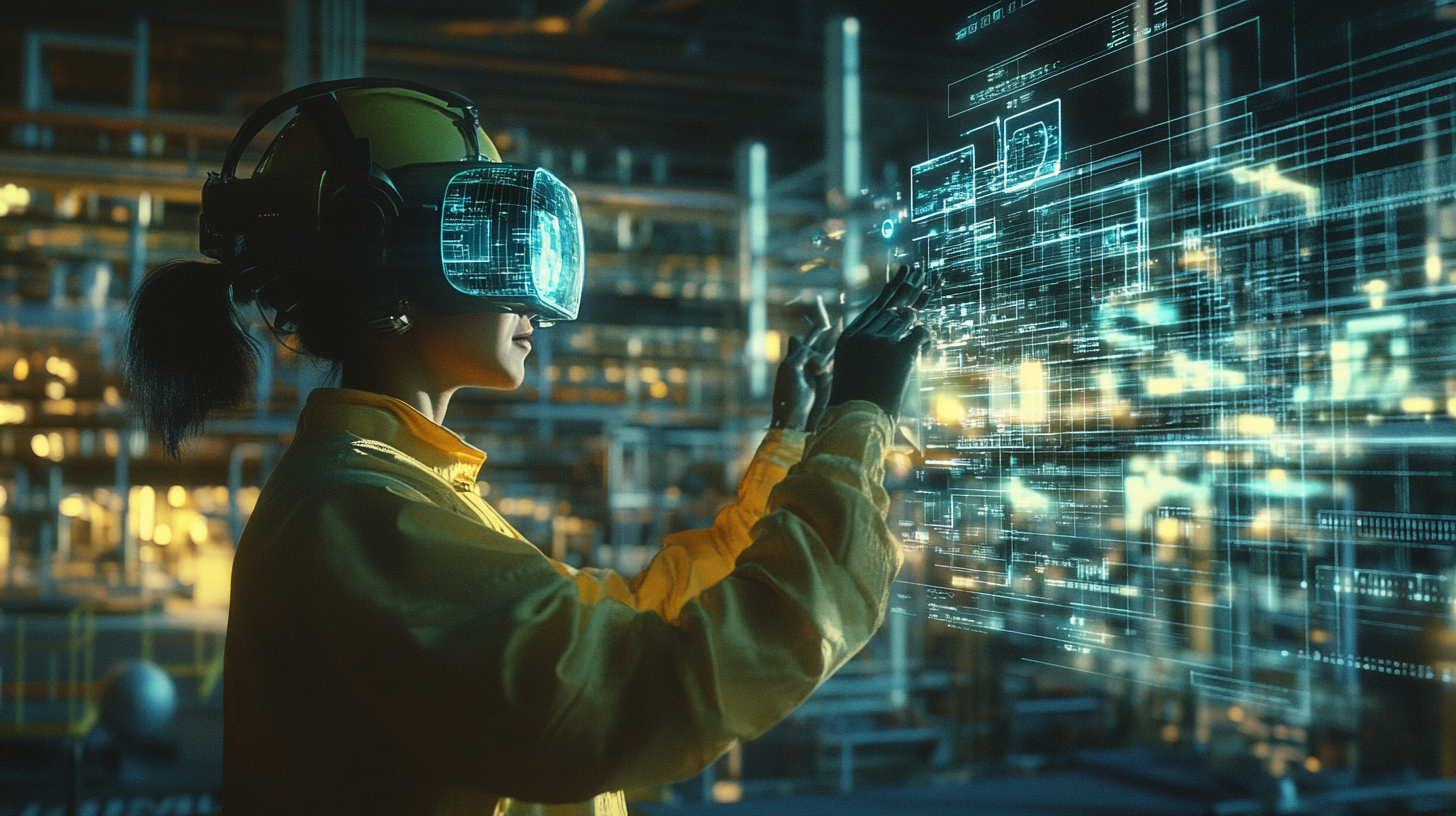
Immersive engineering, collaborative teamwork and what that has to do with the metaverse – Image: Xpert.Digital
VR, AR, XR: These are the tools that are revolutionizing manufacturing
Immersive engineering and collaborative work in the industrial metaverse: A transformative symbiosis
The world of industrial production, with Industry 4.0 and the Industrial Metaverse, stands on the cusp of a completely new approach to product development, driven by the convergence of immersive engineering, advanced collaborative methods, and emerging metaverse technologies. While the metaverse in general—often associated with entertainment and social media—is still grappling with its economic relevance, one specific area is already emerging as a driver of real-world innovation: the industrial metaverse. This development promises nothing less than a paradigm shift in how products are designed, developed, manufactured, and maintained.
This report illuminates the multifaceted aspects of this transformation and analyzes the technological, organizational, and economic implications arising from the integration of immersive engineering and collaborative work in the industrial metaverse. We draw on insights from current research initiatives and pioneering industrial projects to paint a comprehensive picture of the opportunities and challenges this development presents.
Related to this:
Technological Foundations of Immersive Engineering in the Metaverse
The industrial metaverse is built on a range of key technologies which, in combination, enable a completely new dimension of product development and manufacturing. At the heart of this technological revolution is immersive engineering, which allows engineers and designers to immerse themselves in virtual, interactive environments and interact with digital models and simulations as if they were real.
Interconnected XR ecosystems as an infrastructural basis
A fundamental prerequisite for realizing the industrial metaverse is the availability of high-performance and interconnected XR ecosystems (XR stands for Extended Reality, an umbrella term encompassing Virtual Reality, Augmented Reality, and Mixed Reality). Traditional virtual reality headsets, while already established in many sectors, often reach their limits in demanding industrial applications. This is where the development of advanced XR infrastructures that go beyond simple head-mounted displays comes in.
Initiatives like Fraunhofer IAO's INSTANCE demonstrate the path to the future. Here, a cross-industry hardware and software infrastructure is being created, based on complex systems. Instead of VR headsets, high-resolution projectors, powerful real-time graphics architectures, and precise tracking systems are used. These networked XR labs enable teams at different locations to interact simultaneously and in real time with identical virtual prototypes.
A prime example of this development are so-called CAVE environments (Cave Automatic Virtual Environments), such as those used at the Center for Virtual Engineering. These rooms utilize high-brightness 4K projections to create immersive 360° displays that completely immerse the user in the virtual world. Precise tracking captures the user's movements and enables intuitive interaction with the virtual environment, far exceeding the capabilities of conventional VR headsets.
The advantage of such networked XR ecosystems lies in their ability to represent highly complex virtual environments while simultaneously enabling collaboration among distributed teams. Engineers and designers can feel as if they are working together on a physical prototype, even though they are actually located in different places. This not only accelerates development processes but also fosters creativity and innovation, as teams can more effectively exchange ideas and develop solutions together.
Hybridization of CAD/PLM systems and XR interfaces
Another critical success factor for immersive engineering in the industrial metaverse is the seamless integration of existing engineering tools and systems into virtual work environments. In particular, the bidirectional connection of CAD (Computer-Aided Design) and PLM (Product Lifecycle Management) systems to XR interfaces is of crucial importance.
CAD systems are at the heart of modern product development. They are used to create 3D models of components, assemblies, and complete products. PLM systems, on the other hand, manage the entire product lifecycle, from the initial concept through development and manufacturing to maintenance and disposal. Integrating these systems into the industrial metaverse makes it possible to generate virtual prototypes directly from the CAD data and link them in real time with information from the PLM system.
One example of this development is Siemens' NX Immersive Designer, developed in collaboration with Sony. This solution demonstrates how parametric 3D model data from the NX CAD system can be seamlessly transferred to Sony's mixed reality glasses. The key feature is the bidirectional communication: design changes made in the virtual environment are synchronized back to the PLM system in real time.
This so-called "closed-loop" approach eliminates media breaks and avoids the need to manually transfer data between different systems. It also enables the provision of context-sensitive tool palettes in the virtual environment. This means that the tools and functions available to the user in the XR environment dynamically adapt to the current engineering tasks. For example, different tools are needed for a design review than for assembly planning or maintenance simulation.
The hybridization of CAD/PLM systems and XR interfaces is therefore a crucial step towards making the industrial metaverse an integral part of the engineering workflow. It enables engineers and designers to continue using their familiar tools and processes in an immersive and collaborative environment while simultaneously benefiting from the advantages of XR technology.
Physically accurate simulation environments
Another important aspect of immersive engineering in the metaverse is the ability to perform physically accurate simulations in virtual environments. Advances in areas such as ray-tracing engines and physics simulations make it possible to represent material properties, flow behavior, mechanical stresses, and many other physical phenomena in real time and with high accuracy.
Ray-tracing engines ensure a realistic representation of light and shadows in the virtual environment. This is important not only for visual immersion but also for evaluating design aspects such as surface texture, reflections, and color. Physics simulations, on the other hand, allow the behavior of virtual objects to be investigated under various conditions. For example, the effects of forces and loads on components can be simulated, or the flow behavior of liquids and gases in complex systems can be analyzed.
Holo-Lights' AR3S system exemplifies how such physically accurate simulations can be used in augmented reality. Here, results from finite element analysis (FEA), a method for calculating mechanical stresses and deformations, are directly overlaid as holographic overlays onto physical prototypes. This allows engineers to visualize and evaluate the simulation results immediately within the context of the real-world object.
NVIDIA Omniverse is another platform driving this development. Omniverse enables GPU-accelerated multiphysics simulations, which perform calculations significantly faster than traditional CPU-based systems. This leads to a substantial acceleration of iteration cycles in product development. Engineers can simulate and compare different design variants more quickly, resulting in optimized products and shorter development times. It has been reported that the use of such technologies can reduce iteration cycles by up to 40%.
Physically accurate simulations in the industrial metaverse thus offer enormous potential for making product development more efficient and of higher quality. They enable products to be tested and optimized virtually before physical prototypes need to be built. This not only saves time and costs, but also reduces material consumption and thus contributes to more sustainable product development.
Collaborative work models in the industrial metaverse
The industrial metaverse is not just a technological platform, but also a catalyst for new forms of collaboration. The immersive and interactive possibilities of the metaverse open up entirely new perspectives for team collaboration, regardless of their physical location.
Related to this:
- For hybrid teams: Success factors of collaborative platforms
- What advantages do collaborative platforms offer compared to traditional work models?
Multimodal interaction paradigms
Modern XR systems rely on multimodal interaction paradigms to enable intuitive and natural operation of virtual environments. Instead of traditional keyboard and mouse input, various input methods are combined, including voice control, gesture recognition, and haptic feedback.
Voice control allows users to issue commands and interact with the virtual environment simply by speaking. Gesture recognition captures hand and body movements and translates them into actions in the virtual world. Haptic feedback provides tactile sensations, for example, through vibration motors in controllers or special gloves. This enhances immersion and enables more precise and natural interaction with virtual objects.
The partnership between Siemens and Sony demonstrates the integration of such multimodal interaction paradigms into industrial applications. Their XR solutions, for example, utilize 6DoF (6 Degrees of Freedom) controllers, which enable precise manipulation of virtual assemblies. 6DoF means that the controllers can detect movements in six degrees of freedom: forward/backward, left/right, up/down, and rotation around all three axes. This allows for highly intuitive and precise control within the virtual environment.
Additionally, eye-tracking systems are integrated to capture users' gaze direction and focus. Eye-tracking can be used in various applications, such as analyzing attention distribution within design teams. By evaluating gaze data, it's possible to determine which areas of a virtual prototype are viewed most intensely and where potential design problems or optimization opportunities might lie.
The multimodality of modern XR systems significantly contributes to reducing the training time for new users and increasing the acceptance of the technology. It has been reported that training time can be reduced by an average of 60% compared to traditional VR interfaces. This is particularly important in industrial environments, where a large number of employees with diverse backgrounds and prior knowledge often need to work with the systems.
Asynchronous collaboration through AI-powered avatars
Another exciting development in the area of collaborative work models in the industrial metaverse is the use of artificial intelligence (AI) to support asynchronous collaboration. Asynchronous collaboration means that team members do not need to work on a project simultaneously and in the same location. This is particularly relevant for globally distributed teams and for projects that span time zones and different working hours.
AI-powered avatars can play a key role here. They are digital representations of team members that can act in the virtual environment in the absence of the real people. These avatars can, for example, log decisions, track tasks, and generate recommendations for action based on historical interaction data.
AVEVA, an industrial software provider, is conducting intensive research into the development of such AI avatars. Their research shows that AI avatars can significantly increase consistency in intercontinental development projects. It has been reported that consistency increases of up to 35% can be achieved. This is because AI avatars can bridge cultural and temporal barriers by, for example, documenting information and decisions in a standardized format and making them accessible to all team members, regardless of their location or time zone.
AI avatars can also help prevent knowledge loss and ensure project continuity. If a team member leaves or goes on vacation, their AI avatar can continue to perform tasks and ensure that important information and decisions are not lost.
It is important to emphasize that AI avatars are not intended to replace human employees. Rather, they are meant to serve as supporting tools that improve the efficiency and effectiveness of collaboration and enable teams to work together successfully, even in complex and distributed environments.
Related to this:
- MMM – Metaverse Mittelstand und Maschinenbau in 5G: 5G technology in the Troisdorf industrial park with VR glasses and avatars
- How can collaborative platforms improve cooperation between different departments within a company?
Context-adaptive knowledge databases
Another important aspect of collaborative work models in the industrial metaverse is the integration of context-adaptive knowledge databases. Complex engineering projects generate vast amounts of information and data, including CAD models, material data sheets, standards, guidelines, previous project information, and much more. The challenge lies in making this information available to the relevant employees at the right time and in the right context.
Integrated knowledge graphs can offer a solution here. Knowledge graphs are semantic networks that represent information in the form of nodes and edges and depict relationships between different information elements. In the context of the industrial metaverse, knowledge graphs can, for example, link CAD models with standards, material data sheets, and historical project information.
DXC Technology, an IT services company, uses metaverse environments to display this data contextually as holographic overlays. When an engineer views a specific component in the virtual environment, relevant information from the knowledge graph is automatically displayed, such as material specifications, manufacturing guidelines, or results of previous tests.
It has been reported that the use of such context-adaptive knowledge databases can reduce the error rate in design reviews by up to 28%. This is because engineers can access relevant information more quickly and easily, thus enabling them to make more informed decisions.
Additionally, machine learning algorithms can be used to analyze user interactions in the virtual environment and proactively suggest relevant information. For example, if an engineer frequently searches for specific standards or material data, the system can automatically bring this information to the forefront or even proactively display it before the user even has to search for it.
Context-adaptive knowledge databases in the industrial metaverse thus help to manage the information overload and ensure that engineers and designers have access to the information they need at all times, enabling them to work more efficiently and without errors.
Economic implications and market development
The integration of immersive engineering and collaborative work in the industrial metaverse is not only technologically exciting, but also promises significant economic advantages. Market development in this area is dynamic, and promising growth prospects are emerging.
🗒️ Xpert.Digital: A pioneer in the field of Extended and Augmented Reality

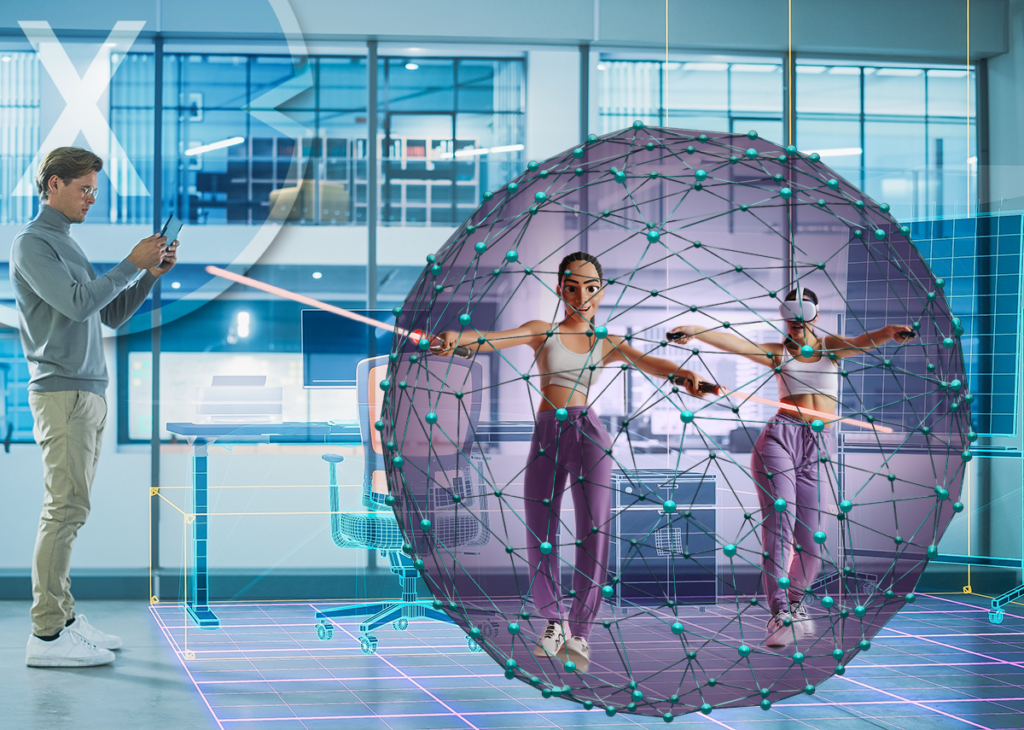
Finding the right Metaverse agency, planning office, or consulting firm - Image: Xpert.Digital
🗒️ Finding the right Metaverse agency, planning office, or consulting firm – Search and search: Top Ten Tips for Consulting & Planning
More information here:
Growth forecasts and investment strategies - background analysis
Market Research & Innovation: Why the Metaverse is Transforming Industry
Market research firms like ABI Research predict impressive growth for the industrial metaverse market, forecasting a compound annual growth rate (CAGR) of 32.05% until 2034. Companies are increasingly focusing on lean implementations with a clear and short-term return on investment (ROI).
A study by Deloitte identifies three main clusters of investment strategies in the industrial metaverse:
Digital Twins
Approximately 45% of companies prioritize investments in digital twins. Digital twins are virtual representations of physical objects, processes, or systems. They enable companies to simulate, analyze, and optimize their real-world operations in the virtual world.
AI-powered collaboration tools
Around 30% of companies rely on AI-powered collaboration tools. These tools are intended to improve teamwork, support knowledge management, and optimize decision-making processes.
Own XR ecosystems
Approximately 25% of companies are developing their own XR ecosystems. This includes building their own hardware and software infrastructure for immersive engineering and collaborative applications in the metaverse.
The partnership between Siemens and Sony exemplifies how strategic alliances can reduce development costs in the industrial metaverse. By sharing technology and leveraging expertise, companies can pool their resources and accelerate innovation. Such partnerships are reported to reduce development costs by up to 40%.
Return on Investment (ROI) analyzed
Investments in immersive engineering and collaborative technologies in the industrial metaverse pay off for companies in many ways. Numerous studies and industry projects demonstrate the positive ROI of these technologies.
A key advantage is the reduction of physical prototypes and test cycles through virtual prototyping. By using simulations and virtual models, products can be thoroughly tested and optimized before physical prototypes need to be built. Virtual prototyping has been reported to reduce the number of physical test cycles by an average of 62%. This saves not only material costs but also valuable development time.
Simultaneous multidisciplinary reviews in virtual environments also contribute to accelerating product development. The ability for teams from different disciplines to simultaneously and collaboratively review and discuss virtual prototypes makes coordination processes more efficient and decisions faster. It has been reported that such simultaneous reviews can reduce time-to-market by up to 35%.
The "Iguversum" from Igus, a manufacturer of plastic products, demonstrates the potential savings achieved through virtualized automation testing. Igus uses virtual environments to plan, test, and optimize automation systems. It is reported that Igus achieves annual savings of €780,000 by using the Iguversum, while simultaneously reducing travel costs by 89%.
Related to this:
Burckhardt Compression, a manufacturer of compressor systems, uses augmented reality (AR) for the maintenance of its equipment. AR-supported maintenance instructions and remote support enable more efficient and effective maintenance work. Burckhardt Compression has reportedly achieved a 43% increase in equipment availability through AR-supported maintenance.
These examples demonstrate that the ROI of immersive engineering and collaborative technologies in the industrial metaverse is significant across various application areas and industries. The benefits range from cost and time savings to quality improvements and increased plant availability.
New business models and value chains
The development of the industrial metaverse not only leads to efficiency gains and cost savings in existing business models, but also opens up completely new business models and value chains.
One example of this is Metaverse-as-a-Service platforms, which offer pay-per-use access to high-end simulation resources. Access to expensive simulation software and hardware can be a major hurdle, especially for small and medium-sized enterprises (SMEs). Metaverse-as-a-Service platforms enable these companies to use simulation resources cost-effectively and on demand, without having to make large upfront investments.
Holo-Light's "XR now" is an example of such a platform. XR now offers pay-per-use access to supercomputing resources for XR applications. It is reported that companies can access supercomputing resources for as little as €0.12 per GPU hour. This holds disruptive potential, particularly for small and medium-sized enterprises (SMEs), as it enables even smaller companies to perform complex simulations and benefit from the advantages of immersive engineering.
At the same time, specialized consulting services are developing for the integration of XR into existing PLM processes. The introduction of immersive engineering and metaverse technologies in companies often requires profound changes in processes, structures, and skills. Consulting firms support companies in successfully managing this transformation. The market for such consulting services is projected to reach a volume of €12.4 billion by 2026.
The development of the industrial metaverse thus creates not only new opportunities for companies to improve their products and processes, but also for new companies to develop innovative services and business models.
The Future of Collaboration: How OpenXRT and Blockchain are Shaping the Industrial Metaverse
Despite the great potential of the industrial metaverse, there are also challenges and critical success factors that companies must consider during implementation.
Related to this:
Interoperability and standardization
One of the biggest challenges is the heterogeneity of XR formats and CAD systems. A multitude of different file formats, tracking protocols, and physics engines exist, which are often incompatible with each other. This complicates data exchange and collaboration between different systems and platforms.
To meet this challenge, standardization initiatives are crucial. Fraunhofer IAO, for example, is working on an "OpenXRT" standard that aims to unify file formats, tracking protocols, and physics engines. The goal is to create an open and interoperable standard for XR technologies in an industrial context.
Initial tests with the OpenXRT standard show promising results. Reports indicate that data conversion times can be reduced by up to 70%, while model accuracy is improved by 92%. Such a standard would significantly simplify data exchange between different XR systems and engineering tools, thereby increasing the efficiency of development processes.
Data security in distributed environments
Another important aspect is data security in distributed environments. In the industrial metaverse, sensitive design data and production information are often exchanged across different locations and partners. It is therefore crucial to ensure that this data is protected against unauthorized access and manipulation.
Blockchain-based solutions like Siemens' "Industrial Data Space" offer promising approaches in this area. The Industrial Data Space enables secure and sovereign data exchange between companies. By using blockchain technology and zero-knowledge proofs, it ensures that sensitive data can only be viewed and used by authorized parties, while simultaneously protecting privacy.
Encrypted data tokens make it possible to grant temporary access rights to external partners without fully exposing the central PLM system. This is particularly important for collaboration with suppliers and service providers who may only need access to certain data for a limited period.
Data security and privacy are therefore key success factors for the acceptance and use of the industrial metaverse in companies. Robust security concepts and technologies are essential to gain companies' trust in these new technologies and to ensure the protection of sensitive data.
Skills development and change management
The introduction of immersive engineering and metaverse technologies requires not only technological adjustments but also comprehensive skills development and effective change management. Employees must be trained to work with the new technologies and prepared for the changed ways of working.
DXC Technology reports on 200-hour training programs specifically tailored to the needs of the industrial metaverse. These programs impart both technical skills in using XR systems and simulation software, as well as collaborative soft skills essential for working in virtual teams.
Gamification elements are used in these training programs to increase participant motivation and engagement. It has been reported that gamification significantly increases the completion rate of training programs. Compared to traditional training, where the completion rate is often around 67%, VR-supported training programs with gamification elements achieve completion rates of up to 89%.
At the same time, it is important to institutionalize the cultural shift that accompanies the introduction of the industrial metaverse. A study by the MLC (Manufacturing Leadership Council) shows that 68% of manufacturing companies are establishing dedicated metaverse departments to actively shape this cultural change and drive the integration of new technologies.
Skills development and change management are therefore crucial success factors for the successful implementation of the industrial metaverse. Companies must invest in the training and further education of their employees and foster a corporate culture that supports openness to innovation and new ways of working.
Quantum computing in the industrial metaverse: Simulations of the future
The development of the industrial metaverse is still in its early stages, and exciting future prospects and research priorities are already emerging that will further increase the potential of these technologies.
Neuroadaptive XR systems
A promising area of research is neuroadaptive XR systems based on brain-computer interfaces (BCIs). BCIs enable direct communication between the human brain and a computer. In the context of the industrial metaverse, BCIs could be used to integrate cognitive signals directly into design processes and make interaction with virtual environments even more intuitive and efficient.
Early prototypes from Fraunhofer IAO are already demonstrating the potential of neuroadaptive XR systems. These systems read EEG (electroencephalogram) data to detect stress levels in virtual meetings and automatically adjust the ambient brightness. The goal is to optimize working conditions in virtual environments and reduce the cognitive load on users.
Sony is experimenting with fMRI-based (functional magnetic resonance imaging) systems that capture unconscious design preferences and use them as input for generative AI systems. Based on these preferences, generative AI can then automatically generate design suggestions, accelerating and improving the design process.
Neuroadaptive XR systems have the potential to fundamentally change how we interact with virtual environments and enable new forms of human-computer interaction. However, much more research is needed to bring these technologies to market and to address ethical questions related to the use of brain data.
Quantum computing for real-time simulations
Another promising future prospect is the use of quantum computing for real-time simulations in the industrial metaverse. Quantum computers utilize the principles of quantum mechanics to solve certain computational tasks significantly faster than classical computers.
The combination of quantum simulators with XR visualization could reduce the calculation time for complex flow analyses or material simulations from weeks to minutes. This would significantly accelerate iteration cycles in product development and expand the possibilities for virtual testing and optimization.
Research projects at ETH Zurich are showing initial success in the quantum prediction of material fatigue. The results of these simulations can be visualized as holographic damage maps and used in the industrial metaverse to virtually test components for their lifespan and reliability.
Quantum computing has the potential to revolutionize simulation technologies in the industrial metaverse and open up entirely new application areas. However, quantum computing is still in an early stage of development, and it will be some time before this technology can be widely used in industrial applications.
Sustainability potential through virtual factories
The industrial metaverse also offers significant sustainability potential. Digital twins enable energy-optimized planning of production facilities as early as the design phase. By simulating various production scenarios and energy flows, companies can optimize the energy consumption of their factories and conserve resources.
FREYR, a battery cell manufacturer, uses gigafactory simulations to reduce the energy consumption of its production facilities. It is reported that FREYR can reduce energy consumption by 23% through virtual balancing of production lines.
AI-powered logistics simulations in the industrial metaverse can also contribute to improving the sustainability of supply chains. By optimizing transport routes and warehousing, companies can reduce CO2 emissions in their supply chain. It has been reported that AI-powered logistics simulations can reduce CO2 emissions in the supply chain by an average of 18%.
Virtual factories in the industrial metaverse enable companies to plan, simulate, and optimize production processes without consuming physical resources. This contributes to more sustainable production and supports companies in their efforts to improve their environmental footprint.
Synthesis and recommendations for action
The analysis shows that immersive engineering in the industrial metaverse is not a futuristic vision, but an operational lever for competitively critical innovations. Companies that strategically embrace this development can gain significant advantages and position themselves at the forefront of a new era of engineering.
This leads to the following recommendations for decision-makers in companies:
Pursue incremental implementation strategies
Start with clearly defined use cases that promise a rapid ROI. Virtual design reviews or AR-supported maintenance are good entry points to gain initial experience and promote acceptance within the company.
Establish interdisciplinary competence centers
Create teams that bring together experts from IT, mechanical engineering, and cognitive science. These teams can develop user-centered XR solutions tailored to the specific needs of the business.
Prioritize open ecosystems
Rely on open standards and modular architectures that ensure flexibility and adaptability through API interfaces. This enables rapid integration of new technology generations and avoids vendor lock-in.
Implement ethical guidelines for AI collaboration
Develop clear guidelines for the use of AI in collaborative environments. Transparency in algorithmic decision-making processes and human oversight are essential to build trust and minimize ethical risks.
Collaborative, immersive and transformative
The development of the industrial metaverse will depend significantly on the extent to which immersive technologies are understood not as isolated tools, but as an integral component of networked value chains. Companies that approach this transformation strategically and consider the aforementioned recommendations will be able to fully exploit the potential of the industrial metaverse and secure a decisive competitive advantage. The future of engineering has begun, and it is immersive, collaborative, and transformative.
We are here for you - Consulting - Planning - Implementation - Project Management
Xpert.Digital - Pioneer Business Development
Smart Glasses & AI - XR/AR/VR/MR industry expert
Consumer Metaverse or Metaverse in general
If you have any questions, require further information or advice, please feel free to contact me at any time.

Konrad Wolfenstein
I would be happy to serve as your personal advisor.
You can contact me by filling out the contact form below or simply call me on +49 7348 4088 965 .
I'm looking forward to our joint project.
Write to me


Xpert.Digital - Konrad Wolfenstein
Xpert.Digital is a hub for industry focusing on digitalization, mechanical engineering, logistics/intralogistics and photovoltaics.
With our 360° Business Development solution, we support renowned companies from new business to after-sales.
Market intelligence, smarketing, marketing automation, content development, PR, mail campaigns, personalized social media and lead nurturing are part of our digital tools.
You can find more information at: www.xpert.digital - www.xpert.solar - www.xpert.plus
Keep in touch