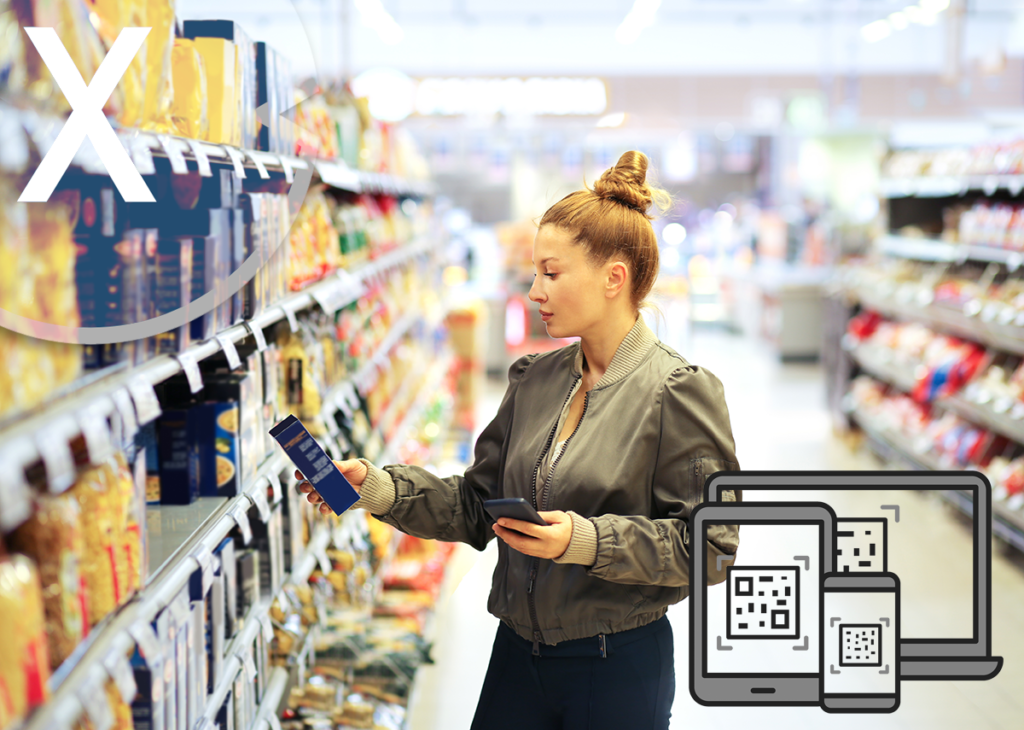
Conversion, retrofitting and upgrading of POS systems to 2D code – Image: Xpert.Digital
🛒 Digital Revolution: The Rise of 2D Matrix Codes in Supermarkets by 2027
🎯 Joint action by retailers and manufacturers
In an increasingly complex world, efficiency and transparency in the supply chain are becoming ever more important. Supermarkets and manufacturers have recognized this and are working intensively on pilot projects to complete the transition from traditional 1D barcodes to advanced 2D matrix codes by 2027. But what exactly is behind this technological change, and what impact will it have?
🔄 The change in the packaging process
For producers and manufacturers, this transition represents a significant change in the packaging process. While previously 1D barcodes were typically printed on packaging, additional 2D matrix codes must now be implemented. These contain far more information than their one-dimensional predecessors and thus offer a range of advantages that extend beyond mere product identification.
📝 What is a 2D matrix code?
A 2D matrix code is a two-dimensional code that can store information both horizontally and vertically. This allows it to contain not only product information, but also data about manufacturing processes, origin, and even interactive elements such as web links. In a sense, it is therefore "smarter" than conventional 1D barcodes.
🎁 Advantages of 2D matrix codes
🛡️ More security and traceability
The increased data capacity of 2D matrix codes enables better product traceability. This enhances safety for both manufacturers and consumers and simplifies the handling of recalls or quality issues.
📊 Better data management
The ability to store more data directly on the product enables better analysis and more effective inventory management. This is a major benefit, especially for retailers, as it allows for optimized logistics and resource savings.
🌐 A step towards a connected world
This change can be seen as a further step towards the comprehensive digitalization and networking of the retail sector. Ideally, this could lead to a win-win-win situation for manufacturers, retailers, and customers: Manufacturers can optimize their processes, retailers benefit from more efficient inventory management, and customers gain greater transparency and information about the products they purchase.
📣 Similar topics
- 🌐 Digitalization in Retail
- 🛍️ The future of shopping: From barcode to matrix code
- 📊 Efficient inventory management through 2D matrix codes
- 🛡️ Product safety and traceability in the modern supply chain
- 🏭 Industry 4.0: How Smart Codes are changing the industry
- 🤖 Cash register systems of the future: What comes after the barcode?
- 💡 The advantages of 2D matrix codes over 1D barcodes
- 📲 Connecting physical products and the digital world
- 💳 Payment methods in retail: How 2D matrix codes make paying easier
- 🔄 From 1D barcode to 2D matrix code: A paradigm shift
#️⃣ Hashtags: #2DMatrixCodes #DigitalizationInRetail #EfficientSupplyChain #ProductSafety #FutureOfRetail

Xpert.Plus Warehouse Optimization - High-bay warehouses and pallet warehouses: Consulting and planning
📦 2D Codes: A revolution in retail for a connected future
🌐 Retailers and manufacturers: Working together for advanced technologies
In the age of digitalization, trade and production are undergoing constant transformation. The widespread introduction of 2D codes on product packaging is planned for 2027. This transition requires an adaptation of printing technologies, as the 2D code, unlike the existing 1D barcode, can contain batch-specific information.
💡 Advantages: More than just a number
🛡️ Anti-counterfeiting protection
The introduction of 2D codes allows manufacturers to better protect their products against counterfeiting. Each code can contain specific information such as the manufacturing date, place of manufacture, and even individual production batches.
🔄 Easier recall campaigns
The 2D code makes it easier for manufacturers to conduct targeted recalls. Because the code contains specific production information, affected products can be identified more quickly.
💵 Promotions and transparency
For both retailers and consumers, 2D codes offer additional promotional opportunities. By allowing specific product information to be stored, customers can learn more about the origin of products, contributing to a more transparent supply chain.
🎯 Technology and printing requirements
🖨️ Printing technology adjustment
The switch to 2D codes places new demands on printing technology. Since these codes are significantly more complex than previous barcodes, a higher print resolution is required. Manufacturers must therefore evaluate their existing technology and adapt it if necessary.
📸 Monitoring via high-resolution cameras
To ensure the readability of the codes, high-resolution cameras are used. These can check the codes in real time and ensure that all necessary information is correctly encoded.
🔄 Systems instead of components: Integration as the key
Previously, separate printers were typically used for labeling. However, the introduction of cameras for code verification has rendered this model obsolete. New, modular systems are now being used that integrate labeling, verification, and even inspection. This greatly simplifies the work and makes the entire process more user-friendly and less prone to errors.
📣 Similar topics
- 🛒 Digitalization in Retail
- 🏭 Smart production technologies
- 🔒 How 2D codes improve anti-counterfeiting protection
- ♻️ Sustainability through more efficient production processes
- 🤖 Automation in the production environment
- 📊 Data analysis for more transparent supply chains
- 🎯 How technology improves customer loyalty
- 📦 Packaging of the future: Smart and sustainable
- 📈 Increased efficiency through new printing technologies
- 👥 Collaboration between retailers and manufacturers for a connected world
#️⃣ Hashtags: #DigitalizationInRetail #AntiFake Protection #2DCodes #TransparentSupplyChain #SmartProduction
Important information for logistics: In 2027, the Data Matrix code (2D barcode) or QR code will replace the barcode
The Data Matrix code, or QR code, will replace the barcode in 2027 – Image: Xpert.Digital
More information here:
🤖 2D codes and the need for technology upgrades in production, logistics, and sales
🎯 Advantages and requirements of 2D code
From product packaging to digital advertising. While the transition from 1D barcodes to 2D codes brings a number of advantages, it also places increased demands on sensor technology in production, logistics, and sales.
🏭 Production requirements
🖨️ Printers and scanners
In production, the print quality of the codes is a crucial factor. Specialized high-resolution printers are required to create the 2D codes. These printers must be equipped with appropriate scanners and sensors to verify the quality and readability of the code.
🎛️ Control systems
Modern production systems require seamless integration of sensors and software to ensure efficient and error-free production. This includes sensors that check the quality of printed 2D codes in real time.
🚚 Logistics requirements
📦 Track & Trace systems
The expanded information stored in the 2D codes enables better product tracking. This also requires advanced sensors to read the codes throughout the entire logistics process.
📈 Warehouse management
2D codes also offer added value in warehouse management, as they enable more efficient storage location management. Specialized scanners and sensor technologies are necessary for this highly detailed tracking.
🛒 Sales requirements
🏷️ Price tags and product information
2D codes allow customers to easily access additional product information. However, the necessary technology must be able to scan a large number of codes quickly and reliably, which requires specialized sensor technology.
💳 Mobile Payment
More and more people are using their smartphones to pay. 2D codes are an important technology for this. However, to prevent fraud, the sensors in the point-of-sale systems must be highly secure and fast.
📣 Similar topics
- 🖨️ Printers and scanners for 2D codes: What should you consider?
- 🎛️ Quality control with sensors in production
- 📦 How 2D codes are revolutionizing logistics
- 📈 Effective warehouse management through modern sensor technology
- 💳 Mobile payments: Future or risk?
- 🤖 Artificial intelligence in sensor technology
- 🌐 Networking of sensors in the IoT age
- 🏭 Industry 4.0: How is digitalization changing production?
- 🚚 Logistics 4.0: Efficiency through digitalization
- 🛒 The future of retail: Technology as the key to success
#️⃣ Hashtags: #2DCodes #Sensortechnology #DigitalizationInProduction #EfficientLogistics #FutureOfRetail
🌐 2D Codes: Revolution in production, logistics and sales, and their global emergence
🎯 The inevitability of 2D codes
2D codes are more than just a technological innovation; they represent a revolution for manufacturers, retailers, and consumers. The global adoption of these codes necessitates a significant upgrade or even replacement of existing sensor technology in production, logistics, and sales.
🛠️ Challenges and opportunities in production
💡 Anti-counterfeiting measures and quality control
For manufacturers, 2D codes open up new possibilities in the area of counterfeit protection. They offer an additional layer of security that helps to strengthen consumer confidence.
🌐 Globalization and supply chain
2D codes enable a transparent, global supply chain. This transparency is of enormous importance, especially in times of globalization, and facilitates product recalls should quality defects occur.
📦 Logistical realignment
📊 Inventory and stock management
Retailers can benefit enormously from the introduction of 2D codes. The ability to manage inventory in real time improves inventory accuracy and ensures product visibility and availability.
🍏 Sustainability through waste prevention
2D codes can help to track the expiration date of products more accurately, which in turn helps to avoid waste.
🛒 Consumer focus
📱 Digital access to information
The advantages for consumers are also considerable. The codes give them direct access to information, allow them to verify the authenticity of products, and enable them to interact with manufacturers.
🔄 Traceability and transparency
The ability to verify the origin of a product provides an additional level of security and trust for the consumer.
📣 Similar topics
- 🛡️ How does the 2D code improve anti-counterfeiting protection?
- 🌍 Globalized supply chains through 2D codes
- 📊 Inventory management in the digital age
- 🍏 Sustainability through advanced technology
- 📱 How 2D codes integrate the consumer into the supply chain
- 🔄 The importance of traceability for the modern consumer
- 🛒 How retailers benefit from 2D codes
- 📦 Optimizing logistics through 2D codes
- 🛠️ Production technologies for the introduction of 2D codes
- 🎯 The impact of 2D codes on marketing and advertising
#️⃣ Hashtags: #2DCodeRevolution #SustainableLogistics #AntiCounterfeiting #ConsumerTransparency #DigitalSupplyChain
Resilience and flexibility
Matrix codes offer greater resistance to damage than traditional barcodes. Because the information is stored in a matrix of dots, the code can be partially damaged, and the relevant data can still be read. This is particularly advantageous in industrial environments where products are exposed to harsh conditions during transport and storage.
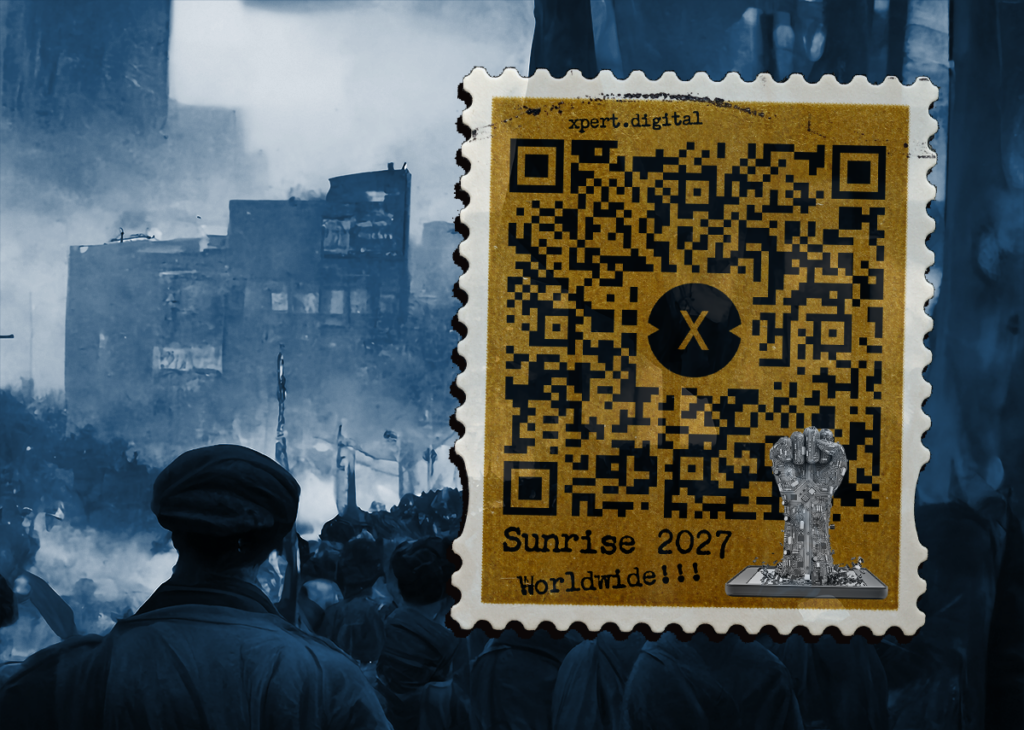
Matrix code as a postage stamp – Matrix code worldwide introduction in 2027 – Image: Xpert.Digital
➡️ Try it out and scan the stamp despite the obscured code
➡️ The 'inconspicuous' 2D matrix code or matrix code postage stamp and the 'world revolution' behind it
Use in various industries
Improved product labeling with matrix codes is used in various industries. From the food and pharmaceutical sectors to the automotive industry, companies are taking advantage of this technology. In the food industry, for example, expiration dates and batch numbers are marked with matrix codes to ensure traceability.
outlook
The introduction of improved product identification through matrix codes will undoubtedly revolutionize buffer warehousing. Increased efficiency, real-time monitoring, error reduction, and the integration of IoT and AI will elevate warehouse management to a new level. Companies that adopt this technology early will gain a decisive advantage in an increasingly competitive economy and strengthen their position as market leaders.
2D matrix code can also be used for WebAR or WebXR (3D)!
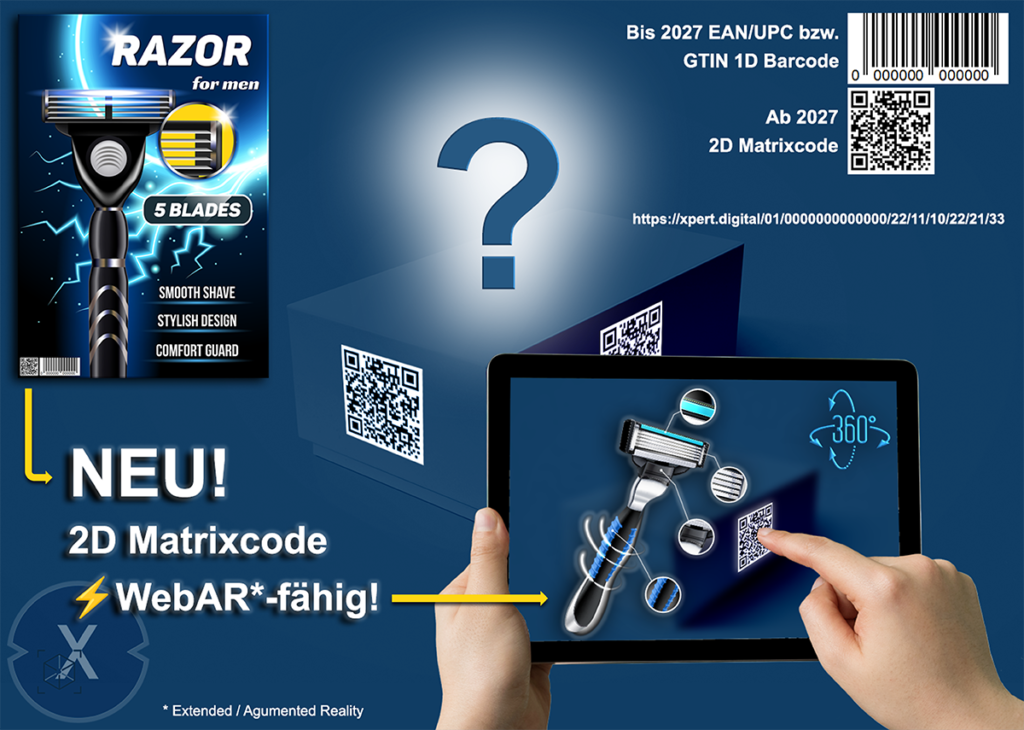
The 2D matrix code, the successor to the 1D barcode, is WebAR compatible and WebXR-enabled! – Image: Xpert.Digital
More information here:
🔄 Switching to 2D codes: A challenge for POS systems, manufacturers and consumers
🎯 Why 2D codes?
The switch from classic 1D barcodes to modern 2D codes, often referred to as matrix codes, opens up a wealth of new opportunities and challenges for supermarkets, manufacturers, and even consumers. These codes are not only more compact but also offer the possibility of storing significantly more information.
🛒 Modernization of POS systems in supermarkets
🖥️ Technological requirements
Upgrading point-of-sale systems requires a significant investment in new scanning technologies to efficiently read the more complex 2D codes. This involves not only the hardware but also the software.
💵 Cost-benefit analysis
Although the initial investment can be high, switching to 2D codes offers significant advantages in the medium to long term. The ability to store more information improves inventory management and reduces operating costs.
🏭 Advantages for manufacturers and packaging design
📦 Transparent supply chain
By integrating 2D codes into packaging, manufacturers can significantly increase supply chain transparency. This transparency is important not only for the manufacturer but also for the end consumer.
🗑️ Waste reduction and sustainability
Improved traceability and expanded product information enable more accurate monitoring of shelf life, which helps to reduce food waste.
🛍️ Interaction with manufacturers and access to information
📲 Direct communication
Consumers can scan the 2D code with their smartphones and thereby gain direct access to additional information or can even contact the manufacturer directly.
🔍 Traceability
The extended code allows consumers to trace the origin and journey of the product all the way to the store. This builds trust and can even contribute to quality assurance.
📣 Similar topics
- 🖥️ The technological challenges of switching to 2D codes
- 2. 🏭 How 2D codes are revolutionizing packaging design
- 📦 Supply chain transparency through modern coding
- 🗑️ Sustainability through smart barcodes
- 🛍️ The role of the consumer in the age of 2D codes
- 📲 Communication between manufacturer and consumer
- 🔍 Traceability as the key to quality assurance
- 💵 Cost-benefit analysis of switching to 2D codes
- 🛒 How supermarkets benefit from technology
- 🎯 Future prospects of 2D code technology
#️⃣ Hashtags: #2DCodeRevolution #TransparentSupplyChain #Sustainability #CustomerInteraction #Traceability
Xpert.Plus – Logistics consulting and logistics optimization – industry expert, featuring its own ‘Xpert.Digital Industry Hub’ with over 1,500 specialist articles
Xpert.Plus is a project by Xpert.Digital. We have many years of experience in supporting and consulting on warehouse solutions and in warehouse optimization, which we combine under Xpert.Plus in a large network.

Konrad Wolfenstein
I would be happy to serve as your personal advisor.
You can contact me by filling out the contact form below or simply call me on +49 7348 4088 965 (Munich) .
I'm looking forward to our joint project.
Write to me



Xpert.Digital – Konrad Wolfenstein
Xpert.Digital is a hub for industry focusing on digitalization, mechanical engineering, logistics/intralogistics and photovoltaics.
With our 360° Business Development solution, we support renowned companies from new business to after-sales.
Market intelligence, smarketing, marketing automation, content development, PR, mail campaigns, personalized social media and lead nurturing are part of our digital tools.
You can find more information at: www.xpert.digital – www.xpert.solar – www.Xpert.Plus
Keep in touch