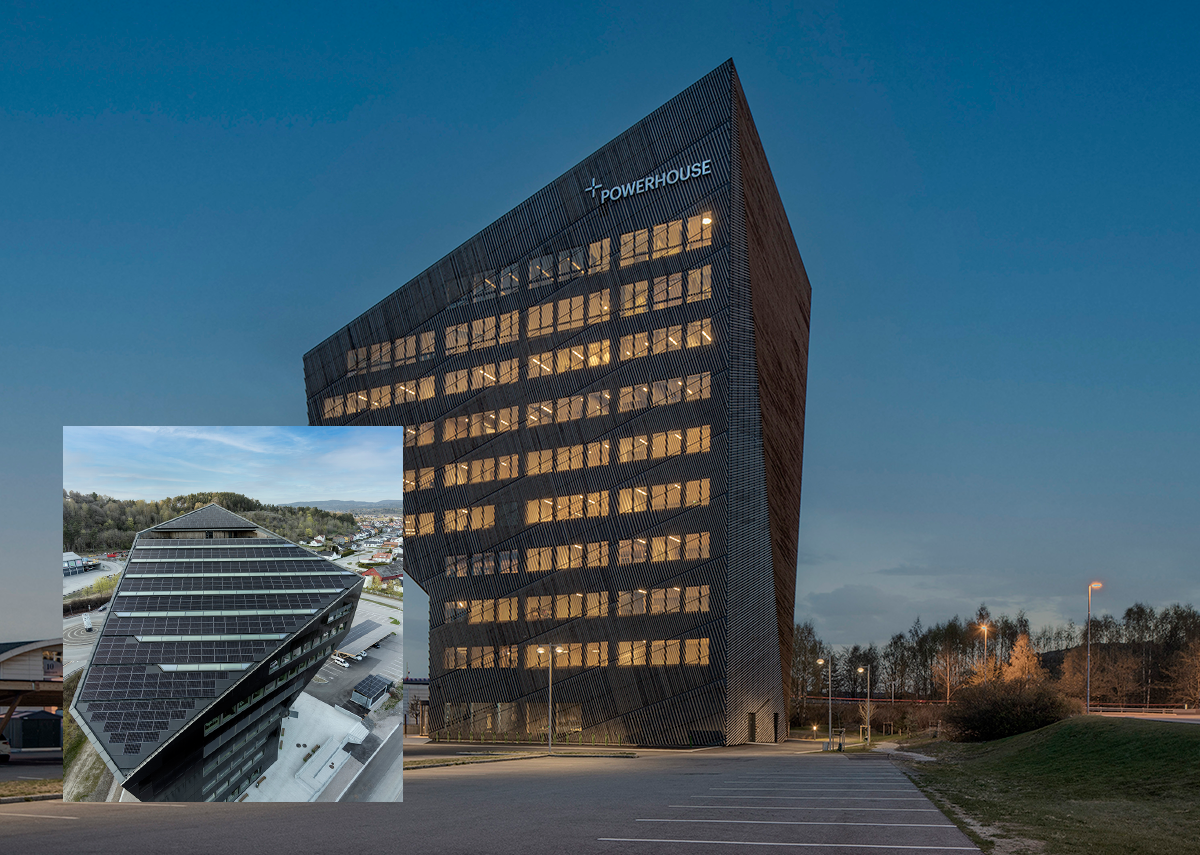
CO2-neutral building “Powerhouse Telemark” – Photographer: Sindre Ellingsen / Copyright: Schüco International KG
Norway's climate protection goals are ambitious. The aim is to achieve a nearly CO2-neutral building stock by 2050. A pioneering example for the decarbonization of new office buildings is the "Powerhouse Telemark," which offsets its carbon footprint over its entire life cycle. Its innovative facade solution plays a key role in this.
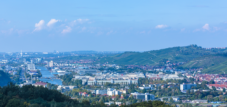
Far beyond the horizon of the industrial town of Porsgrunn, the striking silhouette of the "Powerhouse Telemark" is visible. In sunshine, the eleven-story office tower sparkles like an XXL-sized amber diamond, its rooftop terrace offering a breathtaking view of the province's main town of approximately 35,000 inhabitants and the Frierfjord. Completed in the summer of 2020, the zero-emission building has become a symbol of the transition to a green economy in the region, which lies about 150 kilometers south of Oslo and boasts a long history as a progressive economic hub. The UNESCO World Heritage Site of Vemork, located in the same province as Porsgrunn, is home to one of the largest hydroelectric power plants of the early 20th century. The location for a "powerhouse" could hardly be more fitting.
“Powerhouse Telemark”
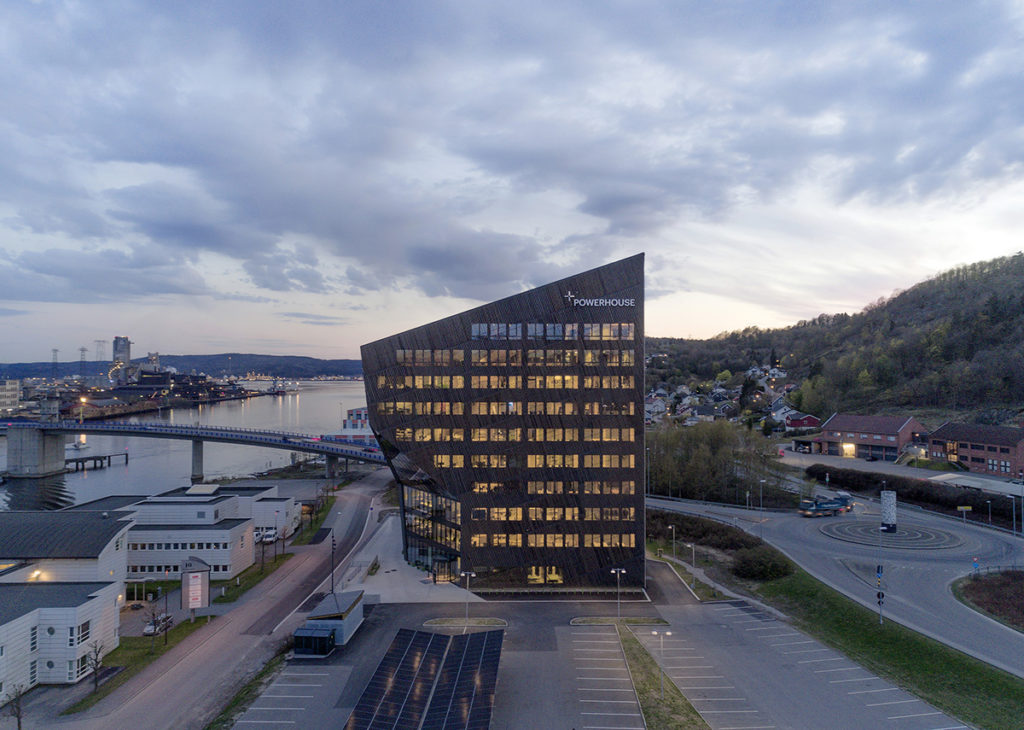
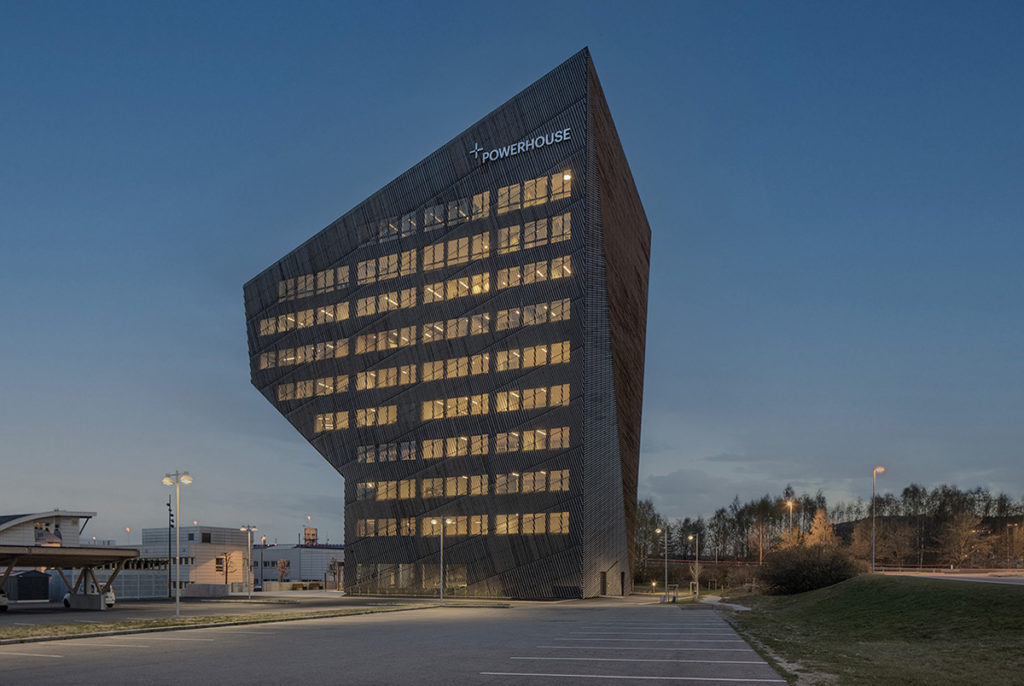
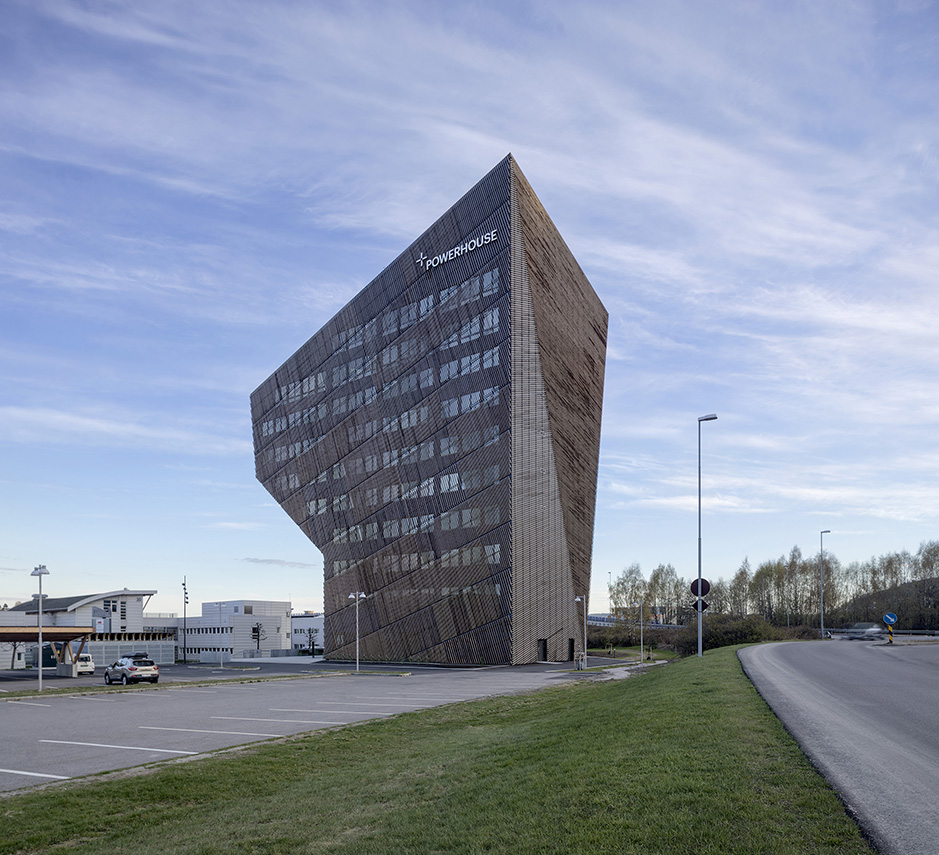
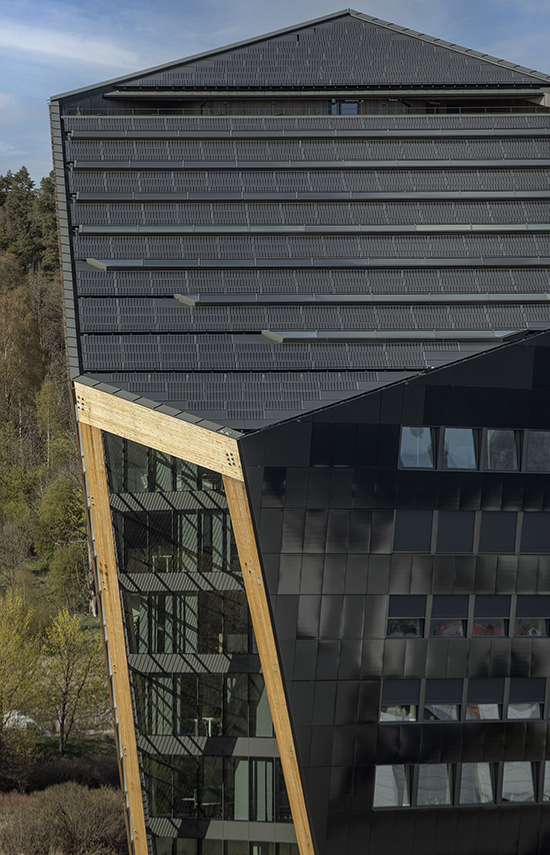
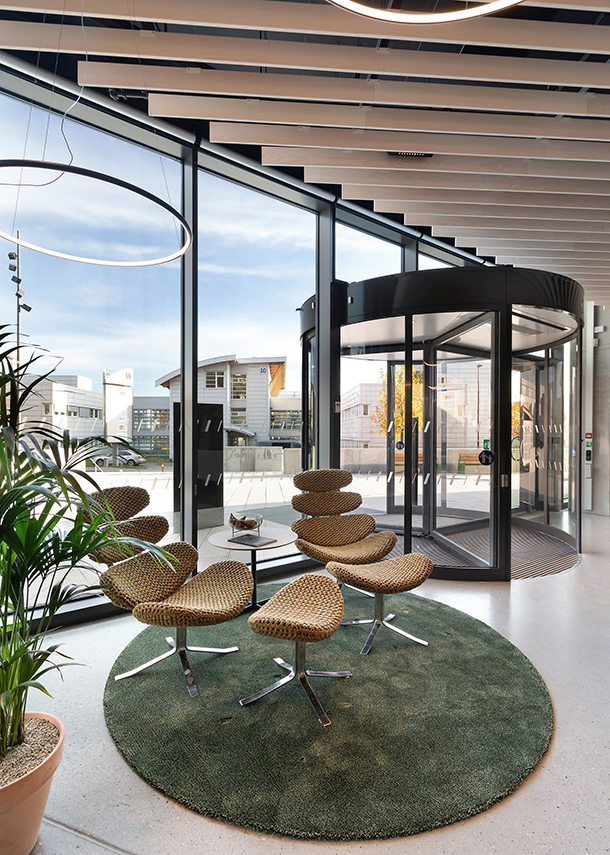
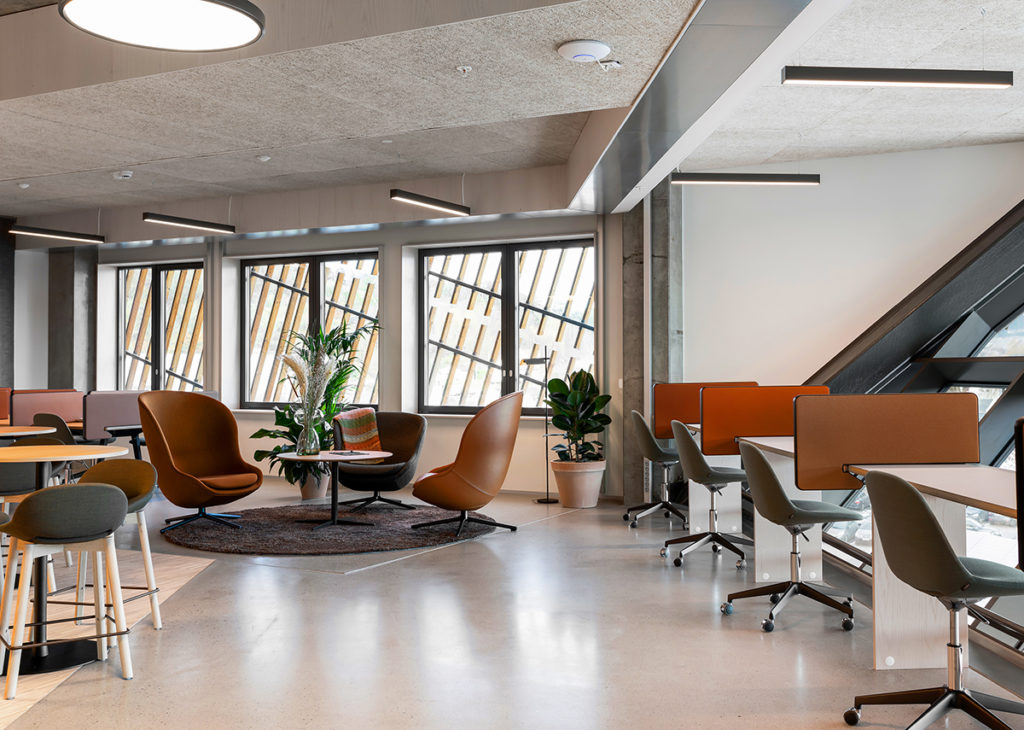
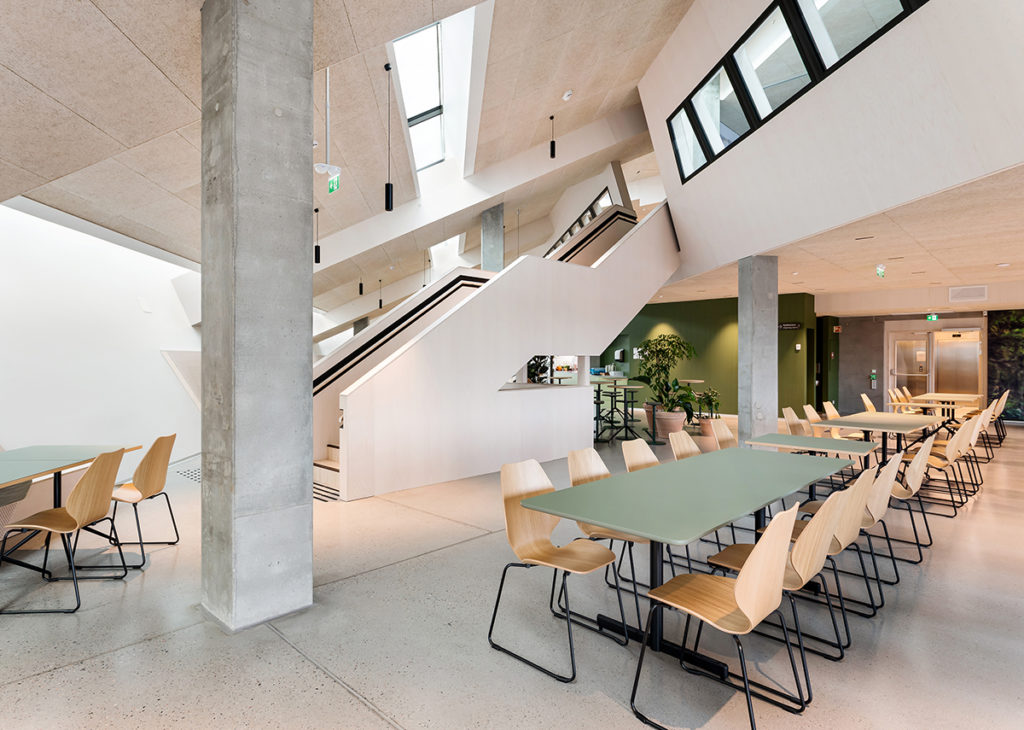
- The eleven-story zero-emission building is located directly on the Porsgrunnselva river.
- The “Powerhouse Telemark” is already the fourth powerhouse in Norway, but the first office building of this type in a smaller town.
- An integrated building, energy, facade and interior design reduces the energy requirements of the solar self-sufficiency project by up to 70 percent compared to similar new buildings.
- Vertical glass slots are integrated into the building's roof, providing daylight to the three upper office floors.
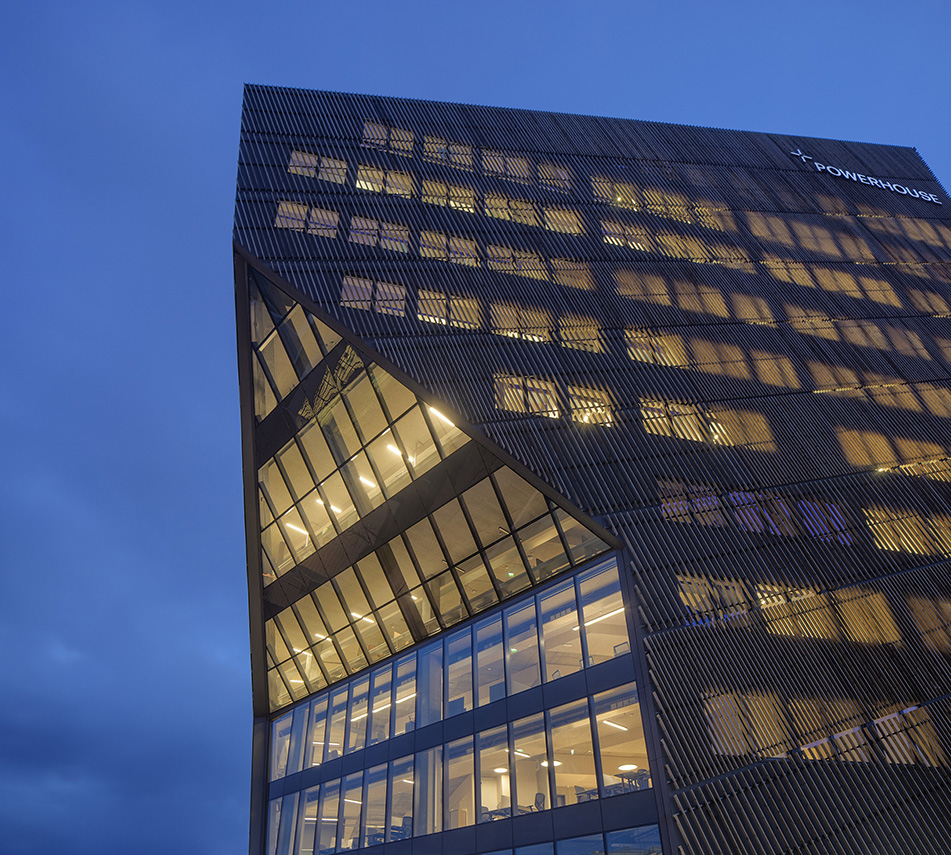
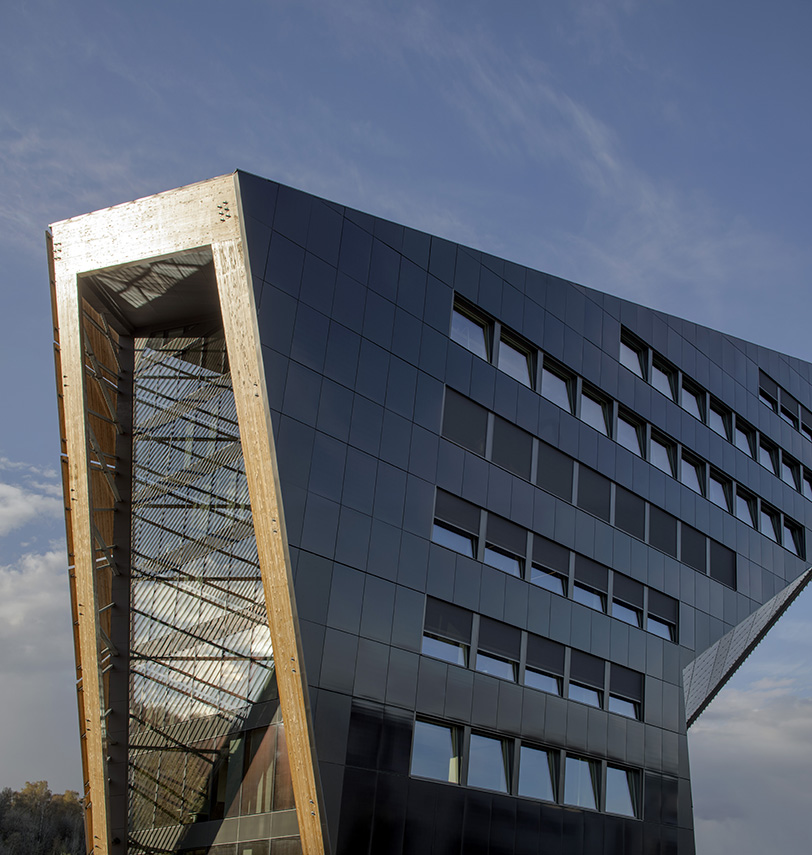
- On the building entrance side, which features a striking notch, the Schüco façade system FWS 50 SG.SI demonstrated maximum design freedom while simultaneously offering the best possible environmental compatibility.
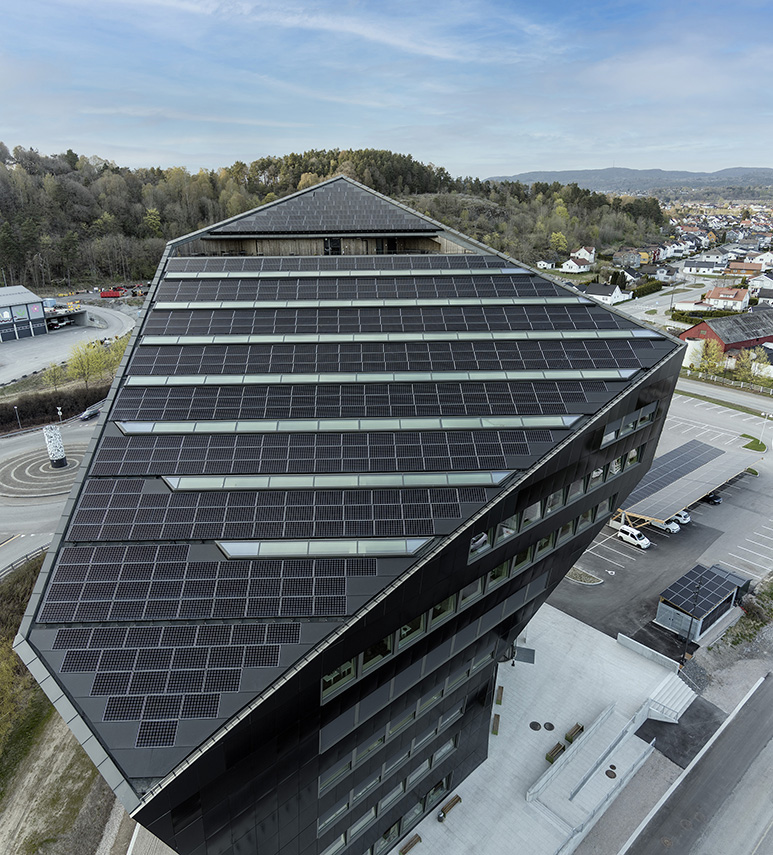
- The angled, upward-sloping southeast facade was also equipped with photovoltaic modules. All the modules of the powerhouse produce approximately 243,000 kilowatt hours of solar power annually.
- To capture a maximum amount of sunlight, the roof surface with the integrated photovoltaic modules was tilted towards the south.
- All pieces of furniture were tested in detail for their climate friendliness, so that nothing throws the CO2 balance off.
- Standardized interior solutions and co-working spaces offer the possibility to scale office space as needed in order to be flexible and implement remote working concepts.
- On the ninth floor, a striking staircase connects the canteen with the conference rooms, inviting not only people to walk there, but also promoting chance encounters and thus communication between users.
243,000 kilowatt hours all inclusive
This powerhouse is not only an architectural eye-catcher. Its energy performance is also remarkable, as demonstrated by the energy concept "Powerhouse Telemark: A plus energy building with a low exergy heating and cooling system" developed by the engineers at Skanska Norway. The calculated 243,000 kilowatt-hours of solar power generated annually by the approximately 8,400-square-meter office building include both the operational energy required for the building's ongoing maintenance and the embodied energy in the materials used, resulting in a balanced carbon footprint after an assumed lifespan of 60 years. The key innovation: an integrated building, energy, facade, and interior design reduces the energy consumption of this solar-powered, self-sufficient building by up to 70 percent compared to similar new constructions. What sounds unique is now ready for mass production: "Powerhouse Telemark" is already the fourth Powerhouse in Norway, but the first office building of its kind in a smaller town. Emil Eriksrød, CEO of R8 Property, wants to change that.
An investor with vision
The zero-emission building, awarded the "BREEAM Excellent" sustainability certificate, is intended to serve as a source of inspiration for future-proof zero-emission buildings, particularly outside major cities like Oslo and Trondheim, where such projects are already under construction. The need for action is urgent everywhere: in 2017, the Norwegian construction industry emitted almost 13 million tons of CO2, roughly equivalent to the amount of climate-damaging greenhouse gases emitted by the oil and gas industry during the same period. If Norway is to achieve its climate protection goals, it is high time for the industry to rethink its approach. At R8 Property, the future has already begun, as visionary Eriksrød founded the company in 2010 with the explicit goal of developing sustainable office properties where people enjoy working. His success proves him right: since 2015, R8 Property has topped the "Norwegian Tenant Index" and is considered one of the most popular office landlords nationwide.
Zero emissions as a mission
Looking back: The successful "Powerhouse Telemark" project began when R8 Property's office space at its headquarters in Porsgrunn, on the banks of the Porsgrunnselva river, reached its capacity limits. There was no more room in the building to adequately accommodate new tenants, necessitating an alternative. Since a suitable, buildable plot of land was located next to the company headquarters, the answer was quickly found: This would be the site of the new head office, whose spacious office areas would offer maximum flexibility, meet the latest climate protection requirements, and provide inspiring workspaces. The aim was to create a beacon of excellence, radiating its influence throughout the region and beyond. So much for the theory. For the practical implementation, the Powerhouse Initiative came on board. This alliance, founded by renowned representatives of the Norwegian construction industry, includes the developer Entra, the Skanska construction group, the engineering firm Asplan Viak, the environmental organization Zero, and the architecture and design firm Snøhetta, which specializes in sustainable building. Together, they create zero-emission buildings characterized by maximum user-friendliness and cost-effectiveness. Unlike conventional plus-energy houses, whose energy concept primarily aims for energy-efficient operation and the reduction of resulting CO2 emissions, the design of a "powerhouse" focuses on avoiding all greenhouse gases emitted by the building throughout its entire life cycle – from planning and construction to use and deconstruction. Consequently, the planning process is fundamentally holistic and integrated, rather than, as is commonly the case, work on a trade-by-trade basis.
Simulate first, then construct
So the planners put their heads together. First, they had to ensure the building's operation with climate-friendly energy. Crucial to this was maximizing the use of daylight to avoid artificial light sources as much as possible, since lighting is typically a significant energy consumer in office buildings. To reduce energy consumption to an absolute minimum, the creative team at Snøhetta developed a lighting concept that used only 2.3 watts per square meter and a spatial concept that created a stimulating atmosphere through the interplay of light and shadow and the fluid transitions between different work situations. In addition, the building's roof was fitted with vertical glass slits, providing daylight to the three upper office floors. Second, the energy requirements for heating and cooling had to be determined. Third, an analysis was needed to calculate the embodied energy, including the CO2 emissions from the production of the intended materials and products, the greenhouse gases generated during the periodic replacement of building components, and the CO2 emissions from disposal. All the values were summed up to form the basis for the energy concept to be developed. Building Information Modeling (BIM) was used to refine the digital building model. The complex calculations employed, among other things, the energy simulation software Simien v 6.009 and a calculation tool based on DIN EN ISO 11855-2 (the EU standard for environmentally sound building design). The result: Take a highly insulated building envelope, combine it with actively generated renewable energy sources that are integrated into a closed-loop system, support the entire process with a low-tech approach, and primarily use resource-conserving, recycled building materials.
Balanced climate footprint with solar power
The building's iconic shape is not only visually appealing, but also offers significant energy advantages. To maximize solar gain, the roof is impressively inclined at 24 degrees to the south and equipped with highly efficient integrated photovoltaic modules from the Danish company SolarLab, boasting an efficiency of 22 percent and a peak output of 210 kilowatts. The angled, upward-sloping southeast facade is similarly equipped, as is the roof of the adjacent carport. The nearly 1,500 square meters of module surface area generates approximately 243,000 kilowatt-hours of solar power annually. Of this, just under 50,000 kilowatt-hours are used for operational energy, while around 193,000 kilowatt-hours are stored in the building's 130-kilowatt-hour battery storage system to offset carbon emissions. Excess energy produced is fed into the electric vehicle charging stations and thus back into the power grid. Over its 60-year lifespan, the net-positive energy building will generate almost 15 million kilowatt-hours of CO2-neutral electricity in this way. According to the data in "Norway: Heating and Cooling of Commercial and Industrial Buildings with Renewable Energies," published by the German-Norwegian Chamber of Commerce in Oslo, this makes the "Powerhouse Telemark" currently one of the most efficient solar power plants in Norway.
Demonstrable environmental compatibility as a success factor
The widely used Schüco FWS 50.HI façade system was employed for the skylight construction. This system allows for the architecturally appealing realization of large spans, particularly in large-scale projects such as shopping centers, office and administrative buildings, and hotels. A decisive factor for the planners and client in choosing this solution was the demonstrable environmental compatibility of the materials, certified according to the Cradle-to-Cradle product standard. Cradle-to-Cradle certified systems can also be recycled an unlimited number of times after their service life and meet high standards regarding social responsibility and the careful use of water and energy during production. To create the most elegant possible design for the large, sloping window front in the lower section of the southeast façade, to maximize daylight, and to utilize sustainable products, the decision was made to use the equally Cradle-to-Cradle certified Schüco FWS 50 SG.SI façade system for other parts of the building envelope as well. The semi-structural glazing look with a narrow face width of just 50 mm ensures that the profiles are only visible from the inside and appear on the outside as a flush, all-glass facade with delicate joints, giving the powerful system a graceful appearance, contrary to what its name might suggest. The chosen solution for the building entrance, featuring a striking notch, is also visually very distinctive. Here, too, the Schüco FWS 50 SG.SI façade system demonstrated maximum design freedom while simultaneously offering the best possible environmental compatibility.
The highly thermally insulated windows and curtain walls with triple glazing are impressive in both design and technical terms, as they guarantee the lowest thermal performance: The heat transfer coefficient of all windows (Uw values) and curtain walls (Ucw values), including the frame profiles and glazing, is 0.75 W/m²K, the total solar energy transmittance (g-value) of the glazing is 37 percent and the daylight transmission is 63 percent.
Ecodesign makes the difference
Environmental compatibility and durability were also top priorities in the material selection process, with the aim of minimizing CO2 emissions. The Schüco FWS aluminum façade system impressed not only with its Cradle-to-Cradle Silver certification, but also with its 100% recyclability without any loss of quality. Further advantageous properties of the material were also decisive in choosing the façade system, such as its lightness combined with very high stability, its high corrosion resistance thanks to anodizing, and its insensitivity to temperature fluctuations. All extremely beneficial characteristics for a positive CO2 balance. A good dose of creativity was also required. The wooden floor, for example, is made of industrial parquet produced from wood waste. The carpet tiles are made from 70 percent recycled fishing nets. The untreated, exposed concrete exudes a raw charm. From the office desk to the kitchen furniture, every detail was checked for its climate-friendliness to ensure that nothing would throw the CO2 balance off. Even a special signage system with environmentally friendly foil was designed, allowing for visual identification of office spaces without producing unnecessary waste.
Heat comes from a depth of 300 meters
Geothermal energy provides a comfortable temperature of 21.5 degrees Celsius in the building. Integrated into a "LowEx" system, which relies on optimally coordinated low-temperature heating and high-temperature cooling (resulting in extremely low electricity consumption), a highly efficient heat pump taps into the earth's heat from a depth of 300 meters via eight geothermal probes. The yield is so substantial that it covers almost 100 percent of the energy required for heating and ventilating the rooms. These boreholes are among the deepest ever drilled for geothermal energy in Norway and demonstrate that the oil and gas industry's expertise in drilling technology and geology can be applied to the development of geothermal energy and thus climate-friendly energy sources.
Interior design opens up possibilities
The interior design was also carefully considered. From the reception area on the ground floor to the shared staff canteen and the penthouse meeting rooms, two generously proportioned, open staircases lead to the upper floors. This not only encourages walking and exercise but also fosters chance encounters and communication among users. On the ninth floor, a striking wooden staircase connects the canteen with the meeting rooms and leads out to the roof terrace, which offers a magnificent view of the fjord. Standardized interior solutions and co-working spaces allow tenants to scale their office space as needed, ensuring flexibility and enabling remote working concepts. Various applications, such as check-in, room booking, and visitor registration, can be personalized and controlled via the Orbit software app on smartphones.
The enthusiasm with which the tenants use the building reinforces R8 Property CEO Eriksrød's conviction that they have realized the right office property at the right time and in the right place. So: Full steam ahead for this climate-friendly and user-friendly powerhouse!
Construction sign
Project: Telemark
Location: Porsgrunn, Telemark Province
Country: Norway
Planning/Construction Period: 2015 – 2020
Gross Floor Area (GFA): 8,403 m²
Client: R8 Property, Porsgrunn, Norway
Architects: Snøhetta, Oslo, Norway
Energy Concept: Skanska AB, Oslo, Norway
Building Services Engineering: Asplan Viak AS, Sandvika, Norway
Contractor: H-fasader AS
Project Development: Entra Eiendom AS, Oslo
SCHÜCO International KG
The Schüco Group, headquartered in Bielefeld, Germany, develops and distributes system solutions for windows, doors, and facades. With 5,650 employees worldwide, the company strives to be the technology and service leader in the industry, both today and in the future. In addition to innovative products for residential and commercial buildings, the building envelope specialist offers consulting and digital solutions for all phases of a construction project – from the initial concept through planning and manufacturing to installation. 10,000 craft businesses and 30,000 architectural firms, as well as construction professionals who commission building projects, collaborate with Schüco worldwide. Founded in 1951, the company is now active in more than 80 countries and generated annual sales of €1.695 billion in 2020. Further information is available at www.schueco.de