

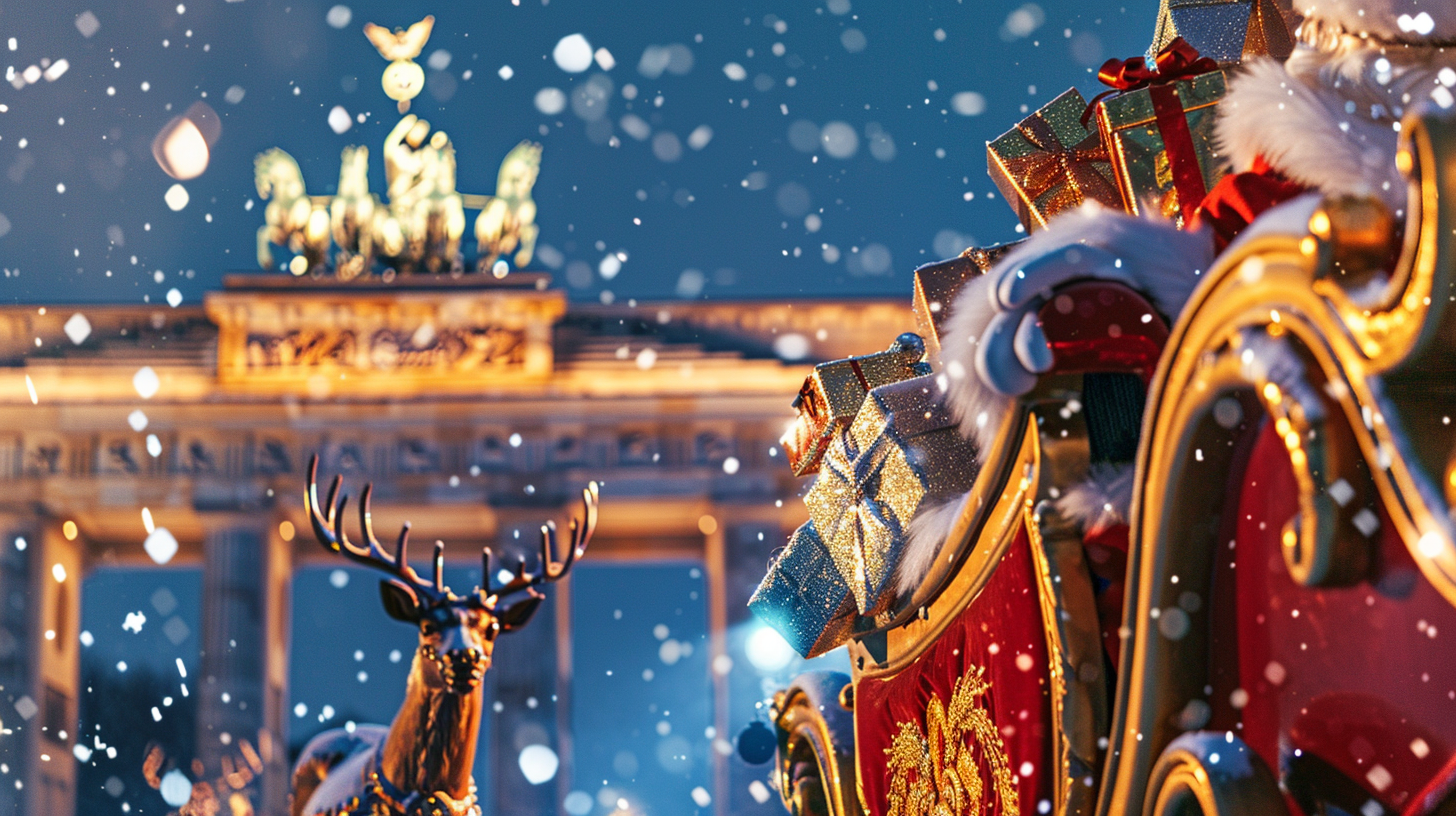
We wish you a Merry Christmas – A cosmic event with deep roots: The pagan winter solstice and the Christian Christmas – Image: Xpert.Digital
🎄💫 The magic of light and hope: Winter solstice and Christmas as symbols of new beginnings
✨🌟 The Christmas season is a time for pausing, reflection, and hope. Especially during the dark days of winter, when light is scarce and the world seems to be in a state of quiet stillness, many people seek signs of renewal and confidence. The close connection between the winter solstice and Christmas offers a deeper layer of meaning that transcends cultural and religious boundaries.
🌌 A cosmic event with deep roots: The winter solstice
The winter solstice, which occurs annually on December 21st or 22nd, is the astronomical event that marks the shortest day and the longest night of the year. From this point on, the light slowly returns, the days grow longer, and life seems to stir anew. Even in early cultures, the winter solstice was an occasion for rituals and festivals celebrating the end of darkness and the return of light.
Light was understood as a symbol of life, warmth, and hope – a universal image that endures to this day. In many cultures, this moment in the annual cycle was considered a turning point, marking the beginning of a new era: The sun, the source of all life, returns triumphantly.
🎇 Christmas: Birth of the Light of the World
Christmas, celebrated on December 25th, carries a similar symbolism. In the Christian faith, the birth of Jesus Christ is interpreted as the coming of the "Light of the World." Jesus Christ, as the Bible tells us, brings hope and salvation, especially in difficult times. His birth is not coincidentally close to the winter solstice—the early Christian church deliberately chose this date to utilize the symbolism of light while simultaneously integrating existing pagan traditions.
🌿 Historical Connections: Pagan Customs and Christmas
Many Christmas customs celebrated worldwide today have their origins in pre-Christian traditions closely linked to the winter solstice.
Evergreen plants and lights: The custom of bringing evergreen branches such as fir, mistletoe, or ivy into the home symbolizes the eternity of life. Decorating with candles and lights is also deeply rooted in the idea of dispelling darkness and celebrating the return of light.
The Twelve Days of Christmas: The twelve nights between December 25th and January 6th, known as the Twelve Days of Christmas, have their origins in Celtic and Germanic traditions. This period was considered a transitional phase between the years, during which the boundaries between the worlds – the visible and the invisible – were particularly permeable.
📅 Setting the date of Christmas
December 25th was first established as the date for Christmas in the 4th century AD. The Council of Constantinople in 381 AD officially declared this day the Feast of the Nativity of Christ. Historians suggest that this was also a strategic decision to replace popular pagan winter solstice festivals, such as the Roman festival of Sol Invictus (the birth of the unconquered sun), and thus promote Christianization.
🌟 Light and hope as central messages
The close connection between the winter solstice and Christmas is particularly evident in their shared symbolism of light and hope:
The winter solstice symbolizes the natural cycle of darkness and light. It shows that even after the longest night, the light returns and life awakens again.
Christmas places this message in a spiritual context. The birth of Christ is understood as light that comes into the darkness of the world and gives new hope.
"The light shines in the darkness, and the darkness has not overcome it." – This Bible verse from the Gospel of John summarizes the essence of the Christmas message.
🎁 Modern Perspectives: A Time for Reflection and Solidarity
Today, for many people, Christmas is not only a religious festival, but also an opportunity to pause and reflect on what is essential: family, friendship, charity, and the hope for better times. Especially in a world often characterized by uncertainty and challenges, the symbolism of light offers a powerful metaphor.
Putting up Christmas trees, lighting candles, and sharing gifts are more than just traditions. They remind us that even small gestures of light and warmth can make a big difference.
🔄 A turning point in the course of the year and in life
Both the winter solstice and Christmas symbolize turning points – in a cosmic as well as a personal sense:
The winter solstice marks the beginning of the natural cycle of growth and renewal.
Christmas invites us to pause and nurture the hope for a better future, no matter how dark the present may seem.
❤️🔥 A personal Christmas wish
May this time of reflection and light bring you and your loved ones renewed hope. Just as the sun returns after the longest night, may the days in your life become brighter and the outlook clearer. Let us take the symbolism of light as inspiration to offer one another warmth and confidence.
Because in the end it is the light – be it cosmic, spiritual or interpersonal – that illuminates our hearts and brings us together.
Merry Christmas and have a wonderful winter!