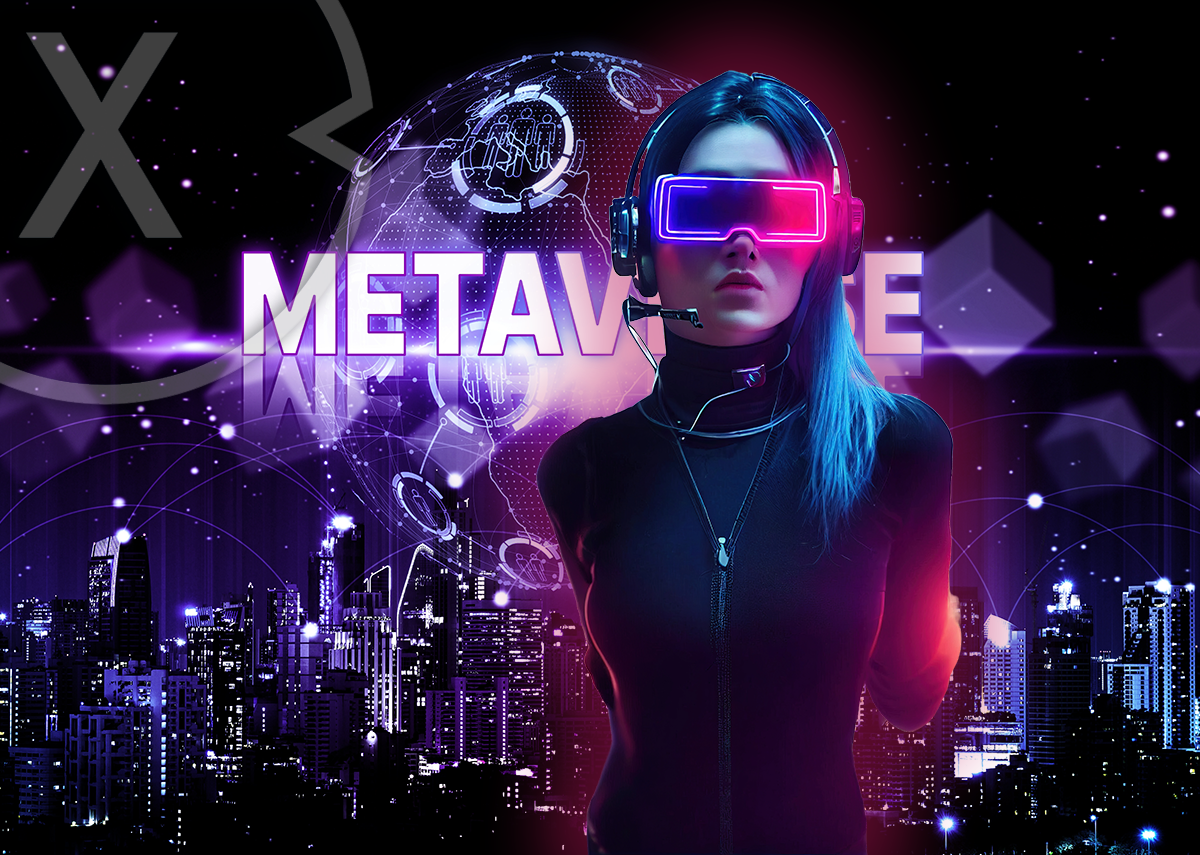
Metaverse in China – Insight into the XR technology industry – Image: Xpert.Digital
🌐🇨🇳 # The Virtual Future and China's National Strategy for the Metaverse
📖🌟 A guide to the digital tomorrow
China's metaverse strategy is far more than just a gimmick in the digital world. It is intended to serve as a catalyst for the country's real economy. Numerous cities and provinces in China have already launched budget plans and training programs to fully exploit the metaverse's potential within existing industries.
More information here:
🏁🔬 The race for technology and patents
In recent months, Beijing has launched China's first metaverse patent pool. This initiative, part of the capital's ambitious plans, aims to attract over 100 metaverse companies by the end of 2024. The pool already contains approximately 170 specialized patents. But Beijing is not alone; numerous other Chinese metropolises also aspire to become hubs for this groundbreaking technology.
🗺️📈 Strategic plans and economic impulses
The Chinese Ministry of Industry and Information Technology recently released a three-year plan for an "industrial metaverse." This initiative makes metaverse technology a cornerstone of the national strategy. The goal is to build a thriving digital economy that will further complement the existing, already impressive economy, surpassed only by the United States.
💼📊 Benefits for the real economy
China's focus on the metaverse is not only technology-driven but also driven by clear economic advantages. Deng Jian-peng, a renowned expert in financial technology law and a professor at the Central University of Finance and Economics in Beijing, emphasizes the practicality of the metaverse in existing industries. As a prime example, he cites BMW's "industrial metaverse," developed by Nvidia, which is a digital replica of the automaker's production line. This allows for the optimization of production processes and cost reduction.
Related to the topic:
🔮⚖️ The path to the future: Challenges and opportunities
Despite the optimism, challenges remain. Regulating the digital world and dealing with global competition are just two of the many aspects that need to be considered. Privacy protection and ethical considerations could prove to be obstacles in implementing the metaverse plans.
🔒📊 The role of the social credit system
A particularly noteworthy development is the integration of the Chinese social credit system into the metaverse. While this may seem dystopian to some, it could pave the way for a new kind of social order and interaction in both the real and virtual worlds.
👩🏫🌍 The added value for society
The impact of the metaverse is not limited to the economy. Training and education could be revolutionized by replacing traditional classrooms with more immersive, interactive experiences. Healthcare services could be improved through telemedicine and virtual reality, and social cohesion could be strengthened through shared virtual experiences.
📝🌐 China aims to become a leading player in the metaverse
China's ambition to become a leading player in the metaverse is a complex undertaking that extends far beyond technological innovation. It presents immense opportunities as well as challenges and could propel the country significantly toward global technological and economic leadership. Integrating the metaverse into existing industries and social systems could not only boost the economy but also unlock new possibilities for society as a whole.
📣 Similar topics
1️⃣ China's Vision for the Metaverse: More Than Just Virtual Reality
2️⃣ Catalyst for the Economy: China's Metaverse Strategy
3️⃣ Beijing's Patents: The Race for Metaverse Technologies
4️⃣ A Three-Year Plan for the "Industrial Metaverse" in China
5️⃣ The Practicality of the Metaverse: Economic Benefits and Examples
6️⃣ Regulation and Ethics: The Challenges of the Metaverse in China
7️⃣ Social Credit System in the Metaverse: Utopia or Dystopia?
8️⃣ Educational Revolution Through the Metaverse: The Chinese Approach
9️⃣ Telemedicine and Virtual Reality: Healthcare in the Metaverse
🔟 China's Complex Undertaking: The Path to Global Technological and Economic Leadership Through the Metaverse
#️⃣ Hashtags: #MetaverseInChina #TechnologyRace #IndustrialMetaverse #SocialCreditSystem #EducationRevolution
🗒️ Xpert.Digital: A pioneer in the field of Extended and Augmented Reality


Finding the right Metaverse agency, planning office, or consulting firm - Image: Xpert.Digital
🗒️ Finding the right Metaverse agency, planning office, or consulting firm – Search and search: Top Ten Tips for Consulting & Planning
In the age of digitalization, where technologies such as Extended Reality (XR) and the metaverse are constantly gaining in relevance, Xpert.Digital is positioning itself as a thought leader and pioneer. With over 1,500 specialist articles, Xpert.Digital is establishing itself as a central point of contact for the industry.
🌌 Extended Reality (XR): The best of both worlds
Extended Reality is an umbrella term encompassing Virtual Reality (VR), Mixed Reality (MR), and Augmented Reality (AR). Xpert.Digital is dedicated to creating impressive XR experiences that are both informative and entertaining.
- Interactive experiences: XR allows users to immerse themselves in virtual worlds and interact with their environment in ways that were previously unimaginable.
- Education and training: XR can be used for educational purposes to convey complex topics and concepts in an understandable and tangible way.
- Entertainment: Whether games, films or art – XR opens up new horizons in digital entertainment.
🔮 Augmented Reality (AR): Seeing the world with digital eyes
Augmented Reality, a particular focus of Xpert.Digital, makes it possible to integrate digital information or graphics into the real world. The possibilities are virtually limitless.
- Marketing and advertising: AR can be used to create interactive advertising campaigns that engage customers in a completely new way.
- Everyday assistance: From navigation apps that project the route directly onto the street, to furniture apps that show what a new sofa would look like in the living room – AR makes it possible.
🌐 The Metaverse: The Next Big Thing
The metaverse is a virtual world where people can interact through avatars and create shared experiences. Xpert.Digital recognizes the enormous potential of the metaverse and is working to translate this potential into usable products and services.
- Social interaction: The Metaverse offers the opportunity to connect with people from all over the world and share common experiences.
- Economy and trade: In the Metaverse, virtual goods and services can be traded, opening up completely new business models and sources of income.
- Creative freedom: From building your own worlds to designing individual avatars – the metaverse is a place of endless creative possibilities.
🚀 Xpert.Digital at the forefront of innovation
Xpert.Digital demonstrates how a company can be at the forefront of the technological revolution. With their focus on XR, AR, and the metaverse, they are well-positioned to shape and define the future of digital interaction.
More information here:
🌏 China's strategy for the metaverse: A balancing act between economy and regulation
🏭 A metaverse focused on the real economy
China has ambitious plans for the Metaverse, specifically aimed at strengthening the real economy. Earlier this year, the financial hub of Shanghai unveiled a series of 20 Metaverse application scenarios slated for implementation by the end of 2025. These projects are diverse and reflect the various sectors of the Chinese economy, ranging from a virtual representation of a state-owned steel mill and a Metaverse hospital enabling remote treatment to educational scenarios promising a seamless transition between virtual and real-world learning.
🚫 No open metaverse game worlds
Interestingly, the Chinese government has made it clear that it does not plan to promote open metaverse game worlds like "Decentraland" or "Sandbox." This suggests a more pragmatic than playful approach to the metaverse. Zhao Xing, a leading researcher at Fudan University in Shanghai, emphasizes that Chinese metaverse initiatives are heavily focused on real-world use cases. The goal is to address current challenges in technology, industry, and administration through the application of the metaverse.
🏢 The role of companies
Businesses play a crucial role in this development. A notable collaboration took place between the spirits giant Kweichow Moutai and the tech company NetEase. They launched a wine-themed metaverse and even issued NFTs (non-fungible tokens) tied to actual bottles of fine spirits. This demonstrates that the business world recognizes the opportunities the metaverse offers to drive the real economy.
🔒 Regulatory concerns and cryptocurrencies
Another characteristic of China's metaverse strategy is its cautious approach to cryptocurrencies and NFTs. While open metaverses often use cryptocurrencies like SAND to incentivize users, China emphasizes the need to comply with financial regulatory standards. This is also due to the significant legal and political risks associated with using cryptocurrencies and NFTs in China.
🔮 China aims for leadership role
Looking to the future, it is clear that China is aiming for a leading role in the developing metaverse. Having missed some opportunities in the early years of the internet, mobile web, and artificial intelligence, both the government and the business sector see the metaverse as a chance to catch up and assume a leading position. The Chinese metaverse strategy is also expected to have an impact internationally. It is conceivable that they will try to set standards, particularly when it comes to integrating social or economic systems, such as the Chinese social credit system, into the metaverse.
💻 The role of technology
From a technological perspective, China is likely to play a key role in the development of the metaverse. With the massive proliferation of 5G networks, cloud computing, and artificial intelligence, China possesses the technological foundations to create a robust and versatile metaverse. Therefore, Chinese technology companies are expected to play a significant role not only in the domestic market but also internationally.
🔍 Pragmatic Metaverse for the Real Economy
China's approach to the metaverse is pragmatic and strongly focused on the real economy. It demonstrates how a country can use the metaverse as a tool to solve real-world problems and offers a glimpse into the potential future of this new digital landscape. The balance between innovation and regulation plays a crucial role in this approach. The Chinese metaverse strategy could therefore serve as an interesting model for other countries seeking to engage in the development of this new technology.
📣 Similar topics
1️⃣ China and the Real Economy: The Metaverse as a Growth Engine
2️⃣ Pragmatism in the Chinese Metaverse: No Room for Games?
3️⃣ Shanghai as a Metaverse Pioneer: 20 Application Scenarios by 2025
4️⃣ Cryptocurrencies and NFTs: China's Cautious Approach
5️⃣ Companies in Focus: Kweichow Moutai Meets NetEase in the Metaverse
6️⃣ China's Technological Foundations for the Metaverse
7️⃣ The Chinese Strategy: Global Impact of the Metaverse
8️⃣ Regulation and Innovation: China's Balancing Act in the Metaverse
9️⃣ Education and Health: Metaverse Applications Beyond Entertainment
🔟 Social Credit System in the Metaverse: China's Vision for the Digital Society
#️⃣ Hashtags: #ChinaMetaverseStrategy #RealEconomyInTheMetaverse #CorporateCooperation #RegulationAndInnovation #TechnologyInTheMetaverse
🛒 V-Commerce: The ingenious hybrid shopping model 🛍️ Also applicable to hybrid trade fairs 🎪🤝 and events 🌐🎉
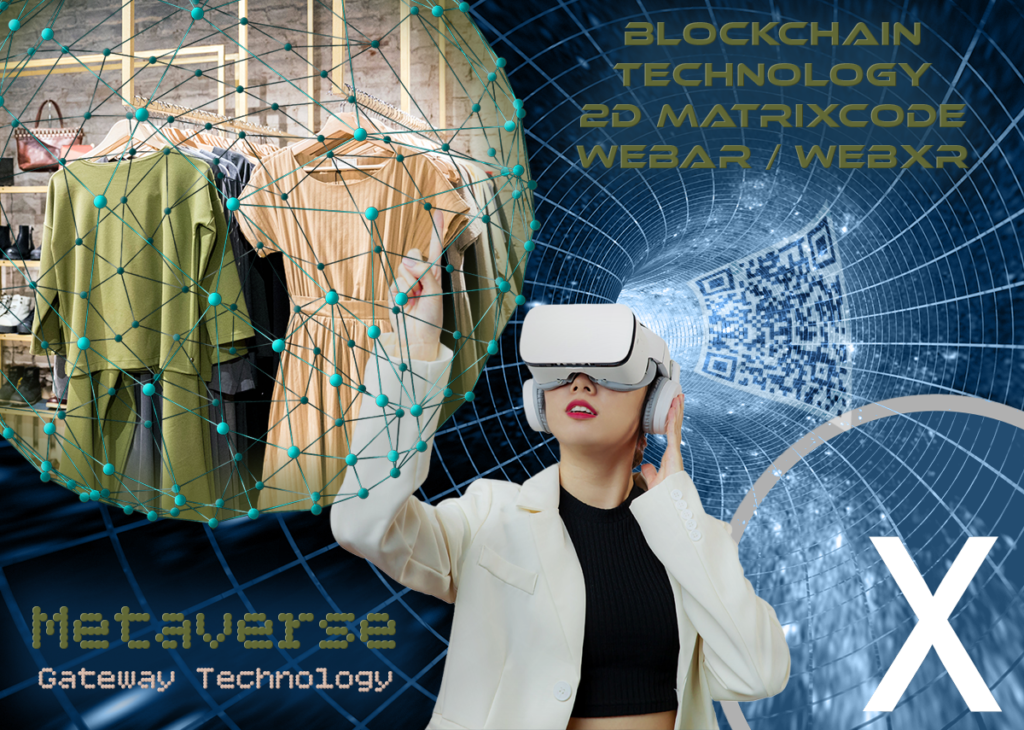
XR (Extended Reality) & Metaverse Gateway Technologies 2024 – Image: Xpert.Digital
V-Commerce, a combination of "virtual" and "commerce," is a novel hybrid model for retail that can also be easily implemented at hybrid trade fairs and events. Imagine how the boundaries between online and offline shopping blur, opening up countless opportunities for both buyers and sellers. This model is also applicable as a cross-border solution, making it particularly interesting for internationally operating companies.
More information here:
🇨🇳 China's National Metaverse Strategy 🌐: A Metaverse with Chinese Characteristics 🐉
⚖️ Regulatory background and challenges
The digitalization of the financial world, and in particular the "financialization" of digital assets, poses a challenge for Chinese regulators. Initial Coin Offerings (ICOs) were banned as early as 2017, followed by a general trading ban on cryptocurrencies in 2021. The reasons are manifold, ranging from concerns about financial stability to the government's need for control.
As a consequence, public blockchains like Ethereum and Solana are less popular in China. Instead, policymakers favor private or permissioned blockchain networks that do not use cryptocurrencies. These networks are controlled either by a single company or a consortium of companies. The advantage for regulators lies in the easier controllability of such systems.
🔄 Adaptability of Chinese regulation
Despite its strict stance on cryptocurrencies and public blockchains, the Chinese government could relax or adapt its regulations in the future. Hong Kong, for example, introduced new rules for cryptocurrency trading on June 1st. These could serve as an experiment for a potential relaxation of regulations on the Chinese mainland.
This development is reminiscent of the economic reforms of the 1980s in Shenzhen, which served as an experiment for greater economic liberalization across China. The risks and opportunities arising from the rule changes in Hong Kong could provide important insights for policymakers in Beijing.
🛠️ Future plans and technology strategies
Furthermore, public blockchain technology is not being completely ignored in China. For example, the Shanghai government has published a three-year plan for technical research in the blockchain industry. This plan includes the promotion of both consortium blockchains and public blockchains. In addition, interoperability between differently structured blockchain networks is considered an important goal.
🌐 The Metaverse under Chinese supervision
When it comes to the metaverse, China is showing a growing interest in shaping this digital universe according to its own rules. The goal is to develop a metaverse with "Chinese characteristics." This means that the Chinese metaverse is expected to be subject to strict regulations and surveillance, similar to other areas of digital life in China.
👥 Social points and digital identity
One of the concepts being discussed for the Chinese metaverse is the introduction of a digital identity system. This could be linked to the social credit system already existing in China. Social points and penalties could therefore play a significant role in the Chinese metaverse.
🏢 Role of large tech companies
Large Chinese technology companies like Tencent and Alibaba are already investing in metaverse technology. They could become key players in the development of a Chinese metaverse that considers commercial, social, and cultural aspects.
🔚 Open questions
China's national metaverse strategy is complex and influenced by various factors, from regulatory caution and adaptability to the involvement of large technology companies. While many questions remain unanswered, one thing is clear: China intends to play a significant role in the global metaverse, but in its own unique way.
📣 Similar topics
- 🇨🇳 China's cryptocurrency ban: What it means
- 🏦 Regulation of digital assets in China: An overview
- 🌐 China's Path to Its Own Metaverse
- 🔗 Private vs. Public Blockchains: China's Preferences
- 🌉 Hong Kong's new crypto rules: An experiment for China?
- 📈 Shanghai's Three-Year Plan for Blockchain Research
- 🕵️♂️ Surveillance in the Chinese Metaverse: What to expect
- 🎮 Tencent and Alibaba: Key players in the Chinese metaverse
- 📊 Social credit system in the digital universe: China's plans
- 🛠️ Blockchain Interoperability: China's Strategic Goals
#️⃣ Hashtags: #ChinasMetaverse #CryptoRegulation #DigitalIdentity #TechCompanies #BlockchainStrategies
Our Industrial Metaverse Configurator
Simply try out our universally applicable (B2B/Business/Industrial) Metaverse Configurator for all CAD / 3D demo options:
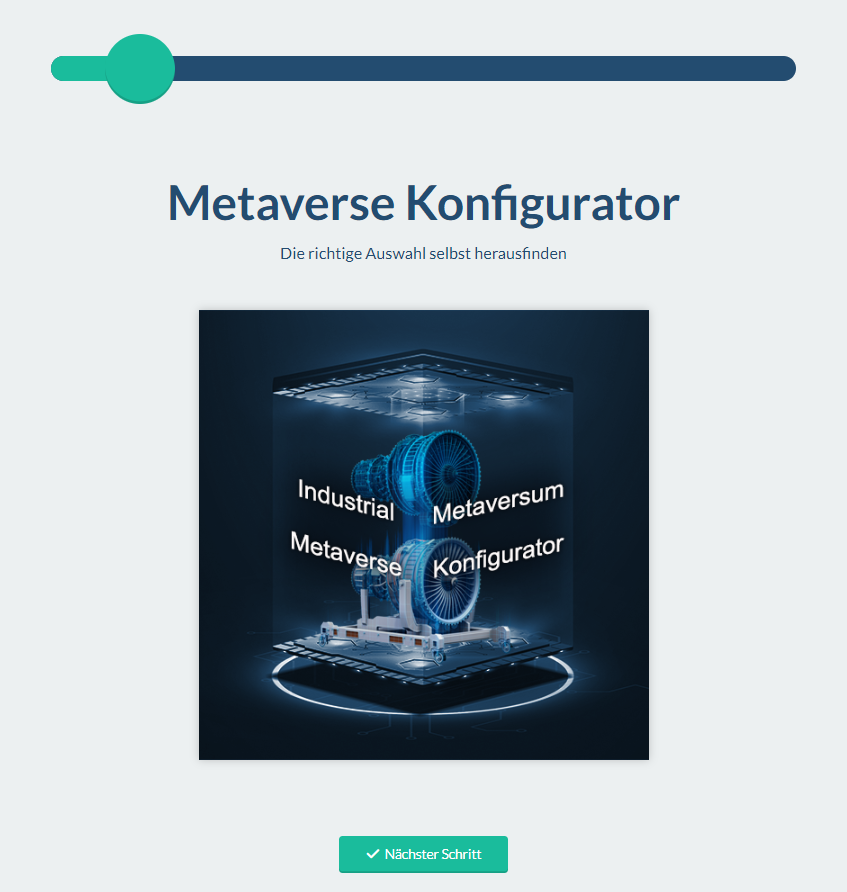

Xpert (B2B/Business/Industrial) Metaverse Configurator for all CAD / 3D data, usable on all end devices, one platform!
Related to this:
🇨🇳🌐 China's Fascination with the Metaverse: A National Vision
📌 The Metaverse as a technology trend
The hype surrounding the metaverse has increased worldwide in recent years, and China is no exception. The country sees this virtual reality not only as a technological innovation but also as an opportunity to boost the real economy. Therefore, the Chinese government is working on a national metaverse strategy designed to prepare both the public and the business community for this forward-looking concept.
🏢🗺️ National strategies and local initiatives
In China, enthusiasm for the metaverse remains undiminished, despite the fact that a national strategy is still in development. Several provinces and cities, from major metropolises like Beijing and Shanghai to lesser-known cities like Jinan and Zhengzhou, have already unveiled their own plans and guidelines. Amidst varying economic conditions, these local governments share similar goals: to attract at least 100 metaverse companies or develop at least 30 exemplary use cases for the metaverse.
👥💰 Internal rivalry and economic incentives
Competition among local government officials has only fueled the hype surrounding the metaverse in China. A region's or city's economic performance directly impacts the career prospects of its decision-makers. Therefore, financial incentives are often part of the strategy: for example, the city of Zhengzhou has offered up to 200 million yuan (approximately US$28.34 million) in seed capital to metaverse companies that relocate their headquarters to the city.
⚠️🌿 Critical voices and sustainability
However, there are also critical voices warning of the potential dangers of rushed development. Deng, an expert in the field, argues that a hasty publication of metaverse guidelines by too many regional governments could harm the industry. Instead, he advocates for initially promoting the technology in top-tier cities like Beijing, Shanghai, Guangzhou, Shenzhou, and Hangzhou. These could then serve as models for a gradual nationwide rollout.
🇨🇳🔍 The Chinese Touch: Metaverse with country-specific characteristics
In China, it is likely that the metaverse will have some unique, country-specific features. For example, the Chinese social credit system, an instrument for monitoring and controlling citizens, could be integrated into the virtual world. This would add an extra layer of complexity to the Chinese metaverse that does not exist in other countries.
📈🔗 The economic dimension
China's interest in the metaverse is not only technology-driven but also strongly economically motivated. The country sees it as a new wave of innovation that could help boost the national economy. By promoting metaverse companies and developing use cases, China could assume a leading role in this emerging industry, similar to its position in other technology sectors.
🛣️🔮 The path to the future
The metaverse is still in its early stages of development, and many questions remain unanswered. However, what is already clear is China's ambition to play a leading role in this field. Through a combination of national strategy, local initiatives, financial incentives, and adaptation to country-specific needs and circumstances, China is attempting to leverage the metaverse trend to its own advantage. The extent to which this will succeed remains to be seen, but one thing is certain: the metaverse in China will undergo an exciting development that is well worth watching.
📣 Similar topics
1️⃣ China's National Metaverse Strategy: A Look into the Future
2️⃣ Beijing vs. Shanghai: Local Metaverse Initiatives Compared
3️⃣ Economic Incentives: How China Promotes the Metaverse
4️⃣ Internal Rivalry: The Role of Local Governments in the Chinese Metaverse
5️⃣ Critical Perspectives: The Dangers of Rushed Metaverse Development in China
6️⃣ The Chinese Touch: Social Credit System in the Metaverse
7️⃣ Financial Incentives for Metaverse Enterprises in China
8️⃣ The Metaverse as an Economic Engine: China's Vision for the Future
9️⃣ The Role of World-Class Cities in the Chinese Metaverse
🔟 From Technology to Business: China's Multidimensional Metaverse Strategy
#️⃣ Hashtags: #ChinaMetaverse #NationalStrategy #EconomicIncentives #LocalInitiatives #CriticalPerspectives
🗒️ If you don't understand something or need advice, we also offer training courses and workshops

Metaverse & Extended Reality training, lecture or workshop for Augmented, Mixed and Virtual Reality – Xpert.Digital
In today's digital age, technology is evolving at a rapid pace. New terms and technologies are constantly emerging, requiring understanding and mastery. If you're struggling to keep up with topics like the metaverse, XR technologies, or immersive 3D, you're not alone.
More information here:
🌐 Metaverse and technology companies in China
The question of how the metaverse will develop is a major concern for many technology companies worldwide. However, a worrying pattern is emerging in China, highlighted by a number of developments. One of the most prominent players, Tencent, has undertaken a "personal restructuring" within its extended reality division, which focuses specifically on the metaverse. This change has been interpreted by some as a sign that the company might be scaling back its metaverse ambitions.
💼 Corporate strategies in a global context
This comes as international companies like Meta and Disney are also reconsidering their metaverse activities. Meta recently reported billions in losses, while Disney has put its plans on hold for the time being. In a similar turn of events, Baidu, the Chinese equivalent of Google, has withdrawn from the metaverse scene. A prominent project manager left the company, citing insufficient profitability and its strategic focus on artificial intelligence as the main reasons.
❓ Complexities and challenges
These facts raise some interesting questions. On the one hand, they suggest that building an immersive metaverse is enormously complex and requires significant investment in hardware, software, and talented researchers. So far, the metaverse experiences created by Tencent and Baidu have failed to meet user expectations. This could indicate that the technology or the concept itself is not yet mature.
🌐💻 Technological dependencies
Another obstacle for Chinese companies is their dependence on high-performance computer CPUs, primarily manufactured by US companies like Nvidia. Given the geopolitical tensions between the US and China, Chinese companies may find it difficult to access the necessary resources. This is all the more problematic because the US dominates the global supply of microchips, which are an essential component of the computing power required.
🌏 Asian Perspectives: Japan and South Korea
In contrast, Japan and South Korea are in a more favorable position, benefiting from more favorable business environments and regulations. Their respective approaches to the metaverse may also be better aligned with their national interests and capabilities. South Korea focuses more on the "virtual space" approach, similar to Mark Zuckerberg's vision of meta, while Japan emphasizes Web 3.0 and digital assets.
🇨🇳 China's unique advantages
But despite these challenges, China has some unique advantages. The country possesses a massive user base and considerable financial resources. If these are properly deployed, China could be able to build a robust, self-contained metaverse ecosystem. Furthermore, the Chinese government is known for its massive investments in future-oriented technologies and could therefore act as a key enabler for the development of the metaverse in China.
🔮 Future prospects and opportunities
The different approaches of the three Asian countries could ultimately contribute to a more diverse and richer metaverse landscape. There is hope that these different approaches could one day merge to enable a more comprehensive definition and realization of the metaverse. While the challenges are significant, the opportunities are also immense. What is certain is that the metaverse will remain a competitive and fascinating field, with both companies and countries vying for leadership. And in this complex, rapidly changing environment, the key to success may lie in remaining flexible and adaptable.
📣 Similar topics
- Tencent and the Metaverse Future: A Turning Point? 🇨🇳🌐
- Metaverse: Rise and Fall of Major Players 📈📉
- Geopolitical challenges in the metaverse 🌍💻
- The impact of CPU supply on China's metaverse ambitions 🇨🇳🔌
- Disney and Meta: Rethinking the Metaverse 🏰🌐
- Baidu withdraws: AI vs. Metaverse 🤖🇨🇳
- Japan and South Korea: Alternative Visions of the Metaverse 🇯🇵🇰🇷
- Metaverse: Is the technology truly mature? 🌐💡
- China's financial resources and the metaverse 🇨🇳💵
- Flexibility: The key to Metaverse success 🗝️🌐
#️⃣ Hashtags: #Metaverse #ChinaTech #Geopolitics #CorporateStrategy #AsiaInTheMetaverse
🗒️ New territory for newcomers: What you should know now about blockchain, tokens, NFTs, wallets, cryptocurrency and the metaverse
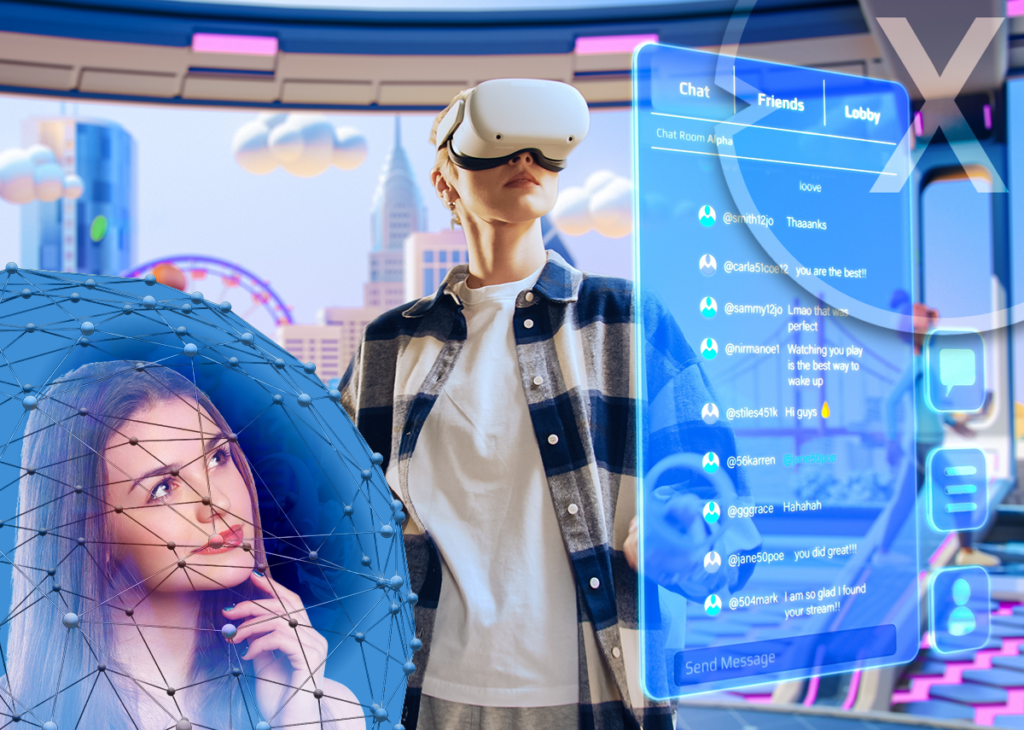
(Consumer) Metaverse: New territory for newcomers – What you should know now – Image: Xpert.Digital
In today's digital world, terms like blockchain, NFTs, wallets, cryptocurrencies, and the metaverse have become increasingly prevalent. For newcomers, these terms can initially seem confusing and complex. Here, we attempt to explain these concepts clearly and provide you with important and interesting details.
More information here:
🌐🇨🇳 The Complexity of the Relationship Between Local Governments and the Metaverse in China
The interaction between local governments and the development of the metaverse in China is a topic of far-reaching importance that requires careful analysis. This relationship reflects not only the country's technological ambitions but also the complex challenges that can arise from rapid development. This often results in a kind of internal rivalry between different provinces and cities, all striving to become number one in the burgeoning metaverse market.
🏙️🛠️ Internal Rivalry: The Role of Local Governments in the Chinese Metaverse
Local government plays a vital role in promoting technology and innovation in China. This is no different when it comes to the development of the metaverse, a virtual space created by the merging of physical reality and digital worlds. Various regions, such as Shenzhen, Beijing, and Shanghai, are trying to create incentives for companies operating in this field. These include tax breaks, special economic zones, and the provision of infrastructure.
📉💡 Critical Perspectives: The Dangers of a Rushed Metaverse Development in China
While China's ambitions in the metaverse are impressive, it is essential to consider the potential dangers of hasty development. Key concerns include data security, privacy, and social justice. Since the metaverse is a space where vast amounts of personal data can be stored, the potential for misuse is enormous. The issue of data privacy is further complicated by the authoritarian nature of the Chinese government.
📊🔒 Social and Ethical Concerns: Inequality and Escapism in the Metaverse
Furthermore, socioeconomic inequalities already existing in the physical world could be transferred to the metaverse. For example, people in poorer regions of the country might lack access to the benefits of the metaverse due to a lack of the necessary technology and infrastructure. This could further widen the gap between the "haves" and the "have-nots.".
There are also ethical concerns related to the escapism that the metaverse can offer. In a society where work pressure and social stress are often high, the alluring aspect of an "other world" could lead people to neglect the challenges and responsibilities of the real world.
🔍🌐 Balancing opportunities and risks in the Chinese metaverse
The role of local governments in the Chinese metaverse and the associated risks constitute a complex and multifaceted issue. On the one hand, regional competitive advantages drive technological innovation. On the other hand, internal rivalry between local governments can lead to fragmentation and inefficiency. At the same time, rapid development must not come at the expense of data security, privacy, and social justice.
Therefore, the sustainable development of China's metaverse requires careful planning and coordination that considers not only technological aspects but also social and ethical challenges. Only in this way can China capitalize on the enormous opportunities the metaverse offers without overlooking the potential dangers and negative societal impacts. This necessitates close cooperation between government agencies, technology companies, and civil society to ensure that metaverse development aligns with the values and interests of the Chinese people. Furthermore, China should also consider international standards and best practices to promote global metaverse integration while safeguarding national sovereignty.
📣 Similar topics 2023
- China's ambitions in the metaverse 🇨🇳🌐
- Regional competitive advantages and technology 🏙️💡
- Data security in the metaverse 🛡️📊
- Socioeconomic inequalities in the digital space 💰🌐
- Ethics and escapism in the metaverse 🌌🤖
- Internal rivalry: China's Metaverse market 🔀🇨🇳
- Local governments as drivers of innovation 🏛️🚀
- Metaverse development and data privacy 📈🔒
- China's ambitious metaverse goals 🎯📱
- Sustainable development in the Metaverse 🌱🌏
📣 Similar topics 2024
1️⃣ Regional Rivalries in the Chinese Tech Sector
2️⃣ Metaverse in China: Growth or Threat?
3️⃣ The Role of Local Government in China's Technology Boom
4️⃣ Data Security in the Metaverse: A Chinese Perspective
5️⃣ Tax Advantages and Economic Zones: Incentives for Metaverse Companies in China
6️⃣ Social Justice in the Digital Age: China's Metaverse
7️⃣ Fragmentation vs. Unity: Challenges in the Chinese Metaverse
8️⃣ Ethics in the Metaverse: China's Dilemma
9️⃣ Infrastructure for the Metaverse: Local Government as a Key Player
🔟 China's Metaverse Strategy: A Balancing Act Between Innovation and Risk
#️⃣ Hashtags: #Metaverse #China #Innovation #DataSecurity #Inequality #MetaverseInChina #LocalGovernment #TechnologyCompetition #DataSecurity #SocialJustice


We are here for you - Consulting - Planning - Implementation - Project Management
Xpert.Digital - Pioneer Business Development
Smart Glasses & AI - XR/AR/VR/MR industry expert
Consumer Metaverse or Metaverse in general
If you have any questions, require further information or advice, please feel free to contact me at any time.

Konrad Wolfenstein
I would be happy to serve as your personal advisor.
You can contact me by filling out the contact form below or simply call me on +49 7348 4088 965 .
I'm looking forward to our joint project.
Write to me



Xpert.Digital - Konrad Wolfenstein
Xpert.Digital is a hub for industry focusing on digitalization, mechanical engineering, logistics/intralogistics and photovoltaics.
With our 360° Business Development solution, we support renowned companies from new business to after-sales.
Market intelligence, smarketing, marketing automation, content development, PR, mail campaigns, personalized social media and lead nurturing are part of our digital tools.
You can find more information at: www.xpert.digital - www.xpert.solar - www.xpert.plus
Keep in touch