Charging stations and charging points for electric vehicles in Germany. Electric mobility is increasingly becoming an important component of the energy transition: independence from fossil fuels, greater climate protection, and sustainable resource use.

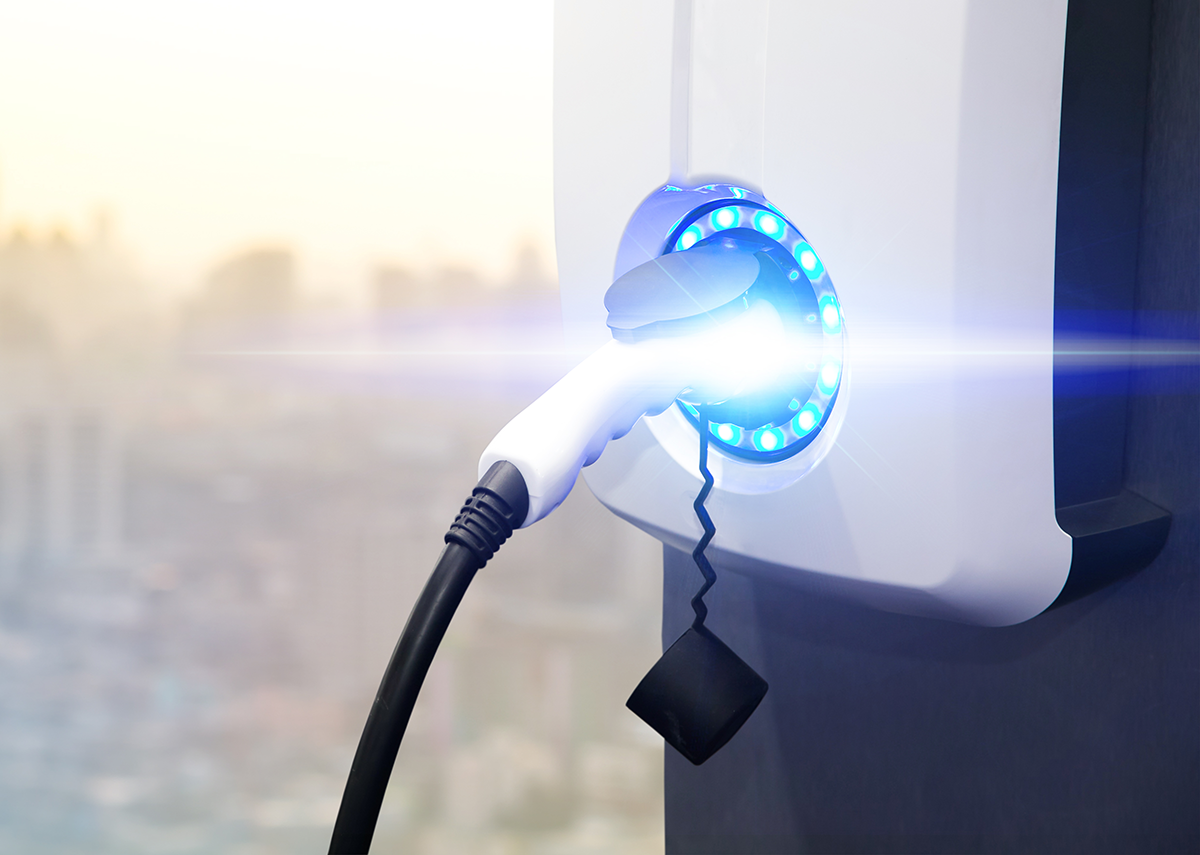
Charging infrastructure for electric vehicles – Image: BigPixel Photo|Shutterstock.com
In Germany, fossil fuels account for more than 50% of energy consumption for heating and cooling, whether for space heating or air conditioning. This includes hot water, process heat (e.g., for cooking, washing, firing, or welding), and refrigeration. Renewable energies are now playing an increasingly important role in this sector.
Besides heating and cooling, petroleum is a crucial component for transportation. Worldwide, transportation accounts for 40% of oil consumption. In the EU, this figure is even higher, exceeding 60%! The Federal Institute for Geosciences and Natural Resources predicts that petroleum reserves will be depleted in 40 years if current trends continue.
For this reason alone, a timely change of thinking is necessary, and continuing with the current approach to comparing the emissions of electric cars and combustion engines is counterproductive. Electric cars are emission-free. Combustion engines are more environmentally and climate-friendly in their manufacture and production. The current Achilles' heel of the electric car is battery production. Another weakness is currently the availability of charging points and stations.
However, while the environmental impact assessment of combustion engine vehicles is almost fully optimized, there is still considerable potential for improvement with electric vehicles. An environmental impact assessment considers the entire life cycle of a product, from raw material extraction and manufacturing through transport and use to disposal. With the expansion of renewable energies, the environmental impact assessment of electric cars will improve, further extending their lead in climate-friendly driving.
Energy storage systems are key to the energy transition, not just for mobility! Research in the field of energy storage is of great importance. It can therefore be expected that in the coming years, the more energy-efficient production and development of energy storage systems with ever-increasing lifespans will improve the environmental footprint of electric cars, because energy storage is needed in all areas of life.
Related to this:
- Solar carports with energy storage as solar charging stations for electric cars
- Energy storage
- Renewable energies: Now it all depends on energy storage systems
- Power-to-X energy storage
Furthermore, expanding the charging infrastructure at charging points or charging stations will increase the attractiveness and thus distribute and reduce the costs for research and development accordingly.
What types of charging stations are there?
Charging Point:
A charging point is defined as a facility where only one electric vehicle can be charged at a time. A charging point is considered public if it is located either in public road space or on private property, provided that the parking space belonging to the charging point can actually be accessed by an indefinite group of people or a group that can only be determined by general characteristics.
Charging
stations where multiple vehicles can charge simultaneously therefore consist of several charging points, all of which must have at least the required plug connections.
Wallbox:
A charging point for your own private area, e.g. in your own garage.
Numbers in pictures
- Distribution of charging stations for electric vehicles in Germany
- Number of publicly accessible charging points for electric vehicles in the German federal states
- Number of electric cars worldwide from 2012 to 2020
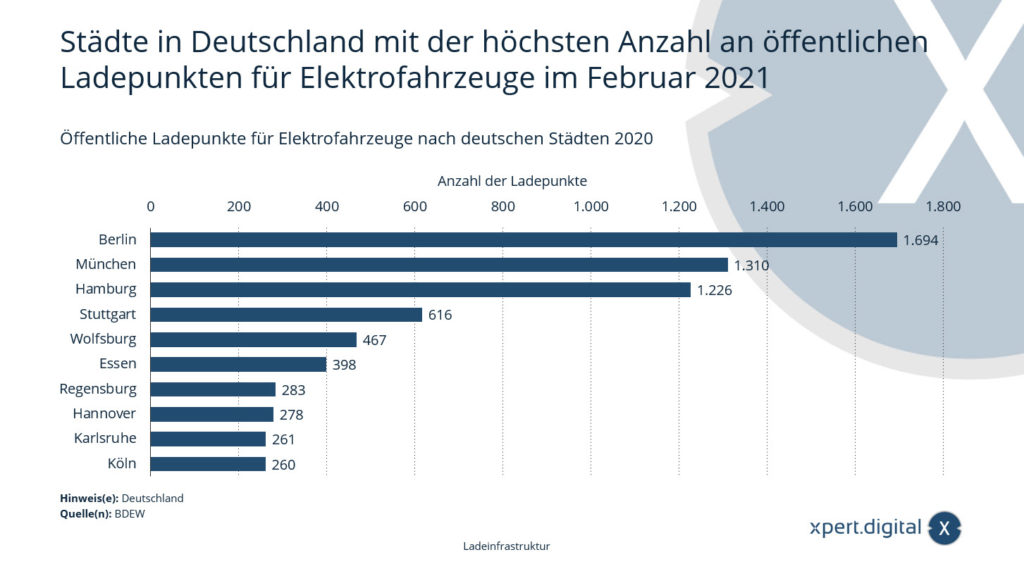
- Cities in Germany with the highest number of public charging points for electric vehicles


What are the most common defects of e-charging stations?
The most frequent defects of electric vehicle charging stations in Germany – customers are often left in the dark about costs – according to an ADAC test in 2018, the lack of information at the charging station about the costs after the charging process is the most frequent defect of e-charging stations in Germany. In some cases, the costs after the charging process are not available either at the charging station or in the app.
- 77% – No information about costs after charging at the charging stations
- 72% – Parking duration is virtually unlimited
- 70% – No information about the price per unit at the charging stations
- 66% – Charging station not/poorly visible at 25 meters
- 23% – Charging is not possible without special access authorization (ad-hoc charging)
- 19% – Information about costs after charging is neither available at the charging station nor in the app
Where are the charging points for electric car users in Germany?
Charging locations of electric car users in Germany in 2019
- 65.7% – At home
- 7.4% – Job
- 15.1% – Public charging station
- 12.7% – Don't know/no answer
How many charging station providers are there for the charging infrastructure?
Standard electric vehicle charging stations are the most common type of charging service offered by 37 providers (as of April 2019). Real-time charging stations, which allow users to check the availability of charging stations in real time via an app, come in second place (20 providers). This service aims to alleviate range anxiety among prospective electric vehicle drivers and ensure that a charging station is always nearby. Hamburg is the German state with the highest density of charging stations.
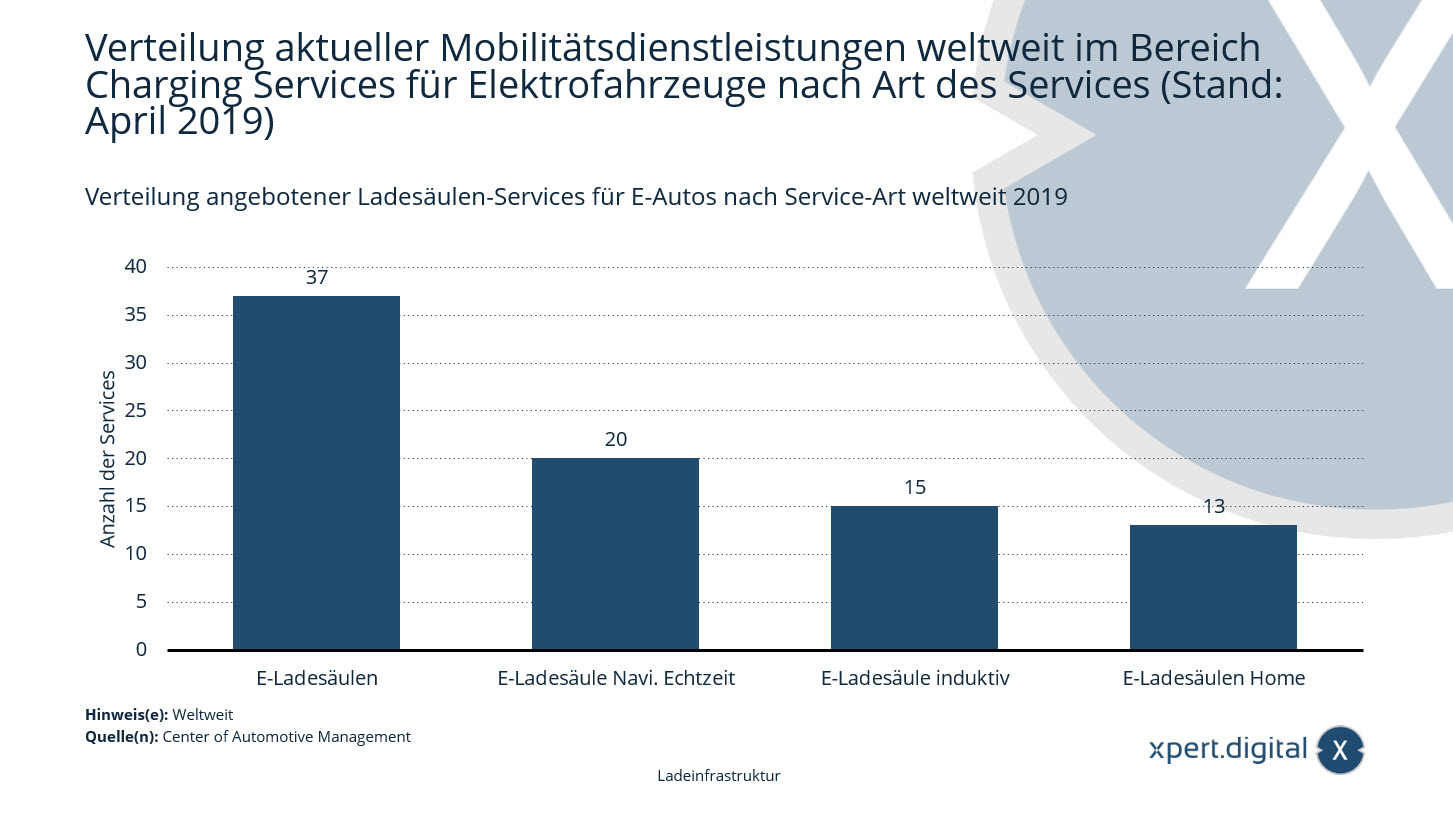
Global distribution of current mobility services in the area of charging services for electric vehicles, categorized by service type – Image: Xpert.Digital
Distribution of charging points for electric vehicles in Germany according to charging speed
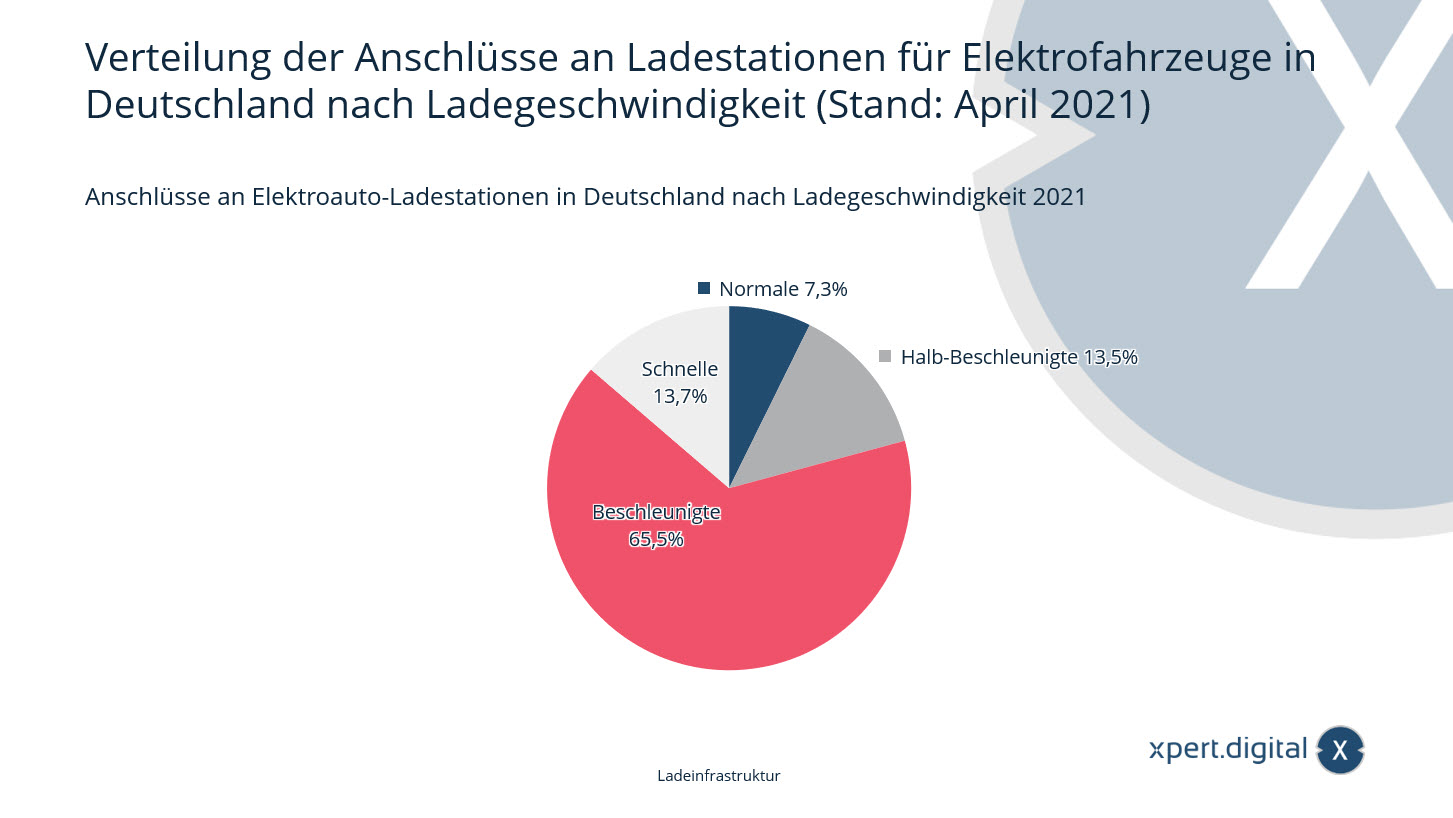
Distribution of charging points for electric vehicles in Germany according to charging speed – Image: Xpert.Digital
Electricity prices at charging stations for electric cars in Germany by operator
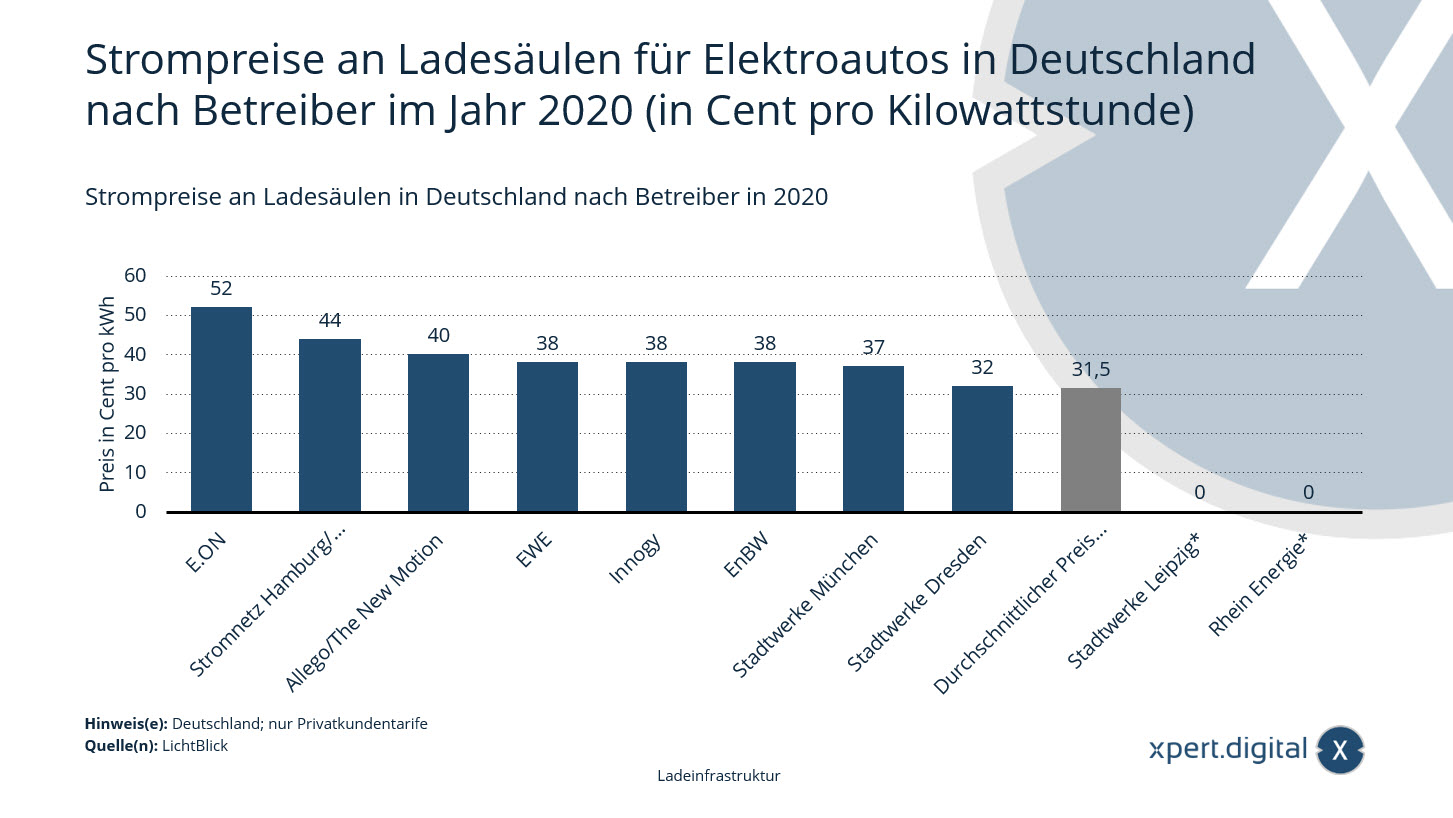
Electricity prices at charging stations for electric cars in Germany by operator – Image: Xpert.Digital
Would you say that there are enough public charging stations for electric cars along the road network?

Would you say there are enough public charging stations for electric cars along the road network? – Image: Xpert.Digital
Number of electric car models offered in Germany between 2013 and 2022
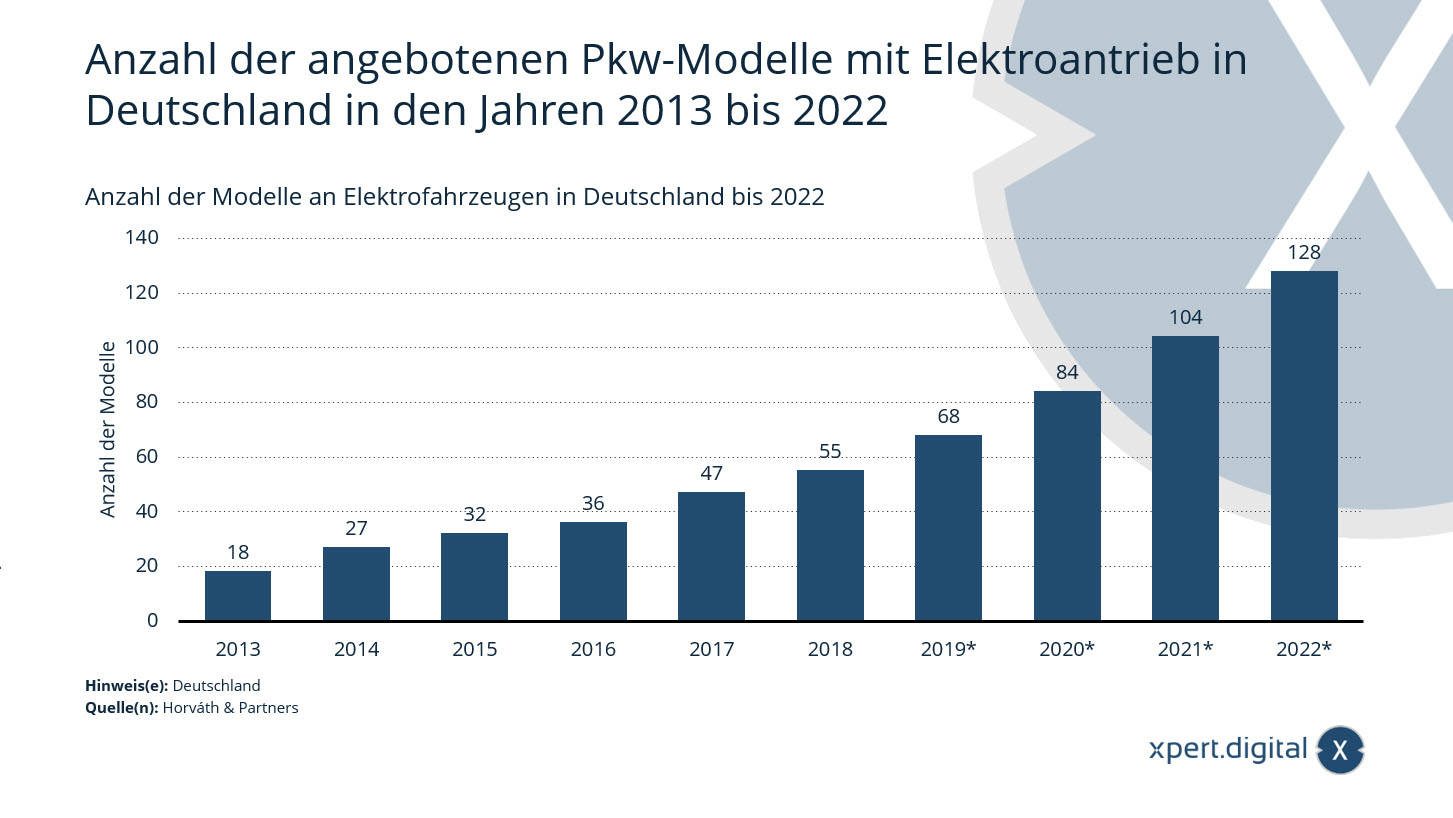
Number of electric car models offered in Germany between 2013 and 2022 – Image: Xpert.Digital
Wide selection by 2022: According to a forecast from 2019, the number of electric car models available in Germany is expected to reach 128 by 2022, more than doubling compared to 2018.
* The figures from 2019 to 2022 are forecasts.
Here are all the interesting figures on electromobility
Important note: The PDF is password protected. Please contact me. The PDF is, of course, free of charge
.
German version – To view the PDF, please click on the image below
.

Electric mobility – PDF Download
📣 For electromobility, further components are essential. These range from the charging station or charging points and solar modules to the necessary mounting substructures – solar carports for open parking spaces.
Related to this:
- Solar carports: Company parking lots – sensible use of sealed surfaces
- Carport and solar obligation in Germany for solar systems and parking spaces
- More green electricity from solar carports – The solar charging station of the future
- Solar carports with energy storage as solar charging stations for electric cars
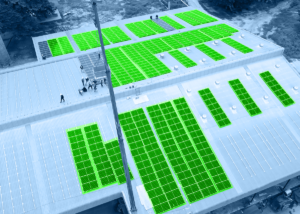
With Xpert.Solar, we offer consulting services for companies planning a photovoltaic system for a flat or pitched roof – even without roof penetration!


- Planning photovoltaics on warehouses, commercial buildings and industrial buildings
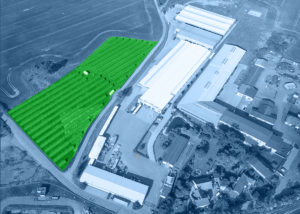
- Industrial plant: Planning a photovoltaic open-field system or open-area system
- Planning solar power systems with photovoltaic solutions for freight forwarding companies and contract logistics
- B2B Solar Systems and Photovoltaic Solutions & Consulting
Why Xpert.Solar?
Xpert.Solar is a project of Xpert.Digital. We have many years of experience in supporting and consulting on warehouse solutions and logistics optimization, which we combine under the Xpert.Plus umbrella in a large network. With Xpert.Solar, we combine the same expertise in the field of photovoltaics and renewable energies.
If you wish, you can also access our extensive market research and market intelligence data in PDF format. Learn more.

Konrad Wolfenstein
I would be happy to serve as your personal advisor.
You can contact me by filling out the contact form below or simply call me on +49 7348 4088 965 .
I'm looking forward to our joint project.
Write to me


Xpert.Digital – Konrad Wolfenstein
Xpert.Digital is a hub for industry focusing on digitalization, mechanical engineering, logistics/intralogistics and photovoltaics.
With our 360° Business Development solution, we support renowned companies from new business to after-sales.
Market intelligence, smarketing, marketing automation, content development, PR, mail campaigns, personalized social media and lead nurturing are part of our digital tools.
You can find more information at: www.xpert.digital – www.xpert.solar – www.xpert.plus
Keep in touch