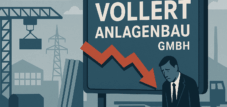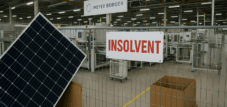
Business model insolvency: How companies can legally save millions by going bankrupt – Image: Xpert.Digital
The trick with company bankruptcy: How employees are systematically cheated out of their money
Corporate undertakers and zero plans: The dark side of Germany's major economic crisis
Record number of company bankruptcies: Why going to court can be lucrative for bosses
The number of corporate bankruptcies in Germany is reaching record highs. But anyone who attributes these alarming reports solely to a weakening economy and high energy costs is overlooking a crucial development: Insolvency is no longer just the bitter end of a failed business, but is increasingly being used as a ruthlessly calculated management tool. Whether it's about shifting personnel costs onto the state, circumventing expensive social plans, or smoothly transitioning to a debt-free new company – German insolvency law offers astonishing loopholes for resourceful entrepreneurs. Coupled with an aging generation of business owners for whom, paradoxically, filing for insolvency often seems more lucrative than a regular business closure, a highly volatile mix is created. A deeper look beyond the bare statistics reveals that the current wave of insolvencies is not only evidence of an economic crisis, but also raises fundamental moral and systemic questions. Who are the real winners and losers when failure suddenly becomes the strategy?
Business model insolvency: When failure becomes a strategy
Germany has been experiencing an unprecedented rise in corporate insolvencies for the past three years. In 2025, German district courts registered 24,064 corporate insolvency applications, an increase of 10.3 percent compared to the previous year, following increases of more than 20 percent in both 2023 and 2024. This puts the number of company bankruptcies at a level last seen in 2014, and according to an analysis by the Leibniz Institute for Economic Research Halle, it is even the highest it has been in approximately twenty years, based on its own methodologically different survey. Statistically, there were 69 bankruptcies per 10,000 companies in 2025, with the highest failure rates in the transportation, hospitality, and construction sectors. The total losses for creditors in 2025 were estimated at between €47.9 and €57 billion, with approximately 285,000 employees directly affected by the bankruptcies. However, behind these bare figures lies a more complex reality that goes far beyond simple economic weakness.
A sober look at the raw numbers
It is striking that industry representatives themselves are urging caution regarding the dramatization of the situation. The Association of Insolvency Administrators and Trustees of Germany points out that, despite the increase, the current figures are significantly below the peaks of the crisis years of 2004 and 2009, when more than 39,000 corporate insolvencies were recorded each year. Many current forecasts are based on unusually low comparative periods from the 2010s, which makes the current increase appear more dramatic than it actually is in historical terms. At the same time, the number of appointed insolvency administrators fell from 3,557 to 1,898 between 2016 and 2025, leading to a perceived overload of the remaining professionals and reinforcing the impression of an even more dramatic situation. Nevertheless, it remains undisputed that the economic downturn since 2022 has deeply eroded the foundations of many sectors, particularly manufacturing, retail, and property development, where the number of cases is now around a third higher than in 2019. Current analyses confirm that the increase will continue for the first half of 2026, intensified by geopolitical crises such as the Middle East conflict and rising energy and raw material prices.
The real systemic question behind the statistics
Particularly noteworthy is the increase in large-scale insolvencies: According to a survey by the transformation consultancy Falkensteg, around 471 companies with annual revenues exceeding ten million euros filed for insolvency in 2025, an increase of approximately 25 percent compared to the previous year. The number of large-scale insolvencies has almost tripled since the low point of the COVID-19 pandemic in 2021. Those affected are primarily metal goods manufacturers, automotive suppliers, electrical engineering companies, and interior design firms – classic industries suffering from high energy costs, weak demand, and international competitive pressure. This raises the question of whether insolvency has become not only an involuntary fate for certain entrepreneurs, but increasingly a calculated management tool. Indeed, experience shows that a properly conducted insolvency proceeding, especially self-administration under the German Act on the Further Development of Restructuring Law (ESUG), can offer significant financial and organizational advantages that a normally operating company could never utilize in this way.
How bankruptcy can actually save money
The key financial lever in insolvency proceedings lies in managing personnel costs. If a company becomes insolvent, the Federal Employment Agency steps in for the three months preceding the insolvency event with what is known as insolvency pay, covering the outstanding net wages and the associated social security contributions. For the employer or the insolvency administrator, this means a direct reduction of the insolvency estate's payroll costs by an entire quarter, while employees continue working and the business effectively remains cost-neutral for the entrepreneur. This instrument is financed through a levy borne exclusively by employers, currently amounting to 0.15 percent of the total payroll. The Federal Employment Agency has budgeted approximately €1.5 billion for insolvency pay in 2026, but €500 million was already paid out in the first quarter. A second important lever concerns the possibility of so-called asset transfer restructuring, in which the valuable part of the business is separated from the insolvent legal entity and transferred to a new, debt-free company, while the old debts, supplier liabilities, and often also unattractive employment relationships remain in the insolvent shell. In this way, a company can effectively be debt-free without the actual beneficial owners being personally liable or losing their business assets.
Why termination becomes cheaper in the proceedings
Besides reducing labor costs, insolvency proceedings also bring about labor law relaxations that can mean significant financial disadvantages for employees. In Germany, there is generally no legal entitlement to severance pay upon dismissal, neither within nor outside of insolvency proceedings, unless a collective bargaining agreement, a social plan, or a mutually agreed settlement provides for it. This is precisely where the system's real weakness to the detriment of employees becomes apparent: While the insolvency administrator is generally obligated to negotiate a social plan with the works council in the event of major operational changes, the total amount of this social plan is legally limited to 2.5 times the gross monthly earnings of the affected employees. Outside of insolvency, there is no such cap, meaning that social plans in healthy companies can regularly be considerably more generous. In addition, a more generous social plan concluded before insolvency proceedings can be revoked by the insolvency administrator or the works council, provided it was agreed upon no more than three months before the insolvency application. This reduces the employees' originally promised entitlements to simple insolvency claims, which are usually only partially satisfied. For employers already planning extensive staff reductions, insolvency proceedings under self-administration can therefore be strategically more attractive than a regular wave of redundancies outside of formal proceedings, because severance payments can be legally capped and a portion of the personnel costs is shifted to the insured community via insolvency benefits.
The role of self-administration and recurring procedures
One instrument that is particularly controversial in this context is insolvency under self-administration, which was significantly strengthened by the Act to Further Facilitate the Restructuring of Companies in 2012. In this procedure, the existing management largely remains in control, while a trustee is appointed to oversee the interests of the creditors, but has considerably fewer intervention powers than a regular insolvency administrator. Legal studies on so-called transferring restructuring within self-administration proceedings show that this instrument opens up leeway that can be used in peripheral areas to instrumentalize the insolvency plan procedure, for example, to resolve shareholder disputes or to selectively restructure the capital structure to the detriment of specific creditor groups. In practice, there is also the phenomenon of repeated insolvencies of the same entrepreneur under changing corporate shells, in which companies are systematically run to the brink of insolvency, then led into bankruptcy, and the valuable assets are transferred to a new company, while creditors, tax authorities, and social security institutions are left with unpaid claims. In particularly serious cases, the figure of the so-called corporate undertaker appears, a service provider who specializes specifically in the preparatory liquidation of companies on the verge of insolvency and sometimes commits insolvency delay, bankruptcy and withholding of contributions, for which the Federal Court of Justice recently held de facto managing directors and backers fully criminally liable.
Insolvency instead of orderly business closure
Alongside the debate surrounding strategic insolvencies, a second, structurally entirely different phenomenon is emerging in Germany: the simple closure of businesses due to age. According to the KfW development bank, the average age of small and medium-sized enterprises (SMEs) in Germany has risen to 54, with 39 percent of owners already 60 or older. KfW reports that around 231,000 SMEs are threatened with closure in the current period alone because no suitable successor can be found, and another 310,000 entrepreneurs are also considering closing down in the medium term, within the next three to five years. A recent special analysis of the KfW SME Panel even confirms this trend with a historic turning point: For the first time, among entrepreneurs planning to retire by the end of 2029, there is a slight surplus of around 569,000 planned business closures compared to 545,000 businesses still actively seeking a successor. The main reason given by 92 percent of affected companies for closing is the lack of a suitable successor, followed by a shortage of skilled workers, high energy and material costs, and growing uncertainty about the future. It is also noteworthy that bureaucracy as a reason for closure has increased from 30 to 42 percent within a year, indicating an increasingly oppressive regulatory burden on German SMEs.
Why insolvency seems more attractive to some entrepreneurs
At this intersection between age-related business closure and strategic use of insolvency, a particularly delicate gray area emerges. An entrepreneur who winds up their business through regular insolvency proceedings must settle outstanding supplier invoices, tax debts, and any contractually or collectively agreed severance payments from their own assets, which are often personally liable, provided the company structure allows for this or personal guarantees exist. If the same entrepreneur instead files for insolvency in a timely manner, liability is limited to the insolvency estate, a social plan can be capped at the statutory maximum of 2.5 gross monthly salaries, and a significant portion of the expiring personnel costs is transferred to the Federal Employment Agency via insolvency benefits. From a purely business perspective, an orderly insolvency can therefore actually be more advantageous than regular liquidation, especially if no continuation of the business is planned anyway and the entrepreneur wishes to retire from the market due to age. This creates a double dilemma for the state: On the one hand, it loses revenue from corporate and income taxes with every insolvency and has to bear higher social expenses in the event of rising unemployment; on the other hand, the insolvency benefit, which is in principle intended to protect employees, effectively becomes a disguised subsidy mechanism for entrepreneurs who want to avoid a more costly regular liquidation.
What often remains hidden from the public
Less well known is that the insolvency code offers further, rarely discussed options for structuring a company's affairs. These include the so-called zero-plan option, in which shareholders can offer creditors a zero percent quota within the framework of insolvency plan proceedings and still achieve debt relief for the company if no more economically viable alternative to liquidation exists. Equally little known is that managing directors are permitted to continue making payments during the current insolvency application period of up to six weeks. These payments can subsequently be considered restructuring contributions, allowing strategically favored creditors, such as close suppliers or affiliated companies, to be paid preferentially shortly before the proceedings are opened. Furthermore, there is the widespread practice of outsourcing valuable brands, patents, or customer bases to separate, insolvency-free companies even before insolvency proceedings begin, so that in the actual insolvency proceedings, only a hollowed-out shell containing the liabilities remains. The low number of actually opened proceedings is also rarely addressed: On average, only around 60 percent of all insolvency applications are actually opened, because many proceedings fail due to insufficient funds to cover costs, which means that a significant portion of the economic damage is not dealt with in an orderly, creditor-protecting procedure, but effectively goes unpunished.
Need for reform between creditor protection and entrepreneurial freedom
The analysis shows that the rising insolvency figures in Germany cannot be explained by a single cause, but are the result of a combination of structural economic weakness, the demographically driven retirement of an aging generation of entrepreneurs, and specific, deliberately exploited legal loopholes. While the vast majority of insolvencies are indeed due to genuine economic hardship, management errors, or intractable succession problems, a smaller but economically significant group of actors exists on the periphery of the system for whom insolvency law has become a calculable tool for cost optimization. In light of the record insolvencies, institutions such as the Institute for Conservative Economic Policy are calling for urgent reforms to energy costs, bureaucracy, and the tax burden in order to reduce the number of genuine, involuntary bankruptcies. At the same time, a closer examination is needed on the labor law side to determine whether the current capping of social plans in insolvency proceedings and the financing logic of insolvency benefits unintentionally create incentives that are detrimental to the community as a whole and to the affected employees. A differentiated analysis that distinguishes between honest entrepreneurial failure, demographically induced withdrawal and strategic instrumentalization of insolvency law would be the necessary basis for an appropriate economic policy response to the current wave of bankruptcies.