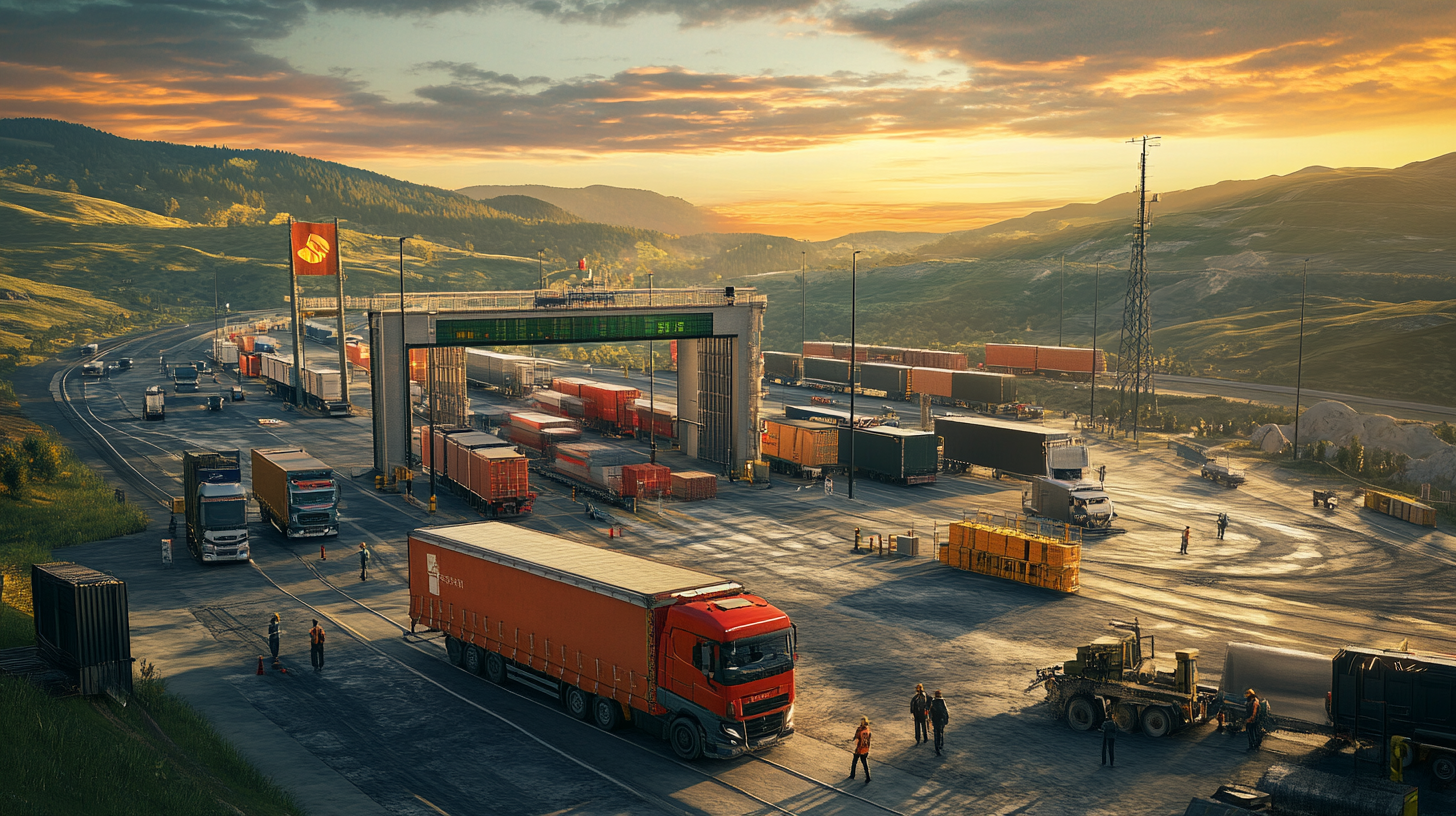
Impact on the European economy and logistics: Bulgaria and Romania's accession to the Schengen Area on January 1, 2025 – Creative image: Xpert.Digital
Schengen 2025: How Bulgaria and Romania are reconnecting Europe's economy
New opportunities for Europe: Schengen accession is driving Bulgaria's and Romania's rise
The expansion of the Schengen Area to include Bulgaria and Romania on January 1, 2025, marks a significant step in the history of European integration. "The accession of these two Southeast European countries is more than a symbolic act," said a spokesperson for the European Commission. Despite their differing starting points, Bulgaria's and Romania's economies have made considerable progress in recent years. Both countries are now not only important trading partners but also increasingly attractive locations for investment. Schengen accession will give this development path additional momentum and simultaneously bring the logistics and intralogistics sector into sharp focus.
Since its inception, the Schengen Area has ensured a significant reduction in border controls between participating states. It now encompasses almost all EU member states as well as some associated countries. The free movement of people, goods, and services is guaranteed through harmonized regulations and coordinated border control measures at the external borders. Although the EU's single market concept already envisioned a smooth flow of goods and capital even without Schengen, the abolition of internal border controls has significantly deepened this development and led to further integration of European economies.
With the accession of Bulgaria and Romania, this idea is further strengthened. Numerous experts consider this "an important milestone for deepening European integration." This text examines the potential economic and logistical implications, addresses opportunities and risks, and explains the challenges that the transport and logistics sector in particular will have to overcome in the near future.
1. Deeper European integration and the role of the Schengen Area
The fundamental principles of the European Union are based on the concept of a common internal market in which people, goods, services, and capital can circulate without unnecessary restrictions. Schengen complements this internal market by abolishing border controls at internal borders and putting freedom of movement into practice. At the same time, this system requires the expansion and coordination of controls at the common external borders to guarantee security and order.
Since the initial signing of the Schengen Agreement, this border regime has continuously evolved. The integration of Bulgaria and Romania has been a stated goal since their EU accession, but there have been repeated debates about the right time. "The accession of these two countries is a logical consequence, as they already meet essential criteria and have made significant progress in many areas, particularly border security," emphasizes an MEP who participated in the negotiations.
Observers believe that official accession to the Schengen Area will send a clear political signal, underscoring the unity of Europe even in turbulent times. Crises such as the high number of asylum seekers from 2015 onwards, the terrorist threat, and most recently the COVID-19 pandemic have demonstrated how fragile the Schengen Area structure can be when the reintroduction of border controls becomes a possibility. Nevertheless, there is broad consensus that enlargement, coupled with precise security measures, will contribute to long-term stability.
2. Economic opportunities: Trade, investment and growth
From an economic perspective, the Schengen expansion promises significant opportunities. Firstly, border barriers will be reduced, which should noticeably accelerate the cross-border flow of goods. The export and import sectors will particularly benefit from this. With the elimination of time-consuming border controls, delivery times will be shorter, logistics chains can be planned more efficiently, and just-in-time principles will gain further importance. For companies, this means increased planning certainty, which can simultaneously reduce warehousing and administrative costs.
“Short delivery times are a crucial competitive factor in a globalized market,” explains a leading logistics expert. When border crossings within Europe function more smoothly and, for example, there are fewer traffic jams at the borders, this increases the attractiveness of the entire economic area. Trade volumes will generally rise as soon as obstacles at internal borders are reduced. This applies to both the goods and services sectors, as service providers can operate more easily across borders without having to fear bureaucratic hurdles.
Furthermore, many analysts predict that foreign direct investment (FDI) in Bulgaria and Romania will increase as a result of their accession to the Schengen Area. "Locations with good transport connections and part of an open economic area are a real draw for companies," is a common refrain in business circles. For Bulgaria and Romania, the potential growth in FDI means not only increased capital inflows but also the transfer of know-how and technology. This process can contribute to a sustainable increase in gross domestic product and make the entire region more competitive.
Another facet is the tourism sector. Thanks to freedom of movement within the Schengen Area, travelers from other EU countries and associated states will be able to move around Bulgaria and Romania even more easily in the future, without having to go through border controls. This will have direct effects on the hotel, restaurant, and leisure industries in the region. "Open borders are a successful model for European tourism," is a common refrain from industry sources. Accordingly, both Bulgaria and Romania have invested heavily in expanding their tourism infrastructure in recent years – both on the Black Sea coast and in the major cities that offer cultural highlights.
3. Impact on logistics: Accelerated transport routes and new corridors
The changes are particularly evident in the logistics sector. Since the 2000s, Bulgaria and Romania have established themselves as strategically important transport and transshipment hubs within Europe. Bulgaria forms a vital link between Southern Europe, Turkey, and the Middle East, while Romania, thanks to its geographical location, shapes both the Danube region and the Black Sea region. Shared transport corridors, for example along the Danube, contribute significantly to closer integration within Europe.
With the elimination of border controls at internal borders, the time required for transporting goods is significantly reduced. "Every hour that trucks save at the borders translates directly into lower logistics costs," emphasizes a representative of a large freight forwarding company. Indeed, complaints about waiting times of hours or even days at various border crossings have become increasingly common in the past. If these waiting times are now significantly shortened, delivery frequency can ideally be increased. This is particularly relevant for just-in-time concepts, which require a seamless and timely supply of goods to production and distribution processes.
Another effect lies in improved planning certainty. When companies no longer have to fear that unforeseen border congestion will disrupt their supply chains, they can operate with a longer-term perspective and fewer time buffers. This, in turn, reduces the burden on warehousing. Many companies therefore assume they can reduce their inventory and thus save costs. At the same time, warehouse space is utilized more efficiently, which increases the need for complex distribution and logistics concepts.
4. Intralogistics and optimization of material flows
Intralogistics, meaning the processes that take place within a company or business unit, is gaining even more importance in this context. Intralogistics deals with the organization, control, and optimization of internal material and goods flows. When external supply processes become more stable and faster, new opportunities arise for manufacturing companies to adapt their internal logistics. "Companies can increasingly rely on lean manufacturing concepts thanks to reliable and faster deliveries," explains a supply chain management specialist.
Lean manufacturing means that materials are not produced and stored in advance, but only arrive when they are actually needed. This saves costs, as less storage space is required and capital is not unnecessarily tied up in intermediate products. Therefore, many companies view Bulgaria and Romania's accession to the Schengen Area as an opportunity to expand their just-in-time principles and operate in close collaboration with their suppliers.
However, this development also brings challenges: "Companies that produce more efficiently must be able to rely on the highest possible reliability in their supply network," says a logistics expert who works for an international mechanical engineering company. Even minor disruptions at a transport hub or unforeseen delays at external borders can lead to significant problems throughout production. Therefore, for many companies, ensuring a stable and well-developed logistics environment is a fundamental prerequisite for fully utilizing the potential of the Schengen expansion.
5. Infrastructure in Bulgaria and Romania: Challenges and development plans
Although a number of infrastructure projects have been implemented in Bulgaria and Romania in recent years, deficiencies remain that negatively impact the efficiency of transport routes. Many transit routes, particularly on the road network, are not yet fully equipped to handle the increased traffic volume. Greater capacity is also needed in rail transport to fully exploit the potential of cross-border freight transport.
One hotspot is the border crossing between Giurgiu (Romania) and Ruse (Bulgaria) over the Danube, which is considered a bottleneck and has frequently been plagued by traffic jams. However, with the impending accession to the Schengen Area, there is an expectation that significant investments will flow into modernizing these bottlenecks. "We fully expect that the member states will commit even more strongly to expanding the transit routes once Bulgaria and Romania are part of the Schengen Area," according to one transport planner.
Furthermore, experts point out that Romania is an important gateway to the Black Sea. Major seaports, such as Constanța, already play a significant role in handling goods arriving in Europe from other parts of the world. With improved connections to the rest of the Schengen Area, these ports could assume an even larger share of European trade. This would open up additional growth opportunities for related sectors such as warehousing, container logistics, and maintenance services.
In Bulgaria, ports like Varna and Burgas are also gaining importance, especially as they can shorten trade routes to Turkey, the Middle East, and Central Asia. Clear trends are already emerging indicating that Bulgarian and Romanian logistics companies are investing in modern technologies and aiming to develop into hub locations. "Proximity to the Black Sea and improved connections to Europe are two key factors that will lead to a strategic repositioning of both countries in the long term," emphasizes a port manager.
6. Political and security policy aspects
Despite all the economic advantages, security issues remain a central concern regarding Schengen accession. The EU requires Schengen states to adequately protect their external borders to effectively combat unwanted migration and organized crime. In the past, Bulgaria in particular has faced criticism because smuggling and illegal entry sometimes reached significant proportions. At the same time, both countries have demonstrated their willingness to secure their external borders in accordance with EU standards.
“Especially in times of geopolitical tension, it is important to effectively control the external borders of the Schengen Area without restricting freedom of movement within,” argues a representative of the Bulgarian Ministry of the Interior. In recent years, with EU support, extensive modernization measures have been implemented at border crossings, border guards have been trained, and technical systems have been introduced to conduct biometric checks, for example. Due to its geographical proximity to the conflict in Ukraine and the Black Sea, Romania has assumed a central role, and cooperation with its neighboring states has been intensified.
At this point, it becomes clear that Schengen is not only an economic but also a political union. For only if the citizens of the member states feel that external security is guaranteed will support for open internal borders be maintained. "We will be judged by how effectively we prevent illegal activities while simultaneously ensuring the flow of legal goods and people," said an EU politician in Brussels. For Bulgaria and Romania, therefore, joining the Schengen Area is linked to significant security obligations.
7. Challenges for companies and logistics service providers
Companies operating in both countries or delivering to the region need to sharpen their focus on transport and logistics processes. The elimination of border controls does not automatically guarantee smooth operations, but rather creates the conditions for accelerated networking. Logistics service providers face the challenge of reconfiguring their route networks to enable them to operate quickly and efficiently within the Schengen Area in the future.
“We are already working on developing new transport corridors that will better integrate Bulgarian and Romanian production facilities into our European network,” explains a managing director of a European freight forwarding association. More than ever, advanced IT systems, tracking systems, and digitized customs procedures are playing a crucial role. Even though joining the Schengen Area has eliminated traditional customs controls at internal borders, certain documentation requirements and security checks remain, particularly when goods are imported from outside the EU or from non-Schengen countries.
In addition to optimizing transport routes, it will be important for companies to adapt their warehousing and distribution systems to the expanded Schengen Area. As a result, some regional distribution centers may relocate further inland, while others near the border may be closed or consolidated. This often involves determining the best transport connections and how to best optimize proximity to production sites and sales markets.
8. Potential for employment and labor movements
Besides the economic and logistical aspects, joining the Schengen Area also impacts the labor market. Many people already commute between neighboring countries to work in another. Bulgaria and Romania will be even more integrated into the European labor market in the future. Freedom of movement allows skilled workers to settle in the new Schengen countries on short notice or to carry out temporary projects there. This, in turn, benefits companies desperately seeking qualified personnel.
"Especially in the logistics, construction, and IT sectors, the influx of skilled workers from other EU countries could become a real competitive advantage for Bulgaria and Romania," according to HR experts. However, increased labor mobility could also put more pressure on domestic labor markets. Conversely, it opens up the possibility for people in Bulgaria and Romania to work more easily in other EU countries without having to go through lengthy visa procedures. This brain drain effect is viewed critically in some quarters, as highly qualified workers could be withdrawn from the domestic market.
Furthermore, the cultural influences that permeate daily work life should not be underestimated. Increased collaboration between employees from different nations fosters an international environment in many sectors, which promotes creativity and innovation. At the same time, this greater mixing of cultures demands intercultural competence and openness. Many corporations have already introduced specific training programs to prepare employees for working in multicultural teams.
9. Sustainability and ecological perspectives
Another point that is increasingly coming into focus is the question of sustainability. Bulgaria and Romania's accession to the Schengen Area could lead to a shift in supply flows within Europe. The shorter delivery times and more efficient routes made possible by reduced border waiting times can contribute to a reduction in environmental impact if transport takes place without unnecessary detours or idle time.
At the same time, however, there is a risk that increased freight traffic by road will lead to higher CO₂ emissions if environmentally friendly modes of transport such as rail or inland waterway shipping are not used simultaneously. "It will be a major challenge to shift the growing transport demand in Bulgaria and Romania to sustainable modes of transport," warns a sustainability expert. Potential expansion projects for rail infrastructure play a crucial role here, as do funding programs for combined transport (e.g., truck-trailer combinations that cover part of the journey by rail).
In this context, Danube shipping and Black Sea ports in particular offer opportunities to transport some goods via waterways rather than by road. This could reduce emissions and simultaneously relieve pressure on the road network. If intelligent traffic management systems are introduced and modern logistics concepts are implemented in parallel, the Schengen enlargement has the potential to pave the way for a more sustainable transport landscape in Southeast Europe.
10. Lessons from past crises: Stability of the Schengen Area
The Schengen Area has undergone several stress tests in recent years. The temporary reintroduction of internal border controls in some countries, for example in response to terrorist attacks or pandemics, has raised doubts about the stability of the system. Nevertheless, there is broad agreement that Schengen is a cornerstone of European integration and offers enormous advantages in times of peace. "Open borders are not a given; they must be actively maintained and defended," is a common refrain in speeches by European politicians.
The accession of Bulgaria and Romania, in particular, could signal confidence in the future of the Schengen Area. By opting for greater openness and the inclusion of additional countries, it also underscores a willingness to abandon Schengen at the first sign of a crisis. Rather, it emphasizes the need for close cooperation among member states to jointly address external challenges.
For Bulgaria and Romania, the challenge also lies in continuously proving themselves as reliable partners. "If these two countries demonstrate their ability to participate at the European level and meet security policy requirements, it will strengthen the entire bloc," adds another observer. Thus, joining the Schengen Area is closely linked to the commitment to putting European values such as solidarity, cooperation, and responsibility into practice.
11. Future perspectives and possible expansions
With Bulgaria and Romania joining the Schengen Area, many politically engaged individuals are wondering whether the Schengen Area will expand further in the near or distant future. Croatia is already part of the Schengen Area, while other countries like Cyprus and Ireland either face special regulations or already have exemptions. EU enlargement in general repeatedly sparks discussions about the Schengen membership of new candidate countries, particularly those from the Western Balkans.
“An expanded Schengen Area would be a great opportunity to further strengthen the European single market and solidify the principle of freedom of movement,” according to one political scientist. However, there are also concerns that the Schengen Area could be expanded too quickly without all candidate countries meeting the technical and legal requirements. The debate surrounding border protection, combating crime, and managing migration is likely to continue as long as Europe faces issues of security and social cohesion.
In any case, the focus for the near future is on the accession of Bulgaria and Romania on January 1, 2025. Experts expect that this date will not only bring economic changes but also have symbolic significance: the enlargement process will be visibly advanced, despite some controversies and delays in the past.
12. Strengthening the European single market
The accession of Bulgaria and Romania to the Schengen Area on January 1, 2025, opens up numerous opportunities and takes European integration to a new level. Both countries are important economic players in Southeast Europe and have already gained economic significance in recent years. The abolition of border controls at internal borders will further accelerate the movement of goods and people within Europe, which should result primarily in lower transport costs, optimized supply chains, and better opportunities for just-in-time delivery.
“The accession of both countries to the Schengen Area is a sign that Europe is coming together to strengthen the single market and defend common values,” said a representative of the European Commission. At the same time, enlargement presents challenges: The infrastructure in Bulgaria and Romania requires some modernization, and high expectations are placed on the capabilities of both states regarding border security and the fight against crime.
Logistics companies that react early and adapt their transport networks are likely to be among the winners. Businesses that realign their production and warehousing structures to shorter delivery routes and more reliable transit times will also benefit. Not only large corporations, but also medium-sized and small businesses can profit in the long term from simplified access to Southeast European markets. The advantages range from reduced warehousing costs and smooth shipping to the creation of new jobs in the logistics and transport sector.
An open yet secure Schengen Area is becoming increasingly important in light of global developments to strengthen Europe's position as an economic hub. Political decision-makers are aware of their responsibility, recognizing that Schengen is not only an economic achievement but also a symbol of freedom within the EU.
Undoubtedly, the integration of the two countries will remain a process that continues after January 1, 2025. Measures to modernize roads, bridges, railways, and ports will not be completed overnight. However, the prospect of increased trade, more investment, greater labor mobility, and a stronger single market motivates all sides to see Schengen accession as an opportunity. Moreover, it is an invitation to the entire EU to deepen cooperation and find common answers to the challenges of the 21st century.
The experiences of recent years, particularly during times of global crisis, have shown that cohesion within the European Union is repeatedly put to the test. But precisely for this reason, institutions and member states place great emphasis on the Schengen idea, which shapes the daily lives of millions of Europeans and holds the single market together. With Bulgaria and Romania as new members, an area of open borders is growing, promoting integration in Central and Southeastern Europe and taking economic exchange to a new level.
“Schengen is a cornerstone of Europe, a place that breathes freedom,” is a frequently quoted statement by a former Commission President. The accession of Bulgaria and Romania to this circle underscores that freedom of movement continues and is even being expanded, while at the same time the commitment to reliable external border security remains. For businesses, consumers, and policymakers alike, this signifies a new era of opportunities, but also a clear mandate to create the necessary framework for their realization.
This development will significantly shape the direction of the European logistics and transport sector in the coming years. Innovation is expected to increase in many strategic areas – from automated warehouses and improved IT systems in supply chains to cross-border infrastructure projects. This will allow Bulgaria and Romania, in particular, to develop into even stronger hubs in European trade.
The accession of both countries to the Schengen Area represents a win-win situation: Southeast Europe will be more closely integrated with the rest of the EU, economic output will increase, and the attractiveness of the single market will grow. At the same time, companies already active in the region or those wishing to expand their operations there will benefit from improved conditions. The local population will also gain new opportunities in the job market. Ultimately, Schengen enlargement is one piece of a larger European mosaic, in which the vision of open borders and a thriving single market is intended to lead to greater prosperity and exchange.
Expert partner in warehouse planning and construction


Xpert.Plus Warehouse Optimization - High-bay warehouses and pallet warehouses: Consulting and planning
We are here for you - Consulting - Planning - Implementation - Project Management
☑️ SME support in strategy, consulting, planning and implementation
☑️ Creation or realignment of the digital strategy and digitization
☑️ Expansion and optimization of international sales processes
☑️ Global & Digital B2B trading platforms
☑️ Pioneer Business Development

Konrad Wolfenstein
I would be happy to serve as your personal advisor.
You can contact me by filling out the contact form below or simply call me on +49 7348 4088 965 .
I'm looking forward to our joint project.
Write to me


Xpert.Digital - Konrad Wolfenstein
Xpert.Digital is a hub for industry focusing on digitalization, mechanical engineering, logistics/intralogistics and photovoltaics.
With our 360° Business Development solution, we support renowned companies from new business to after-sales.
Market intelligence, smarketing, marketing automation, content development, PR, mail campaigns, personalized social media and lead nurturing are part of our digital tools.
You can find more information at: www.xpert.digital - www.xpert.solar - www.xpert.plus
Keep in touch