


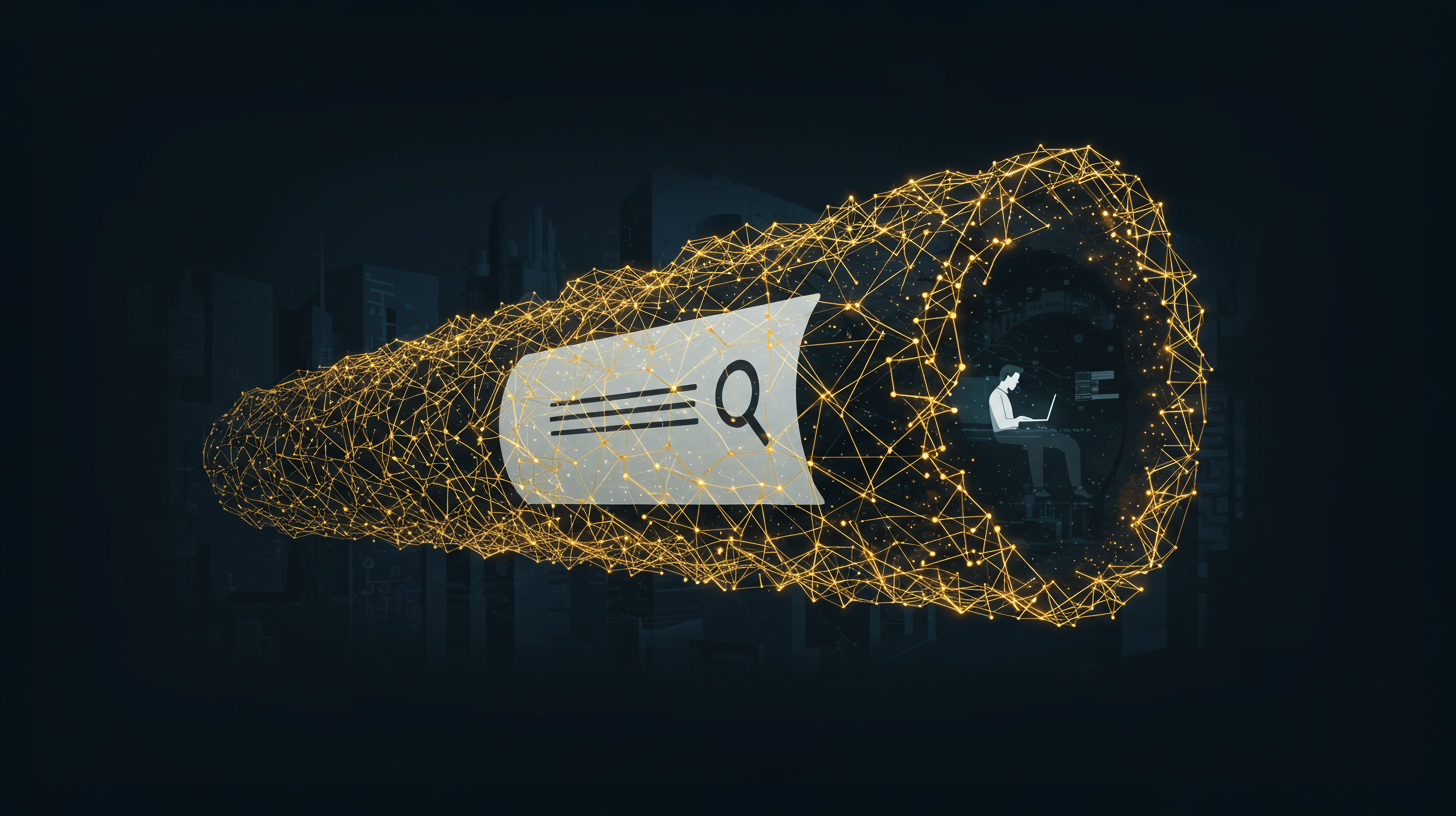
LLMO / GEO | What is the state of traditional search engine optimization for brand visibility in the age of AI? – Image: Xpert.Digital
Only 37.4% of Google searches in the US now result in clicks on external websites
The future of search results: Why companies need to rethink their approach now
The era of classic SEO, in which companies optimized solely for Google, is drawing to a close. For decades, traditional SEO relied on keyword placement, backlink building, and technical website optimization to rank in search results. However, with the advent of Large Language Models (LLMs) like ChatGPT, Perplexity, and Google's AI Overviews, digital marketing is undergoing a fundamental transformation.
The numbers speak for themselves: Only 37.4% of Google searches in the US now result in clicks on external websites. At the same time, 13.14% of all search queries already include AI overviews, and companies optimizing for LLMs are experiencing growth of 30-150%. This development represents a paradigmatic shift from pure ranking optimization to optimization for AI-powered answers.
What exactly is LLM Optimization and how does it differ from traditional SEO?
Large Language Model Optimization (LLMO), also known as Generative Engine Optimization (GEO) or Answer Engine Optimization (AEO), describes the strategic preparation of digital content for AI systems. While traditional SEO aims to generate website traffic through higher rankings, LLMO focuses on ensuring that content is understood, extracted, and cited in generated answers by AI models.
The fundamental difference lies in the optimization goal: SEO focuses on website rankings and clicks, while LLMO is geared towards brand mentions and citations in AI responses. LLMs are oriented towards entities such as brands, products, and topics – not URLs. This means that relevance is created through presence on many platforms, not just on one's own website.
Related to this:

Why do traditional SEO strategies fail in AI-driven search?
The fundamentals of traditional SEO fall short when applied to AI-powered search systems, as the way content is processed differs fundamentally. While search engines evaluate websites based on keywords and backlinks, LLMs analyze content semantically and understand context, intent, and thematic relationships.
LLMs prefer structured, easily understandable content that provides clear answers to specific questions. They place particular emphasis on source quality and authority, favoring sources such as Wikipedia or structured datasets. Traditional keyword optimization is being replaced by natural, conversational language, as users interacting with AI systems tend to communicate in complete sentences.
Furthermore, 95% of AI citation behavior cannot be explained by website traffic metrics, and 97.2% cannot be explained by backlink profiles. This means that traditional SEO authority signals are losing importance in the AI world.
What specific strategies do LLM-optimized content require?
Successful LLMO strategies are based on several core principles that go beyond traditional SEO approaches. First, content must be structured in a way that makes it easily understandable and extractable for AI systems. This includes clear headings, concise answers, and structured data markup.
Content strategy for LLMs
Companies should create detailed, comprehensive content of at least 1,500-2,000 words that fully answers specific questions. It's crucial to provide citable content that is well-structured, well-sourced, and concisely written. FAQ sections and conversational headings that sound like genuine user queries increase the likelihood of AI citation.
Related to this:


Technical optimization
On a technical level, websites should be optimized for AI crawlers, which are often "lighter" than traditional search engine bots. Static, clean HTML structures without JavaScript-dependent content are ideal. Schema markup and structured data help LLMs "read" websites like knowledge graphs.
Cross-platform presence
Since LLMs aggregate information from various sources, a consistent presence across multiple platforms is crucial. This includes not only their own website, but also mentions in thematically relevant articles, lists, forums like Reddit and Quora, and a presence on platforms like Wikipedia.
How does the zero-click era influence user behavior and brand visibility?
The zero-click era has fundamentally changed search behavior. Approximately 80% of consumers rely on zero-click results for at least 40% of their search queries. This is leading to an estimated 15-25% decrease in organic web traffic. At the same time, AI-generated traffic is growing by an impressive 1,200% between July 2024 and February 2025.
This development, however, does not mean the end of brand visibility, but rather requires a realignment of strategy. Brand mentions are now just as valuable as clicks. For example, if ChatGPT directly mentions Asana, Monday.com, and Notion in its answer to the question about the "best project management tools," these brands gain massive visibility without users even visiting their websites.
Brand Authority Building
In the zero-click era, brand authority becomes the most important currency. Companies must establish themselves as trusted sources that are deemed citable by AI systems. This requires building genuine expertise through original research, case studies, and first-hand experience.
Related to this:


Which industries and companies are already benefiting from LLMO strategies?
Several industries are already demonstrating successful LLMO implementations. Software company Logikcull reported as early as June 2023 that 5% of all leads were generated via ChatGPT, representing nearly $100,000 in monthly subscription revenue. Companies like Surfer SEO regularly appear in LLM responses when people ask about content optimization tools.
B2B sector
B2B companies especially benefit from LLMO, as up to 72% of B2B buyers encounter AI overviews during their research. At the same time, 90% of users still click on cited sources to verify information, which continues to offer traffic opportunities for B2B brands.
Related to this:

E-commerce and retail
In the e-commerce sector, platforms like Perplexity already utilize structured product comparisons. When users search for children's toothpaste, Perplexity generates tables of the best products based on test results. Brands appearing in such overviews benefit from qualified traffic with high conversion rates.
How can companies build their brand presence across different LLM platforms?
Building a successful LLM presence requires a platform-specific strategy, as different AI systems have different source preferences. ChatGPT cites Wikipedia content 47.9% of the time, along with traditional media and technology-oriented websites. Google's AI Overviews uses Reddit content 21% of the time and YouTube videos 18.8% of the time. Perplexity shows a more balanced distribution between professional and consumer-oriented sources.
Wikipedia optimization
Wikipedia represents a significant portion of LLM training data. Companies should ensure their brand information on Wikipedia is accurate and helpful. Every LLM is trained on Wikipedia content, which is why this platform is crucial for brand visibility.
Reddit and community platforms
User-generated content (UGC) on platforms like Reddit and Quora is highly valued by LLMs. Companies should ensure their brand is mentioned in helpful answers and discussions without spamming or being pushy.
Earned Media and Digital PR
The strategic use of earned media is crucial for LLMO success. Mentions in thematically relevant articles, industry publications, and trusted forums increase visibility in the AI context, with domain authority being secondary.
Which metrics and KPIs are relevant for LLMO success?
Measuring the success of LLMO requires new metrics that go beyond traditional SEO KPIs. Instead of focusing solely on keyword rankings and organic traffic, companies need to implement AI-specific metrics.
Primary LLMO metrics
- AI Mentions Monitoring: Tracking brand mentions in AI-generated responses using tools like Profound, Oterlly, and Scrunch
- Referral traffic from AI tools: Analysis of website traffic from sources such as ChatGPT, Perplexity and Claude via Google Analytics 4
- Brand Share of Voice: Measuring brand share in generative search results compared to competitors
- Citation frequency: Tracking how often content in LLM answers is cited
Secondary indicators
Since direct LLMO measurements are still limited, companies use proxy indicators such as branded search volume, long-tail keyword tracking, and lead quality metrics. The growth of the backlink profile from AI training sources (Wikipedia, Reddit, Quora) and links from topical authority websites also signal LLMO success.
What technical requirements are necessary for successful LLM optimization?
The technical infrastructure for LLMO differs significantly from traditional SEO requirements. AI crawlers often operate with "easier" requirements than traditional search engine bots, but prefer clearly structured, semantically rich content.
Structured data and schema markup
Comprehensive schema markup is essential for LLMO, as it helps AI systems interpret websites like knowledge graphs. LocalBusiness, Service, Product, FAQ, and HowTo schemas are particularly valuable for AI visibility. This structured data provides context that can improve the visibility of URLs in AI engines.
Content architecture
A modular content architecture is crucial for RAG (Retrieval-Augmented Generation) processes. Content must be structured into semantically related blocks that AI systems can individually extract and cite. Clear hierarchies with H1-H6 headings and logical content structures significantly improve AI readability.
API accessibility
Providing public APIs for website content can increase visibility in LLM systems. Traditional SEO techniques such as clean URL structures and optimized loading times remain relevant, as many LLMs continue to consider these quality signals.
How will the LLM landscape develop by 2026 and beyond?
The future of LLM optimization points to a further acceleration of AI integration into all aspects of digital marketing. Market forecasts indicate that LLMs will capture 15% of the search market by 2028, while the global LLM market is expected to grow by 36% between 2024 and 2030.
Technological developments
Google's Deep Search in AI Mode and the introduction of Gemini 2.5 point the way forward in technological development. These systems can process hundreds of search queries in parallel and generate expert-level reports in minutes. The development of personalized AI overviews that adapt to individual user preferences will require new optimization approaches.
Platform diversification
The future belongs to a decentralized search landscape where discovery takes place across multiple interfaces. Besides Google, platforms like TikTok (40% of respondents) and ChatGPT (56% of respondents) are gaining importance as discovery channels. This development requires omnichannel marketing strategies that cover all relevant touchpoints.
What does this mean specifically for marketing strategies and budget allocation?
The transformation to the LLM era requires a fundamental realignment of marketing budgets and strategies. While traditional SEO remains relevant, companies must increasingly invest in LLMO-specific measures.
Budget shifts
Companies should reallocate 20-30% of their SEO budgets to LLMO measures, including content restructuring, schema implementation, and building a cross-platform presence. Investments in brand authority building through digital PR and expert content creation are becoming increasingly important compared to pure link-building campaigns.
Skill development
Marketing teams need to develop new skills that go beyond traditional SEO. These include an understanding of AI systems, prompt engineering, and the ability to optimize content for semantic processing. Collaboration between PR, content, and SEO teams will be essential, as LLMs learn from all corners of the web.
ROI analysis
Initial LLMO implementations show ROI improvements of 20-30% for companies that integrate AI into their marketing decisions. The long-term investment in brand authority and entity recognition pays off through improved visibility in the growing AI search landscape.
The transformation from SEO to LLMO is not just a technical adjustment, but a strategic paradigm shift that defines the future of digital brand visibility. Companies that recognize this development early and act accordingly will maintain the upper hand in the AI-driven future of digital marketing.
Related to this:
Your global marketing and business development partner
☑️ Our business language is English or German
☑️ NEW: Correspondence in your native language!

Konrad Wolfenstein
I and my team are happy to be available to you as your personal advisor.
You can contact me by filling out the contact form here wolfenstein@xpert.digital:or simply call me at +49 7348 4088 965. My email address is
I'm looking forward to our joint project.