

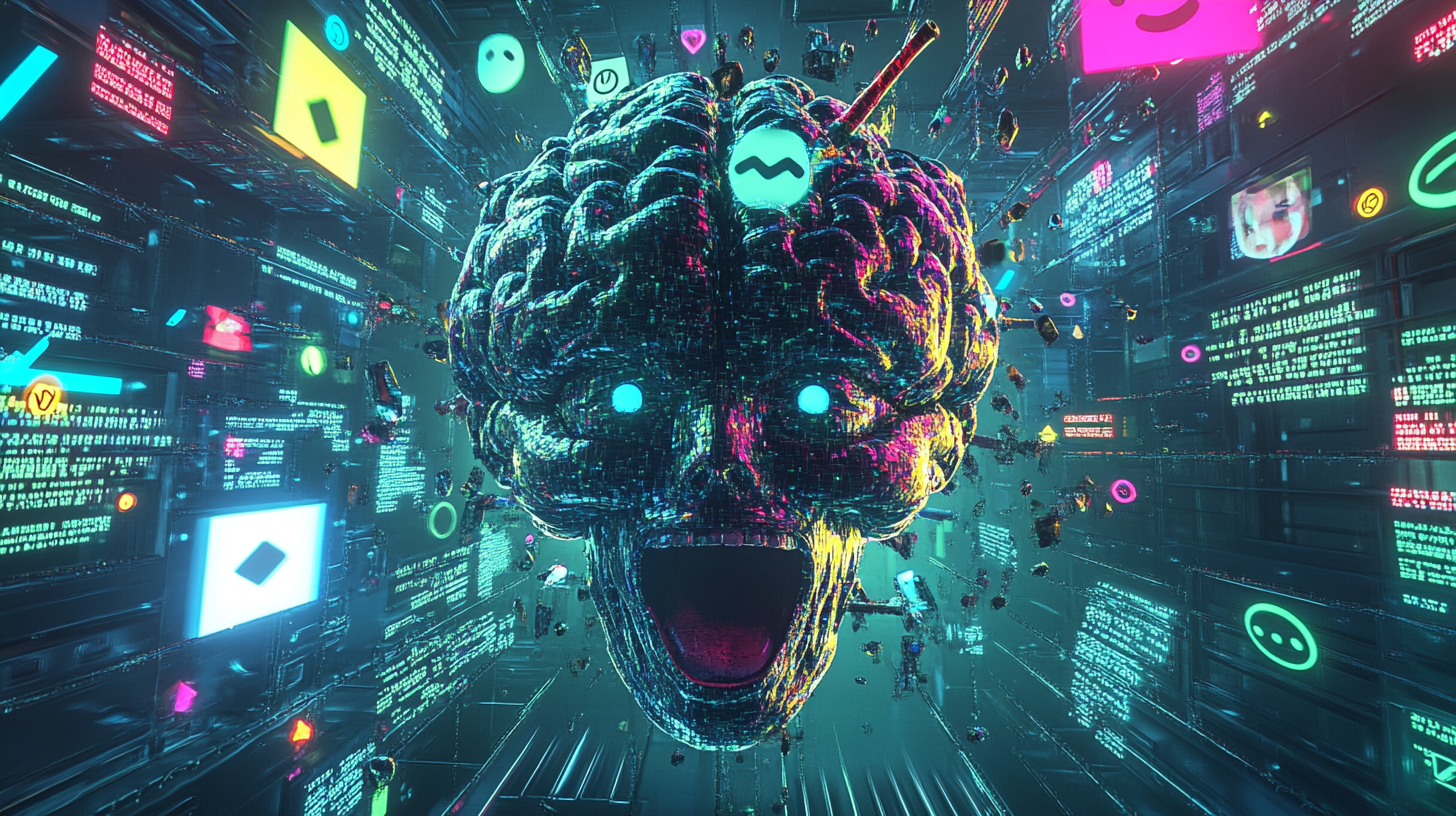
Toxic brain rot: The social media disease 'scrolling' leads to 'brain rot' (brain deterioration) through endless scrolling – Image: Xpert.Digital
💭🧠 Focus on the problem: The effects of excessive social media consumption on our psyche
The issue of "brain rot" caused by excessive social media use is indeed a growing problem in our digital age. It's about more than just wasting time; it affects profound aspects of our mental health and can even influence the structure of our brains. The incessant stream of information, often fragmented and superficial, the constant stimulation, and the resulting sensory overload can lead to a kind of cognitive inertia that negatively impacts our ability to focus, think deeply, and feel emotionally balanced.
It's important to understand that the term "brain rot" might be a bit of a gimmick, but it accurately describes a real phenomenon. The constant availability of short-form content designed for instant gratification can mislead our brain's reward system. Dopamine, the neurotransmitter associated with pleasure and reward, is released with every "like," every new notification, or every interesting short video. This mechanism can lead us to constantly seek more of this stimulation, resulting in a vicious cycle of scrolling.
📉🔍 Consequences: The effects of social media overconsumption
The consequences of this excessive consumption are manifold. Difficulty concentrating is a common side effect. When our brain is constantly bombarded with rapid, changing stimuli, it loses the ability to focus on a single task. This can manifest itself in all areas of life, whether reading a book, working, or conversing with others. The ability to engage in deep work—that is, to concentrate on complex tasks without distractions—can also suffer.
Furthermore, constantly comparing oneself to the often idealized portrayals on social media can lead to feelings of inadequacy, low self-esteem, and even depression. The "perfect" lives presented online rarely reflect reality and can make consumers feel that their own lives are less valuable or exciting. This can lead to social envy and a distorted perception of reality.
Sleep quality can also suffer from excessive social media use. The blue light emitted by screens can inhibit the production of melatonin, the sleep hormone. Additionally, the mental stimulation from the content consumed keeps the brain active and alert, making it harder to fall asleep. Conversely, sleep deprivation has numerous negative effects on physical and mental health.
🛠️📱 Solutions: Conscious use of digital media
To counteract this phenomenon, it is important to take proactive measures and develop a more conscious approach to digital media. The strategies mentioned in the original text are a good starting point, but can be further expanded and deepened.
Screen time limit
Limiting screen time is a fundamental step. It's not about completely abstaining from social media, but about finding a healthy balance. Using the built-in features on smartphones is a good start. Looking at detailed usage statistics can be very insightful. Often, you're surprised by how much time you actually spend on social media. Setting limits is then the next logical step. For example, you could decide to spend no more than an hour a day on Instagram or TikTok. Consciously scheduling "digital-free" time, especially before bed, is also essential. Putting your smartphone away an hour before bed and reading a book or talking with your partner can work wonders for your sleep quality.
📚✨ Consciously manage your media consumption: Quality over quantity
More conscious media consumption goes beyond mere quantity and concerns the quality of the content consumed. It's important to actively ask yourself: "What am I actually taking in here?" Consciously curating your own feed is crucial. For example, you can unfollow accounts that evoke negative feelings or convey unrealistic standards. Instead, you can focus on content that is inspiring, educational, or simply entertaining, without leaving you with a feeling of inadequacy. Creating reading lists and setting aside specific reading times promotes a more active and focused approach to information, as opposed to passively letting yourself be bombarded by short social media posts. Consciously seeking out positive and constructive content can also help minimize negative effects.
🌱🧘 Alternatives: Offline activities and mindfulness
Finding alternative activities is crucial for meaningfully filling the time wasted scrolling. Exercise is an excellent way to reduce stress, improve mood, and keep the body fit. Regular physical activity promotes blood flow to the brain and can therefore also improve cognitive function. Maintaining real-life social connections is equally important. Personal interactions offer a deeper and more fulfilling form of connection than superficial online contacts. Hobbies, whether learning a musical instrument, painting, or gardening, also provide meaningful activity and can help relax the mind. Mindfulness practices such as meditation or breathing techniques can help sharpen focus, reduce stress, and develop a greater awareness of the present moment.
### 🖥️⏳ Tools and technologies: Digital aids for reducing “brain rot”
Apps like "One Sec," which delay the opening of distracting apps, use psychological mechanisms to interrupt impulsive behavior. The brief waiting period gives you the opportunity to pause and reconsider whether opening the app is truly necessary. "Freedom" is a more comprehensive tool that can block distractions across multiple devices, helping you work or relax without constant interruptions from notifications or the urge to go online. "StayFree" and "Digital Detox" offer detailed insights into your own usage patterns and allow you to set goals and reward successes, which can increase motivation to change your behavior.
🎯🚀 The path to a more conscious digital life
It is important to emphasize that the most effective strategy is to combine these different approaches. Technological tools can be a valuable support, but they are not a panacea. They must be accompanied by conscious behavioral changes and the development of a healthy relationship with digital media. Regular digital detox periods and the active planning of offline activities are just as important as using screen time limiting apps.
Ultimately, it's about regaining control over your attention and not being controlled by social media algorithms. It's about leading a balanced life where digital media has a meaningful place but doesn't dominate everything. Combating "brain rot" is an active process that requires mindfulness, self-reflection, and a willingness to change. But the positive effects on mental health, concentration, and overall well-being are well worth it. It's a step towards a more conscious, fulfilling, and less fragmented life.
Related to this: