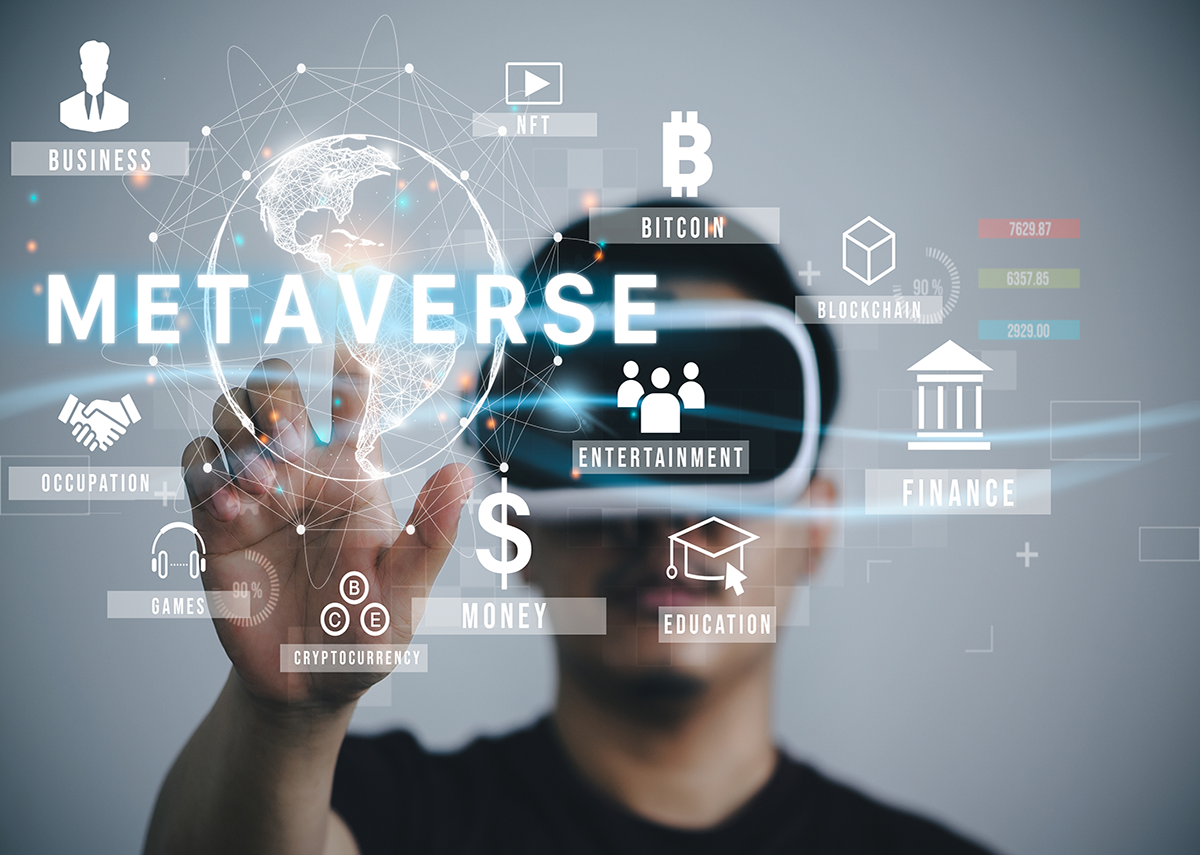
Metaverse with blockchain technology – Image: Deemerwha studio|Shutterstock.com
Metaverse with Blockchain Technology
The metaverse is a highly discussed concept with diverse interpretations. It is widely believed to revolutionize the internet by presenting personalized avatars in a virtual world. However, to achieve truly transformative impact, it requires consistent protocols for seamless interaction, a universal currency, and a single login process. This is where blockchain technology comes into play, ensuring decentralized consensus mechanisms, smooth currency transactions, and the authentication of ownership through NFTs. Interoperability and integration are crucial for the metaverse's success in overcoming proprietary barriers. While initial implementations already exist, the final form of the metaverse will evolve over time based on feedback and global adoption.
Blockchain for decentralized consensus
Blockchain technology plays an essential role in the metaverse revolution. It enables a decentralized consensus mechanism where no central authority or institution controls transactions. Instead, transactions are confirmed by a network of computers called "nodes." This creates a transparent, tamper-proof, and forgery-proof system.
Smooth currency transactions
The metaverse requires a universal currency accepted across all virtual worlds. Cryptocurrencies offer an ideal solution. By using cryptocurrencies in the metaverse, users can seamlessly buy and sell goods and services within the virtual environment. The advantages of cryptocurrencies lie in their speed, low transaction costs, and global acceptance.
Authentication of ownership through NFTs
Non-fungible tokens (NFTs) play a crucial role in authenticating ownership within the metaverse. NFTs are unique digital assets built on the blockchain that prove ownership of a specific digital good or virtual property. This allows users to imbue their avatars, digital artwork, or virtual real estate with unambiguous proof of ownership.
Interoperability and integration
To unlock the full potential of the metaverse, interoperability is essential. Different virtual worlds and platforms should be able to interact seamlessly to ensure a consistent and cohesive user experience. Open standards and interfaces are crucial for overcoming proprietary barriers and facilitating integration.
Interoperability refers to the ability of different systems, platforms, or technologies to seamlessly interact and exchange information. In the context of the metaverse revolution, interoperability means that different virtual worlds, platforms, or applications within the metaverse can communicate and cooperate without encountering technical or content-related barriers.
High interoperability allows users to transfer their virtual avatars, digital assets, or identities from one platform to another without being restricted by proprietary systems or closed standards. This creates a seamless and cohesive experience in the metaverse, enhancing usability and enabling smooth transitions between virtual worlds.
Interoperability is a key factor in the success of the metaverse, as it expands the diversity of virtual content and possibilities while simultaneously improving the user experience. Open standards and interfaces play a crucial role in promoting interoperability and help the metaverse become an open and inclusive ecosystem where users can benefit from a wide range of options and innovations.
The evolution of the metaverse over time
Although the Metaverse has already seen initial implementations, its final form is not yet determined. The concept will evolve over time through user feedback and global acceptance. New technologies and ideas will pave the way for innovative features and applications within the Metaverse.
➡️ Investment warning: Please note that the information provided in this article does not constitute financial advice. Investing in cryptocurrencies and other investments related to the metaverse involves risks, and past performance is not indicative of future results.
➡️ The Metaverse promises an exciting future where the boundaries between the physical and virtual worlds blur. Blockchain technology will play a central role in enabling decentralized consensus, seamless currency transactions, and proof of ownership. The Metaverse will continue to evolve and surprise us with ever-new possibilities.
➡️ The Metaverse revolution is only just beginning, and we're excited to see what exciting developments and opportunities the future will bring. The convergence of blockchain technology, cryptocurrencies, and virtual worlds promises a fascinating fusion of reality and virtuality. Be ready to be part of this exciting journey and explore the possibilities of the Metaverse!
Our Industrial Metaverse Configurator
Simply try out our universally applicable (B2B/Business/Industrial) Metaverse Configurator for all CAD / 3D demo options:
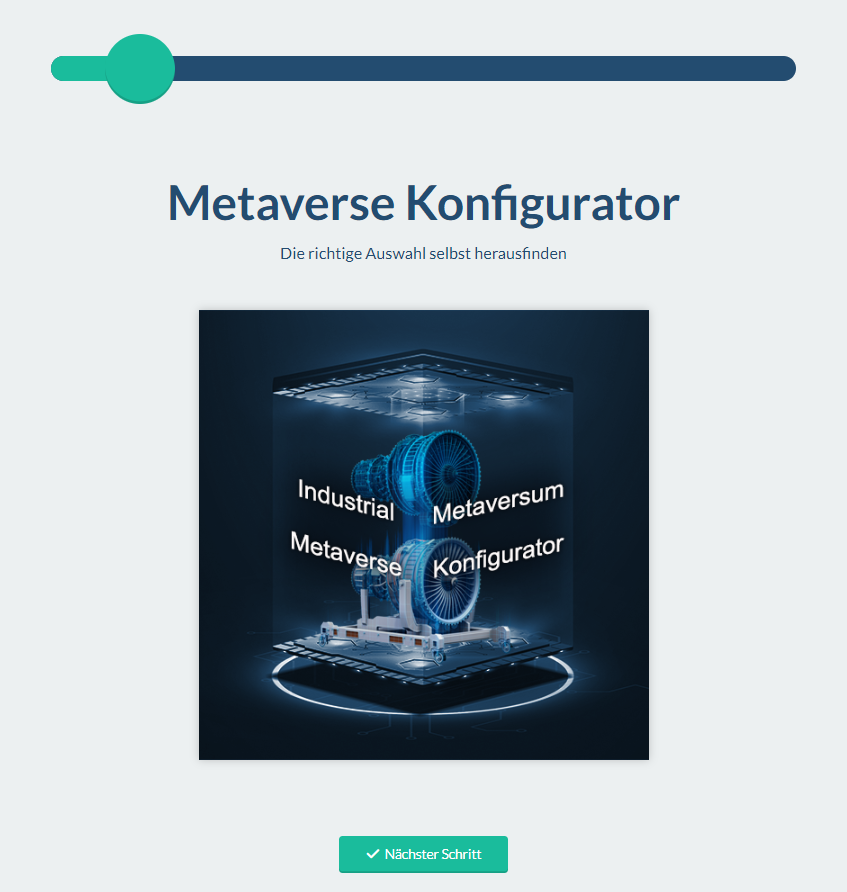

Xpert (B2B/Business/Industrial) Metaverse Configurator for all CAD / 3D data, usable on all end devices, one platform!
Related to this:
The Fascination of the Metaverse: A Look into the Digital Future with Decentraland
The concept of the metaverse has recently garnered significant attention, particularly following Facebook's rebranding as "Meta." But what exactly is this term? The metaverse is a virtual world existing in 3D space, explored by users through avatars. It enables immersive experiences and interactions that go far beyond the capabilities of traditional social media. Decentraland is a pioneer in creating such a digital future and has attracted companies with its sophisticated model.
Decentraland – A pioneering work in the consumer metaverse
Decentraland, a leading metaverse platform, has captured the imagination of many. Here, users can own virtual land and trade it as non-fungible tokens (NFTs) on the Ethereum blockchain. The idea behind Decentraland is that users are not just participants in a virtual world, but also owners of land on which they can build, run businesses, or simply enjoy social interactions. The platform creates a decentralized, community-driven environment offering limitless possibilities.
Metaverse and DeFi – A steadily growing market
The metaverse is not just a place for virtual entertainment, but also a significant growth market in the blockchain sector. Along with the burgeoning DeFi sector, the metaverse is expected to generate substantial revenue in the coming years. Currently, the metaverse market is valued at an impressive $2.5 billion. This highlights its immense potential and appeal to both businesses and investors.
The Magic of Mana – Decentraland's Native Cryptocurrency
In Decentraland, the cryptocurrency "Mana" plays a central role. Mana is the platform's native token and is used by users to buy, sell, and trade virtual land. Recently, Mana has seen a remarkable increase in value due to Decentraland's growing popularity. This demonstrates that the metaverse and gaming applications constitute a significant portion of the NFT market and exert a strong influence on the cryptocurrency.
Metaverse – An integral part of the blockchain world
The metaverse has firmly established itself in the blockchain world and is far more than just a passing fad. With its combination of immersive experiences, decentralized design, and the ability to own digital assets, the metaverse will undoubtedly continue to capture people's attention. Decentraland has positioned itself as a pioneer and leader in this exciting development and will undoubtedly continue to play a central role in the future.
Outlook
The Metaverse, with Decentraland, offers an exciting glimpse into the digital future. The convergence of blockchain technology, NFTs, and virtual reality opens up unimagined possibilities for how we interact, conduct business, and unleash our creativity. The journey into the Metaverse has only just begun, and Decentraland boldly leads us into this fascinating new world. We are eager to see what the future holds for the Metaverse and for all of us.
DeFi sector - Decentralized Finance
The DeFi sector stands for "Decentralized Finance." It is an innovative financial infrastructure based on blockchain technology that decentralizes and digitizes traditional financial services. Unlike the conventional financial system, which is controlled by central institutions such as banks and stock exchanges, DeFi allows users direct access to various financial products and services via decentralized platforms.
DeFi platforms are typically based on a public blockchain, such as Ethereum, and utilize smart contracts, which are programmable agreements. These smart contracts enable the automated execution of financial operations without the need for a third party or central authority. This bypasses most traditional financial intermediaries, resulting in lower costs, faster transactions, and greater financial inclusion.
The DeFi sector includes various financial products and services, including:
1. Lending
Users can borrow or lend money by depositing cryptocurrencies as collateral.
2. Liquidity pools
Users can contribute their cryptocurrencies to liquidity pools to use them for lending and trading activities and earn interest.
3. Decentralized Exchanges (DEX)
Trading platforms where users can trade cryptocurrencies directly with each other, without a central authority acting as an intermediary.
4. Yield Farming
Users can utilize various DeFi platforms to generate additional returns in the form of cryptocurrencies by providing liquidity and engaging in other financial activities.
5. Insurance
DeFi also offers the possibility of taking out insurance products that cover certain risks and losses.
➡️ The DeFi sector has experienced tremendous growth and widespread acceptance in recent years. Its underlying technology and diverse applications have the potential to fundamentally change how we use financial services, complementing or even revolutionizing traditional financial systems. However, it's crucial to be aware that the DeFi sector also carries risks, including high volatility and potential security vulnerabilities. Therefore, it's advisable to thoroughly research and exercise caution before participating in DeFi activities.
Metaverse meets Blockchain: The appeal of virtual properties and their real-world significance
The Metaverse is a fascinating concept that innovatively merges the virtual and real worlds. Within the Metaverse, users can immerse themselves in a shared digital environment where they can meet and interact with others, conduct business, and perform activities, much like in a video game, but on a far larger and more diverse scale. Blockchain technology is used to support this unique digital ecosystem and manage the transactions that take place within it.
The blockchain is a decentralized and transparent database consisting of a chain of blocks in which transactions are stored. Each block contains a cryptographic reference to the previous block, creating an immutable record. Blockchain technology thus provides an ideal foundation for the metaverse, as it ensures security, trust, and transparency.
A central aspect of the metaverse is the purchase of virtual land. This virtual land is fictional, yet highly sought-after and valuable property within the digital world. Similar to real life, one can secure a piece of land in this digital space, which functions as virtual real estate. These properties can take various forms, from simple plots to elaborately designed virtual estates that serve as marketplaces, residential areas, or entertainment centers.
Purchasing virtual land in the Metaverse is typically done using blockchain-based digital currencies. This is where cryptocurrency comes into play, allowing users to conduct actual value transactions within the digital environment. Some of the most popular cryptocurrencies used in the Metaverse include Ethereum, which plays a crucial role with its smart contracts, and other cryptocurrencies specifically developed for the Metaverse.
The value of these virtual plots of land is not merely symbolic or fictitious. In fact, they can have significant monetary value. In some virtual worlds, there is a limited number of plots, leading to scarcity and driving up prices. Some highly sought-after plots have indeed changed hands for substantial sums in the past, demonstrating that the metaverse real estate market in the digital world can have a real and economic impact.
Beyond its economic aspects, blockchain technology also plays a crucial role in data security and the protection of user rights within the metaverse. Because the blockchain is decentralized and immutable, data cannot be easily manipulated or deleted. This fosters a high level of trust, especially when it comes to protecting personal information or property rights.
Blockchain technology also enables virtual properties to be uniquely and unambiguously identifiable. This prevents properties from being sold or copied twice. Each property has a unique identifier linked to its owner and the digital assets it holds.
Furthermore, blockchain technology enables the seamless transfer of virtual properties and digital assets between different platforms and games. This facilitates interoperability between various metaverse platforms, enhancing user-friendliness and expanding the metaverse space as a whole.
➡️ Purchasing virtual land in the metaverse using blockchain technology is far more than just a fictitious asset. It represents an exciting new type of digital good with real economic impact and potential. Blockchain technology supports the trading and security of this virtual real estate, provides data security, and protects user rights, while simultaneously laying the foundation for an expanded and interoperable metaverse. It is undoubtedly an exciting time to witness and participate in the development of this digital ecosystem.
Blockchain and Metaverse
Blockchain and metaverse are two different concepts that can, however, be related in some way.
Blockchain is a decentralized and transparent technology used to record and verify transactions. It allows information to be stored in blocks that are linked together. Each block contains a cryptographic hash of the previous block, ensuring data integrity. Blockchain is frequently used in connection with cryptocurrencies like Bitcoin, but it also has applications in many other areas such as supply chains, finance, and decentralized applications (DApps).
The metaverse, on the other hand, refers to a virtual, computer-based universe where users can interact, create content, and have experiences. It is often considered an enhanced version of the internet, where physical and virtual reality merge. The metaverse offers an immersive and interactive environment where users can be represented by avatars and own digital currencies, digital assets, and virtual items.
The connection between blockchain and the metaverse lies in the fact that blockchain technology can offer a way to support the digital economy within the metaverse. By using blockchain, digital assets, virtual objects, and transactions in the metaverse can be made transparent, traceable, and secure. Blockchain can also help verify ownership of digital content and prevent fraud.
Several projects and platforms are already combining blockchain and the metaverse. For example, there are virtual worlds where users can buy, sell, and trade digital properties using blockchain technology. These properties are represented on the blockchain as non-fungible tokens (NFTs). NFTs are unique digital assets that can represent ownership rights to specific objects or content.
The connection between blockchain and the metaverse is expected to grow further in the future. With the increasing acceptance of cryptocurrencies and the growing interest in virtual worlds, the use of blockchain technology in the metaverse is likely to increase. This could open up new possibilities for digital economic systems, social interactions, and the creation of virtual ecosystems.
The stamp comparison
To explain Bitcoin and Ethereum using the postage stamp example, similarities and differences can be presented as follows:
Similarities
- Limited availability: Both postage stamps and cryptocurrencies like Bitcoin and Ethereum have a limited number of copies. For postage stamps, the print run is determined by the quantity printed, while for cryptocurrencies, the maximum number of coins is determined by the protocol and the underlying technology.
- Value: Both stamps and cryptocurrencies can have value. The value of stamps can be determined by their rarity, historical or cultural significance, and collector demand. For cryptocurrencies, value is determined by market demand and users' trust in the technology and ecosystem.
Differences
- Physical vs. digital nature: Stamps are physical objects that can be printed and collected. They can be touched, viewed, and traded in the real world. In contrast, Bitcoin and Ethereum are purely digital currencies. They exist only as data on a blockchain and cannot be physically traded or touched.
- Purpose: Postage stamps primarily have collector value and are rarely used for transactions. They often represent historical events or cultural symbols. Cryptocurrencies like Bitcoin and Ethereum, on the other hand, were developed as digital means of payment. They allow users to transfer value online, conduct transactions, and enter into contracts.
- Technology and Blockchain: The main difference between stamps and cryptocurrencies lies in the underlying technology. Cryptocurrencies like Bitcoin and Ethereum use a decentralized technology called blockchain, which verifies and records transactions. Stamps, on the other hand, do not use such technology. They are therefore not counterfeit-proof. Detecting counterfeit stamps is difficult and requires expert assistance. Stamps do not offer currency security in the sense of being counterfeit-proof.
- Market price volatility: While the value of stamps is generally more stable and can rise or fall slowly (collector's value), cryptocurrencies can be subject to strong price fluctuations. The cryptocurrency market is known for its high volatility, meaning that the prices of Bitcoin and Ethereum can rise or fall quickly and dramatically.
New territory for newcomers: What you should know now about blockchain, tokens, NFTs, wallets, cryptocurrency and the metaverse

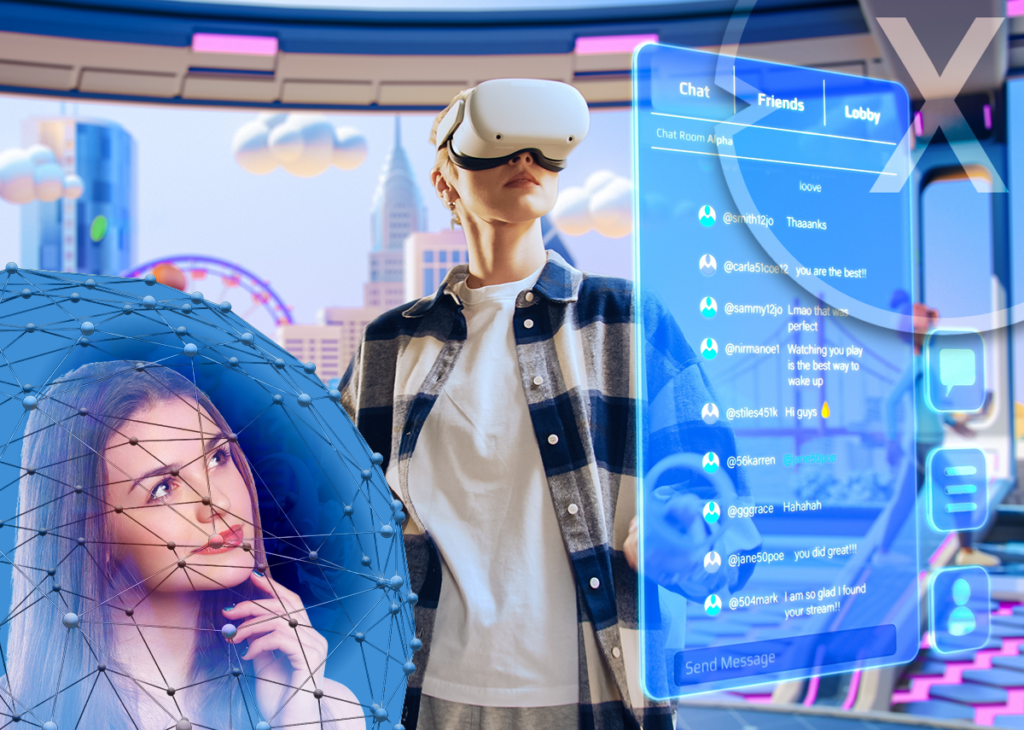
(Consumer) Metaverse: New territory for newcomers – What you should know now – Image: Xpert.Digital
In today's digital world, terms like blockchain, NFTs, wallets, cryptocurrencies, and the metaverse have become increasingly prevalent. For newcomers, these terms can initially seem confusing and complex. Here, we attempt to explain these concepts clearly and provide you with important and interesting details.
More information here:
Dekaverse: DekaBank is in the Metaverse – The Beta Metaverse – Decentraland, Marketing & Gamification
Dekaverse – DekaBank is in the Metaverse Decentraland – Image: photo_gonzo|Shutterstock.com
The Dekaverse serves as a kind of testing ground for DekaBank and its customers to explore new technologies and make them more accessible to the public. Blockchain technology, one of the most significant innovations of digitalization, is a particular focus here.
Decentraland offers users the opportunity to explore how blockchain technology works and to familiarize themselves with cryptocurrencies and NFTs. This provides a unique opportunity for those unfamiliar with these technologies to learn about them and expand their understanding.
More information here:

Xpert.Digital – Pioneer Business Development
If you have any questions, require further information or advice regarding the Consumer Metaverse or Metaverse in general, please feel free to contact me at any time.

Konrad Wolfenstein
I would be happy to serve as your personal advisor.
You can contact me by filling out the contact form below or simply call me on +49 7348 4088 965 .
I'm looking forward to our joint project.
Write to me


Xpert.Digital – Konrad Wolfenstein
Xpert.Digital is a hub for industry focusing on digitalization, mechanical engineering, logistics/intralogistics and photovoltaics.
With our 360° Business Development solution, we support renowned companies from new business to after-sales.
Market intelligence, smarketing, marketing automation, content development, PR, mail campaigns, personalized social media and lead nurturing are part of our digital tools.
You can find more information at: www.xpert.digital – www.xpert.solar – www.xpert.plus
Keep in touch