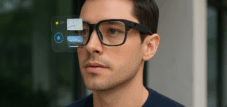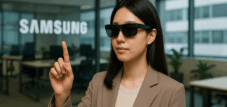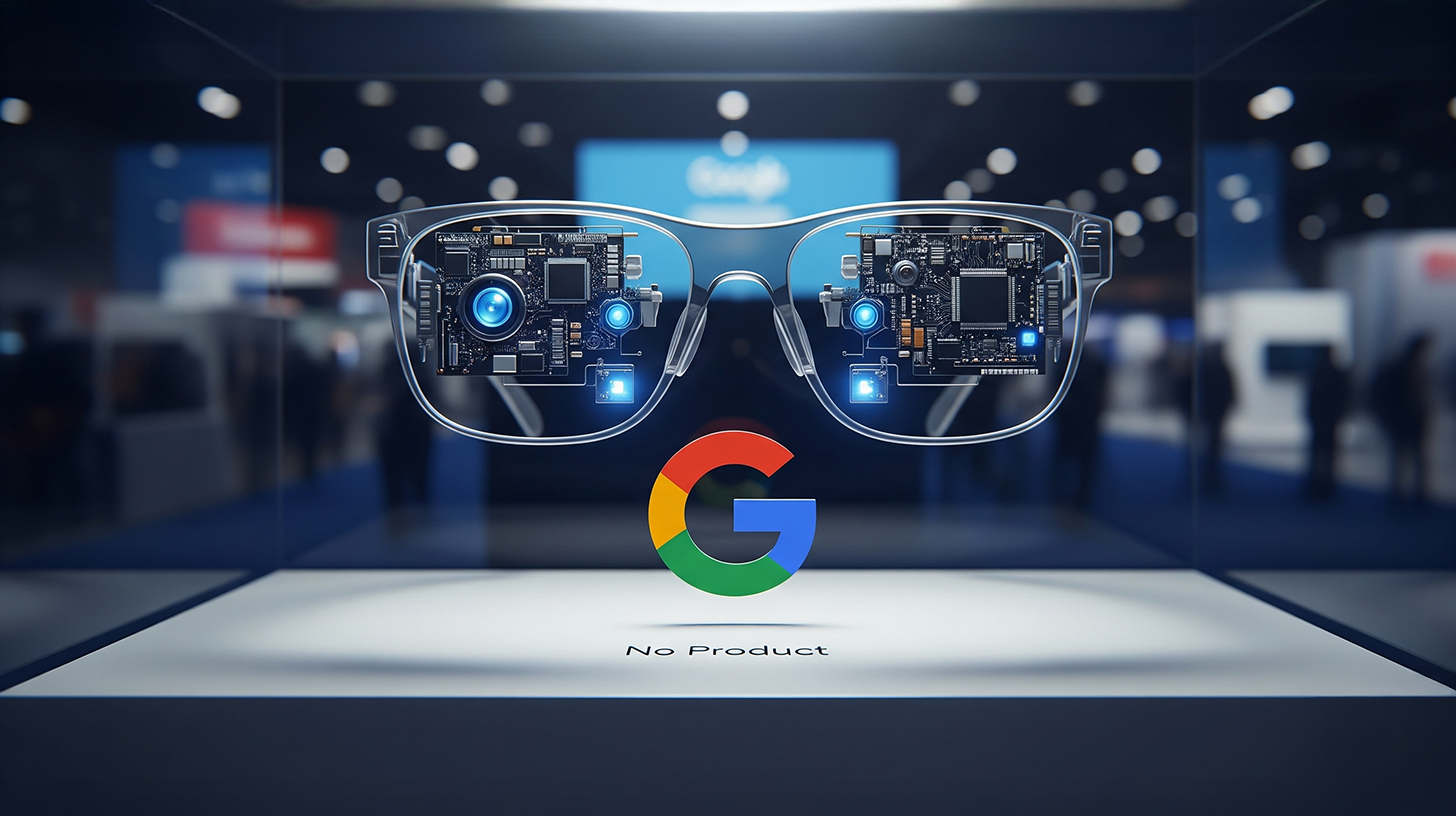
Google's paradoxical plan: The best technology for smart glasses, but no product of its own? – Image: Xpert.Digital
Apple & Meta are forging ahead: Is Google missing out on the smart glasses revolution?
What is the current situation with Google Smart Glasses?
The world of technological innovation is often characterized by grand announcements and even greater expectations. This dynamic seems particularly evident with Google Smart Glasses. The company has been working on smart glasses for many years and originally intended to launch them as Pixel Glass, aiming for a major breakthrough in this field. However, as is so often the case in the technology sector, the realization is proving more complex than anticipated.
Rick Osterloh, Google's hardware chief, recently confirmed in several interviews that the company has still not decided whether its planned smart glasses projects will actually go into production. This statement is particularly noteworthy given that Google already presented advanced prototypes and a comprehensive Android XR platform at its I/O 2025 developer conference.
The uncertainty is also reflected in the conflicting signals Google is sending. On the one hand, the company has made significant investments in the development of Android XR, forged partnerships with renowned eyewear manufacturers like Warby Parker and Gentle Monster, and developed a comprehensive software infrastructure for smart glasses. On the other hand, the fundamental decision regarding a Google product of its own remains open.
Related to this:

Why has Google become so hesitant about smart glasses?
Google's reluctance can be partly explained by the traumatic experiences with Google Glass, which was developed between 2012 and 2015. Sergey Brin, one of Google's founders and then-leader of the Glass project, publicly admitted for the first time at Google I/O 2025 that he had "definitely made a lot of mistakes" with Google Glass. He admitted that at the time he had "no idea about supply chains in consumer electronics" and didn't understand "how difficult it is to build such a product, offer it at a reasonable price, and simultaneously control the entire manufacturing process.".
The original Google Glass cost $1,500, had a conspicuous camera module, and limited functionality. Privacy concerns quickly led to the derogatory term "Glasshole" for wearers and sealed the fate of the consumer version. Even a later enterprise version was discontinued in 2023.
These negative experiences have apparently led to a fundamental strategic realignment. Google seems to be proceeding much more cautiously this time, focusing primarily on partnerships with other manufacturers instead of acting as a hardware producer itself. Rick Osterloh confirmed that Google will not be launching its own smart glasses, despite having previously shown Pixel Smart Glasses prototypes.
What are the technical foundations of the new Google Smart Glasses?
Despite the uncertainty surrounding its own product, Google has made significant progress in technology development. At the heart of this new effort is Android XR, an operating system specifically designed for extended reality applications. This platform has been dubbed the "first new Android platform of the Gemini era" because it was specifically designed to integrate Google's advanced AI.
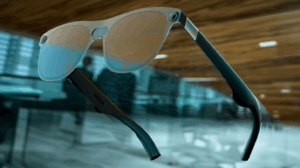
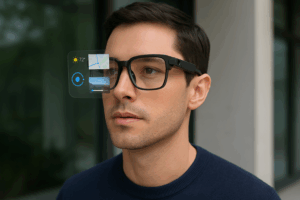
The technical specifications of the planned smart glasses are impressive: they will be equipped with cameras, multiple microphones, and speakers. A special feature is the optional display that can be integrated into the lenses and discreetly shows information such as navigation details, messages, or appointments. The glasses are optimized for use with Android smartphones and should allow users to access apps without having to take their smartphone out of their pocket.
The truly revolutionary element, however, is Project Astra's integration of Google's AI model, Gemini. This AI, through its "rolling contextual window," can see and hear the same things as the user, enabling it to understand the context of commands and remind the user of important information when needed. Google impressively demonstrated this technology at I/O 2024 when a user inquired about a misplaced pair of glasses, and Gemini promptly replied, "The glasses are on the desk near a red apple.".
What partnerships has Google established for smart glasses?
Google is pursuing a partnership-oriented strategy to minimize the risk of developing its own hardware. Its most important collaboration is with Samsung, with whom Google is already working on the mixed-reality headset "Project Moohan." This partnership is to be extended to smart glasses, with the two companies aiming to develop a "software and hardware reference platform" that will enable other manufacturers to release their own smart glasses based on Android XR.
Related to this:
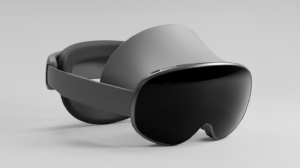
The partnerships with established eyewear manufacturers are particularly interesting. Google has announced collaborations with Gentle Monster from South Korea and Warby Parker from the USA. These companies will offer "stylish glasses with Android XR," ensuring that the smart glasses are not only technically functional but also fashionable. This was a significant weakness of the original Google Glass, which was often rejected due to its striking design.
In addition, Google has forged partnerships with technology companies. Xreal, a specialist in AR glasses, announced its own smart glasses called "Project Aura" at Google I/O 2025. Qualcomm is the hardware partner for the chipsets, while other partners such as Sony, Magic Leap, and others will support the Android XR ecosystem.
What can the new Google Smart Glasses actually do?
The demonstrated features of the Google Smart Glasses prototypes are quite impressive and showcase the technology's potential. One of the core features is live translation, where spoken language is translated in real time and displayed as subtitles on the glasses' screen. This was already demonstrated at the TED conference in Vancouver, where a live translation from Farsi to English was presented.
The memory function is particularly innovative: The integrated camera continuously scans the user's surroundings without requiring explicit instructions. The AI remembers where items have been placed and can help locate them when needed. In a demonstration, a tester asked, "Do you know where I last put the hotel key card?" and Gemini replied precisely, "The hotel key card is to the left of the record.".
Other planned features include navigation with Google Maps integration, where directions are displayed directly in the user's field of vision. Sending messages, scheduling appointments, taking photos, and controlling various apps will also be possible. The glasses can also scan QR codes and interact with streaming services.
Of particular interest is the planned integration with Project Astra, Google's universal AI assistant. In demonstration videos, Astra helped memorize apartment security codes, check weather conditions, and even determine whether a passing bus was heading towards Chinatown. This seamless integration of visual perception, speech processing, and contextual understanding could make smart glasses a truly useful everyday companion.
Related to this:

How does Google compare to other companies in the competition?
The smart glasses market has become a highly competitive one among the largest technology companies. Meta has already established a leading position and, according to reports, has sold around two million Ray-Ban Meta glasses. The company is continuously expanding its portfolio and plans new models for 2025, including Oakley glasses with smart features and a higher-priced model with an integrated heads-up display.
Apple is also working intensively on smart glasses and is reportedly planning a competitor to the Ray-Ban Meta Glasses for the end of 2026. The company has brought forward the market launch, originally planned for 2027, presumably to avoid falling too far behind the competition. Apple's smart glasses are expected to be equipped with cameras, microphones, and speakers, and will support features such as phone calls, music playback, live translations, and navigation.
Chinese technology companies are also competing in the market. Huawei, Alibaba, Xiaomi, and Baidu are all developing their own smart glasses projects. Xiaomi is already testing its first AI glasses on the Chinese market. Snap plans to launch AR glasses for consumers in 2026.
Google finds itself in a paradoxical situation: The company has developed one of the most advanced software platforms for smart glasses with Android XR and possesses one of the most powerful AI technologies, yet it hesitates to develop its own hardware. This strategy could allow other companies to leverage Google's technology while reaping the hardware profits themselves.
What are the biggest technical challenges?
Developing mass-market smart glasses presents significant technical challenges. One of the biggest hurdles is miniaturizing components while simultaneously ensuring acceptable battery life. The original Google Glass failed partly because it was too bulky and didn't look like regular glasses.
Display technology presents another major challenge. Integrating displays into lenses that must remain transparent requires highly advanced optical technologies. Meta, for example, is working with LED projectors to display holographic 3D images across the lenses, while Google is relying on microdisplays integrated into the lens.
Computing power and connectivity are further critical factors. Most planned smart glasses are not completely self-contained but require a connection to a smartphone for more complex calculations and AI functions. This leads to additional challenges regarding wireless data transmission and battery consumption.
Data privacy and public acceptance remain problematic. The original Google Glass also failed due to public privacy concerns, as people felt uncomfortable being monitored by glasses that were "constantly filming." Although public attitudes toward surveillance technologies have changed since the 2010s, these concerns remain relevant.
What role does artificial intelligence play in Google Smart Glasses?
Artificial intelligence is the key factor that could differentiate Google Smart Glasses from their predecessors. The integration of Gemini, Google's most advanced AI model, through Project Astra enables entirely new application scenarios. Unlike previous smart glasses, which primarily functioned as extended smartphones, the new devices can act as true intelligent assistants.
Gemini's multimodal nature allows the glasses to simultaneously process visual information, understand speech, and respond contextually. This combination of seeing, hearing, and understanding makes the glasses a potentially revolutionary interface between the digital and physical worlds.
Project Astra goes a step further, aiming to function as a "universal AI assistant for everyday life." The AI can act proactively, alert the user to important things, and take over complex tasks without requiring explicit instructions. In demonstration videos, Astra, for example, helped with bicycle repairs by analyzing visual problems and suggesting solutions.
The memory function is particularly noteworthy: The AI can remember conversations, seen objects, and situations, and later use this information contextually. This enables continuous, personalized support that goes far beyond the capabilities of conventional voice assistants.
Our recommendation: 🌍 Limitless reach 🔗 Connected 🌐 Multilingual 💪 Sales power: 💡 Authentic with strategy 🚀 Innovation meets 🧠 Intuition


From local to global: SMEs conquer the world market with a clever strategy - Image: Xpert.Digital
In an era where a company's digital presence determines its success, the challenge lies in creating an authentic, personalized, and far-reaching presence. Xpert.Digital offers an innovative solution that positions itself as the intersection of an industry hub, a blog, and a brand ambassador. It combines the advantages of communication and sales channels in a single platform and enables publication in 18 different languages. Cooperation with partner portals and the ability to publish articles on Google News and a press distribution list with approximately 8,000 journalists and readers maximize the reach and visibility of the content. This represents a crucial factor in external sales and marketing (SMarketing).
More information here:
Smart Glasses: From the AI glasses boom to the AR revolution – market opportunities, Google's indecisiveness and data privacy risks
What do industry experts say about the future of smart glasses?
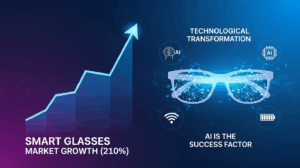
Industry experts largely agree that smart glasses could become one of the next major technology categories after smartphones. The market is already showing initial signs of success: Meta's Ray-Ban glasses have sold significantly better than expected, and EssilorLuxottica is reportedly planning a substantial increase in production.
The fact that all major technology companies are investing in this category simultaneously suggests that the time for smart glasses may have arrived. Unlike in the 2010s, several technological prerequisites are now in place: powerful AI systems, miniaturized components, improved battery technology, and societal acceptance of wearable technology.
However, analysts warn against overly high expectations. Ming-Chi Kuo, a renowned Apple analyst, predicts that it could take until mid-2027 before true AR glasses become mainstream. Until then, AI-powered glasses without genuine AR functionality will likely dominate the market.
Experts view Google's uncertainty critically. While the company possesses the most advanced AI technology and a comprehensive software platform, its reluctance to develop hardware could allow other companies to dominate the market. Meta and Apple, in particular, both of which are investing aggressively in hardware, could benefit from Google's hesitancy.
Related to this:

What societal impact could smart glasses have?
Smart glasses could bring about far-reaching societal changes, both positive and problematic. On the positive side, they could open up new opportunities for people with disabilities: real-time translations could overcome language barriers, navigation aids could help visually impaired people, and AI assistance could support people with cognitive impairments.
In a professional context, smart glasses could significantly increase productivity. Technicians could have instructions displayed directly in their field of vision, doctors could access patient data without having to take their eyes off their patients, and translators could mediate between different languages in real time.
At the same time, there are significant concerns about data privacy and surveillance. Smart glasses with cameras could enable a new dimension of surveillance, where virtually all interpersonal interactions could be recorded and analyzed. The fact that these recordings are often invisible exacerbates these concerns.
The psychological effects could also be significant. Constant digital overlays on reality could change the way people perceive and interact with their environment. There is a risk of even greater dependence on digital technologies and a reduction in direct interpersonal communication.
What are the economic dimensions of the smart glasses market?
The smart glasses market is considered by analysts to be one of the most promising emerging technology sectors. Meta has already proven that commercial demand exists: Ray-Ban Meta glasses start at $300 and have sold millions of units. This demonstrates that consumers are willing to pay for useful smart glasses when the price and functionality are right.
Google is reportedly investing hundreds of millions of US dollars in the development of Android XR and smart glasses technologies. These investments demonstrate the company's confidence in the long-term potential of the market, even though short-term product decisions are still pending.
The value chain for smart glasses is complex and includes chip developers like Qualcomm, display manufacturers, optics specialists, eyewear manufacturers, and software developers. This could lead to a similarly large ecosystem as that of smartphones, with corresponding economic implications.
For traditional eyewear manufacturers, smart glasses could mean a transformation of the entire industry. Companies like EssilorLuxottica, which already collaborates with Meta, could evolve from hardware manufacturers to technology partners. German and European eyewear manufacturers face the challenge of positioning themselves in this new market environment.
What technical standards are developing for smart glasses?
The development of technical standards for smart glasses is still in its early stages, but some important trends are already emerging. Google's Android XR could play a similar role to Android on smartphones and establish itself as the dominant operating system. The platform is designed as an open system intended to support various hardware manufacturers.
The integration of AI systems will likely become a crucial differentiator. While Google relies on Gemini, other companies are developing their own AI solutions: Meta uses its own AI platform, Apple is expected to use Apple Intelligence, and Chinese manufacturers are developing local AI solutions.
Connectivity standards are not yet fully defined. Most current smart glasses require a Bluetooth connection to a smartphone for more complex functions. However, future generations could gain direct cellular access or utilize newer connectivity standards such as 6G.
Security and data protection standards are expected to be subject to strict regulatory requirements, particularly in Europe with the GDPR. Manufacturers must ensure that continuous video and audio recordings are adequately protected and that the rights of third parties are respected.
How might the smart glasses market develop in the coming years?
The market development for smart glasses will likely occur in several phases. The first phase, which we are already in, is characterized by AI-powered glasses without true AR functionality, such as the Ray-Ban Meta Glasses. These devices offer practical functions like photography, telephony, and AI assistance, but without visual overlays of reality.
The second phase, which could begin around 2026-2027, is expected to bring true AR glasses with integrated displays. Google, Apple, Meta, and Samsung are all working on such devices, which can project digital information directly into the user's field of vision. These devices will likely be more expensive and have a shorter battery life than current AI glasses.
The third phase could bring fully autonomous smart glasses that do not rely on a smartphone connection. These devices would have their own computing power, storage, and mobile connectivity. However, the timeframe for this development is still very uncertain and could extend into the 2030s.
Adoption will likely begin in niche markets: skilled workers in industry and medicine, early technology adopters, and specific use cases. Mass adoption will depend on factors such as price, battery life, design, and social acceptance.
What does Google's indecisiveness mean for the industry?
Google's hesitancy in developing its own smart glasses hardware has far-reaching implications for the entire industry. On the one hand, it could allow other companies to gain market share while Google focuses on software development. Meta, Apple, and Samsung could benefit from this reluctance and establish themselves as leading hardware providers.
On the other hand, Google's strategy of creating an open platform for various hardware partners could prove more successful in the long run. Similar to Android, the widespread adoption of Android XR could allow Google to achieve a dominant position in the smart glasses ecosystem without having to take on the risks of hardware development.
However, this uncertainty damages Google's credibility as an innovation leader. After the setbacks with Google Glass, Google Cardboard, and Daydream, this renewed indecisiveness seems like a pattern of instability. Developers and partners may hesitate to invest significantly in an ecosystem where it's unclear whether Google will remain committed in the long term.
Rick Osterloh's statements suggest that Google may favor displayless glasses used in conjunction with smartphones. This strategy would reduce risk but also limit the potential for disruptive innovation.
What lessons can be learned from the Google Glass story?
The story of Google Glass offers valuable lessons for current smart glasses development. Sergey Brin's admission of his mistakes demonstrates the importance of realistic planning and appropriate expertise in all aspects of product development. The original Google Glass failed not only due to technical limitations but also due to a lack of understanding of supply chains, pricing, and societal acceptance.
The Google Glass privacy controversy highlights the need to take societal concerns seriously and address them proactively. The term "Glasshole" arose not only because of the technology itself, but also because of how it was communicated and deployed. Modern smart glasses manufacturers must heed this lesson and communicate transparently about data privacy and surveillance capabilities.
Design was a critical factor: The conspicuous technology of the original Google Glass made wearers easy targets for criticism and social rejection. Today's smart glasses from Meta and others deliberately opt for inconspicuous designs that are barely distinguishable from ordinary glasses.
The price of $1,500 was too high for the functionality offered. This demonstrates the importance of a reasonable price-performance ratio for mass acceptance. Meta's success with $300 glasses confirms this lesson.
Related to this:
Between innovation and pragmatism
The situation with Google Smart Glasses reflects the complex challenges of modern technology development. Google undoubtedly possesses the most advanced AI technology and a comprehensive software platform for smart glasses, but hesitates on the crucial question of its own hardware production. This indecisiveness is understandable, given the traumatic experiences with Google Glass and the considerable risks involved in hardware development.
On the other hand, this reluctance could cost Google a historic opportunity to play a leading role in one of the most promising new technology sectors. While Meta is already selling millions of smart glasses and Apple is aggressively investing in development, Google remains stuck in a passive, observational role.
The technological foundations are significantly better than at the time of the original Google Glass: AI systems are more powerful, components are smaller and more efficient, and societal acceptance of wearable technology has increased. Project Astra and Android XR demonstrate the impressive potential of Google's approach.
Ultimately, it remains to be seen whether Google's partnership-oriented strategy will be successful or whether the company will miss another opportunity to define a new technology segment. The decision that Rick Osterloh and his team have to make could have far-reaching consequences for Google's position in the post-smartphone era. The smart glasses revolution will happen—the only question is whether Google will play a leading or a supporting role.
We are here for you - Consulting - Planning - Implementation - Project Management
☑️ SME support in strategy, consulting, planning and implementation
☑️ Creation or realignment of the AI strategy
☑️ Pioneer Business Development

Konrad Wolfenstein
I would be happy to serve as your personal advisor.
You can contact me by filling out the contact form below or simply call me on +49 7348 4088 965 .
I'm looking forward to our joint project.
Write to me



Xpert.Digital - Konrad Wolfenstein
Xpert.Digital is a hub for industry focusing on digitalization, mechanical engineering, logistics/intralogistics and photovoltaics.
With our 360° Business Development solution, we support renowned companies from new business to after-sales.
Market intelligence, smarketing, marketing automation, content development, PR, mail campaigns, personalized social media and lead nurturing are part of our digital tools.
You can find more information at: www.xpert.digital - www.xpert.solar - www.xpert.plus
Keep in touch