
Autonomous Physical AI (APAI): The silent revolution of decentralized intelligence – Image: Xpert.Digital
How local AI systems are fundamentally shaking up the power structure of the global tech industry
Or: Why hyperscalers are losing their moat and Europe is getting a historic opportunity
The End of the Cloud Empire: Why Physical Autonomy is Transforming the Global Economy
The development of artificial intelligence is at a turning point of epochal significance. While public debate still focuses on the capabilities of individual language models, a fundamental transformation of technological and economic power structures is taking place in the background. The concept of Autonomous Physical AI, or APAI for short, describes a convergence of two disruptive developments: the democratization of high-performance AI through open-source models on the one hand, and the integration of artificial intelligence into physical systems on the other, systems that can operate autonomously, decentrally, and independently of centralized cloud infrastructures.
The global edge AI market, which forms the technological basis for this development, is projected to grow from $25.65 billion in 2025 to $143.06 billion by 2034, representing a compound annual growth rate (CAGR) of 21.04 percent. In parallel, the market for physical AI—AI systems operating in the physical world—is expanding from $5.41 billion in 2025 to $61.19 billion by 2034, with an even higher CAGR of 31.26 percent. These figures not only illustrate the enormous economic potential but also signal a structural shift away from centralized cloud architectures toward decentralized, locally controlled AI infrastructures.
The release of DeepSeek V3.2 in December 2025 marks a catalyst that dramatically accelerates this development. With performance levels comparable to GPT-5 and open licensing under Apache 2.0, the Chinese model breaks the previous paradigm that top performance was inextricably linked to proprietary systems and expensive cloud subscriptions. For European companies, this opens up, for the first time, a realistic possibility of operating high-performance AI entirely within their own infrastructure, without routing sensitive data through foreign servers.
The following analysis examines the historical milestones of this development, analyzes the key factors and market mechanisms, assesses the status quo using quantitative indicators, and compares different strategies in case studies. Finally, risks, controversial viewpoints, and future development paths are highlighted to provide a sound basis for strategic decisions.
Related to this:

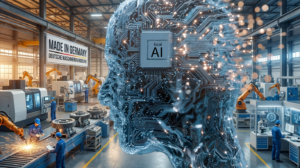

From the mainframe era to cloud dominance: The emergence of digital dependency
The current situation can only be understood against the backdrop of a centralization trend that has developed over decades. The history of computer technology is characterized by recurring cycles between centralization and decentralization, with each cycle giving rise to new dependency structures and power constellations.
In the mainframe era of the 1960s and 1970s, computing power was concentrated in a few large data centers controlled by companies like IBM. The personal computer revolution of the 1980s democratized access to computing power and shifted control to users. The internet revolution of the 1990s created new networking possibilities, while the cloud computing wave, beginning in 2006 with the launch of Amazon Web Services, initiated a renewed centralization, this time under the control of a handful of US technology companies.
The rise of generative AI from 2022 onward significantly intensified this centralization dynamic. The extreme computing power demands of training large language models seemed to cement the hyperscaler oligopoly. OpenAI, Google, and Microsoft invested billions in proprietary models and controlled access through APIs and subscription models. By 2025, these companies planned to collectively spend over $300 billion on AI infrastructure, with Amazon alone investing around $100 billion, Google approximately $91 billion, and Microsoft roughly $80 billion.
The emergence of open-source alternatives was initially gradual, but gained momentum from 2023 onwards. Meta released its Llama models, Mistral AI in France positioned itself as the European champion, and increasingly competitive open-weight models emerged from China. However, the decisive breakthrough came with DeepSeek, which, through radical efficiency optimization, proved that world-class performance is achievable even without the resources of the US hyperscalers.
Parallel to the development of language models, a quiet revolution took place in the field of physical AI. Advances in vision-language-action systems, high-precision sensors, and embedded AI chips enabled autonomous systems to perceive and interpret their environment and act independently. This convergence of powerful open-source models and advanced hardware for edge computing forms the foundation of the APAI revolution.
Related to this:

The anatomy of upheaval: Technological drivers and market dynamics
The current upheaval is driven by several mutually reinforcing factors, the interplay of which creates a qualitatively new paradigm.
The first key driver is the algorithmic efficiency revolution. DeepSeek demonstrated with its Sparse Attention technology that the computational effort required to process long texts can be drastically reduced by filtering out irrelevant information early on. While traditional transformer architectures exhibit computational effort that increases quadratically with sequence length, the new architecture linearizes this effort. Training costs for DeepSeek V3 amounted to only $5.5 million, while competing models like GPT-4 were estimated to cost over $100 million. This 18-fold increase in efficiency makes local operation economically attractive.
The second driver is hardware democratization. The availability of used high-end graphics cards like the NVIDIA RTX 3090 at prices around €700 allows even smaller companies to build their own AI infrastructure. A dual RTX 3090 system with 48 gigabytes of VRAM can run models with 70 billion parameters and achieves performance close to GPT-4 levels. The total investment for such a system is between €2,500 and €3,000.
The third driver is the shift in cost structures. Studies show that on-premises AI infrastructure, with stable, high utilization, can be up to 62 percent more cost-effective than cloud solutions and even 75 percent cheaper than API-based services. A Swiss hospital calculated that an on-premises infrastructure costing $625,000 over three years would deliver the same performance as a cloud solution costing $6 million. The break-even point is typically reached when utilization exceeds 60 to 70 percent.
The fourth driver is the increasing importance of data sovereignty. With the EU AI Act and the GDPR, European companies are subject to strict regulations regarding data transfers to third countries. The ability to operate high-performance AI locally completely eliminates the compliance risk of data flowing to US servers. A survey revealed that German companies prefer AI systems from Germany to foreign solutions, driven by regulatory requirements and concerns about data sovereignty.
The relevant players in this market can be divided into several categories. On the hyperscaler side are Microsoft, Google, Amazon, and Meta, which together dominate the cloud AI market. Microsoft holds approximately 39 percent market share in the area of foundation models. Opposing them are open-source challengers such as DeepSeek, Meta with Llama, and Mistral AI, which has a valuation of €13.7 billion. On the hardware side, NVIDIA dominates with a 92 percent market share in data center GPUs but faces increasing competition from AMD, Intel, and specialized chips from AWS.
Quantitative inventory: The market in numbers
The current market situation can be precisely described by a number of indicators that illustrate both the dynamics of growth and the emerging areas of tension.
The global cloud market reached a volume of US$107 billion in the third quarter of 2025, an increase of US$7.6 billion compared to the previous quarter. AI adoption in European companies rose from 8 percent in 2021 to 13.5 percent in 2024, with large companies showing significantly higher adoption rates than SMEs. However, according to the World Economic Forum, less than one percent of companies worldwide have fully operationalized responsible AI, and over 60 percent of European firms are still in the earliest stages of maturity.
The energy footprint of AI infrastructure poses a growing challenge. Data centers consumed approximately 415 terawatt-hours of electricity globally in 2024, and this figure could rise to between 900 and 1,000 terawatt-hours by 2030. In the US, data centers already accounted for 4 percent of total electricity consumption in 2024, with projections indicating a doubling by 2030. Generative AI requires seven to eight times more energy than traditional workloads, further intensifying the sustainability debate.
The chip supply situation remains tight. NVIDIA dominates the AI chip market with an 80 percent global market share, leading to shortages and price increases. SK Hynix reports that all its chips are sold out until 2026, while demand for high-bandwidth memory (HBM) is limiting availability for consumer electronics. These bottlenecks are driving companies to diversify their supply chains and explore alternative architectures.
Investment flows are clearly trending. The Global AI Infrastructure Investment Partnership, backed by BlackRock, Microsoft, and NVIDIA, aims to attract $80 to $100 billion to AI data centers and energy infrastructure. In the US, a private investment of up to $500 billion in AI infrastructure has been announced under the project name "Stargate." The EU is mobilizing €200 billion for AI investments, €50 billion of which will come from public funds.
German industry is sending mixed signals. According to the International Trade Administration, 84 percent of German manufacturers plan to invest around $10.5 billion annually in smart manufacturing by 2025. Companies like Siemens, Bosch, and BMW are already using AI for quality control, predictive maintenance, and energy management. However, it has been criticized that German industrial groups are stuck in a so-called "pilot purgatory," where experiments are conducted but no large-scale implementations are undertaken.
Our EU and German expertise in business development, sales and marketing

Our EU and German expertise in business development, sales and marketing - Image: Xpert.Digital
Industry focus areas: B2B, digitalization (from AI to XR), mechanical engineering, logistics, renewable energies and industry
More information here:
A thematic hub offering insights and expertise:
- Knowledge platform covering global and regional economies, innovation and industry-specific trends
- A collection of analyses, insights, and background information from our key areas of focus
- A place for expertise and information on current developments in business and technology
- A hub for companies seeking information on markets, digitalization, and industry innovations
Fragmented AI world: How geopolitics is reshaping access to models and chips
Contrasting strategies compared: USA, China and Europe
The different approaches of the leading economic regions reveal fundamental strategic divergences that will have long-term effects on global competitiveness.
The United States pursues a strategy of proprietary dominance, supported by massive capital investment and export controls. Leading US companies, most notably Microsoft, OpenAI, and Google, rely on closed models with access via paid cloud APIs. OpenAI generated $3.7 billion in revenue in 2024 and projects $12.7 billion for 2025. This strategy is based on the assumption that technological superiority can be maintained through scaling and proprietary data. At the same time, the US is attempting to restrict China's access to high-end chips and secure hardware dominance through aggressive export controls.
The strengths of this approach lie in its superior capital resources, established ecosystem of developers and integrations, and close collaboration with enterprise customers. Its weaknesses include increasing customer price sensitivity, a shrinking performance advantage over open-source alternatives, and growing skepticism regarding data privacy. OpenAI's model advantage has decreased from six months in 2024 to potentially zero by November 2025.
China pursues a diametrically opposed strategy of open-source disruption. DeepSeek, Alibaba's Qwen family, and other Chinese players release their models under permissive licenses and compete on efficiency rather than scale. DeepSeek's decision to release a GPT-5-level model under the Apache 2.0 license aims to cannibalize the margins of Western competitors and reduce global reliance on US technology. The Chinese government supports this strategy through subsidies, land grants, and electricity quotas for data centers, as well as by promoting the domestic chip industry to reduce dependence on foreign technology.
The strengths of this approach lie in its extreme cost-efficiency, global reach through open source, and strategic positioning as an alternative to US dominance. Weaknesses include political risks and mistrust in Western markets, a shorter track record in terms of security and reliability, and potential regulatory hurdles in sensitive industries.
Europe positions itself between these poles, focusing on sovereignty and regulation. The EU's "Apply AI Strategy" emphasizes European solutions and open models, particularly for the public sector, supports SMEs through Digital Innovation Hubs, and promotes the development of its own frontier AI capabilities. Mistral AI has established itself as a European champion, with a valuation of €13.7 billion following a €1.7 billion funding round that included ASML and NVIDIA. Deutsche Telekom, together with NVIDIA, is building one of Europe's largest AI factories in Munich, scheduled to begin operations in the first quarter of 2026 and increase AI computing capacity in Germany by approximately 50 percent.
The strengths of the European approach lie in its robust regulatory framework, which fosters trust, its focus on data sovereignty as a competitive advantage, and its growing ecosystem of startups and research institutions. Weaknesses include significantly lower capital resources compared to US competitors, fragmented markets and slow decision-making processes, as well as a lag in computing capacity, with Europe hosting only 18 percent of global data center capacity, of which less than 5 percent is owned by European companies.
Related to this:


Downsides and unresolved conflicts: A critical examination
The APAI revolution is not without significant risks and controversial aspects that are often overlooked in the euphoria surrounding technological possibilities.
Geopolitical risk represents a key uncertainty factor. DeepSeek is a Chinese company, and while there is no evidence of backdoors in its models, concerns exist regarding potential future interference or regulatory restrictions. The US has already tightened export restrictions on AI chips, and it cannot be ruled out that similar measures will be extended to AI models. Companies operating in critical infrastructure must carefully assess this risk.
The energy issue presents a fundamental dilemma. The electricity consumption of AI data centers is rising rapidly, and even decentralized edge solutions require significant resources. An AI data center consumes as much electricity as 100,000 households, and the largest facilities currently under development consume 20 times more. CO2 emissions from data centers could increase from 212 million tons in 2023 to 355 million tons by 2030. This development is at odds with climate targets and could lead to regulatory intervention.
The shortage of skilled workers remains a bottleneck. Managing local AI infrastructure requires specialized expertise that many companies do not have in-house. Accenture reports that 36 percent of European workers do not feel adequately trained to use AI effectively, which is a major reason why 56 percent of large European organizations have not yet scaled their AI investments.
The security risks of decentralized systems are often underestimated. While local AI eliminates the risk of data leakage to cloud providers, it creates new attack vectors. AI APIs should never be directly exposed to the open internet, and building a secure infrastructure with VPNs, reverse proxies, and network segmentation requires additional investment and expertise.
The debate surrounding Small Language Models versus Large Language Models raises fundamental questions. While proponents praise small models for specialized applications as more cost-effective and practical, critics emphasize that the performance of large models remains indispensable for many complex tasks. IBM argues that small models require less memory and processing power and are therefore easier to deploy in resource-constrained environments. On the other hand, DeepSeek V3.2 scores 83.3 percent in LiveCodeBench, behind Gemini 3 Pro's 90.7 percent, demonstrating that performance differences remain significant for demanding tasks.
The conflict between innovation and regulation is particularly evident in Europe. While the EU AI Act, whose rules for high-risk AI systems will apply from August 2026, fosters trust, it also carries the risk of disadvantaging European companies compared to less regulated competitors. Penalties for non-compliance can reach up to €35 million or 7 percent of global revenue. In November 2025, the European Commission proposed simplifications in its "Digital Omnibus on AI," aiming to postpone compliance deadlines and introduce relief for SMEs.
Future development paths: Scenarios and disruption potentials
Further developments will be influenced by several factors, the interplay of which allows for different scenarios.
In the baseline scenario of gradual decentralization, open-source models prevail in specific application areas, while hyperscalers maintain their dominance in premium services. The market segments: Sensitive applications and cost-optimized workloads migrate to on-premises infrastructure, while generic tasks and burst-like workloads remain in the cloud. German companies are building hybrid architectures, with Deloitte reporting that 68 percent of companies with AI in production already pursuing some form of hybrid hosting strategy. In this scenario, the edge AI market grows continuously but only reaches critical mass in industrial applications by the end of the decade.
In the accelerated disruption scenario, a breakthrough in model compression enables models with 100 billion parameters to run on standard hardware with 24 gigabytes of VRAM. Prices for cloud AI APIs fall dramatically as hyperscalers are forced to compete with free alternatives. OpenAI and Google partially or fully open up their models to defend market share. Europe seizes the opportunity to build its own AI infrastructure, and the "Germany Stack" of Deutsche Telekom and SAP becomes the standard for public institutions and safety-critical applications. In this scenario, the share of local AI deployments in German companies could rise from under 10 percent to over 30 percent within 18 months.
In a fragmentation scenario of geopolitical escalation, tightened export controls and regulatory divergences lead to a split in the global AI landscape. Western companies are cut off from using Chinese models, while China develops its own standards and exports them to the Global South. Europe attempts to forge a third way but struggles with insufficient resources and fragmented approaches. In this scenario, costs rise for all stakeholders, and the pace of innovation slows globally.
Potential disruptors that could influence these scenarios include breakthroughs in quantum computing, which could become commercially available by 2030 and enable fundamental changes in AI training and inference. The integration of federated learning into enterprise applications could enable collaborative model training without data sharing, thereby unlocking new forms of cross-industry AI development. Finally, regulatory innovations such as European AI sandboxes and simplified compliance requirements could significantly accelerate adoption.
Related to this:

Strategic recommendations: Implications for decision-makers
The analysis leads to differentiated implications for various stakeholder groups.
For policymakers, this necessitates accelerating the development of European AI infrastructure with substantial investments. The EU initiative with one billion euros in funding is a start, but falls far short of investments by the US and China. Creating a European AI chip ecosystem, promoting open-source projects, and harmonizing regulatory frameworks are priorities. Maintaining a balance between fostering innovation and protecting against misuse requires constant attention.
For business leaders, a phased approach is recommended. First, an inventory of AI applications should be conducted to identify which workloads process sensitive data and are suitable for local migration. A pilot project with a distilled 70-billion-parameter model on a dual RTX 3090 configuration allows for the gathering of experience with manageable risk. The total cost of ownership (TCO) should be calculated over a three-year horizon, taking into account that on-premises solutions offer significant cost advantages with stable utilization. Building internal expertise in AI operations is essential, as reliance on external service providers presents a new risk.
For investors, the sector offers attractive opportunities with calculable risks. Edge AI and physical AI markets are growing at double-digit annual rates and are driven by structural trends. Investments in the "picks and shovels" of the AI revolution—hardware, infrastructure, and tooling—promise more stable returns than bets on individual model generations. Diversification across regions and technological approaches reduces geopolitical risks.
Related to this:

A historic turning point
The evolution towards autonomous physical AI marks nothing less than a reconfiguration of the global technology architecture. The era in which a few US companies controlled access to high-performance AI is drawing to a close. It is being replaced by a pluralistic ecosystem where open-source models, local infrastructure, and decentralized processing offer genuine choice.
A historic opportunity is opening up for the German and European economies. The combination of stringent data protection requirements, industrial expertise, and growing technological sovereignty is creating competitive advantages that have previously been neutralized by cloud dependencies. Companies that invest in local AI infrastructure now are positioning themselves for a future where data sovereignty and cost efficiency are no longer mutually exclusive.
The challenges remain significant. Energy consumption, skills shortages, geopolitical risks, and regulatory uncertainties demand prudent management. But the direction is clear: the future of artificial intelligence is decentralized, locally controlled, and increasingly physically embedded. Those who ignore this development risk not only falling behind technologically but also becoming strategically dependent in an age that will be dominated by intelligent machines.
The crucial question is no longer whether this change will happen, but how quickly it will occur and who will be best positioned to benefit from it. For decision-makers in business and politics, the time for waiting is over. The window for strategic action is now open.
A new dimension of digital transformation with 'Managed AI' (Artificial Intelligence) - Platform & B2B solution | Xpert Consulting

A new dimension of digital transformation with 'Managed AI' (Artificial Intelligence) – Platform & B2B solution | Xpert Consulting - Image: Xpert.Digital
Here you will learn how your company can implement customized AI solutions quickly, securely and without high entry barriers.
A managed AI platform is your all-inclusive, worry-free solution for artificial intelligence. Instead of dealing with complex technology, expensive infrastructure, and lengthy development processes, you receive a ready-made solution tailored to your needs from a specialized partner – often within just a few days.
The key advantages at a glance:
⚡ Rapid implementation: From idea to ready-to-use application in days, not months. We deliver practical solutions that create immediate added value.
🔒 Maximum data security: Your sensitive data stays with you. We guarantee secure and compliant processing without sharing data with third parties.
💸 No financial risk: You only pay for results. High upfront investments in hardware, software, or personnel are completely eliminated.
🎯 Focus on your core business: Concentrate on what you do best. We take care of the entire technical implementation, operation, and maintenance of your AI solution.
📈 Future-proof & scalable: Your AI grows with you. We ensure continuous optimization and scalability, and flexibly adapt the models to new requirements.
More information here:
Your global marketing and business development partner
☑️ Our business language is English or German
☑️ NEW: Correspondence in your native language!

Konrad Wolfenstein
I and my team are happy to be available to you as your personal advisor.
You can contact me by filling out the contact form here wolfenstein@xpert.digital:or simply call me at +49 7348 4088 965. My email address is
I'm looking forward to our joint project.
☑️ SME support in strategy, consulting, planning and implementation
☑️ Creation or realignment of the digital strategy and digitization
☑️ Expansion and optimization of international sales processes
☑️ Global & Digital B2B trading platforms
☑️ Pioneer Business Development / Marketing / PR / Trade Fairs
🎯🎯🎯 Benefit from Xpert.Digital's extensive, five-fold expertise in one comprehensive service package | BD, R&D, XR, PR & Digital Visibility Optimization

Benefit from Xpert.Digital's extensive, five-fold expertise in a comprehensive service package | R&D, XR, PR & Digital Visibility Optimization - Image: Xpert.Digital
Xpert.Digital possesses in-depth knowledge across various industries. This allows us to develop tailored strategies precisely aligned with the requirements and challenges of your specific market segment. By continuously analyzing market trends and monitoring industry developments, we can act proactively and offer innovative solutions. The combination of experience and expertise generates added value and provides our clients with a decisive competitive advantage.
More information here: