Warehouse automation: When optimization is sufficient and when a comprehensive retrofit is unavoidable – Image: Xpert.Digital
Retrofit vs. warehouse optimization: How to find the best solution for your company
Step by step to the perfect warehouse strategy: Analysis, evaluation and decision
The question of whether targeted warehouse optimization is the best solution or a comprehensive retrofit is unavoidable depends on a multitude of factors that each company must assess individually. It involves a detailed analysis of the current state of the warehouse system and a comparison with the company's future requirements and goals. There is no one-size-fits-all answer, but a structured approach helps in making the right decision.
Related to this:
The path to warehouse optimization: Targeted improvements for greater efficiency
Warehouse optimization offers a sensible and often more cost-effective alternative if the warehouse's fundamental structure is still intact. This means that the mechanical infrastructure, such as racking, conveyor technology, or any installed automation components, still fulfills its purpose and has no serious defects. If only adjustments or targeted improvements are needed to accelerate or streamline existing processes, optimization may suffice. The primary focus here is on increasing efficiency within the existing framework, without making sweeping technological changes.
Specific measures for warehouse optimization can be diverse: The implementation or significant improvement of the warehouse management system (WMS) often plays a central role. A modern WMS enables more precise inventory management, optimizes picking routes, and improves overall order processing. Detailed recording of warehouse movements and stock levels allows for the identification of bottlenecks and better resource planning.
Optimizing the warehouse layout and associated workflows can also lead to significant efficiency gains. A well-thought-out arrangement of storage locations, consideration of turnover rates, and a clear structuring of picking zones can shorten walking distances and reduce throughput times. The introduction of clearly defined processes and responsibilities further contributes to smoother operations.
An often underestimated factor is the human element. Targeted employee training regarding new processes, the use of new software, or optimized workflows can make a significant difference. Improved employee management, for example through more detailed work instructions or performance monitoring, can also contribute to increased efficiency.
The introduction of mobile devices such as scanners or tablets, or even the use of smart glasses for direct process support, can increase accuracy and reduce processing times. Employees thus have all relevant information directly in their field of vision and can perform work steps faster and more accurately.
The comprehensive retrofit: When renewal becomes a necessity
A retrofit, on the other hand, is unavoidable, or at least the more economically sensible option, when the existing system is outdated and this manifests itself in frequent malfunctions and associated downtime. If spare parts for obsolete components are difficult to obtain or have become disproportionately expensive, this also indicates the need for a complete overhaul. Rising operating costs due to inefficiencies, such as high energy consumption in older systems or inefficient processes, can also be a strong argument for a retrofit.
Safety aspects play a crucial role. If existing systems no longer meet current safety standards or even pose safety risks, a retrofit is essential to protect employee health and comply with legal requirements. Similarly, if a significant increase in warehouse performance is required that cannot be achieved with existing resources, a retrofit is almost always the only option.
The integration of new technologies or comprehensive automation solutions is another important driver for retrofit projects. Companies that want to strengthen their competitiveness through the use of modern technologies such as artificial intelligence (AI) or augmented reality (AR) will generally not be able to avoid a retrofit.
The many advantages of a retrofit
A key advantage of a retrofit lies in the lower costs compared to a completely new build. Typically, retrofit costs range from 30 to 70 percent of the cost of a brand-new facility. This allows companies to modernize their warehouse infrastructure without unduly straining their budget.
A well-executed retrofit significantly extends the lifespan of the equipment, often by 15 to 20 years. This is an important aspect, as it allows the original investment to be used for a longer period and extends the depreciation periods.
Retrofitting often significantly increases plant availability, frequently by more than 20 percent. Replacing vulnerable components and modernizing control technology reduces susceptibility to malfunctions and increases operational reliability.
The warehouse's performance also benefits from a retrofit. Throughput increases of 10 to 30 percent are not uncommon. This is achieved through faster conveyor technology, more intelligent control algorithms, and more efficient processes.
Another important aspect is improving energy efficiency. Modern drives, energy-optimized controls, and intelligent operation can significantly reduce energy consumption and thus sustainably lower operating costs. This not only contributes to profitability but also makes an important contribution to environmental protection.
The retrofit also offers the opportunity to integrate modern technologies such as AI or AR. AI can be used, for example, in warehouse management to generate demand forecasts, optimally allocate storage locations, or predict maintenance intervals (predictive maintenance). AR can support maintenance work or order picking processes by displaying relevant information directly in the employees' field of vision.
The path to the right decision: Structured decision-making
To make an informed decision as to whether warehouse optimization is sufficient or a comprehensive retrofit is necessary, a structured approach is recommended:
First, a comprehensive plant analysis is essential. This should include a detailed assessment of the current state of the mechanics, control technology, software, and the entire infrastructure. What bottlenecks are currently hindering smooth operation? Which components are particularly prone to failure? What is the current level of automation?
The next step should be to assess the product lifecycle of the installed components. Are any important components already discontinued or about to be phased out? Is the supply of spare parts guaranteed, or are shortages imminent? This will provide insight into how long the existing system can likely continue to operate reliably.
A detailed analysis of current and future business requirements is also crucial. How will order volumes develop? Are changes planned to the product range or sales channels? What demands do customers place on delivery times and flexibility? The warehouse must be able to meet these future demands.
Based on these analyses, a cost-benefit analysis should be prepared for various scenarios. What costs are associated with pure optimization? What investments are necessary for a retrofit, and what benefits does it bring (e.g., increased performance, lower operating costs, improved safety)? Long-term aspects should also be considered.
The impact on ongoing operations must also be considered in the decision. Can a retrofit be carried out during normal operations, or are extended downtimes unavoidable? What impact would this have on delivery capacity and customer satisfaction? In many cases, it is possible to perform a retrofit in phases to minimize disruptions.
A retrofit is particularly useful when the mechanical components of the system are still in good condition, but the controls, drives, and software are outdated and no longer meet current requirements. The existing mechanical infrastructure can thus continue to be used while the "smart" components are brought up to date.
Ultimately, the decision depends on the specific requirements, the available budget, and the company's long-term goals. Careful planning and detailed analysis are crucial to making the right choice between optimization and retrofitting, thereby ensuring the warehouse's long-term efficiency and competitiveness. It is advisable to seek advice from experienced experts who possess the necessary know-how to evaluate the various options and find the best solution.
The future of warehouse automation: More than just increased efficiency and cost reduction
The increasing automation of warehouses is not a trend, but a necessity, driven by diverse factors and the unstoppable progress in technology and the economy. The reasons for automation are multifaceted and extend far beyond mere cost reduction. In the future, the role of the warehouse will fundamentally change, transforming from a simple storage location into an intelligent logistics center.
The driving forces of warehouse automation
Increased efficiency and cost reduction remain key motivators for automation. Automated systems operate around the clock, without fatigue, and with high precision. This leads to a significant acceleration of warehouse processes compared to manual labor. In the long term, automation lowers operating costs by reducing personnel requirements, minimizing errors, and optimizing energy consumption. Optimal utilization of available warehouse space, achieved through automated storage systems, can result in space savings of up to 80 percent.
Automation is also a response to the growing challenges of modern logistics. The increasing shortage of skilled workers in the logistics sector is making it ever more difficult to find and retain qualified personnel. Automated systems can help close part of this gap. At the same time, customer expectations regarding delivery speed and quality are constantly rising. E-commerce and same-day delivery are no longer just a vision of the future, but a reality. Automated warehouses enable companies to meet these demands. Market volatility and the growing demands of e-commerce also require flexible and responsive logistics solutions, which can be achieved through automation.
An often overlooked aspect is the improvement of working conditions. Automation relieves employees of monotonous and physically demanding tasks that can lead to health problems in the long run. Occupational safety is increased by having machines take over dangerous tasks. Furthermore, more ergonomic workplaces can be created, for example in order picking, where robots lift heavy loads or perform repetitive tasks.
A look into the future: The trends in warehouse automation
The future of warehouse automation is characterized by rapid technological developments and innovative concepts:
Advanced robotics and artificial intelligence (AI) will play an increasingly important role. The use of autonomous mobile robots (AMRs) for flexible transport tasks within warehouses will continue to grow. These robots can orient themselves without fixed paths and dynamically adapt to changing conditions. Collaborative robots (cobots), which can work safely alongside humans, are being used in more and more areas, such as order picking and packaging. The integration of AI and machine learning enables predictive analytics, for example, to predict machine failures (predictive maintenance) or to optimize inventory levels. AI-supported systems will also be able to make complex decisions autonomously and continuously improve processes. Even swarm intelligence, in which many small robots work together in a coordinated manner, could play a role in the future. AI will also be used in quality control, for example, through image recognition to identify damaged products.
Related to this:
Innovative technologies will revolutionize warehouse logistics. The use of drones for inventory tasks, where they autonomously fly through the aisles and record stock levels, will become more efficient and faster. In the future, drones could also be used for transporting goods within the warehouse or even for last-mile delivery. Virtual and augmented reality (VR/AR) offer new possibilities for system planning and employee training. Employees can practice new processes in virtual environments or familiarize themselves with the operation of complex systems. AR glasses can assist with maintenance work by displaying technical information or step-by-step instructions directly in the technician's field of vision. The use of digital twins, virtual representations of the real warehouse, enables the simulation and optimization of warehouse processes before changes are implemented in the real world. Blockchain technology could also play a role in the future to increase transparency and traceability in the supply chain.
Related to this:
Networking and data utilization are becoming increasingly important. The Internet of Things (IoT) enables real-time monitoring and control of systems and processes. Sensors collect data on the condition of machines, the fill level of containers, and the location of goods. This data is used to optimize processes and react to disruptions at an early stage. Cloud computing provides the necessary infrastructure to process and analyze these vast amounts of data. Big Data Analytics makes it possible to identify patterns and trends and to make informed decisions. The integration of various systems, such as warehouse management systems (WMS), transportation management systems (TMS), and enterprise resource planning (ERP) systems, ensures a seamless flow of information throughout the entire supply chain. Cybersecurity is becoming an increasingly important issue in order to protect sensitive data from unauthorized access.
Sustainability and flexibility are also increasingly coming into focus. The use of energy-efficient and resource-conserving automation solutions is becoming ever more important in order to reduce the ecological footprint. This includes, for example, the use of energy-efficient drives, the utilization of renewable energies, and the optimization of transport routes to save fuel. There is also a trend toward scalable and flexible systems that can quickly adapt to fluctuating requirements. Modular automation solutions enable companies to expand or reduce their capacities as needed. The trend toward smaller, decentralized warehouses located close to customers (micro-fulfillment centers) will increase to enable faster deliveries and reduce last-mile costs. Circular economy concepts will also gain importance in warehouse logistics, for example, through the reuse of packaging materials or the return of products. Human-machine collaboration (HMC) will be an important component of future warehouses. Robots will not completely replace human workers, but rather take on supporting tasks and work hand in hand with employees.
Warehouse automation will lead to a comprehensive transformation of the logistics industry, prioritizing efficiency, flexibility, sustainability, and human-machine collaboration. Companies that recognize these developments early and integrate them into their strategies can secure significant competitive advantages and solidify their position in the global market. The future of the warehouse is intelligent, networked, and autonomous – a place where technology and human expertise work together seamlessly.
LTW Intralogistics Solutions
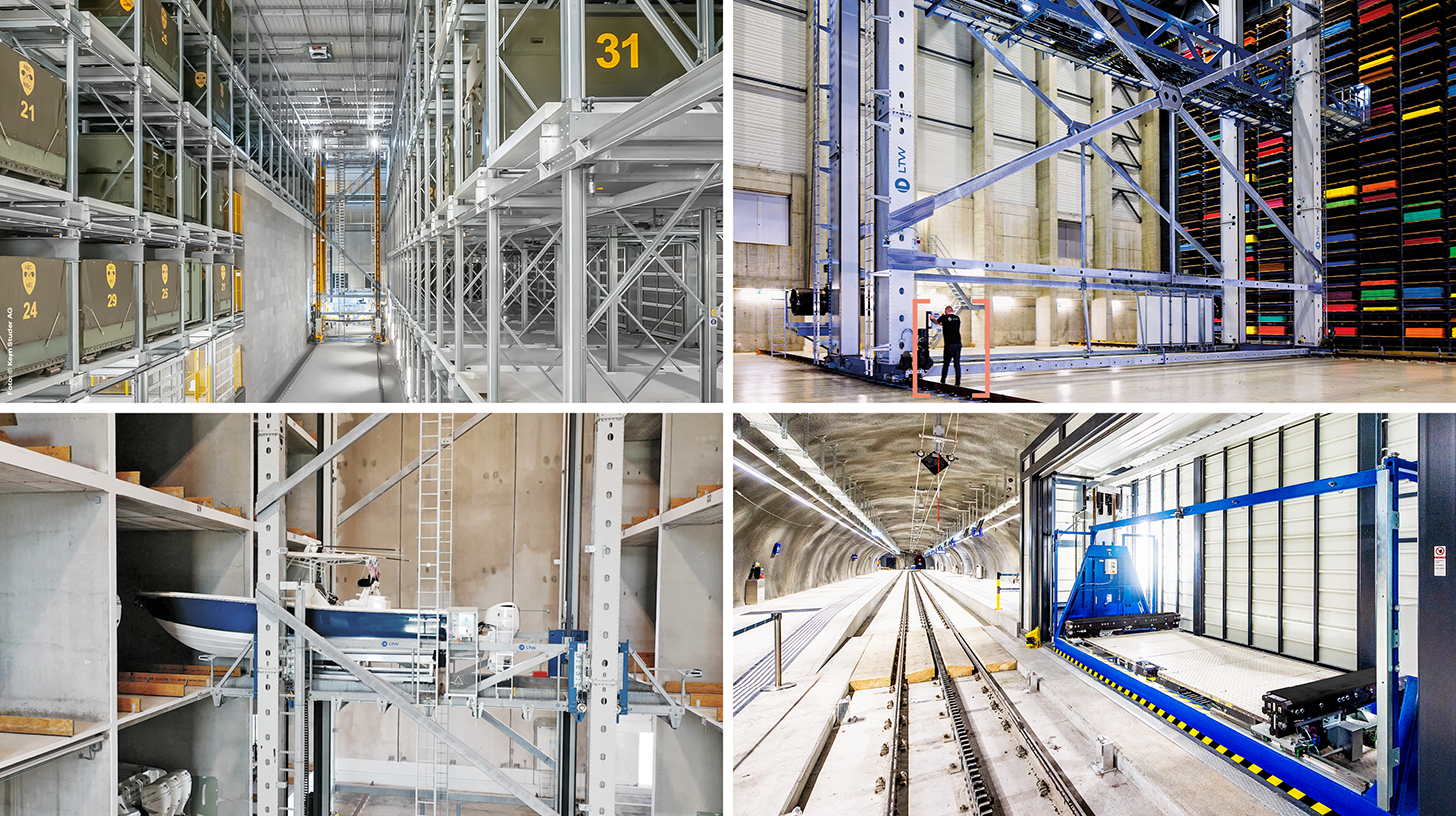
LTW Intralogistics – Engineers of Flow - Image: LTW Intralogistics GmbH
LTW offers its customers not individual components, but integrated complete solutions. Consulting, planning, mechanical and electrotechnical components, control and automation technology, as well as software and service – everything is networked and precisely coordinated.
In-house production of key components is particularly advantageous. This allows for optimal control of quality, supply chains, and interfaces.
LTW stands for reliability, transparency, and collaborative partnership. Loyalty and honesty are firmly anchored in the company's philosophy – a handshake still means something here.
Related to this:
Warehouse automation: When is warehouse optimization sufficient and when is a retrofit necessary?
The decision between warehouse optimization and retrofitting presents many companies with a key challenge. In an era where efficiency and adaptability are among the key factors for success in logistics, making the right choice is crucial. This guide highlights the most important aspects, offers valuable insights, and expands on the topic with forward-looking perspectives.
Warehouse optimization: Increased efficiency through targeted adjustments
Warehouse optimization can be the right choice if the existing infrastructure is largely intact and only minor adjustments are needed to make processes more efficient.
When is warehouse optimization worthwhile?
- Technical integrity: The mechanics and basic infrastructure of the warehouse are still functional and meet current requirements.
- Minimal adjustments: Only minor improvements or extensions are required.
- Process-focused goals: The focus is on increasing the efficiency of existing processes without extensive technological innovations.
- Budget constraints: A complete modernization or retrofit would be oversized or too expensive.
Possible measures for warehouse optimization
- Improvement of the warehouse management system (WMS): A modern WMS enables more precise control of warehouse processes and improves transparency.
- Optimizing the warehouse layout: The arrangement of shelves, picking stations and aisles can bring significant efficiency gains.
- Employee training: Investments in the further education of staff to ensure optimal use of existing resources.
- Use of mobile technologies: Smart glasses or mobile devices can provide real-time information and accelerate processes.
Retrofit: Modernization instead of new construction
A retrofit is a good option when the existing infrastructure no longer meets the requirements, but a complete new system is neither necessary nor economical.
When is a retrofit necessary?
- Age of the plant: The existing systems are outdated, leading to malfunctions or shutdowns.
- Spare parts problems: Spare parts are difficult to obtain or are associated with high costs.
- Increased operating costs: Inefficiencies are driving up ongoing costs.
- Security risks: New security standards can only be met through modernization.
- Technological requirements: The integration of new technologies such as automation or digital systems is necessary.
Advantages of a retrofit
A retrofit offers numerous advantages, including:
- Cost efficiency: The costs are typically between 30-70% of a new building.
- Lifespan extension: The system lifespan is increased by 15 to 20 years.
- Performance increase: Higher throughput rates of 10% to 30%.
- Energy efficiency: Improved technologies reduce energy consumption.
- Seamless integration: Modern technologies such as AI and AR can be easily integrated.
Decision-making: Optimization or Retrofit?
The decision between warehouse optimization and retrofitting requires a comprehensive analysis. The following steps will help with the decision-making process:
- Analysis of existing facilities: Technical condition, efficiency and capacities must be assessed.
- Life cycle assessment: How long can the existing components still be used economically?
- Business requirements: Are the current and future requirements for the warehouse known?
- Cost-benefit analysis: Which scenario offers the best returns?
- Impact on operations: How severely will ongoing operations be affected?
A retrofit is particularly recommended when the mechanical infrastructure is still sound, but controls, drives, or software need to be modernized. Well-planned retrofits can even be carried out during operation.
Why warehouse automation?
Warehouse automation is becoming increasingly important. This is due to the numerous advantages it offers and the challenges it addresses.
Efficiency improvement and cost reduction
- Speed: Automated processes run up to ten times faster than manual ones.
- Cost reduction: Lower staffing needs and reduced error rates lead to lower operating costs in the long term.
- Space saving: Up to 80% of storage space can be saved through compact automation solutions.
Overcoming challenges
- Skills shortage: Automation helps to compensate for the increasing shortage of skilled workers in logistics.
- Rising customer expectations: Fast deliveries and high quality are becoming the standard.
- Flexibility: Automated systems adapt more quickly to market changes.
Improvement of working conditions
- Ergonomics: Employees are relieved of heavy or repetitive tasks.
- Safety: Hazardous tasks are taken over by machines.
- Motivation: Satisfaction increases through collaboration with modern technologies.
Future trends in warehouse automation
The future of warehouse automation will be shaped by innovation and technological advancements. Here are the key trends:
Advanced robotics and AI
- Autonomous mobile robots (AMRs): These robots offer flexible solutions for transport and order picking.
- Collaborative robots (cobots): Cobots work side by side with humans and can take over tasks such as packaging.
- Predictive analytics: AI-based systems optimize warehouse processes through real-time data analysis.
This goes well with:
Innovative technologies
- Drones: These can conduct inventories and potentially even transport goods.
- Virtual and Augmented Reality (VR/AR): These technologies support the planning of systems and the training of employees.
- Blockchain: For greater transparency and security in the supply chain.
Related to this:
Networking and data use
- Internet of Things (IoT): Sensors monitor and control warehouse processes in real time.
- Digital twins: Virtual models of the warehouse help to simulate and optimize processes.
- Seamless integration: Systems are networked to ensure a smooth flow of information.
Sustainability and flexibility
- Energy efficiency: Automated systems reduce energy consumption.
- Decentralized warehouses: Smaller warehouses located near customers shorten delivery times.
- Scalability: Systems can be adapted to growing requirements.
Decision-making is a strategic process
The decision between warehouse optimization and retrofitting is a strategic process that depends on a company's specific needs. Both approaches offer their own advantages and require careful planning. Looking ahead, it's clear that warehouse automation remains key to competitiveness. Companies that invest in intelligent solutions now will secure long-term advantages in a rapidly changing world.

Xpert.Plus Warehouse Optimization - High-bay warehouses and pallet warehouses: Consulting and planning
We are here for you - Consulting - Planning - Implementation - Project Management
☑️ SME support in strategy, consulting, planning and implementation
☑️ Creation or realignment of the digital strategy and digitization
☑️ Expansion and optimization of international sales processes
☑️ Global & Digital B2B trading platforms
☑️ Pioneer Business Development

Konrad Wolfenstein
I would be happy to serve as your personal advisor.
You can contact me by filling out the contact form below or simply call me on +49 7348 4088 965 .
I'm looking forward to our joint project.
Write to me


Xpert.Digital - Konrad Wolfenstein
Xpert.Digital is a hub for industry focusing on digitalization, mechanical engineering, logistics/intralogistics and photovoltaics.
With our 360° Business Development solution, we support renowned companies from new business to after-sales.
Market intelligence, smarketing, marketing automation, content development, PR, mail campaigns, personalized social media and lead nurturing are part of our digital tools.
You can find more information at: www.xpert.digital - www.xpert.solar - www.xpert.plus
Keep in touch