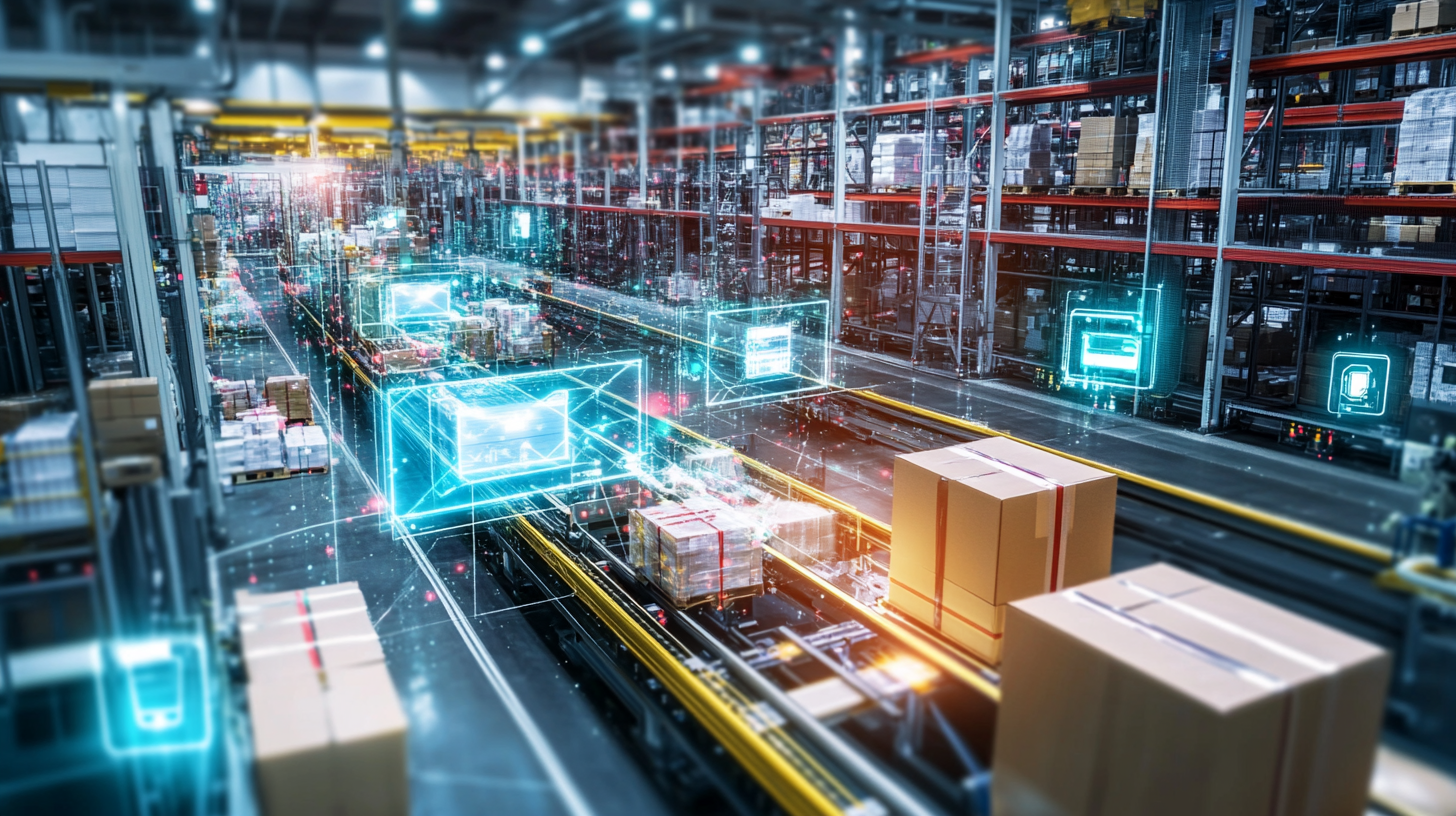
Automated warehouses in Spain: Key trends with AI and IoT – From high-bay warehouses to robots – Image: Xpert.Digital
The future is automated: How Spain's logistics sector can remain competitive
Automated warehouses in Spain: Trends, market leaders and future prospects
Warehousing in Spain is undergoing a profound transformation, driven by the rapid growth of e-commerce, increasing demands for delivery speed, and growing pressure for efficiency. Forecasts predict that the market for automated warehouses in Spain will reach a volume of €2.5 billion by 2026. This development underscores the immense importance of automation solutions for companies seeking to thrive in an increasingly competitive environment. Automated warehouses not only provide a solution to logistical challenges but also enable companies to enhance their competitiveness and position themselves optimally for the future.
Key trends in automated warehousing in Spain
1. Growth of e-commerce and its impact on logistics
The e-commerce sector in Spain is booming and posing new challenges to the supply chain. Increasing customer demand for same-day or next-day delivery is forcing companies to make their warehousing more efficient. Automated warehouses offer a crucial solution by enabling faster throughput times, optimized inventory management, and more precise order fulfillment.
2. Artificial Intelligence (AI) and Machine Learning (ML)
The use of AI and ML in warehousing is steadily increasing. These technologies improve warehouse logistics through predictive maintenance, optimized storage routes, and automated inventory management. Intelligent algorithms analyze large amounts of data in real time to continuously optimize processes.
3. Robotics and Automation
Robots are playing an increasingly important role in warehouse logistics. They take over tasks such as order picking, packing, and palletizing. Modern robots are increasingly collaborative and can be flexibly integrated into existing systems to maximize efficiency.
4. Internet of Things (IoT) and Big Data Analysis
By networking machines and systems, the IoT enables the collection of vast amounts of data. This data can be used to analyze and optimize warehouse processes. Combined with big data analytics, bottlenecks can be identified and workflows optimized.
5. Sustainability and energy efficiency
Sustainable warehousing is gaining importance. Companies are increasingly investing in energy-efficient systems to minimize their carbon footprint. This includes, for example, the use of renewable energies, energy-efficient lighting, and optimized heating and cooling systems.
6. Increase in micro-fulfillment centers
Smaller, decentralized warehouses in urban areas are becoming increasingly important for reducing delivery times for customers. Automation solutions play a key role in operating these small warehouses efficiently.
7. Labor shortage and automation as a response
The shortage of skilled workers in the logistics industry is worsening, causing companies to increasingly rely on automation to compensate for staffing shortages.
8. Government funding programs for automation
The Spanish government supports automation through various funding programs. Companies that invest in automated warehouses benefit from financial incentives and tax breaks.
Market leader in automated warehousing in Spain
1.DAIFUKU
DAIFUKU is a global leader in automated material flow and storage systems. The company offers a broad portfolio, including stacker cranes, conveyor technology, sorting systems, and software solutions. In Spain, DAIFUKU has implemented numerous projects, particularly for the food and automotive industries.
2. SSI SCHÄFER
SSI SCHÄFER is an internationally operating provider of logistics systems. Of particular note are their modular warehouse solutions, which can be flexibly adapted to customer needs.
3. Dematic
Dematic develops integrated automation solutions for intralogistics and is represented in Spain with several major projects.
4. Vanderlande
The Dutch company Vanderlande specializes in material flow systems and offers solutions for warehouses, distribution centers and airports.
5. Mecalux
Mecalux is a Spanish provider of warehouse automation and software solutions. The company is one of the leading players in the Spanish market.
Technologies and solutions in automated warehouses
1. Storage and order picking systems
- Storage and retrieval machines: Optimized for high-bay warehouses to efficiently utilize storage space.
- Shuttle systems: Increase storage density and speed of goods movement.
- Automated guided vehicles (AGVs): For the autonomous transport of goods within the warehouse.
2. Material flow technologies
- Conveyor technology: Roller conveyors, chain conveyors and belt conveyors for internal transport.
- Sorting systems: Automatic distribution of goods according to destination, weight, or other criteria.
3. Software and networking
- Warehouse management software (WMS): Controls and optimizes all processes within the warehouse.
- 5G and IoT: Enables real-time monitoring of warehouse processes and seamless communication between machines.
Industry-specific trends and solutions
- Retail: Automated warehouses increase efficiency and enable faster order processing.
- Food industry: Temperature-controlled solutions ensure safe storage.
- Automotive industry: AGVs and automated warehouse control optimize parts supply in production.
The future of automated warehousing in Spain
The automation of warehousing in Spain will continue to advance. The e-commerce boom, increasing efficiency demands, and technological advancements are driving this trend. Companies investing in modern warehouse technologies not only benefit from greater efficiency and lower costs but also position themselves as competitive players in a rapidly changing market. The growing demand for automation will also create new jobs in software development, data analytics, and robotics, thereby strengthening the Spanish economy in the long term.
Expert partner in warehouse planning and construction

Automated warehouses in Spain: An overview of trends, market leaders and the role of DAIFUKU - Background analysis
Spain relies on high-tech: The rapid rise of automated logistics systems
The Spanish logistics sector is undergoing a profound transformation, fueled by the explosive growth of e-commerce, ever-increasing expectations for fast delivery times, and the relentless pursuit of efficiency improvements. A study by LogisticsIQ predicts that the automated warehouse market in Spain will reach an impressive €2.5 billion by 2026. This development highlights the pivotal role that automated warehouses play in addressing today's logistical challenges and how they help companies sustainably strengthen their competitiveness. Below, we will delve into the key trends, leading market players, and groundbreaking technologies in automated warehousing in Spain, with a particular focus on the company DAIFUKU.
The dynamics of change: Key trends in automated warehousing
The Spanish automated warehouse market is a dynamic field influenced by a multitude of factors, leading to constant innovation and emerging trends. These trends shape the logistics landscape and define how companies store and distribute their goods.
The e-commerce boom as a driving force
The e-commerce sector in Spain is growing rapidly, presenting the logistics industry with new challenges. The demand for same-day delivery and short lead times is putting pressure on Spanish companies to automate their processes to remain competitive. Automated warehouses offer crucial advantages in this regard: they enable faster delivery times, higher throughput rates, and more efficient order processing. Automation makes it possible to meet rising customer expectations while simultaneously maximizing operational efficiency.
Artificial intelligence and machine learning as game changers
Artificial intelligence (AI) and machine learning (ML) have become indispensable tools in automated warehouses. These technologies enable process optimization, improved forecasting, and support informed decision-making. AI and ML are used, for example, to optimize warehouse routes, implement predictive maintenance, and automate inventory management. These applications lead to significant cost savings and increased efficiency.
robotics
The future of warehouse work: The integration of robots into warehouse environments is steadily increasing. Robots take over tasks such as order picking, packing, and palletizing, thereby increasing efficiency and relieving the burden on human workers. The use of robots enables 24/7 operation and reduces the error rate, significantly improving the overall productivity of the warehouse.
The Internet of Things and data-driven decisions
The networking of devices and systems in the warehouse through the Internet of Things (IoT) enables the collection and analysis of large volumes of data. This data provides valuable insights into warehouse processes, allowing for the optimization of workflows, cost reduction, and overall performance improvement. The ability to analyze data in real time and make informed decisions is a significant advantage for modern, automated warehouses.
Sustainability as a competitive factor
The trend towards sustainability is gaining increasing importance in warehousing as well. Companies are increasingly relying on energy-efficient technologies, environmentally friendly packaging materials, and optimized transport routes to reduce their ecological footprint. Automation offers significant advantages in this regard, as it makes it possible to considerably reduce energy consumption by optimizing lighting, heating, and cooling in warehouses.
Micro-Fulfillment Center
Decentralization for faster deliveries: The increasing prevalence of micro-fulfillment centers, i.e., small, decentralized warehouses in urban areas, is a clear trend in Spain. These decentralized warehouses enable faster and more flexible deliveries to customers in metropolitan areas. They promote the use of automated solutions to optimize space and processes and are crucial for addressing the challenges of the "last mile" in e-commerce.
The shortage of skilled workers as a challenge
The labor shortage in the logistics sector poses significant challenges for companies. Automated warehouses help to close this gap by taking over tasks that were previously performed by humans. This development is not only a necessity but also an opportunity to transform and make work in the logistics industry more attractive.
Government funding programs as a catalyst
The Spanish government supports warehouse automation through various initiatives and funding programs. These measures help to promote investment in automated warehouse solutions and strengthen the competitiveness of Spanish companies. Government support signals that warehouse automation is not just a trend, but a strategic priority for the Spanish economy.
The protagonists of change: Leading companies in the field of automated warehousing
The Spanish automated warehousing market is characterized by intense competition, in which several established companies distinguish themselves through their innovative strength and market presence. Key players include:
DAIFUKU
DAIFUKU is a leading global provider of automated material handling systems and warehouse solutions. The company offers a comprehensive portfolio of products and services, including stacker cranes, conveyor technology, sorting systems, and software solutions. "Our goal is to create solutions that are not only efficient but also sustainable," is a common refrain at DAIFUKU. DAIFUKU's strong presence in Spain and its numerous projects across various industries underscore the company's importance to the Spanish market.
SSI Schäfer
SSI Schäfer is a globally operating provider of warehousing and logistics systems. The company offers a comprehensive range of products and services, including racking systems, container handling systems, order picking technology, and software. A key competitive advantage of SSI Schäfer is its focus on modular solutions that can be flexibly adapted to customer needs. SSI Schäfer is known for its ability to develop customized solutions that meet the individual requirements of its customers.
Dematic
Dematic is a leading global provider of integrated automation solutions for intralogistics. The company designs, builds, and maintains automated warehouse systems for various industries. Dematic has a strong presence in Spain and collaborates with many well-known companies. Its solutions are designed to maximize the efficiency and agility of logistics processes.
Vanderlande
Vanderlande is a global market leader in innovative material handling systems, offering a wide range of solutions for various industries, including warehouses, distribution centers, and airports. The company provides solutions for warehouses and distribution centers, including sorting systems, conveyor technology, and robotics. Vanderlande specializes in the development and implementation of complex automated logistics systems.
Mecalux
Mecalux is an international provider of warehouse solutions headquartered in Spain. The company offers a wide range of products and services, including racking systems, warehouse automation, and warehouse management software. Mecalux is one of the leading providers of warehouse solutions in Spain and distinguishes itself through its local expertise and comprehensive product portfolio.
DAIFUKU: A detailed analysis of the market position in Spain
DAIFUKU distinguishes itself in the Spanish market through its extensive expertise, broad product portfolio, and strong customer focus. The company offers innovative solutions for a wide range of industries and requirements, from small to large warehouse projects. DAIFUKU places great emphasis on quality, reliability, and long-term partnerships with its customers.
DAIFUKU's strengths in Spain include its extensive market experience, a strong partner network, and a comprehensive service offering. The company has established itself as a reliable partner for complex automation projects. Its weaknesses include higher prices compared to some competitors and a focus on large-scale projects, which may limit the appeal to smaller companies. However, the quality and reliability of its solutions often justify the higher investment costs.
DAIFUKU has already completed numerous successful projects in Spain, including automated warehouses for leading companies in the food retail, automotive, and logistics sectors. DAIFUKU's key clients in Spain include Mercadona, SEAT, and DHL, highlighting the versatility and trust placed in the company's solutions.
Concrete examples: Case studies of automated warehouses in Spain
The diversity and complexity of automated warehouses are best illustrated by concrete examples:
Case Study 1
DAIFUKU at a Spanish food retailer: DAIFUKU implemented a state-of-the-art, automated warehouse for a leading Spanish food retailer. The warehouse features a cutting-edge storage and retrieval system and efficient conveyor technology, enabling fast and precise order fulfillment. This solution is a prime example of how automation improves efficiency and speed in food supply.
Case Study 2
SSI Schäfer at a logistics company: SSI Schäfer implemented an automated warehouse for a Spanish logistics company. The warehouse utilizes an innovative shuttle system for storing and picking small parts. This solution demonstrates how shuttle systems increase storage density and improve flexibility in handling different types of goods.
Case Study 3
Dematic in the fashion industry: Dematic developed an automated warehouse for a Spanish fashion retailer. The warehouse is equipped with an automated sorting system and robotic order picking, demonstrating how the fashion industry benefits from customized automation solutions. The combination of sorting systems and robotic order picking enables fast and precise processing of fashion items.
Technology in detail: The building blocks of automated warehouses
In automated warehouses in Spain, various technologies and solutions are used to increase efficiency and optimize processes.
Storage systems
Storage and retrieval machines (SRMs)
Stacker cranes (SRCs) are automated cranes that store and retrieve goods in high-bay warehouses. They enable high storage density and efficient space utilization. Modern SRCs are equipped with sensors and control systems that ensure precise and safe movement of goods. Experts often emphasize that the precision and speed of SRCs are crucial for smooth warehouse operations.
Shuttle systems
Shuttle systems are automated transport systems that move goods within racking systems. They enable high storage density and flexible adaptation to different stored goods. These systems are particularly suitable for warehouses with many different items and high throughput requirements.
Material Handling
Conveyor technology
Conveyor systems transport goods within the warehouse. There are various types of conveyor technology, such as roller conveyors, chain conveyors, and belt conveyors. Modern conveyor systems are modular and can be flexibly adapted to the warehouse's requirements. "Reliable conveyor technology is the backbone of an efficient warehouse," say industry experts.
Sorting systems
Sorting systems automatically distribute goods according to various criteria, such as destination, size, or weight. They enable the fast and efficient sorting of large quantities of goods. These systems are indispensable for distribution centers and high-turnover warehouses.
Automated Guided Vehicles (AGVs)
AGVs autonomously transport goods within the warehouse. They are frequently used for transporting pallets or containers. AGVs navigate using sensors and software and can flexibly adapt to changing environments. The integration of AGVs enables a flexible and efficient material supply.
order picking systems
Pick-by-Light
Employees are guided to the correct storage location by light signals. This results in high picking speeds and low error rates. "Pick-by-light systems are easy to use and very effective," is a common observation in practice.
Pick-by-Voice
Employees receive picking instructions via voice command, allowing them to work hands-free and flexibly. This system is particularly suitable for complex picking processes.
Pick-by-Robot
Robots handle the order picking, resulting in high efficiency and 24/7 operation. The use of robots is a crucial step towards warehouse automation.
Software and communication
Warehouse management software (WMS)
A warehouse management system (WMS) controls and optimizes all warehouse processes, from goods receipt to shipping. Modern WMS systems offer functions such as inventory management, storage space optimization, and route planning. "A high-performance WMS is the heart of an automated warehouse," say experts.
5G
5G technology enables fast and reliable data transmission in warehouses. This is particularly important for the use of real-time applications such as controlling AGVs or monitoring warehouse processes. Real-time communication is crucial for the efficient control of automated processes.
Industry-specific trends and solutions
The specific requirements of different industries lead to customized automation solutions:
retail
In the retail sector, automated warehouses are being used to meet the increasing demands of e-commerce. Solutions such as automatic sorting systems and robot-assisted order picking enable fast and efficient order processing.
logistics
In the logistics industry, automated warehouses are used to optimize transport processes and increase throughput rates. Solutions such as AGVs and automated truck loading and unloading systems improve efficiency and reduce costs.
food industry
Automated warehouses are used in the food industry to maintain the cold chain and ensure product shelf life. Solutions such as temperature-controlled storage areas and automated picking systems ensure safe and efficient food storage.
Automotive industry: In the automotive industry, AGVs are used to transport parts and components within production facilities and warehouses. This enables an efficient and flexible supply of materials to production.
The path to the future of warehousing
The Spanish market for automated warehouses is experiencing dynamic growth, driven by the e-commerce boom and increasing logistics demands. Companies are embracing automation to strengthen their competitiveness and meet market challenges.
Leading companies such as DAIFUKU, SSI Schäfer, Dematic, and Vanderlande play a crucial role in providing innovative solutions for various industries. DAIFUKU is particularly distinguished by its extensive expertise, broad product portfolio, and strong customer focus.
The most important technologies in automated warehouses are stacker cranes, conveyor technology, sorting systems, order picking systems, warehouse management software, AGVs, and robots. Industry-specific solutions are offered for the retail, logistics, food, and automotive industries.
Automated warehouses will play an even more important role in the Spanish economy in the future. Experts anticipate continued market growth in the coming years. Companies investing in this technology can increase their efficiency, reduce costs, and improve their competitiveness. At the same time, automated warehouses will help create new jobs in areas such as software development, data analysis, and robot maintenance. Warehouse automation is therefore an integral part of the modernization and growth of the Spanish economy. Technological advancements and strategic investments in this sector will significantly shape the future of Spanish logistics and set new standards for efficiency and sustainability.

Xpert.Plus Warehouse Optimization - High-bay warehouses and pallet warehouses: Consulting and planning
We are here for you - Consulting - Planning - Implementation - Project Management
☑️ SME support in strategy, consulting, planning and implementation
☑️ Creation or realignment of the digital strategy and digitization
☑️ Expansion and optimization of international sales processes
☑️ Global & Digital B2B trading platforms
☑️ Pioneer Business Development

Konrad Wolfenstein
I would be happy to serve as your personal advisor.
You can contact me by filling out the contact form below or simply call me on +49 7348 4088 965 .
I'm looking forward to our joint project.
Write to me


Xpert.Digital - Konrad Wolfenstein
Xpert.Digital is a hub for industry focusing on digitalization, mechanical engineering, logistics/intralogistics and photovoltaics.
With our 360° Business Development solution, we support renowned companies from new business to after-sales.
Market intelligence, smarketing, marketing automation, content development, PR, mail campaigns, personalized social media and lead nurturing are part of our digital tools.
You can find more information at: www.xpert.digital - www.xpert.solar - www.xpert.plus
Keep in touch