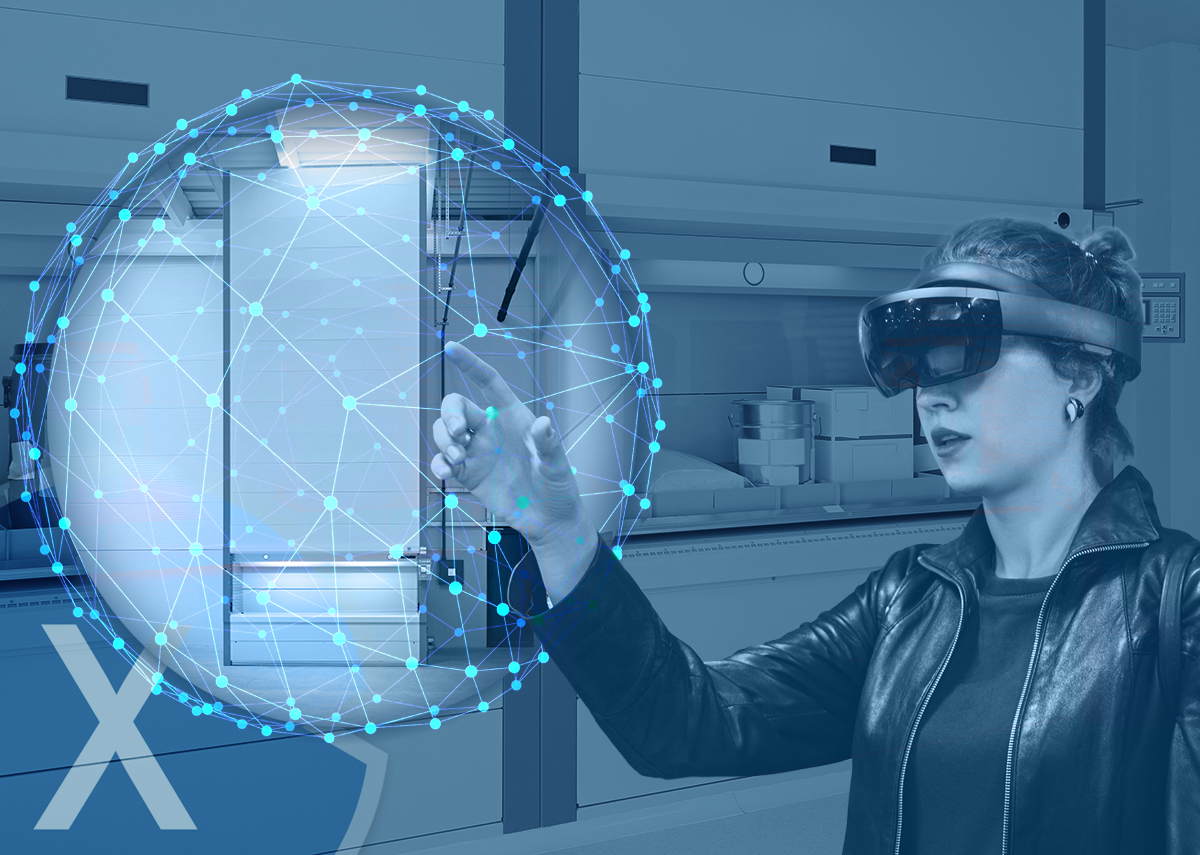
Automated storage racks from carousel racks to rotary storage systems – Image: Xpert.Digital
Automated warehouse racking: How could paternoster racks be equipped with intelligent sensors to automatically monitor inventory, identify bottlenecks, and trigger reorders?
The future prospects for automated storage systems such as carousel racks, vertical lifts, and rotary storage systems are extremely promising. With the integration of the Automation Metaverse and the use of new sensor technologies, including 2D matrix codes, exciting opportunities are opening up for manufacturers and companies to further increase the efficiency and productivity of their warehouse processes.
Automation Metaverse is a digital ecosystem that brings together the entire product range of automated warehouse racking systems in a virtual environment. Here, manufacturers and customers can explore the different racking types, analyze their functions and performance, and make informed decisions. High-resolution 3D models and simulations allow them to see the racking systems in action and virtually test their use in their specific warehouse environment.
A key aspect of the future development of automated storage racks lies in advancing sensor technology, particularly the use of 2D matrix codes. These codes enable the precise and reliable capture of information such as product identification, storage location, and movement within the storage system. By integrating 2D matrix codes into the racks, critical data can be captured in real time and transmitted to the automation metaverse to ensure comprehensive monitoring and control of the warehouse.
Connecting the Automation Metaverse to automated storage racks offers numerous advantages. Firstly, it enables seamless integration of processes and systems by consolidating information from various sources, thus facilitating efficient communication and control. For example, inventory data can be automatically synchronized with ordering systems to ensure optimal inventory management. Furthermore, maintenance and repair work can be planned proactively, as the Automation Metaverse detects potential malfunctions and signs of wear early on and recommends appropriate measures.
The future development of automated warehouse racking will also be shaped by advances in artificial intelligence (AI) and machine learning. Through the integration of intelligent algorithms, the racking systems can learn independently, adapt to changing storage conditions, and identify optimal processes. For example, they can optimize routes to improve material flow and avoid bottlenecks. Furthermore, they can react early to emerging changes in demand, thus ensuring efficient warehousing.
Another important aspect of the future development of automated storage racks is improved safety. By using modern sensor technology, such as 3D cameras and lidar systems, potential hazards can be detected and avoided. The racks can recognize obstacles and stop in time to prevent collisions and ensure the safety of employees and stored goods.
➡️ The future prospects for automated warehouse racking in the Automation Metaverse and with the help of new sensor technologies are promising. Manufacturers and companies can benefit from more efficient warehouse processes, optimized inventory management, preventive maintenance, and increased security. Through the seamless integration of processes and systems, the further development of AI algorithms, and the use of innovative sensor technologies, automated warehouse racking is becoming an indispensable element of modern logistics solutions.
Our Industrial Metaverse Configurator
Simply try out our universally applicable (B2B/Business/Industrial) Metaverse Configurator for all CAD / 3D demo options:
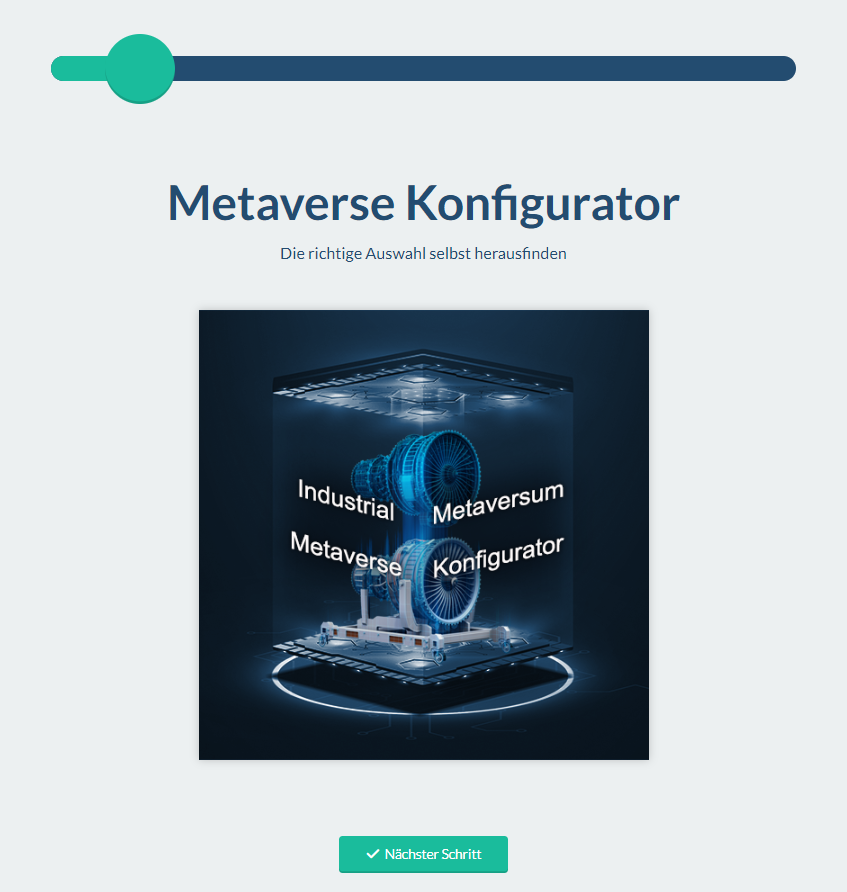

Xpert (B2B/Business/Industrial) Metaverse Configurator for all CAD / 3D data, usable on all end devices, one platform!
Related to this:
What are the differences between carousel storage systems, vertical lift storage systems, and rotary storage systems, and where can they complement each other?
Carousel storage systems, vertical lifts, and rotary storage systems are three different types of storage solutions that can be used in various situations and applications. Although they all serve to optimize warehousing and logistics processes, they differ in their functionality, design, and applications. Nevertheless, they can also complement each other to create an efficient and versatile storage solution.
Carousel storage systems, also known as stacker cranes, are automated storage racks where the shelves are arranged in a closed loop. A carousel consists of multiple levels that can be moved either horizontally or vertically. A storage and retrieval machine, also known as a shuttle, moves along the rack and can request shelves to retrieve or store the desired products. Carousel storage systems offer high storage density and efficient use of available space. They are particularly suitable for storing small items and are frequently used in areas such as spare parts logistics or e-commerce warehouses.
Vertical storage lifts, also known as paternoster lifts, are vertical storage racks consisting of a series of drawers or platforms. The drawers move vertically up or down to provide access to the stored products. Vertical storage lifts offer efficient use of vertical space and allow for quick and easy access to products. They are well-suited for storing medium to large products and are commonly used in areas such as document archiving, workshops, or industrial storage environments.
Carousel storage systems, also known as rotary racks or carousels, consist of a rotating platform with storage compartments. The platform rotates continuously around its axis, allowing access to the desired shelves and products. Carousel storage systems offer high storage density and efficient space utilization, similar to carousel racks. They are suitable for storing small, high-traffic products and are frequently used in areas such as pharmacies, hospitals, and retail stores.
Although carousel storage systems, vertical lifts, and vertical carousel storage systems have different functionalities, they can also complement each other to create optimal storage solutions. For example, carousel storage systems can be used in combination with vertical lifts to increase the efficiency and throughput of the warehouse. Carousel storage systems offer high storage density and allow quick access to products, while vertical lifts enable vertical storage and rapid product retrieval.
Carousel storage systems can also be used in combination with carousel racking to achieve even higher storage density and flexibility. Carousel storage systems offer efficient use of space on a horizontal plane, while carousel racking enables vertical storage and quick access to products.
Carousel storage systems, vertical lifts, and rotary storage systems offer various advantages and disadvantages depending on a company's specific requirements and needs. By combining and integrating these storage solutions, companies can create customized and efficient warehouse environments that meet their business demands. It is important to understand the specific features and benefits of each type of storage solution and to choose the right combination to maximize warehouse productivity, efficiency, and profitability.
Top Ten: The ten best-known manufacturers and companies for carousel storage systems, vertical lifts and rotary storage systems
Ferretto Group
The Ferretto Group is an internationally operating company specializing in the production of carousel storage systems and rotary storage systems. Its products are characterized by their high quality and flexibility.
Kasto
Kasto is a renowned manufacturer of storage lifts and carousel racking systems for the efficient and space-saving storage of materials. The company is known for its technologically advanced solutions.
Mecalux
Mecalux is an international manufacturer of storage solutions, including carousel racking, vertical lifts, and vertical carousel storage systems. The company offers a wide range of products for optimal storage and order picking.
SSI Schäfer
SSI Schäfer is a renowned manufacturer of carousel storage systems, vertical lifts, and rotary storage systems. The company offers customized solutions for optimizing intralogistics and warehousing.
Constructor Group
The Constructor Group is a global provider of storage and logistics solutions, including carousel racking, vertical lifts, and vertical carousel storage systems. The company places great emphasis on innovation and customer satisfaction.
Kardex Remstar
Kardex Remstar is a renowned manufacturer of carousel storage systems and vertical lifts. The company offers a wide range of innovative solutions for optimizing warehousing and logistics processes.
Hänel
Hänel is a leading global supplier of vertical storage and retrieval systems. The company distinguishes itself through its high quality, reliability, and efficiency in the vertical storage and retrieval of goods.
Weland storage system
Weland Lagersystem is a Swedish manufacturer of carousel racking and vertical lift systems. The company is distinguished by its high-quality products and expertise in warehouse logistics.
Modula
Modula is a manufacturer of vertical storage systems, including carousel racking and vertical lifts. The company offers space-saving and efficient solutions for storing and picking goods.
Remmert
Remmert is an established manufacturer of carousel storage systems, vertical lifts, and vertical carousel storage systems. The company offers innovative solutions for efficient storage and material flow control.
Revolutionary vertical solutions: The power of storage lifts for optimal space utilization
In a world where space is becoming increasingly scarce and the demands for efficient resource use are rising, vertical storage systems are playing an ever more important role. Carousel storage systems, in particular, have established themselves as a future-oriented solution for storing a wide variety of products. With their impressive ability to optimally utilize vertical space, they offer companies an efficient and space-saving way to organize and make their goods accessible.
The basic idea behind carousel storage systems is to create a vertical structure that allows goods to be stored on different levels while ensuring efficient access. Unlike conventional shelves, where each item must be picked individually, carousel storage systems rotate continuously, automatically bringing the desired goods to the picking position. This level of automation saves not only valuable time but also valuable space.
The key to efficient space utilization lies in the vertical design of carousel racking. Instead of being limited to a linear arrangement of shelves, carousel racking stacks the shelves on top of each other, thus utilizing the entire height of the warehouse. This makes optimal use of the available space and creates impressive capacities, even in limited areas.
Another advantage of carousel storage systems lies in their flexibility. Depending on a company's specific requirements, the racks can be individually configured and adapted. This allows for optimal use of available space and a customized storage solution tailored to specific needs.
Another interesting feature of carousel storage systems is their scalability. Since they are typically modular, they can easily be expanded or reduced in size to meet a company's changing needs. This means that companies no longer need to invest in entirely new storage systems, but can flexibly adapt their existing infrastructure.
The automation and digitalization of carousel storage systems further contribute to increased efficiency. With the help of modern technologies such as sensors, robots, and intelligent control systems, the racks can optimize the storage process and precisely control the movement of goods. This leads to further improvements in access times, a reduction in errors, and an overall increase in warehouse efficiency.
An interesting detail often overlooked in carousel shelving is its aesthetic impact. Its vertical structure and the continuous movement of the shelves create a striking visual presence. This makes it not only a functional storage tool but also an appealing design element that fosters a modern and innovative atmosphere.
The future of storage with carousel racking promises exciting developments. With the advent of technologies like the Internet of Things (IoT) and artificial intelligence, carousel racking can become even smarter and more interconnected. By integrating real-time data and automated analytics, it can automatically track inventory levels, generate reorders, and ensure optimal storage space utilization.
Carousel storage systems offer a future-proof solution for companies that want to maximize their storage capacity while ensuring efficient and accessible warehousing. With their vertical structure, flexibility, scalability, and automated functionality, they are an answer to today's challenges. Companies that invest in carousel storage systems can benefit from optimized space utilization, increased efficiency, and a modern image.
The upward trend: Storage lifts as an answer to limited space requirements
In today's world, where space requirements are constantly increasing and available storage areas are limited, efficient solutions are needed to optimize space utilization. This is where storage lifts come into play, serving as an innovative answer to this problem. Storage lifts are vertical transport systems that enable the space-saving and efficient storage and transport of goods and materials.
A storage lift essentially functions like a goods elevator. It consists of a vertical shaft in which a transport vehicle moves, picking up shelves or pallets and transporting them between different levels. These levels are typically structured by fixed racks or shelves. The upward movement of the transport vehicle allows the stored goods to be moved quickly and easily to the desired location.
The space required for vertical storage lifts is surprisingly small compared to conventional racking systems. Because these lifts operate vertically, they can optimally utilize available space and offer high storage capacities in a small footprint. This is particularly advantageous in buildings with limited space, such as inner-city warehouses or production facilities with high ceilings.
Another major advantage of vertical storage lifts is their high efficiency. Because goods are transported vertically, they can be moved quickly and without time-consuming movements. This leads to reduced access times and improved productivity. Employees can retrieve goods directly from or store them in the storage lifts without having to walk long distances. This also reduces the risk of damage or loss.
Storage lifts are typically equipped with modern control technology that optimizes the entire storage process. Sensors and software solutions allow the lifts to be automatically controlled to find the most efficient route for transporting goods. This enables fast and precise handling of storage processes and minimizes potential sources of error.
An interesting aspect of vertical storage lifts is their versatility. They can be used for a wide variety of products and materials, regardless of their size or weight. From small-scale storage needs to heavy industrial goods, vertical storage lifts offer a flexible solution for diverse industries and applications. Furthermore, they can be adapted to individual requirements and available space, allowing them to be seamlessly integrated into existing warehouse structures.
Furthermore, storage lifts also contribute to workplace safety. Thanks to automated control technology and a clear design, the risk of accidents and injuries is reduced. Employees no longer need to move heavy loads manually, but can concentrate on operating and monitoring the storage lift. This not only reduces physical strain but also improves overall working conditions.
Storage lifts offer an efficient and space-saving solution for companies facing limited space. They enable optimal use of available space, efficient organization of goods, and quick access. Their versatility and safety contribute to improved productivity and a better working environment. Storage lifts are therefore an answer to the challenges of limited space and an investment in the future of warehouse logistics.
The future for carousel storage systems, vertical lifts and rotary storage systems in the Automation Metaverse
In this age of advancing technological development, fascinating opportunities are opening up for the warehousing industry. With the integration of augmented reality (AR) into storage solutions such as carousel racks, vertical lifts, and vertical carousel storage systems, companies can present their products and solutions in a completely new way. By creating an automation metaverse—a digital space that showcases the entire product range of these storage solutions—companies will be able to captivate their customers with immersive and interactive experiences.
Automation Metaverse offers a virtual environment where customers and prospects can explore various storage solutions. Here, they can gain a comprehensive understanding of the functionalities, capacities, and design features of carousel racking, vertical lifts, and rotary storage systems. High-resolution 3D models allow for a detailed examination of the storage solutions, resulting in a realistic and impressive experience.
But the Automation Metaverse offers far more than just a passive viewing of the products. Using augmented reality, the virtual storage solutions can be seamlessly integrated into the physical world. Customers can, for example, use their smartphone or AR glasses to view the carousel storage systems, vertical lifts, and vertical carousel storage systems in their real-world environment. The virtual storage solutions are precisely projected into the space and appear to the viewer as if they were actually there. Customers can view the racks from different angles, open and close them to understand how they work, and even place virtual products or goods on the racks to visualize the capacity and available space.
This AR experience opens up entirely new possibilities for companies to showcase their warehouse solutions and impress customers. Complex functionalities and innovative features can be demonstrated interactively without the need to transport physical units. Companies can compare different warehouse solution options in real time and tailor them to the individual requirements of their customers.
Another major advantage of augmented reality is its flexibility. Customers can experience virtual warehouse solutions not only at trade fairs and events, but also conveniently from their own location. By using AR-enabled devices, customers can immerse themselves in the Automation Metaverse from anywhere and explore carousel storage systems, vertical lifts, and vertical carousel storage as if they were physically present. This flexibility allows companies to expand their sales network and reach customers worldwide without the need for physical presentations.
The integration of augmented reality into the warehousing industry has the potential to revolutionize how warehousing solutions are presented and sold. Customers can experience products interactively, understand their functionality, and make informed purchasing decisions. At the same time, it enables companies to make their presentations more cost-effective, flexible, and environmentally friendly.
➡️ The Automation Metaverse and augmented reality are no longer mere visions of the future, but have already arrived in the present. Companies can already benefit from these technologies and present their warehouse solutions in innovative and compelling ways. The warehousing industry is entering a new era of product presentation, where the boundaries between the virtual and physical worlds are blurring, creating a seamless and immersive experience for customers.
XR technology
XR technology encompasses various areas, including Extended Reality (XR), Mixed Reality (MR), Augmented Reality (AR), and Virtual Reality (VR). Each of these technologies offers a unique experience and opens up new possibilities for product presentation and interaction with virtual environments. A special form of XR technology worth mentioning is virtual showrooms.
Extended Reality (XR)
Extended Reality (XR) is an umbrella term encompassing all technologies that connect the physical and digital worlds. XR augments reality, allowing users to immerse themselves in a more immersive environment that combines elements of the physical and virtual worlds. XR includes both AR and VR.
Augmented Reality (AR)
Augmented Reality (AR) integrates digital content into the physical environment, thereby enhancing our perception of the real world. With AR, virtual objects can be superimposed onto the real environment in real time. This is typically done via mobile devices such as smartphones or AR glasses. AR allows users to obtain information about real-world objects, place virtual objects, and interact with them.
Mixed Reality (MR)
Mixed Reality (MR) combines elements of the real and virtual worlds to create a hybrid environment. MR allows users to integrate digital objects into the real world and interact with them as if they were physically present. Unlike AR, where virtual objects are placed on top of the real environment, MR objects actively interact with the physical environment.
Virtual Reality (VR)
Virtual Reality (VR) creates a fully immersive virtual environment that completely isolates the user from the real world. Using VR headsets and specialized hardware, users can immerse themselves in this virtual environment and move freely within it. VR enables a realistic and immersive experience where users can view, interact with, and explore virtual objects.
Virtual showrooms
Virtual showrooms are a special form of XR technology that allows companies to showcase their products in a virtual environment. In a virtual showroom, users can navigate through an immersively designed virtual environment and view various products. Companies can create detailed 3D models of their products and present them in the virtual showroom. Users can view the products from different angles, explore details, and even interact with them. Virtual showrooms offer a realistic and immersive experience, enabling companies to present their products in an impressive way and provide customers with an interactive experience.
➡️ XR technology, with its various forms of Extended, Mixed, Augmented and Virtual Reality as well as virtual showrooms, enables a wide range of innovative applications and changes the way products are presented, interacted with and perceived.
The Metaverse for storage systems and XR technologies
In recent years, the concept of the metaverse and the ongoing development of XR technologies, such as augmented reality (AR) and virtual reality (VR), have attracted enormous attention. These exciting technologies are not only used in the entertainment sector but also open up new possibilities in the business world. In particular, the metaverse and XR technologies offer potential for presenting warehouse systems that could revolutionize the industry.
The Metaverse for storage systems is a virtual space showcasing the entire product range of paternoster racks, carousel racks, and rotary storage systems in a digital environment. It's an enhanced version of a traditional online catalog or website, allowing customers to experience storage solutions in an immersive 3D environment. Customers can view the racks from different angles, see them in action, and even interact with them to develop a deep understanding of their functionality and features.
Integrating XR technologies like AR and VR into the metaverse for storage systems takes the customer experience to a whole new level. With AR, for example, customers can use AR glasses or a mobile device to place virtual shelves in their real-world environment. The shelves then appear as 3D projections in the physical world, allowing customers to explore them in real time, open drawers, check capacities, and even place virtual items on the shelves to test their functionality. This interactive AR experience creates an immersive experience and helps customers select the storage systems best suited to their needs.
But VR technology also plays a key role in the presentation of storage systems in the Metaverse. Customers can use VR headsets to immerse themselves in a virtual environment and explore the storage solutions in a fully immersive context. They can walk through virtual warehouses, open shelves, pull out drawers, and even place virtual products on the shelves. VR technology allows customers to experience the storage systems in a true-to-scale and realistic environment, giving them a sense of size, capacity, and functionality.
Integrating the Metaverse for storage systems with XR technologies offers companies numerous advantages. First, they can present their storage solutions in an innovative and engaging way that enhances the customer experience and promotes product understanding. Customers can test the racking systems in a virtual environment and thus make informed decisions without having to provide physical samples.
Secondly, the integration of XR technologies enables global reach and flexibility. Customers can access the metaverse for storage systems from anywhere in the world, facilitating product access and allowing companies to expand their customer base. It also opens up the possibility of conducting trade shows, events, and product presentations virtually, saving time and money while reducing the environmental footprint.
Third, companies can use the metaverse and XR technologies to gather valuable customer feedback. By analyzing interaction data and customer behavior, companies can gain insights to further improve their products and services and make customer-centric decisions.
➡️ The Metaverse offers an exciting future vision for the presentation and interaction of warehouse systems and XR technologies. The merging of the digital and physical worlds opens up new possibilities for both customers and businesses. These technologies are expected to continue to evolve and become more widespread in the coming years, improving the customer experience and increasing efficiency in the selection and implementation of warehouse systems.

Xpert.Plus – industry expert, here with its own 'Xpert.Digital Industry Hub' in the field of mechanical engineering with over 1,000 specialist articles
Xpert.Plus is a project by Xpert.Digital. We have many years of experience in supporting and consulting on warehouse solutions and in warehouse optimization, which we combine under Xpert.Plus in a large network.

Konrad Wolfenstein
I would be happy to serve as your personal advisor.
You can contact me by filling out the contact form below or simply call me on +49 7348 4088 965 (Munich) .
I'm looking forward to our joint project.
Write to me


Xpert.Digital – Konrad Wolfenstein
Xpert.Digital is a hub for industry focusing on digitalization, mechanical engineering, logistics/intralogistics and photovoltaics.
With our 360° Business Development solution, we support renowned companies from new business to after-sales.
Market intelligence, smarketing, marketing automation, content development, PR, mail campaigns, personalized social media and lead nurturing are part of our digital tools.
You can find more information at: www.xpert.digital – www.xpert.solar – www.xpert.plus
Keep in touch