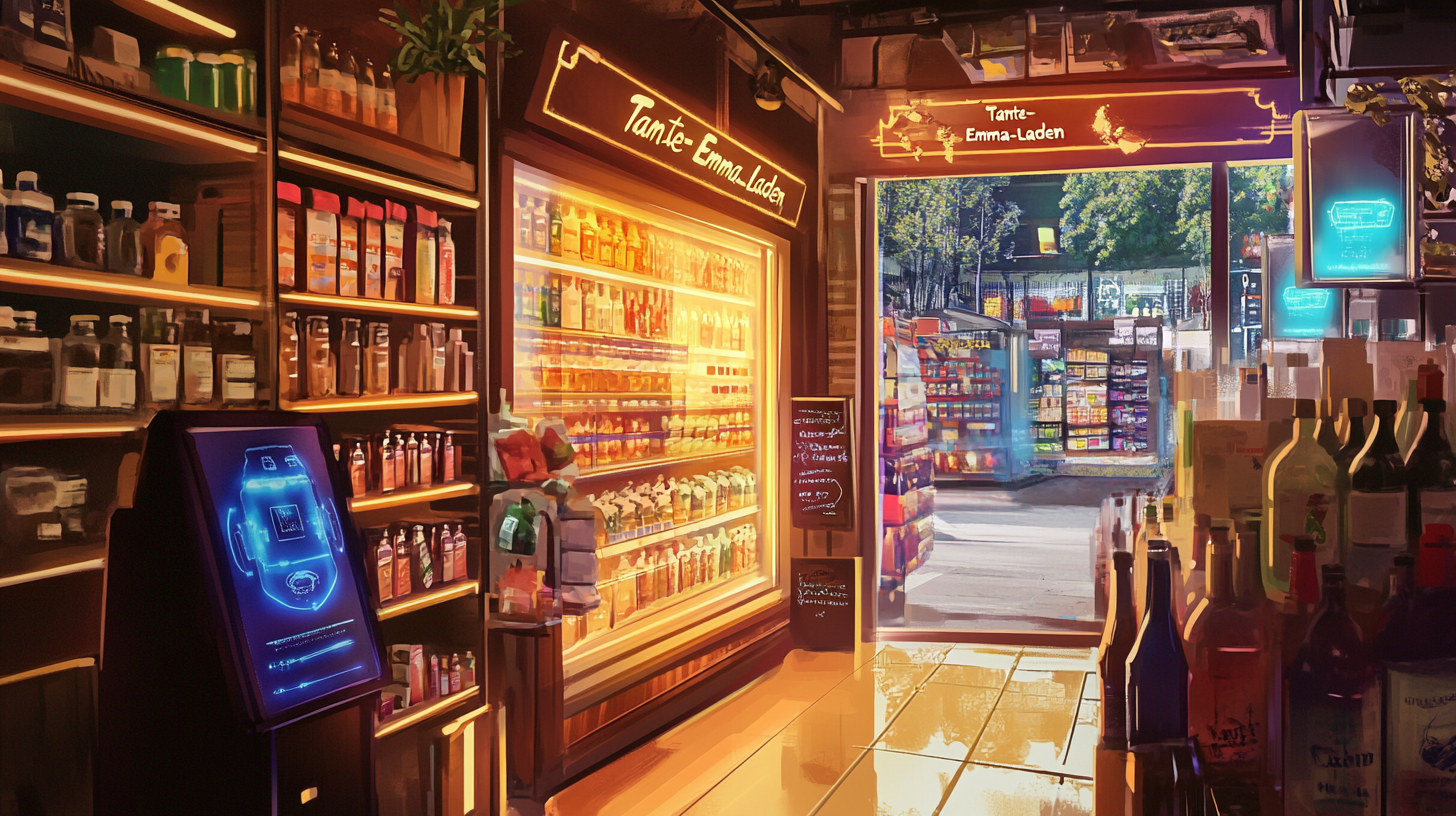
Between tradition and technology: How the corner shop lives on in smart shopping models – Image: Xpert.Digital
👩🍳🛒 The Renaissance of the Corner Shop: Tradition Meets Modernity
🌱✨ For decades, the business model of the classic corner shop was an integral part of local supply in Germany, Austria, and Switzerland. These small, mostly family-run stores were particularly prominent in the 1950s and 1960s before gradually succumbing to the economic pressures of large supermarkets and discount stores. However, with the growing demand for sustainable consumption and personal service, some aspects of the corner shop concept are experiencing a modern renaissance today – with innovative approaches that combine technology and tradition.
💡 What characterized the classic corner shop?
Corner shops were known for their personal and customer-oriented atmosphere. The term "corner shop" is an affectionate name that evokes the image of a familiar, almost familial relationship between shopkeepers and customers. Unlike the anonymous shopping environments of supermarkets, personal service, trust, and flexibility were paramount. Often, the owners knew their customers by name, were aware of their preferences, and even allowed customers to "buy on credit," meaning they could pay for products later.
These shops offered a limited selection of everyday necessities, including groceries, household goods, newspapers, and occasionally fresh, regional produce. Due to their small size and proximity to residential areas, they were particularly essential for rural regions or urban neighborhoods with limited access to larger stores.
📉 Why did the corner shop disappear?
With the rise of large supermarkets in the 1960s, the slow but steady decline of traditional corner shops began. The following main reasons led to the demise of this business model:
1. Economic pressure from large retail chains
Supermarkets and discount stores were able to offer a significantly wider range of products at lower prices. Their efficient logistics chains and considerable market power made it virtually impossible for smaller shops to remain price-competitive.
2. Limited supply and changing consumer behavior
The selection in small, independent shops was often limited, which no longer met the demands of modern consumers. The trend towards "everything under one roof" led to customers preferring larger markets that offered both food and non-food items.
3. Legal and economic changes
The abolition of fixed prices in the 1970s put many small retailers in a difficult position. They were unable to compensate for the price fluctuations of the wholesale markets and were driven out by the competition.
4. Urbanization and Mobility
Increased migration to cities and the expansion of private car use contributed to a decline in the number of customers at rural corner shops. At the same time, urban shopping centers offered a convenient and diverse alternative.
5. Staff shortages and high operating costs
Because small, independent shops were often more expensive to run – from personal customer service to sourcing goods – costs for their owners increased. This led to declining margins and made their long-term survival more difficult.
🤖 Modern successors: Smart shopping models with traditional elements
Despite the decline of the traditional corner shop, modern technologies and new business models have adopted and further developed the basic principles of this concept. The focus is on the values of local supply, personal service, and sustainability. Here are some innovative approaches:
1. Smart Stores:
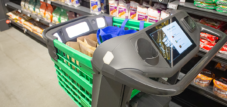
These automated stores – like "Aunt Enso" or "Aunt M" – combine the concept of local convenience with modern technology. They are often open 24/7, frequently operate without staff, and allow customers to scan their purchases themselves and pay digitally. The product range, similar to that of traditional corner shops, focuses on everyday needs, supplemented by smart features such as app integration.
2. Cooperative models
In cooperative stores, customers are often also co-owners. They have influence over the product range and can participate in decisions affecting the store. These models foster the local community and create a closer bond between customers and the business.
3. Grab-and-go stores
In stores like Amazon Go, cameras and sensors automatically register which products customers take from the shelves. Payment is digital, making shopping more efficient and faster. This technology makes shopping almost as convenient as in a traditional corner shop, but with modern tools.
4. Vending machine solutions
Especially in rural areas or as a supplement to brick-and-mortar stores in cities, vending machines are gaining popularity. They offer a limited selection of groceries and household goods and are available around the clock. Some of these machines are even regularly stocked with fresh, regional products, making them a modern version of the corner shop.
5. Regional products and hybrid business models
More and more small shops and online stores are focusing on regional and sustainable products. Hybrid models combine in-store sales with digital ordering options or pick-up services. This combination of traditional and modern approaches appeals to customers who value quality and local products.
Related to this:
🌟 Tradition meets modernity
Although the classic corner shop hardly exists in its original form anymore, its core concept lives on in modern smart shopping models. The desire for personal connection, sustainability, and local support is increasingly being integrated into innovative business models. Especially at a time when many people are looking for alternatives to anonymous supermarkets, these hybrid concepts could successfully carry the spirit of the corner shop into the 21st century.
📣 Similar topics
- 📣 How the corner shop is inspiring the future
- 🛒 From neighborhood help to smart shopping
- 🌱 Sustainability and local sourcing: The renaissance of the corner shop concept
- 🤖 Smart Stores: Tradition and technology hand in hand
- 🏡 Rethinking local supply: The return of small shops
- ❤ Personal Service 2.0: The Values of the Corner Shop Concept in the Digital Age
- 💡 Innovation models for next-generation local businesses
- 📦 Focus on regional products: The corner shop for the modern world
- 🕰 From then until now: Why we miss the corner shop
- 🔗 Cooperative stores and community: Modern alternatives for better local supply
#️⃣ Hashtags: #Sustainability #LocalSupply #SmartShopping #RegionalProducts #FutureOfShops
🎯🎯🎯 Benefit from Xpert.Digital's extensive, five-fold expertise in one comprehensive service package | BD, R&D, XR, PR & Digital Visibility Optimization

Benefit from Xpert.Digital's extensive, five-fold expertise in a comprehensive service package | R&D, XR, PR & Digital Visibility Optimization - Image: Xpert.Digital
Xpert.Digital possesses in-depth knowledge across various industries. This allows us to develop tailored strategies precisely aligned with the requirements and challenges of your specific market segment. By continuously analyzing market trends and monitoring industry developments, we can act proactively and offer innovative solutions. The combination of experience and expertise generates added value and provides our clients with a decisive competitive advantage.
More information here:
🎯 The advantages of smart stores
💡 The revitalization of local supply through smart stores
Smart stores are a modern answer to the challenges that traditional corner shops could no longer meet. They combine the core values of local supply, such as proximity and accessibility, with the efficiency and possibilities of modern technologies. They incorporate innovative approaches like automation, digital payment methods, and flexible opening hours. Especially in rural areas, where there is often a lack of supply, smart stores close the resulting gaps and offer people easy access to everyday products once again.
Related to this:
The strength of smart stores lies in the combination of various advantages that are attractive to both customers and operators. The most important advantages are explained below:
🕒 1. 24/7 availability
One of the key advantages of smart stores is their 24/7 availability. Unlike traditional corner shops, which were often only open during the day, smart stores offer their customers maximum flexibility. These extended opening hours are particularly beneficial for people with irregular working hours – for example, in healthcare, the hospitality industry, or shift work – or in areas where there are otherwise no alternative shopping options.
⚡ 2. Efficiency and speed
Nobody likes standing in a long checkout line. Smart stores circumvent this problem by using technologies like self-scanning or grab & go. Customers take the desired products directly from the shelves, and the purchase is automatically billed when they leave the store. This saves time and makes shopping less bureaucratic. User-friendliness and efficiency are paramount – a crucial advantage over traditional models.
🛠️ 3. Reduced personnel costs
One of the main cost drivers for retailers is personnel costs. Smart stores operate either completely unmanned or with minimal staff, drastically reducing operating costs. This allows them to operate efficiently even in economically challenging regions or less frequented locations, where a traditional store would not be profitable.
📊 4. Local adaptability
By using data-driven technologies, it's possible to tailor a smart store's product range precisely to the needs of the local population. Digital product labels and intelligent inventory management ensure that the right products are always available in sufficient quantities. This targeted adaptation leads to greater customer satisfaction while simultaneously minimizing losses due to excess stock.
🛍️ 5. Merging of online and offline shopping
A major advantage of smart stores is their hybrid function: they combine the strengths of brick-and-mortar retail with the benefits of online shopping. While customers can see, touch, and select products in-store, supporting digital tools such as apps offer detailed information, recommendations, and personalized offers. This creates a customized and convenient shopping experience.
🌱 6. Sustainability and flexibility
Smart stores are often smaller and more space-efficient than traditional stores, making them particularly attractive for geographically limited or rural areas. Many of these stores are housed in modular containers or smaller buildings, reducing construction and rental costs. Furthermore, the reduced energy and space requirements enhance environmental sustainability.
💳 7. Cashless payment and security
The option to pay contactless via credit card, smartphone, or other digital payment methods offers not only convenience but also added security. Eliminating cash reduces the risk of theft and simplifies the process for both businesses and customers.
8. Reducing waiting times
One of the biggest frustrations when shopping – long waiting times – is virtually eliminated in smart stores. Customers appreciate the ability to complete their shopping quickly and easily, which significantly improves the overall shopping experience.
🏡 9. Strengthening local supply and regionality
Especially in rural areas, which are often affected by poor supply, smart stores can make a significant contribution. Furthermore, they facilitate the sale of regional products, strengthening not only customer loyalty but also the local economy. This creates a win-win situation that supports both the local community and small-scale producers.
🤖 Technologies as the basis for modern local supply
The functionality of smart stores is based on several technological innovations. Sensors, cameras, and artificial intelligence (AI) play a central role in automating in-store processes and optimizing the customer experience. For example, customers can use a smartphone app to enter the store, select products, and have them automatically checked out upon leaving. Continuous inventory monitoring and product replenishment are also automated, significantly increasing efficiency.
Another key component is data management. By analyzing purchasing behavior and preferences, operators can optimize their offerings and adapt them to demand. This not only results in a lower waste rate but also in higher customer satisfaction.
Despite all the advantages, smart store concepts also present challenges. For example, the limited or complete absence of staff can diminish the social aspect of shopping, which many customers particularly valued in traditional corner shops. Hybrid models that rely on staff at least part-time could offer a solution here.
Another important issue is data security. Storing and analyzing customer data brings with it the responsibility to manage it securely and transparently. Modern data protection policies are therefore an essential component of this business model.
⚙️ Innovations with the advantages
Smart stores combine the strengths of the traditional corner shop with the possibilities offered by modern technologies. They are not only an economically viable model for the future of local supply, but also an opportunity to close former supply gaps and better serve rural areas. Through flexibility, efficiency, and sustainability, they offer numerous advantages not only for operators, but especially for customers. This demonstrates that digitalization is not only boosting online retail, but can also revolutionize brick-and-mortar stores. Smart stores are thus a clear example of how tradition and innovation can be successfully combined to meet the challenges of modern society.
📣 Similar topics
- 📣 The return of corner shops: Smart stores in focus
- 🛒 Shopping reimagined: The advantages of modern local supply with smart stores
- 🌍 Tradition meets high-tech: How smart stores strengthen rural areas
- 🤖 Automation and regionality: How smart stores are shaping the future
- 💡 Innovation for the community: Local supply in the digital age
- 🔄 24/7 Shopping Experience: How Smart Stores Meet Customer Needs
- 🏡 Regional Shopping 2.0: The Role of Smart Stores in the Local Economy
- 🕒 No more queues: Efficiency through smart shopping
- 🚀 Digital shopping in the style of a village shop: Opportunities and challenges
- 🛠️ Smart technologies for rural regions: Digitalization meets regionality
#️⃣ Hashtags: #SmartStores #LocalSupply #InnovationInRetail #CornerShop2.0 #RegionalStrengthening
We are here for you - Consulting - Planning - Implementation - Project Management
☑️ SME support in strategy, consulting, planning and implementation
☑️ Creation or realignment of the digital strategy and digitization
☑️ Expansion and optimization of international sales processes
☑️ Global & Digital B2B trading platforms
☑️ Pioneer Business Development

Konrad Wolfenstein
I would be happy to serve as your personal advisor.
You can contact me by filling out the contact form below or simply call me on +49 7348 4088 965 .
I'm looking forward to our joint project.
Write to me


Xpert.Digital - Konrad Wolfenstein
Xpert.Digital is a hub for industry focusing on digitalization, mechanical engineering, logistics/intralogistics and photovoltaics.
With our 360° Business Development solution, we support renowned companies from new business to after-sales.
Market intelligence, smarketing, marketing automation, content development, PR, mail campaigns, personalized social media and lead nurturing are part of our digital tools.
You can find more information at: www.xpert.digital - www.xpert.solar - www.xpert.plus
Keep in touch