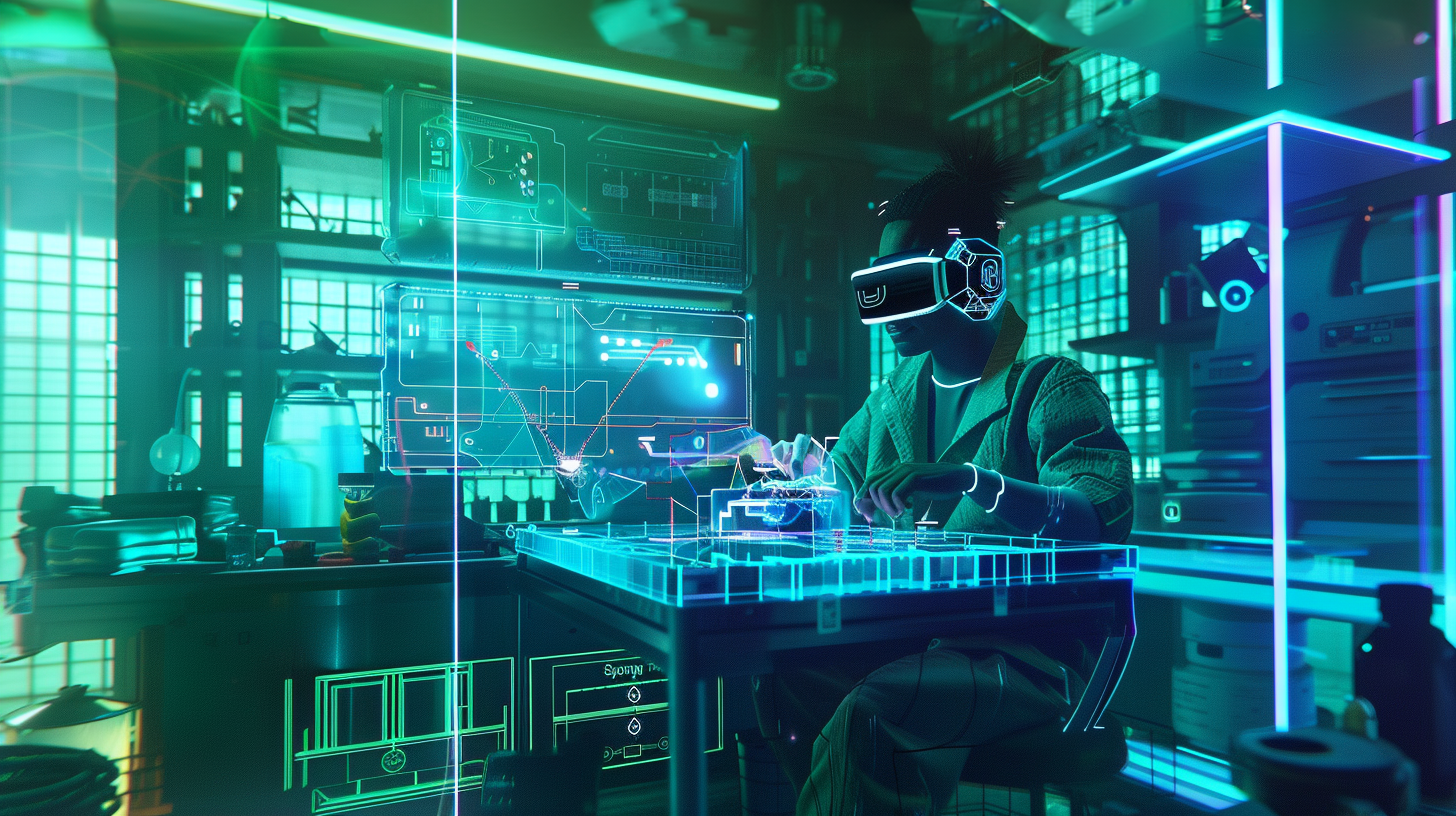
Augmented Reality in the Metaverse: The next generation of product development with digital twins has begun – Image: Xpert.Digital
Technology trio of innovation: What augmented reality, the metaverse, and digital twins make possible
The convergence of augmented reality in the metaverse and digital twins heralds a revolutionary era in product development. This dynamic combination opens up unprecedented opportunities for companies to design their products more efficiently, innovatively, and with greater customer focus, from initial conception to market launch and beyond. The integration of these technologies makes it possible to transform the entire product lifecycle in ways that, until recently, seemed like science fiction.
Virtual prototyping and product design in a new dimension
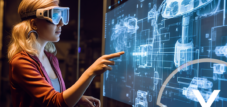
Thanks to AR and digital twins, the traditional, often costly and time-consuming processes of prototype construction are increasingly becoming a thing of the past. The automotive industry, in particular, recognized and implemented the advantages of these technologies early on. Leading manufacturers like BMW and Hyundai are said to be using digital twins and advanced AR applications to fundamentally redesign the development and manufacturing of their vehicles. Imagine engineers wearing AR glasses and being able to overlay virtual models of vehicle components onto the real-world environment in real time, edit them directly, and immediately compare different design variants. This ability to rapidly iterate design changes without having to produce physical models not only significantly accelerates the development process but also reduces material costs and the need for physical test runs. Early detection and correction of potential design flaws in the virtual world saves valuable time and resources in the later production phase.
Similar disruptive developments are emerging in the fashion industry. Companies like Nike are reportedly experimenting intensively with AR and digital twins to revolutionize the design process for sporting goods, especially sneakers. Designers can now develop both physical and digital designs simultaneously and view virtual shoe models in real-world environments to better assess their impact in different contexts. This allows for a more precise alignment of design and functionality and opens up new creative possibilities. The ability to virtually test and combine fabrics, colors, and shapes not only accelerates the design process but also enables greater product personalization.
The advantages of virtual prototyping extend far beyond mere visualization. By integrating simulation software, companies can test the performance and behavior of their virtual prototypes under various conditions. For example, stress tests, aerodynamic simulations, or thermal analyses can be performed before a physical product even exists. This makes it possible to identify and address potential weaknesses early on, significantly improving the quality and reliability of the final products. One can imagine how crucial this is in safety-critical industries such as aerospace or medical technology.
Collaborative product development without geographical boundaries
AR technology in the Metaverse eliminates geographical barriers in product development. Teams spread across different locations worldwide can collaborate on virtual 3D models as if they were in the same room. Engineers, designers, and other specialists can make changes to the models in real time, provide feedback, and develop solutions together. This form of collaborative work not only fosters global cooperation but also significantly shortens development cycles. The ability to discuss complex issues visually and interactively, instead of relying on emails or video conferences, improves communication and mutual understanding within teams. This leads to more efficient decision-making and faster implementation of innovations.
It is said that this type of collaboration also boosts companies' innovative capacity. By involving experts from different disciplines and cultures, new perspectives and ideas can be incorporated into the development process. The virtual environment makes it possible to hold creative brainstorming sessions in which all participants can actively and equally contribute to the idea generation. This democratization of the innovation process can lead to groundbreaking new products and solutions.
Immersive simulations for optimized production processes
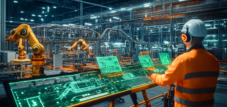
The combination of AR and digital twins opens up fascinating possibilities for simulating complex production processes. Automotive manufacturers are reportedly using this technology to virtually plan and optimize entire production lines before physical implementation. By simulating various scenarios, potential bottlenecks, inefficiencies, or safety risks can be identified and addressed early on. This leads to a significant reduction in production costs, increased efficiency, and improved workplace safety.
One can imagine how valuable this technology is for other industries as well, such as food production, the chemical industry, or logistics. The ability to virtually test and optimize production processes minimizes the risk of costly planning errors and production downtime. Furthermore, by simulating various production scenarios, companies can better respond to changing market conditions or unexpected events.
Customized adaptations and personalized experiences
In e-commerce, AR is revolutionizing how customers experience and buy products. Furniture manufacturers, it is said, are already offering AR apps that allow customers to virtually place and customize furniture in their own living spaces before making a purchase decision. This ability to visualize products in a real-world environment before buying increases the likelihood of a satisfying shopping experience and reduces return rates.
This technology is becoming increasingly important in other industries as well. Clothing manufacturers are experimenting with virtual try-on options that allow customers to virtually try on garments without ever having to enter a store. This saves time and effort and opens up new possibilities for personalized shopping experiences. The ability to individually configure products and visualize them in one's own environment strengthens customer loyalty and promotes product customization.
Revolutionizing maintenance and training
AR, in combination with digital twins, is also transforming the fields of maintenance and training. Maintenance technicians are reportedly using AR glasses that project relevant information and instructions directly onto the actual machine. This supports them in diagnosing and repairing complex systems, increases the efficiency and accuracy of maintenance work, and reduces downtime. The ability to have step-by-step instructions directly in their field of vision minimizes the risk of errors and accelerates the repair process.
AR technology also offers enormous advantages in employee training. New employees can be trained on complex machines in a safe and interactive virtual environment, without the risk of damage or injury. Realistic simulations allow them to gain practical experience and improve their skills before working on real equipment. This leads to better employee qualifications and increased productivity.
Urban planning and architecture in the digital age
Digital twins of entire cities or individual buildings, visualized through AR, open up fascinating possibilities for urban planners and architects. They can simulate planned changes or new constructions in the real environment and assess their impact on infrastructure, the cityscape, and the residents' quality of life. This enables more informed decision-making and better citizen participation in planning processes.
It is said that this technology also plays an important role in the development of sustainable cities. By simulating energy flows, traffic patterns, and environmental impacts, urban planners can develop measures to make cities more efficient, environmentally friendly, and livable. The ability to virtually test different planning scenarios minimizes the risk of incorrect decisions and enables optimized resource use.
These examples vividly illustrate how AR in the metaverse, in conjunction with digital twins, is revolutionizing product development and many other areas of our lives. The seamless integration of virtual and physical elements accelerates innovation, reduces costs, improves collaboration, and enables entirely new forms of interaction with products and our environment. The next generation of product development, and beyond, promises to be more efficient, creative, sustainable, and customer-centric than ever before. We are only at the beginning of this development, and the possibilities of these technologies are expected to increase even further in the future, leading to even more profound changes in business and society.
🗒️ Xpert.Digital: A pioneer in the field of Extended and Augmented Reality

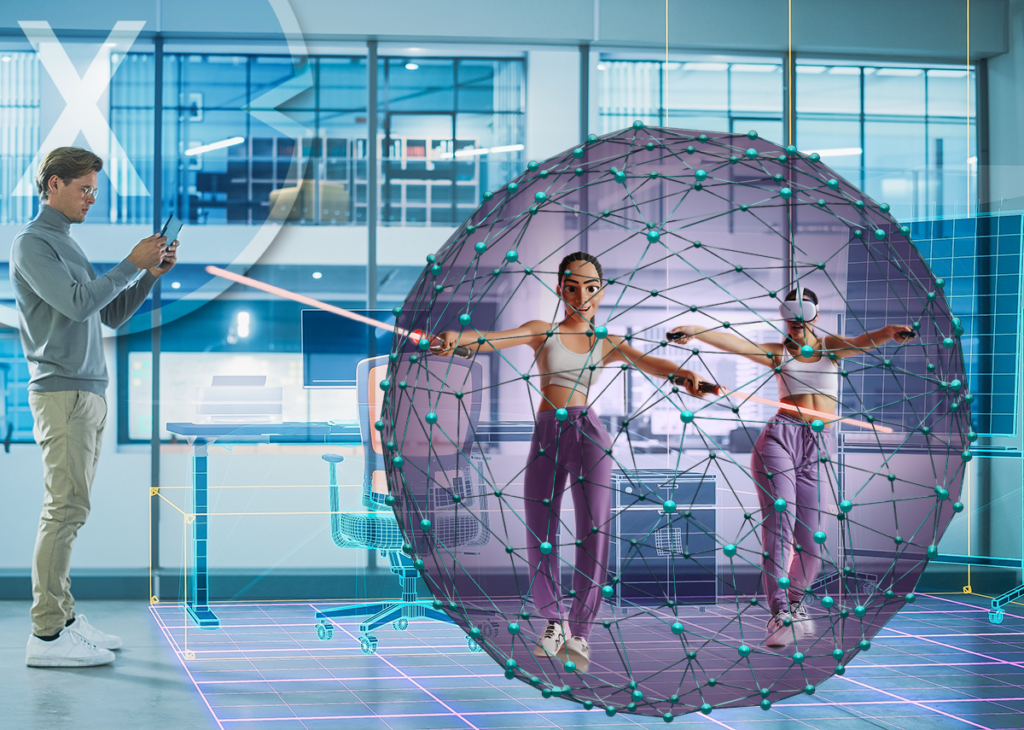
Finding the right Metaverse agency, planning office, or consulting firm - Image: Xpert.Digital
🗒️ Finding the right Metaverse agency, planning office, or consulting firm – Search and search: Top Ten Tips for Consulting & Planning
In the age of digitalization, where technologies such as Extended Reality (XR) and the metaverse are constantly gaining in relevance, Xpert.Digital is positioning itself as a thought leader and pioneer. With over 1,500 specialist articles, Xpert.Digital is establishing itself as a central point of contact for the industry.
🌌 Extended Reality (XR): The best of both worlds
Extended Reality is an umbrella term encompassing Virtual Reality (VR), Mixed Reality (MR), and Augmented Reality (AR). Xpert.Digital is dedicated to creating impressive XR experiences that are both informative and entertaining.
- Interactive experiences: XR allows users to immerse themselves in virtual worlds and interact with their environment in ways that were previously unimaginable.
- Education and training: XR can be used for educational purposes to convey complex topics and concepts in an understandable and tangible way.
- Entertainment: Whether games, films or art – XR opens up new horizons in digital entertainment.
🔮 Augmented Reality (AR): Seeing the world with digital eyes
Augmented Reality, a particular focus of Xpert.Digital, makes it possible to integrate digital information or graphics into the real world. The possibilities are virtually limitless.
- Marketing and advertising: AR can be used to create interactive advertising campaigns that engage customers in a completely new way.
- Everyday assistance: From navigation apps that project the route directly onto the street, to furniture apps that show what a new sofa would look like in the living room – AR makes it possible.
🌐 The Metaverse: The Next Big Thing
The metaverse is a virtual world where people can interact through avatars and create shared experiences. Xpert.Digital recognizes the enormous potential of the metaverse and is working to translate this potential into usable products and services.
- Social interaction: The Metaverse offers the opportunity to connect with people from all over the world and share common experiences.
- Economy and trade: In the Metaverse, virtual goods and services can be traded, opening up completely new business models and sources of income.
- Creative freedom: From building your own worlds to designing individual avatars – the metaverse is a place of endless creative possibilities.
🚀 Xpert.Digital at the forefront of innovation
Xpert.Digital demonstrates how a company can be at the forefront of the technological revolution. With their focus on XR, AR, and the metaverse, they are well-positioned to shape and define the future of digital interaction.
More information here:
Augmented Reality in the Metaverse: The Future of Product Development with Digital Twins
The combination of augmented reality (AR) and the metaverse, coupled with digital twins, offers revolutionary possibilities for product development. These technologies are far more than mere gimmicks: they bridge the gap between virtual and physical worlds and transform how companies design, test, and bring products to market. From virtual prototypes to immersive simulations, the next generation of product development has begun.
The role of augmented reality and digital twins
Augmented reality enables the embedding of digital information into the real world, while digital twins represent virtual replicas of real objects or systems. Combined, these create powerful new tools for businesses:
- Increased efficiency: Processes that previously took weeks or months can be visualized and adjusted in real time.
- Cost reduction: By eliminating physical prototypes and optimizing resource use, development and production costs decrease.
- Improved collaboration: Teams can work on projects regardless of location, which increases the speed of innovation.
Virtual prototyping and innovative product design
AR and digital twins play a central role in modern product development:
Automotive industry: Faster iterations and better design
Automakers like BMW and Hyundai are relying on digital twins and AR technologies to plan and test vehicle components more efficiently. Engineers can view and modify virtual prototypes in real time without creating physical models. "With AR, we can not only implement design changes quickly, but also facilitate collaboration between teams," said a Hyundai engineer.
Fashion industry: Digitally and physically connected
This technology has also found its way into the fashion industry. Nike uses digital twins to design sneakers digitally and test them in real-world environments. Designers can "place virtual shoe models in different lighting conditions and environments to find the perfect design." This saves time and resources and allows for a seamless integration of functionality and aesthetics.
Global collaboration through AR
AR technology allows teams worldwide to work on the same projects without being physically present. Thanks to virtual 3D models, collaboration becomes not only easier but also more effective. Engineers and designers can provide real-time feedback and make adjustments. This significantly shortens development cycles and accelerates innovation. This type of collaboration is becoming the standard, especially in globally operating companies.
Immersive simulations: Optimizing production processes
The combination of AR and digital twins makes it possible to virtually simulate entire production processes. An example from the automotive industry:
Manufacturers can digitally plan production lines and identify potential bottlenecks before physical implementation. These "virtual test runs" help to identify inefficiencies early and minimize production costs. Aircraft manufacturers also use similar technologies to optimize complex manufacturing processes.
Customized adaptations in e-commerce
AR is revolutionizing e-commerce by offering customers unprecedented opportunities for product customization. A prime example from the furniture industry: companies like IKEA offer apps that allow customers to virtually place furniture in their own homes. "Thanks to AR, our customers can see exactly how a product will look in their space before making a purchase decision," explains an IKEA spokesperson. This increases customer satisfaction while simultaneously reducing returns.
Maintenance and training: More efficient through AR
AR and digital twins offer immense advantages in the areas of maintenance and training. Maintenance technicians can use AR glasses that display relevant information and instructions overlaid on the actual machine. This leads to faster and more precise repairs.
An example from the aviation industry: Technicians working on complex aircraft engines receive real-time instructions on which components need to be replaced or serviced. Training can also be conducted in a secure, virtual environment, significantly shortening the learning curve.
Urban planning and architecture: Visionary approaches
The combination of AR and digital twins also has a transformative effect on urban planning and architecture. Architects can simulate planned buildings in their real-world environment to assess their impact on infrastructure and the cityscape. Urban planners can create digital twins of entire neighborhoods to analyze traffic flow or the environmental impact of new construction projects. These approaches promote sustainable building and an improved quality of life in urban areas.
Challenges and future potential
Despite all their advantages, AR and digital twins still face some challenges. These include:
- High initial investments: The development and implementation of these technologies requires significant financial resources.
- Technological complexity: Integration into existing systems and processes is complex and time-consuming.
- Data protection: Especially when creating digital twins, companies must ensure that sensitive data is protected.
Advances in artificial intelligence and machine learning will further drive the use of AR and digital twins. Companies will not only be able to work more efficiently, but also develop entirely new business models.
The combination of augmented reality, the metaverse, and digital twins marks a new era in product development. Companies can develop products faster, more cost-effectively, and with a greater focus on the customer than ever before. From the automotive industry to fashion and architecture, the applications are virtually limitless. These technologies offer not only a competitive edge but also the opportunity to fundamentally transform the way we work and live. The journey has only just begun, and the potential is boundless.
We are here for you - Consulting - Planning - Implementation - Project Management
☑️ SME support in strategy, consulting, planning and implementation
☑️ Creation or realignment of the digital strategy and digitization
☑️ Expansion and optimization of international sales processes
☑️ Global & Digital B2B trading platforms
☑️ Pioneer Business Development

Konrad Wolfenstein
I would be happy to serve as your personal advisor.
You can contact me by filling out the contact form below or simply call me on +49 7348 4088 965 .
I'm looking forward to our joint project.
Write to me


Xpert.Digital - Konrad Wolfenstein
Xpert.Digital is a hub for industry focusing on digitalization, mechanical engineering, logistics/intralogistics and photovoltaics.
With our 360° Business Development solution, we support renowned companies from new business to after-sales.
Market intelligence, smarketing, marketing automation, content development, PR, mail campaigns, personalized social media and lead nurturing are part of our digital tools.
You can find more information at: www.xpert.digital - www.xpert.solar - www.xpert.plus
Keep in touch