Artificial intelligence explained simply. How do you keep track of massive amounts of data, such as Big Data? This is only possible if you orient yourself to certain patterns, or allow yourself to be guided by them.

Artificial Intelligence (AI) – Simple Syntax
A personal experiment: You have a specific image in your mind. Today it's supposed to be a red cabinet with white handles. What do you do?
You enter "red cabinet, white handles" into the Google search.

Yield? Modest.
2nd attempt: You enter "red cabinet, white handles" into the Google search.

The result is already better, but it could certainly be even better.
Using Google Search is the first step into programming. Collecting search queries and converting them into algorithms and code forms the neural network.
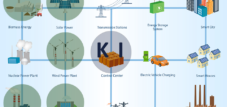
Machine learning, as shown in the top graphic, is therefore not something that can be implemented quickly. It requires a lot of time and effort. This also explains the corresponding development costs. However, when you consider that AI doesn't take vacations, retire, or have any other natural absences, the picture changes completely.
But will that red cabinet with white handles still be fashionable tomorrow? Will it still fit your lifestyle? Tastes change. This is precisely where deep learning comes in. To stick with our example: As you continue searching, the AI learns and recognizes how your search behavior has changed based on the other topics that interest you. It then independently develops new algorithms to "predict" that in a year you might be interested in a green cabinet with blue handles for your kitchen.
Terrible? For some, it is. But it really isn't. Our fear of the unknown is playing tricks on us. If we were to ask a group of people what they might find interesting on television tomorrow, you'd get a wide variety of answers. Not all of them would be the same. Now, what criteria do you use to decide which suggestion you'd accept? Is it the content or perhaps the attractiveness of the person in question?
The same applies to AI. The results depend on how weakly or strongly the neural network has been "programmed." It's about pattern analysis, which should help us make good decisions, not control us. Because if we fail to achieve pattern analysis in big data, we will be mercilessly destroyed. And that is the real horror scenario.
Keep in touch