

Published on: November 29, 2024 / Updated on: December 7, 2024 – Author: Konrad Wolfenstein
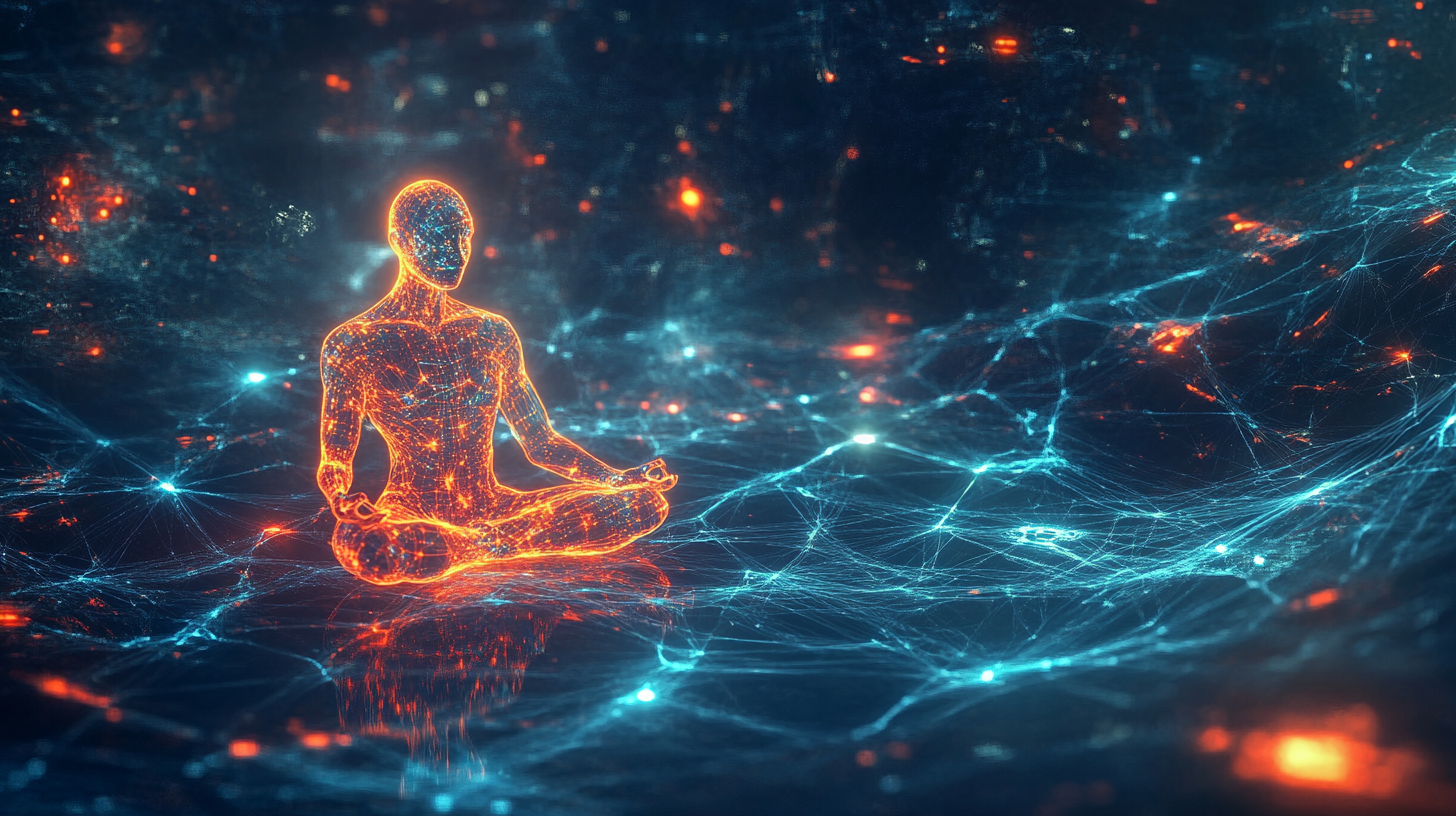
The fundamental existential question of artificial intelligence: Do I need it? – Image: Xpert.Digital
Can artificial intelligence promote creative work and development?
The question of whether development and creative work can benefit from artificial intelligence (AI) may initially seem contradictory. After all, AI is often seen as the opposite of human creativity. However, closer examination reveals that AI does not necessarily replace creativity, but rather represents a tool to support creative processes and unlock new possibilities.
AI as a source of inspiration and support for creative processes
A common misconception in the discussion surrounding AI is the assumption that it stifles or standardizes creativity. In fact, AI can help develop creative ideas by recognizing patterns that might remain hidden to humans or by providing insights that previously seemed unthinkable. For example, a designer can use AI tools to generate innovative color palettes, visualize prototypes more quickly, or compare alternative designs. "AI is not a competitor to human creativity—it is an extension of possibilities."
With its ability to analyze and visualize data at impressive speed, AI offers a platform that can fundamentally transform creative work. Artists and developers can thus focus more intently on the creative core of their work, while repetitive or technical tasks are automated by AI. The use of AI therefore creates an environment that fosters creative thinking and expands the boundaries of traditional approaches.
The role of visualization: Unleashing creativity through freedom
One of the most exciting possibilities offered by AI lies in the visualization of ideas. Whether in architecture, film, design, or marketing, AI-powered tools make it possible to represent ideas faster and more accurately. This means that artists and developers can spend less time on technical implementation and instead gain more freedom to explore new concepts.
For example, AI-powered software allows architects to model their designs in real time and test them in virtual environments. Designers can visualize prototypes that previously would have required hours of manual work. This creates not only a sense of ease but also the opportunity to tap into seemingly inexhaustible creative potential.
"The freedom that AI creates through its visualization capabilities leads to people feeling less restricted by technical obstacles. As a result, they gain the impression that they can achieve anything."
Projects that would be inconceivable without AI
AI enables us to realize projects that would have been unthinkable previously due to technological or time constraints. One example of this is the use of AI in film production. Here, AI can be used to optimize digital effects, analyze screenplays, or even create storyboards that improve the narrative structure.
Another example can be found in the world of science. Thanks to AI, scientists can analyze large amounts of data to find innovative solutions to complex problems. A notable example is the development of new drugs: AI helps analyze the efficacy of potential active ingredients, thus significantly accelerating the development process.
AI is also opening up entirely new perspectives in the field of education. It can create tailored learning content based on the individual needs of learners. This would have been difficult to achieve without the technology, as it is impossible to provide individual support to millions of learners simultaneously.
The creative person remains irreplaceable
Despite all these advances, it is important to emphasize that AI can never replace the human creative spirit. While AI analyzes data, recognizes patterns, and makes predictions, humans remain the driving force behind the creative process. It is humans who have visions that transcend the purely rational, who understand emotions, and who tell stories that touch others.
However, AI can serve as a catalyst for these processes. By providing humans with the tools to implement their ideas more quickly and precisely, it helps to elevate creative work to a new level. It challenges us to redefine our understanding of creativity and to reassess the role of technology in this context.
Challenges and ethical considerations
However, integrating AI into creative processes also presents challenges. One of the biggest concerns is the question of authorship: If an AI creates a work of art, who owns it? Such questions demonstrate that we must consider not only the technological possibilities but also the ethical and legal frameworks.
Another problem is the potential dependence on AI. If people rely too heavily on AI, they could lose the ability to find creative solutions independently. Therefore, it is important to view AI not as a replacement, but as a complement to human creativity.
A new age of creativity
AI has the potential to fundamentally transform creative work and development. It is not a replacement for the human mind, but a tool that opens up new possibilities and pushes through existing boundaries. Through its ability to automate processes, visualize ideas, and analyze vast amounts of data, it creates a platform for innovation and creativity that was previously unimaginable.
"With artificial intelligence, we can realize projects that expand our imagination and redefine the boundaries of what is possible." Nevertheless, the responsibility for how we use this technology remains with humans. Only through the conscious and responsible integration of AI can we ensure that it remains a catalyst for positive change.
In this sense, the future of creative work is not at odds with technology – it is complemented and enriched by it. It is up to us to seize these opportunities while ensuring that people always remain at the center.
Suitable for: