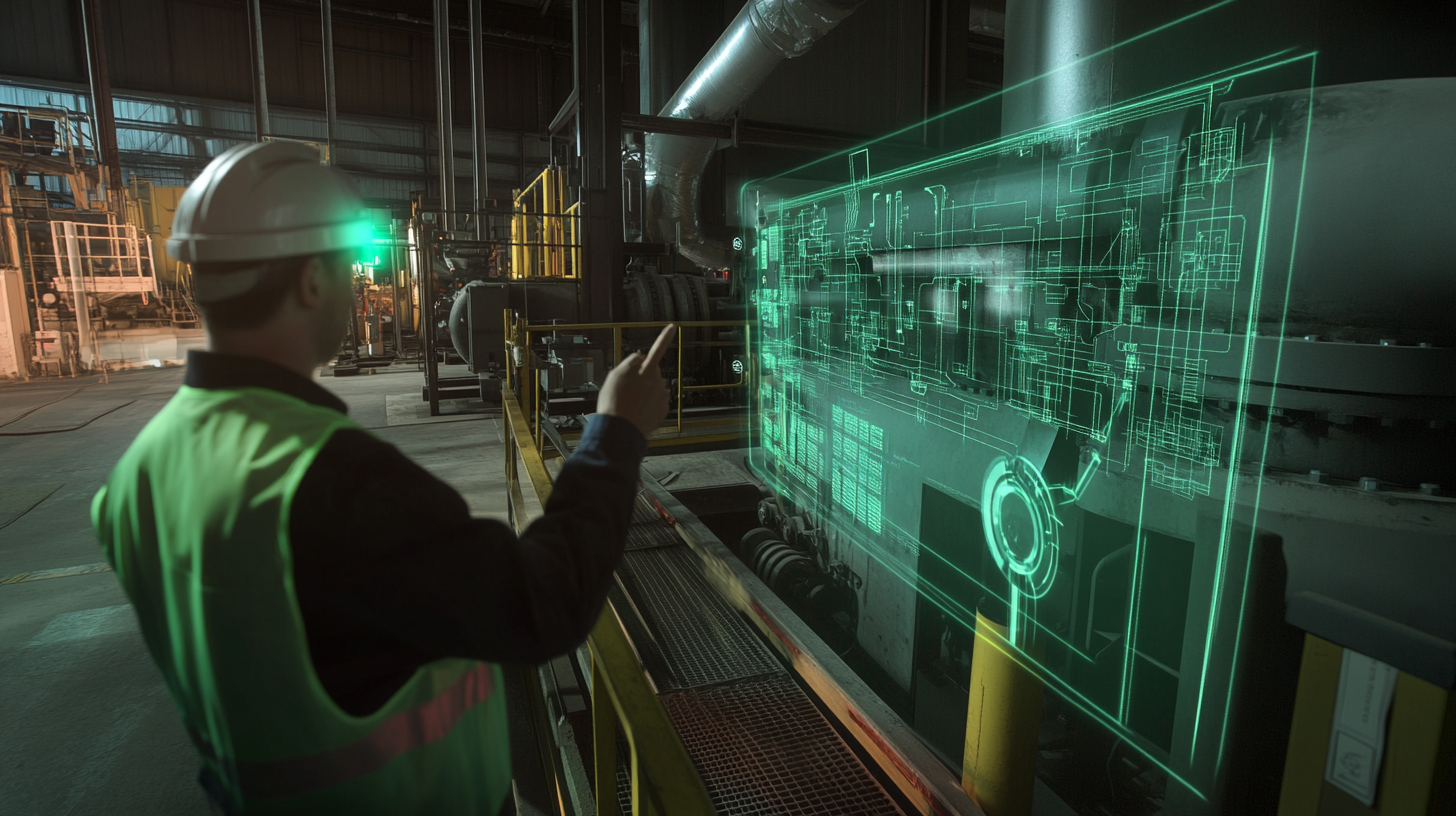
Augmented Reality: AR tracking methods in digitally enhanced spaces – AR tracking technologies at a glance – Image: Xpert.Digital
🌟 Virtual meets real: How augmented reality makes spaces newly experienceable
🌐 Augmented Reality: Advances in AR tracking methods in digitally enhanced spaces
Augmented Reality (AR) has become a key technology in recent years, seamlessly integrating virtual content into the real world. At the heart of this technology are powerful tracking methods that ensure AR content can interact with the physical environment precisely, reliably, and intuitively. These methods are essential for navigating digitally enhanced spaces and open up new possibilities in numerous industries.
The following provides a comprehensive overview of the most important AR tracking technologies, supplemented by their specific applications and the challenges they present.
🌟 Fundamentals of AR tracking technologies
Tracking in AR describes a system's ability to recognize the position and orientation of a device or object in real time. This forms the basis for placing virtual content in the correct context within the real world. Modern AR technologies combine various approaches to ensure the highest possible precision and stability. The choice of method often depends on the use case, the environment, and the technical requirements.
🚀 The most important AR tracking methods
📸 1. Marker Tracking (also Image Tracking)
Marker tracking is one of the oldest and most reliable methods in the field of AR. Specially designed markers or QR codes serve as visual reference points. The camera of an AR-enabled device recognizes these markers and uses them to precisely position virtual content.
Advantages
- Very high accuracy and stability.
- It also works in environments with little texture, as the markers provide a clearly defined reference.
- Ideal for marketing campaigns or educational applications where printed materials such as brochures or posters can be designed interactively.
Disadvantages
- Markers must remain visible, which limits flexibility.
- Visual elements can be perceived as disturbing.
🛋️ 2. Plane Detection
This method allows AR applications to recognize horizontal or vertical surfaces in the environment, such as tables, floors, or walls. It is frequently used for applications where users can decide where content should be placed.
Advantages
- Flexible and intuitive to use.
- Perfect for large-scale models, such as those needed in architecture or interior design.
Disadvantages
- Only works reliably in well-lit and textured environments.
- Detection can be problematic on reflective or monochrome surfaces.
🤖 3. SLAM (Simultaneous Localization and Mapping)
SLAM combines camera technology, sensors, and complex algorithms to determine the device's position in its environment while simultaneously creating a map of the space. This method is often used in high-end devices such as the Microsoft HoloLens or Magic Leap.
Advantages
- Extremely precise and stable, even in dynamic environments.
- Requires no external reference such as markers or GPS.
Disadvantages
- Requires a lot of computing power and can cause delays on simple devices.
- Higher implementation costs.
🗺️ 4. GPS tracking
GPS tracking is based on the Global Positioning System and is frequently used in location-based AR applications, e.g., in games like Pokémon GO or for outdoor navigation solutions.
Advantages
- Enables large-scale applications in outdoor areas.
- Combines well with other technologies such as geofencing.
Disadvantages
- Precision is limited and can be affected by environmental factors such as buildings or bad weather.
- Not suitable for indoor applications.
🏙️ 5. Spatial Perception
Spatial Perception uses a combination of cameras, depth sensors, and technologies such as LiDAR (Light Detection and Ranging) to capture the environment in three dimensions. This allows AR systems to integrate virtual content more realistically into the space.
Advantages
- Maximum accuracy and level of detail.
- Supports realistic interactions, e.g., the shading of virtual objects by real obstacles.
Disadvantages
- High hardware requirements.
- Costly, as special sensors are required.
🔍 Challenges and further developments of AR tracking methods
While AR tracking technologies are continuously being improved, there are still challenges that can limit their widespread use:
Light and environmental conditions
Many technologies, especially plane detection and SLAM, rely on well-lit, structured environments. Dark or monochrome rooms can impair performance.
Hardware dependency
Advanced methods such as SLAM or Spatial Perception require modern hardware such as LiDAR scanners or powerful processors, which are not available in every device.
Data protection and security
GPS tracking and other location-based technologies raise questions about the protection of personal data, especially in sensitive applications.
The future of AR tracking lies in the development of hybrid approaches that combine different technologies to compensate for the weaknesses of individual methods. For example, SLAM and GPS could be used together to enable seamless transitions between indoor and outdoor spaces.
🎯 Application areas of AR tracking
The versatility of AR tracking technologies has led to their adoption in a wide variety of industries. Some of the most important areas of application include:
📚 1. Education and Training
AR enables interactive and immersive learning experiences. For example, students can view a virtual solar system, or technical trainees can explore complex machines in 3D. Marker and plane tracking are particularly suitable for use in classrooms and training facilities.
🧭 2. Navigation and orientation
AR-based navigation systems that combine GPS and SLAM can provide users with visual guidance through AR maps or wayfinding signs. This is ideal for airports, shopping malls, or outdoor adventures.
🎨 3. Marketing and Advertising
Interactive advertising campaigns that use marker tracking create novel experiences for customers. For example, customers could experience a product in 3D by scanning a poster or perceive virtual offers directly in the store.
🏗️ 4. Architecture and Construction
Thanks to plane detection or SLAM, architects and building owners can project digital models directly into the real space to visualize designs and changes in real time. This saves time and costs in the planning process.
🏥 5. Medicine and Healthcare
AR tracking is increasingly used in surgery and medical training. Surgeons can overlay virtual models of organs or structures onto a patient's body to plan operations more precisely.
🔮 The future of AR tracking
AR tracking technologies have revolutionized the way we interact with digital content. Advances in AI, sensors, and computing power will further improve these technologies and make them even more versatile. Approaches that combine AR with other innovative technologies such as artificial intelligence or the Internet of Things (IoT) are particularly exciting.
The vision for the future of AR tracking lies in creating immersive, user-friendly experiences that connect our physical and digital worlds in entirely new ways. With the continuous development of hardware and software, the potential applications will be virtually limitless – from everyday uses to complex industrial solutions.
📣 Similar topics
- 📣 Technological revolution: The importance of AR tracking
- 🧩 Expanding the world: Augmented Reality and its most important methods
- 🚀 Advances in SLAM: The new era of AR tracking
- 🌍 Marker vs. spatial perception: A comparison of modern AR technologies
- 🔍 Realistic and accurate: AR applications in navigation
- 🏗️ Pixels meet reality: AR in construction and architecture
- 🎓 Learning with AR: The education of the future starts now
- 🩺 From the operating room to the classroom: AR in healthcare
- 🌟 Hybrid approaches: The symbiosis of tracking technologies
- 🤔 Data privacy in AR applications: An underestimated challenge
#️⃣ Hashtags: #AugmentedReality #ARTracking #MarkerTracking #SLAM #Technology
Our recommendation: 🌍 Limitless reach 🔗 Connected 🌐 Multilingual 💪 Sales power: 💡 Authentic with strategy 🚀 Innovation meets 🧠 Intuition


From local to global: SMEs conquer the world market with a clever strategy - Image: Xpert.Digital
In an era where a company's digital presence determines its success, the challenge lies in creating an authentic, personalized, and far-reaching presence. Xpert.Digital offers an innovative solution that positions itself as the intersection of an industry hub, a blog, and a brand ambassador. It combines the advantages of communication and sales channels in a single platform and enables publication in 18 different languages. Cooperation with partner portals and the ability to publish articles on Google News and a press distribution list with approximately 8,000 journalists and readers maximize the reach and visibility of the content. This represents a crucial factor in external sales and marketing (SMarketing).
More information here:
🌟 Augmented Reality (AR): Next-generation tracking technologies
Augmented Reality (AR) has become a key technology in recent years, seamlessly merging digital content with our physical environment. However, it's not just the idea of projecting virtual elements into the real world that makes AR so fascinating, but above all the underlying tracking methods that enable precise, stable, and credible integration. To create a compelling, immersive experience, accurate mapping of spatial conditions and seamless determination of the device's position and orientation are essential. AR tracking methods are therefore the invisible engine that ensures digital content doesn't float aimlessly in space, but rather attaches itself precisely to objects, surfaces, or geographical locations. The following sections not only present the common tracking technologies in detail, but also explore their applications, challenges, and future prospects. Valuable background information is provided to give a comprehensive picture of this complex field.
“Augmented reality is more than just a visual gimmick – it’s the link between the digital and real worlds,” one could aptly put it. In such an expanded perceptual space, users interact with holographic information, virtual objects, and dynamic data as if they were actually part of their real environment. The crucial question is: How are these virtual elements positioned so precisely that they remain stable even when the viewer moves, changes their viewing angle, or the lighting conditions change? This is where AR tracking comes in, because without reliable localization, the illusion remains fragile.
🔍 Marker Tracking: The signposts of the virtual world
One of the oldest and best-known methods is marker tracking, often also referred to as image tracking. Here, special, clearly defined markers, such as QR codes or other unique patterns, are placed in the real-world environment or integrated into printed materials. The AR application recognizes these markers via the camera and can thus determine their exact position in space in order to precisely place virtual content on them. This technology boasts high accuracy and stability. However, it requires that the markers are always present. If they are missing or poorly lit, the system can no longer align the virtual content correctly. Nevertheless, marker tracking is particularly popular for use in museums, at trade fairs, or in print campaigns. It makes it easy to provide information such as interactive product models, explanatory animations, or further information at specific points. "Marker-based tracking is like signposts for the virtual world – they show the AR application where to go."
🏡 Plane Detection: Placing digital content on surfaces
Another key method is plane detection, which identifies horizontal or vertical surfaces to place virtual objects. Users can then, for example, place a digital 3D model of a piece of furniture on a table or mount it on a wall. This technology offers maximum flexibility, as it allows users to decide where content should appear. This makes it particularly attractive for the furniture industry, interior design, and the presentation of prototypes in manufacturing. For instance, an architect can "virtually try out a new shelf on the living room wall" before actually purchasing it. The app automatically detects the available surfaces without the need for a marker and aligns the content accordingly.
🗺️ SLAM: Real-time mapping for limitless precision
An even more complex and powerful approach is the SLAM (Simultaneous Localization and Mapping) method. This method no longer relies on a single layer or marker, but creates a dynamic model of the entire environment. By using cameras, sensors, and advanced algorithms, the device can simultaneously determine its own position and orientation and create a continuously updated map of its surroundings. "SLAM is like a digital pathfinder that creates a map in real time as it moves through it." This method enables AR headsets, smartphones, or tablets to operate stably even in unfamiliar or changing environments. This results in a particularly precise and believable AR experience. Users can walk through rooms, view objects from different perspectives, move freely, and the digital content adapts seamlessly to their changing viewpoint. SLAM is therefore of particular interest for high-end AR devices such as smart glasses or advanced industrial applications. For example, a technician can see a digital maintenance manual overlaid on their view while moving around a production facility. The system automatically recognizes the environment and positions relevant information in the correct place.
🛰️ GPS tracking: Experience AR outdoors
GPS tracking is particularly important when AR applications are used outdoors to create location-based experiences. Who doesn't remember the fascination sparked by location-based games where virtual creatures could be captured in the real world? However, GPS alone isn't precise enough to align objects with centimeter accuracy. Therefore, GPS is usually combined with other tracking methods to achieve a satisfactory overall result. Nevertheless, it remains indispensable for applications in navigation, tourist city tours, and geomarketing campaigns, where users are provided with supplementary information at a specific location. "GPS provides information about location, but precise AR experiences require more than just geocoordinates."
🌐 Spatial Perception: The Future of AR Integration
A particularly advanced, yet complex discipline is spatial perception. This involves the use of a wide variety of sensors, such as depth cameras or lidar, to capture the environment in three dimensions. The system recognizes not only surfaces or markers, but also entire rooms, objects, and their surface properties. This allows virtual content to be placed on real objects as if it were actually attached to them. In an AR game, for example, a virtual character could sit on a real couch or emerge from behind a real chair. This integration of digital elements into the real environment creates a level of immersion that goes far beyond simply placing virtual objects. "Spatial perception is the key to truly believable AR experiences where the boundaries between digital and real almost completely disappear."
🎓 Applications: Education, industry and beyond
The applications of these tracking technologies are diverse. In education, AR applications enable a new kind of interactive learning by bringing virtual models of molecules, organisms, or historical buildings into the classroom. Students can explore these models from different perspectives, immerse themselves in them, or relate them to the real world. In industry, AR tracking supports the maintenance and repair of machinery by projecting instructions precisely onto the respective components. In marketing, AR adds an extra dimension to printed media: brochures, posters, or packaging can be enhanced with virtual content that becomes interactive when viewed through a smartphone camera. Architects and engineers also benefit by viewing blueprints as virtual 3D models directly in the unfinished environment. This allows errors to be identified early and costly corrections to be avoided.
### 🤖 Artificial Intelligence, Data Protection and Social Acceptance
Alongside established methods, AR tracking technologies are constantly evolving. A particular focus is on improving stability and accuracy to deliver convincing results even under challenging conditions – such as low light, changing environments, or fast-moving users. At the same time, developers are working on reducing hardware requirements to make AR applications usable on even lighter, more comfortable, and more affordable devices. The future could bring lightweight AR glasses that overlay virtual information onto our real-world surroundings with virtually no delay as we walk down streets, shop in stores, or navigate unfamiliar cities.
The fusion of AR with artificial intelligence also promises new potential. By using intelligent systems, objects in the environment could be better identified and classified, making it possible to display content in a more context-sensitive and relevant way. For example, an AR assistant in a supermarket could automatically display product information when the user looks at a specific shelf. Or in a museum, AR glasses could present additional historical background information as soon as the visitor focuses on a particular sculpture or painting. "Artificial intelligence and AR together will usher in a new era of information delivery."
Besides technical challenges, the social acceptance of AR is also a key issue. Data protection and privacy are crucial aspects when it comes to capturing and analyzing environmental data. Users want to be confident that their personal information is secure when they point their device's camera at streets, buildings, or objects. AR platform developers will need to continue striving for clear guidelines to secure user trust. At the same time, the success of AR applications depends on their ease of use. Only if the technology is intuitive, reliable, and suitable for everyday use will it prevail in the long run.
✨ Tracking as a cornerstone of augmented reality
Ultimately, it's clear that AR tracking technologies are the central pillar for developing groundbreaking applications. They not only enable the precise placement of virtual objects but also create the foundation for new forms of interaction, communication, and knowledge transfer. Whether in education, industry, entertainment, or marketing, AR enriches our perception and opens up entirely new perspectives. "Augmented Reality is poised to permanently change how we interact with digital information." Precise tracking is the key element to ensure that these changes are not only spectacular but also useful, convenient, and reliable.
📣 Similar topics
- 📣 Augmented Reality: The bridge between the digital and real worlds
- 🤖 AR tracking technologies: Precision as the key to success
- 🌍 SLAM: The digital cartographer in AR applications
- 🛠️ Industrial use of tracking technologies in AR
- 🧠 Artificial intelligence and AR: A perfect symbiosis?
- 📱 AR apps in everyday life: From gaming to furniture planning
- 🏞️ GPS tracking and AR: Location-based experiences reimagined
- 🎨 Interactive experiences with plane detection
- 🏗️ Building planning with AR: How architects benefit from virtual models
- 👓 The future of AR: From smart glasses to intuitive solutions
#️⃣ Hashtags: #AugmentedReality #ARTracking #MarkerBasedTracking #Immersion #ArtificialIntelligence
We are here for you - Consulting - Planning - Implementation - Project Management
☑️ SME support in strategy, consulting, planning and implementation
☑️ Creation or realignment of the digital strategy and digitization
☑️ Expansion and optimization of international sales processes
☑️ Global & Digital B2B trading platforms
☑️ Pioneer Business Development

Konrad Wolfenstein
I would be happy to serve as your personal advisor.
You can contact me by filling out the contact form below or simply call me on +49 7348 4088 965 .
I'm looking forward to our joint project.
Write to me


Xpert.Digital - Konrad Wolfenstein
Xpert.Digital is a hub for industry focusing on digitalization, mechanical engineering, logistics/intralogistics and photovoltaics.
With our 360° Business Development solution, we support renowned companies from new business to after-sales.
Market intelligence, smarketing, marketing automation, content development, PR, mail campaigns, personalized social media and lead nurturing are part of our digital tools.
You can find more information at: www.xpert.digital - www.xpert.solar - www.xpert.plus
Keep in touch