


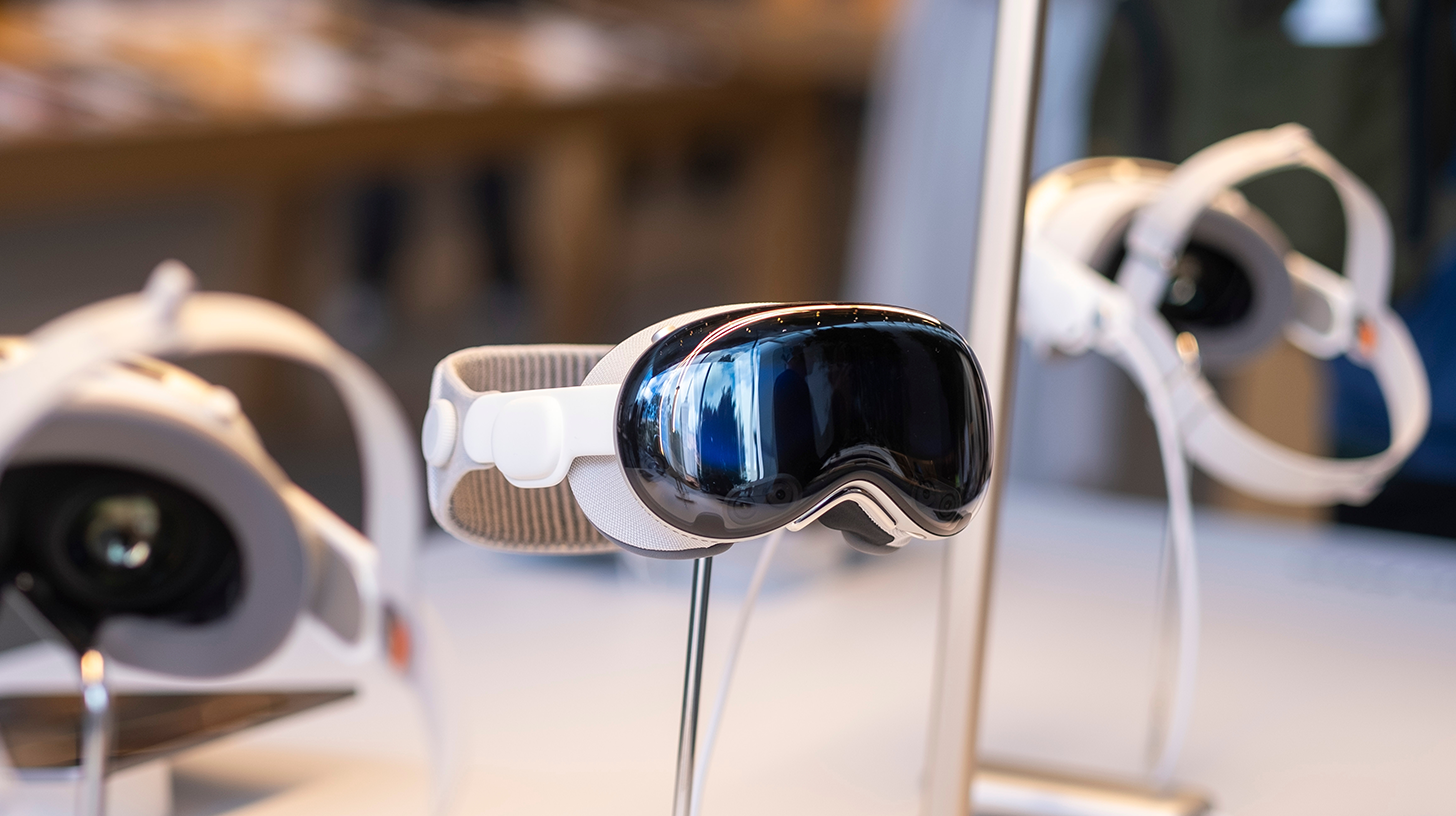
Apple has discontinued production of the Vision Pro – Is it completely over, or is the Vision Pro 2 coming? A step back for a big leap forward – Image: Shutterstock|Ringo Chiu
Apple halts production of the Vision Pro – One step back for two steps forward?
Apple has temporarily halted production of its Vision Pro mixed-reality glasses at the turn of the year 2024/2025. This decision wasn't unexpected, as reports of drastically reduced production due to low demand had already surfaced in the summer of 2024. Nevertheless, this move raises many questions: Is this the beginning of the end for Apple's ambitious mixed-reality project, or is the tech giant simply preparing the stage for the next generation?
Why production was stopped
According to insider information, Apple considered several factors that led to the production halt:
1. Low demand
The starting price of around €3,999 made the Vision Pro a luxury product for a very limited target group. Although the technological innovation was praised, many potential buyers lacked a compelling use case. The Vision Pro is perceived as a technologically leading product that is currently practically limited.
2. Inventory levels are adequately covered
Reports indicate that Apple has already produced enough units to meet current demand. With production capacity for 500,000 to 600,000 devices, Apple has taken precautions and does not need to manufacture any more unless sales figures change drastically.
3. Optimization of production resources
The production halt could also be related to Apple's strategy of using resources more efficiently. Instead of continuing to invest in a product whose market acceptance is uncertain, Apple may have decided to concentrate development and production resources on other projects or a more affordable version of the Vision Pro.
Future prospects of Vision Pro
The production halt by no means signifies the end of Vision Pro. On the contrary, there are indications that Apple is continuing to work on the technology and could resume production if needed. But what exactly is Apple planning?
1. A cheaper alternative
Apple reportedly has plans for a more affordable model that could launch for around $1,500. A lower price would significantly increase the Vision Pro's appeal to a wider audience. This model might omit certain high-end features but still offer an impressive user experience.
2. Vision Pro 2
While reports indicate that development of a second-generation Vision Pro has been temporarily postponed, it is by no means off the table. Apple appears to be taking its time to perfect the next iteration of the product. Insiders expect the Vision Pro 2 to launch no earlier than fall 2025.
3. Cooperations to improve functionality
There is speculation that Apple could collaborate with Sony to integrate the PS VR 2 controllers into the Vision Pro system. This would particularly enhance the gaming experience and increase the product's appeal to a target audience willing to invest in immersive experiences.
The Vision Pro 2: What we can expect
The second generation of the Vision Pro is expected to offer several significant improvements and innovations to strengthen the product's market position. But what features might these be?
1. Performance improvements
Apple is rumored to be working on integrating a new chip, possibly the M5 chip, which would bring a significant performance boost. This new chip could improve computing power and energy efficiency, thus optimizing battery life and the user experience.
2. Improved displays
A switch to OLED displays is expected. These screens could deliver brighter and more vibrant images while consuming less power. This would make the Vision Pro 2 not only more visually appealing but also more practical for everyday use.
3. Advanced AI features
Apple could introduce an AI assistant specifically optimized for the Vision Pro. Advanced voice and gesture controls would allow users to interact with the technology even more seamlessly.
4. Two model variants
The next generation could appear in two versions:
- High-end model: A direct successor to the current Vision Pro, with premium features and a price around $3,500.
- Cheaper version: A stripped-down version that focuses on essential functions and could potentially cost between $2,000 and $2,500.
Mixed Reality Strategy
1. The balance between price and performance
Apple faces the challenge of offering a more affordable Vision Pro without significantly compromising technological innovation and user experience. A lower price could increase market acceptance, but only if the product retains its core values.
2. Software ecosystem
A crucial factor for the success of Vision Pro is the availability of apps and software that fully leverage the potential of mixed reality technology. Apple must work closely with developers to create a robust ecosystem that is both productive and entertaining.
3. Market positioning
The Vision Pro is a product positioned between the consumer and enterprise markets. Apple could define clearer target groups in the future and adjust its marketing strategy accordingly. For example, companies could benefit from the Vision Pro as a tool for training, product design, and virtual meetings.
A look at the market: competition and trends
Apple isn't alone in the mixed reality market with its Vision Pro. Companies like Meta, Sony, and HTC have also developed products in this area. While Meta targets a broader market with more affordable devices like the Quest series, Sony focuses on the gaming community with the PS VR 2.
1. How Apple can stand out
Apple has the advantage of an established and loyal ecosystem. Integrating the Vision Pro into existing Apple products like the iPhone, iPad, and Mac could be a decisive competitive advantage.
2. Market opportunities
Mixed reality technology is becoming increasingly important in industries such as education, healthcare, and entertainment. Apple could gain a foothold in these markets by offering tailored solutions.
One step back for one giant leap forward
The discontinuation of Vision Pro production may seem like a setback at first glance, but it could prove to be a strategically astute move. Apple has the opportunity to analyze feedback from the first generation and optimize the next iteration of the product. A more affordable model could make the technology accessible to a wider audience, while an improved high-end model could continue to dominate the premium technology market.
What does this mean for the future of mixed reality?
Apple has proven in the past that it is willing to accept short-term setbacks in order to achieve long-term success. The Vision Pro could prove to be a key product for the future of mixed reality and augmented digital experiences – provided Apple finds the right balance between innovation, price, and functionality.
With the Vision Pro, Apple stands on the threshold of a new era of technology. Whether this vision becomes reality depends on how skillfully the company adapts its strategy to the needs and expectations of its customers. One thing is clear, however: Apple hasn't given up yet – and the Vision Pro's best days may still be ahead.
Related to this: